 EveryMemory
Is It Normal to Be Forgetful?
Everyday forgetfulness is normal at every age - it's how memory filters and prioritises. What's ordinary, what makes it worse, and where the line is.
Part of the guide: Understanding Memory Loss and Forgetfulness: A Calm, Reassuring Guide →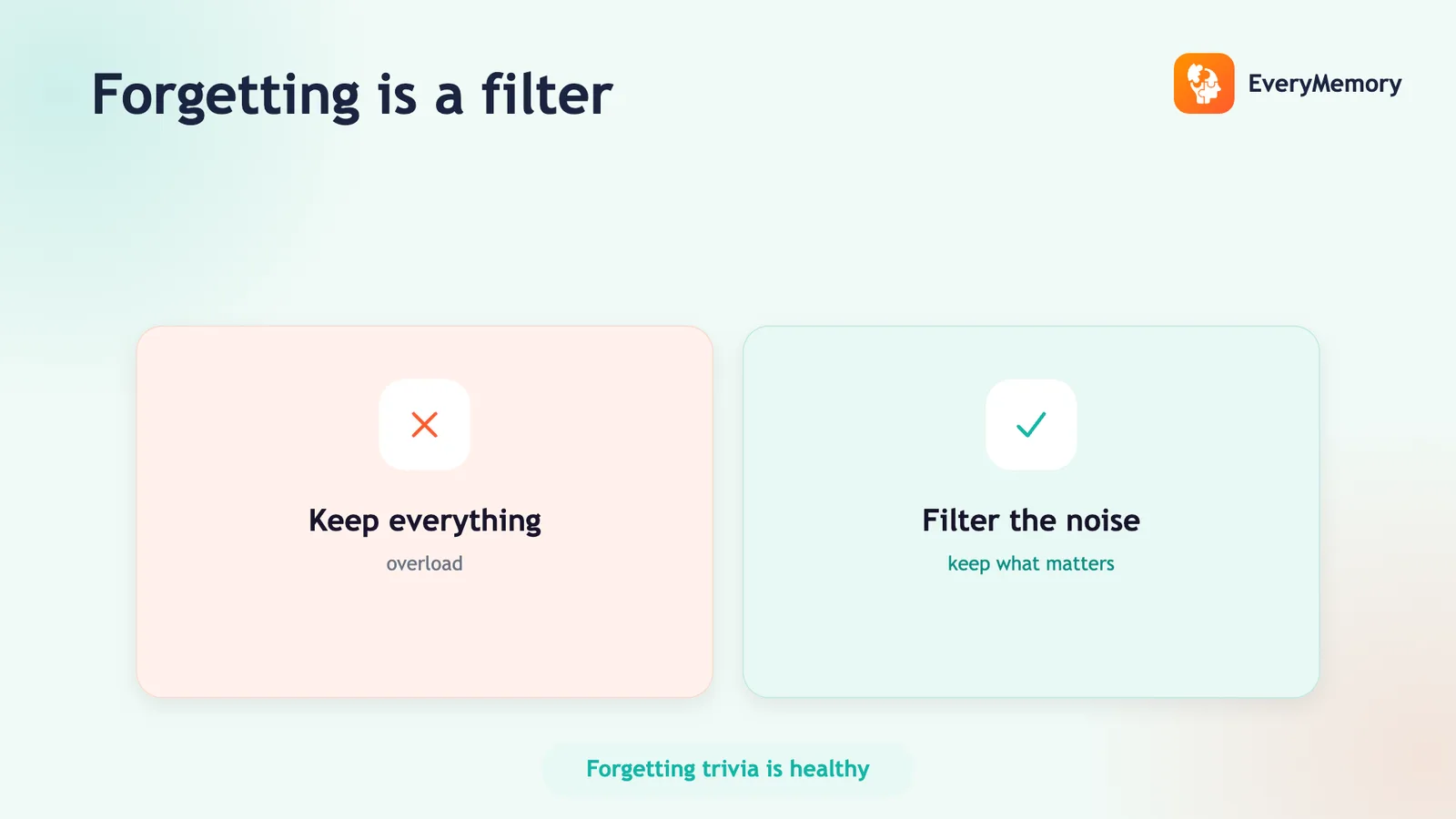
⚡ Quick answer
Everyday forgetfulness - names, where you left things, why you walked into a room - is normal at every age, and more so when you're tired, stressed, or distracted. It reflects how memory filters and prioritises information, not a fault. What's worth attention is forgetfulness that's clearly and steadily worsening, disrupting daily life, or noticed by others alongside confusion.
Key takeaways
- Everyday forgetfulness is normal at every age - memory filters and prioritises, keeping what matters and letting the rest go.
- Universal slips like blanking on names or forgetting why you entered a room are features of how memory works, not warning signs.
- Forgetfulness spikes with tiredness, stress, and busyness, and eases when those do.
- Worth attention if it's clearly worsening over weeks, about whole events, or disrupting daily life.
Almost everyone wonders, at some point, whether they're more forgetful than they should be. The short answer is reassuring: everyday forgetfulness is normal, and it's actually a sign your memory is doing its job.
Here's what ordinary forgetfulness looks like, what makes it spike, and the clear line where it's worth a closer look.
Forgetting is a feature, not a fault
A memory that kept everything would be useless - you'd be unable to find the few things that matter among the flood that doesn't. Memory constantly filters, keeping what seems important and letting the rest go. Most everyday forgetting is that filter working, not breaking.
The normal slips everyone has
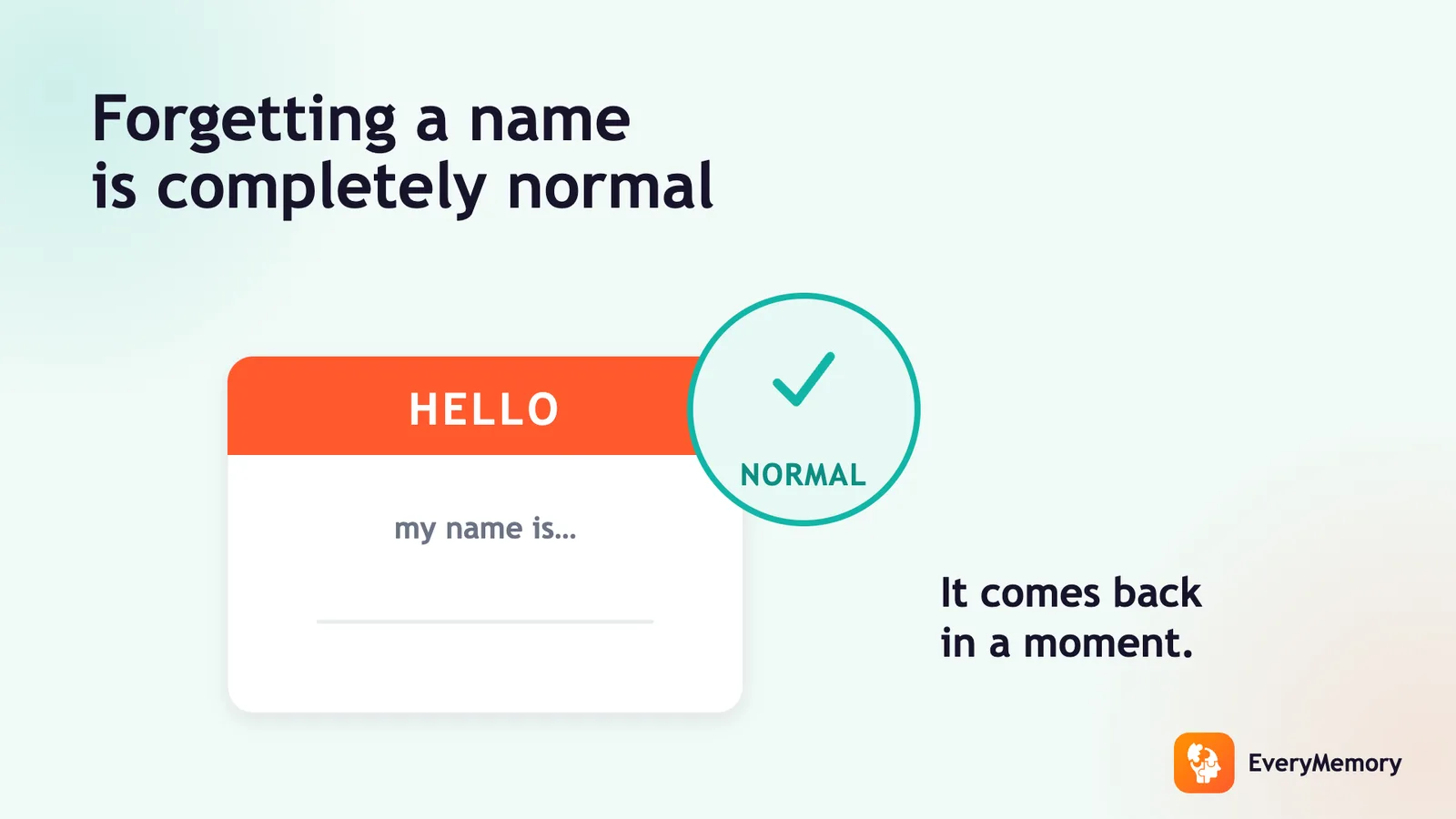
These are ordinary at any age: blanking on a familiar name, walking into a room and forgetting why, losing a word that's on the tip of your tongue, misplacing keys or glasses, forgetting why you opened the fridge. They're so universal each has its own well-studied explanation - they're features of how memory works, not warning signs.
What makes forgetfulness worse
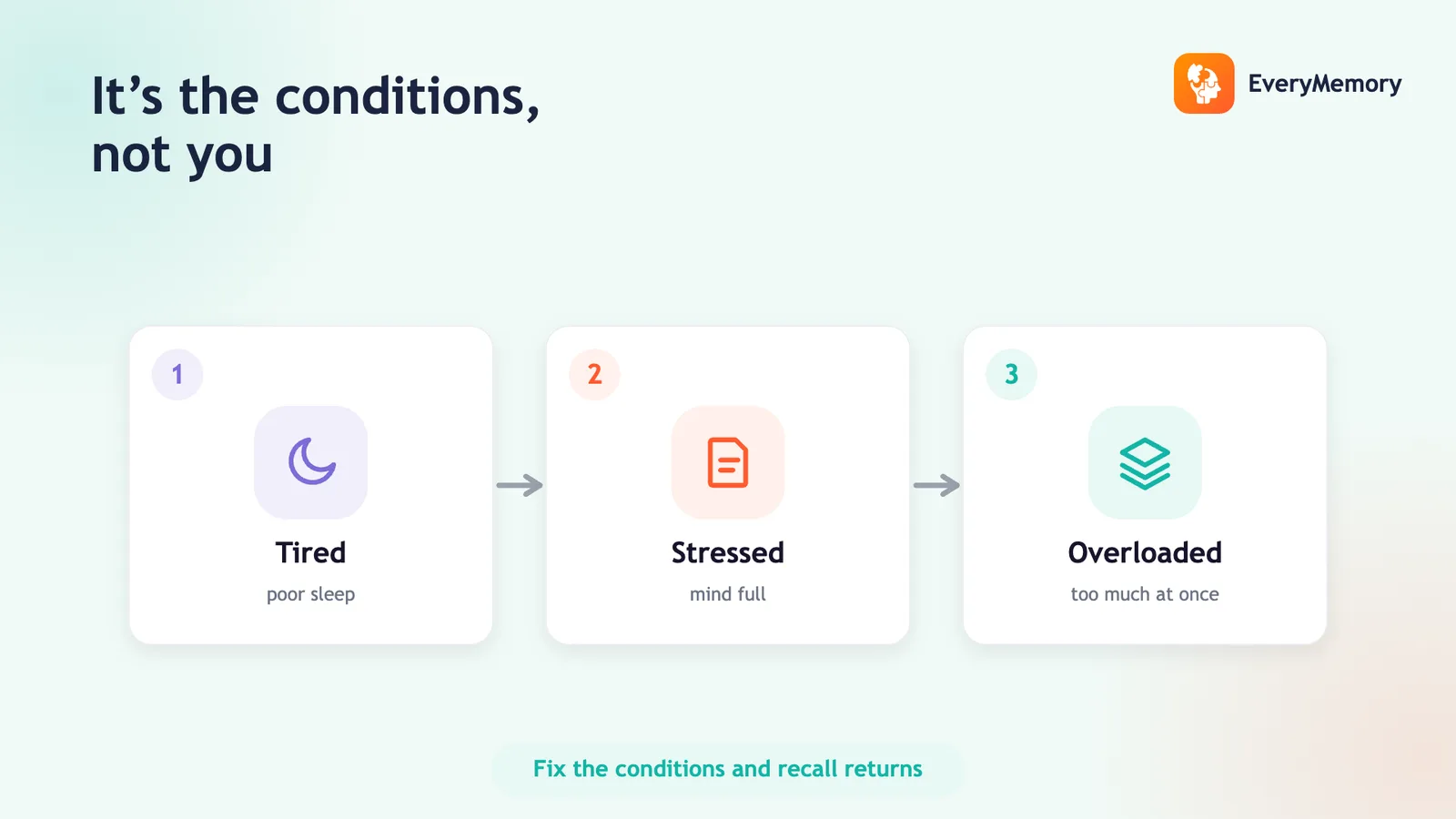
Ordinary forgetfulness spikes for ordinary reasons - tiredness, stress, doing too much, and a normal slight slowing of recall with age. A bad week of sleep or a stressful stretch can make you feel suddenly forgetful, and it eases when life does. None of that is decline.
Normal vs worth-checking
The difference is usually in kind and direction, not the odd slip. Normal forgetting is occasional, about details, and steady over time; it's worth attention when it's clearly worsening over weeks, about whole events rather than details, or disrupting daily life. The full comparison is in memory loss vs normal aging, and a way to track your own trend is a non-medical self-check.
⚠ When to talk to a professional
Occasional everyday forgetfulness is normal at any age. If it's clearly and steadily worsening, disrupting daily life, or noticed by others alongside confusion about familiar people or places, talk to a qualified professional.