 EveryMemory
Medications and Memory: Ask Your Pharmacist
Some everyday medicines can sometimes affect focus or memory for some people - the empowering step is bringing a full medicine list to your pharmacist or doctor and asking.
Part of the guide: How to Keep Your Brain Healthy: A Complete Lifestyle Guide →
⚡ Quick answer
Some medicines and combinations can sometimes affect concentration or memory for some people, particularly as the body changes with age. This does not mean anything is permanently wrong - it means the pattern is worth mentioning to a pharmacist or doctor. Never start, stop, or change any medicine based on what you read. A qualified professional reviewing your full medicine list is the safe path forward.
Key takeaways
- Some medicines and combinations can sometimes affect focus or memory for some people - worth mentioning to a pharmacist or doctor, never acting on alone.
- Never start, stop, or change any medicine based on what you read - only a professional reviewing your full list can safely assess the picture.
- Bring a complete list of every medicine, supplement, and over-the-counter product to your next appointment and ask directly.
- Noting when changes started and what else changed around that time gives your pharmacist or doctor useful information to work with.
You notice that your thinking feels a little foggier than usual. Nothing obvious has changed - except, perhaps, that a new prescription was added a few weeks ago, or a dose was adjusted. The connection is easy to miss.
This article is not here to alarm you, and it is certainly not here to advise you about any specific medicine. It exists to make one calm, practical point: if you have noticed changes in your focus or memory and you take any medicines, the most useful step is to bring a complete list of everything you take to your pharmacist or doctor and simply ask.
Why age changes the way medicines work
As people get older, the body handles medicines differently. The liver and kidneys - which process most medications - can work more slowly, meaning medicines may stay active longer than originally intended. Body composition changes too, affecting how medicines are distributed and how concentrated they become.
This means a medicine you have taken for years without any noticeable effect might, over time or after a dose change, behave slightly differently for you. That is not alarming - it is simply one reason why regular medication reviews with a pharmacist or doctor are genuinely valuable.
The complexity of taking multiple medicines
Many older adults take several medicines at once - for blood pressure, sleep, pain, digestion, and more. When prescriptions come from different specialists over time, no single professional may have a complete picture of everything being taken. Combinations can occasionally produce effects that no individual medicine would cause on its own.
Drug interactions - where two or more medicines affect each other's behaviour - are precisely what a full medication review is designed to catch. Pharmacists are trained to spot these and flag them for prescribing doctors. The National Institute on Aging recommends reviewing your full list with a pharmacist at least once a year, and especially after a hospital stay when new prescriptions are commonly added.
- Bring everything - prescribed, over-the-counter, vitamins, and supplements.
- Include things taken only occasionally, not just daily medicines.
- Note any changes in dose or newly started medicines.
- Mention memory, focus, or mood changes - even if they seem unrelated.
Noticing patterns without jumping to conclusions
If your thinking feels less clear than usual, it is worth pausing on timing. Did the change appear shortly after a medicine was started or its dose was adjusted? Does fogginess arrive at a particular time of day? Does it vary in a way that might correspond to your medication schedule? These are useful observations to write down.
Noticing a pattern is not the same as diagnosing a cause. Many things can affect focus and memory - sleep quality, hydration, stress, and mood all play a role. Our article on brain fog and what may help covers the full range of everyday contributors. But a pattern you have noticed is worth describing to your pharmacist or doctor. Knowing approximately when something started, and what else changed around that time, is genuinely useful for them to hear.
Sleep, hydration, and the layered picture
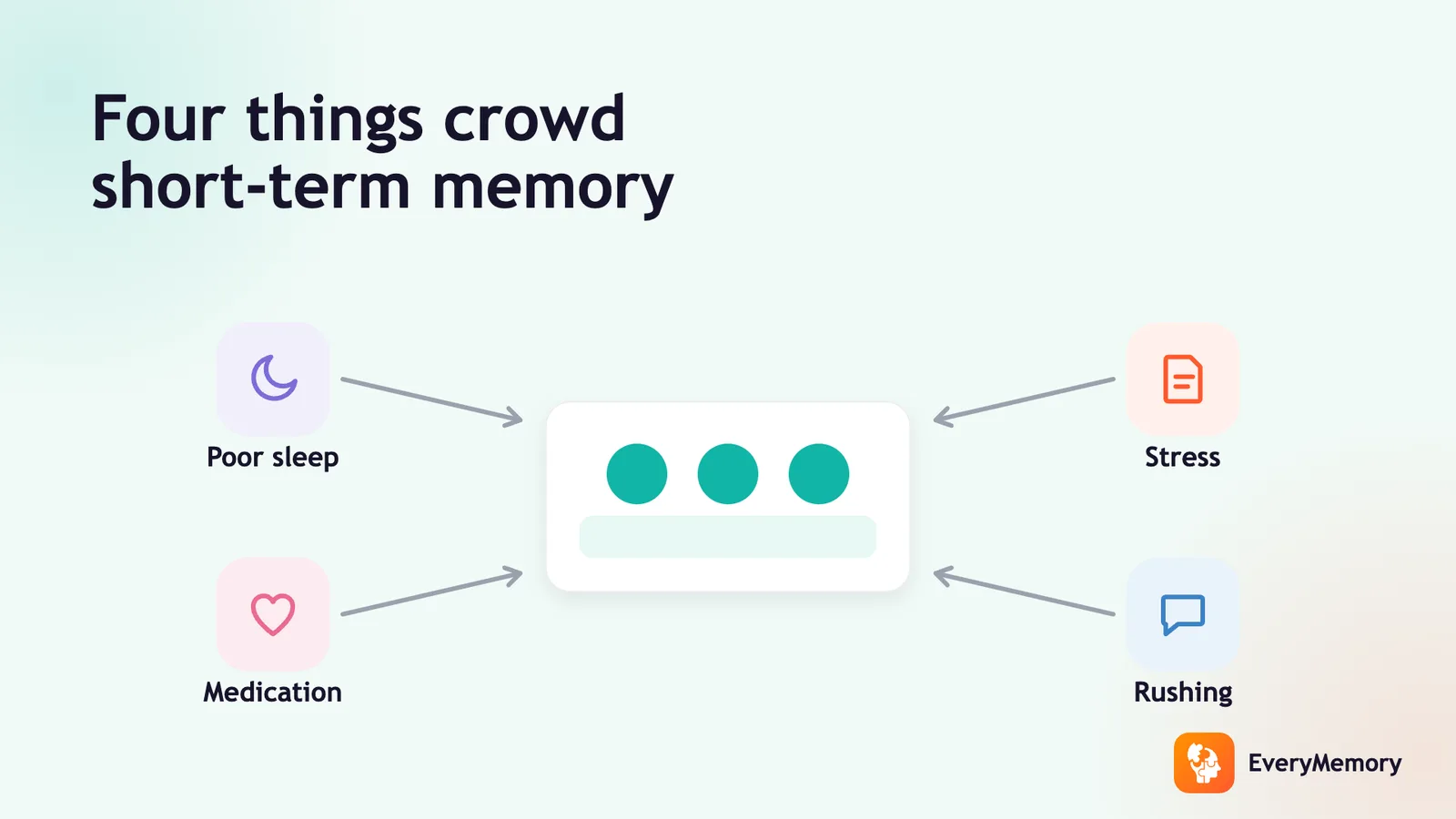
Some medicines can affect sleep quality or fluid balance - and both poor sleep and mild dehydration can themselves affect how sharp your thinking feels the next day. This layering of effects is easy to overlook. Our article on short-term memory problems explains how several everyday factors can stack on top of one another.
This is not a reason to change anything yourself. It is simply a reason to mention the whole picture - sleep quality, fluid intake, and how you feel at different times of day - when you speak with your pharmacist or doctor. The more complete the picture you describe, the more useful the conversation will be.
How to prepare for the conversation
The more clearly you can describe what you have noticed - and when - the easier it is for the pharmacist or doctor to spot a pattern. Our article on what to track before talking to a doctor offers a practical framework for preparing. Even a brief daily note for one or two weeks before the appointment - a few words on how your thinking felt and at what time - gives a professional something concrete to work with.
- Write down every medicine, vitamin, and supplement, with dose and frequency.
- Note when new medicines were started or doses were changed.
- Describe your concerns plainly: what you notice, when, and how long it has been going on.
- Ask directly: 'Could any of these medicines be affecting my memory or concentration?'
- Ask whether a formal medication review - going through the full list together - would be useful.
What a pharmacist can and cannot do
Pharmacists are highly trained medication experts. They can review your full list, identify potential interactions, explain what each medicine does, and flag concerns to your prescribing doctor. Their job is to protect you - not to create unnecessary worry.
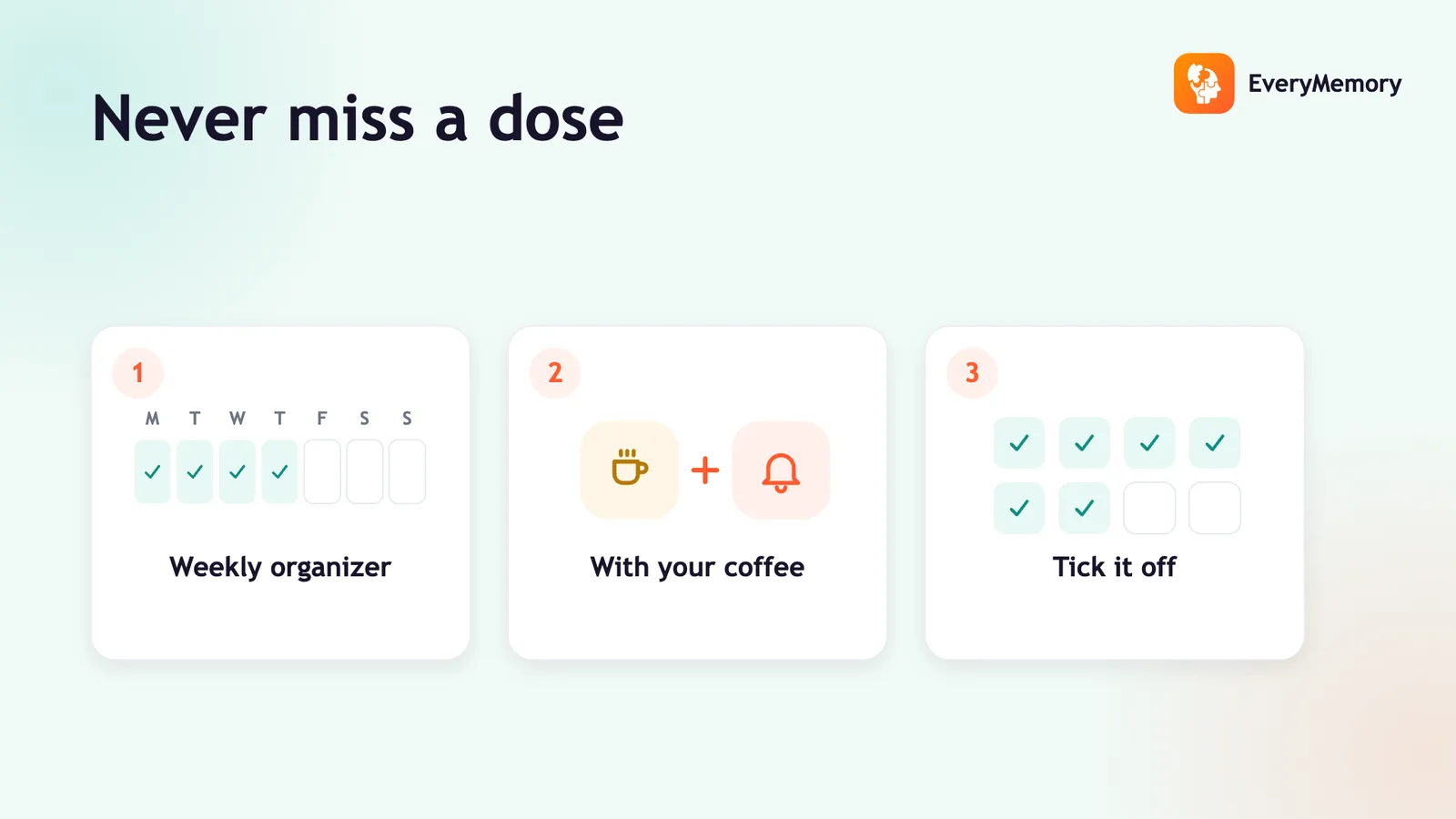
What a pharmacist will not do is tell you to stop or change a medicine without your doctor's involvement. Any change - however small it might seem - should only happen under proper supervision. Stopping some medicines abruptly can itself cause problems, and the medicine you are questioning may be doing important work. The decision is always a clinical one. Our article on how to remember to take medication is a reminder that consistency with a prescribed routine matters until a professional advises otherwise.
✅ Try this today - Build your medicine list today
This takes about fifteen minutes and makes your next pharmacy or doctor visit far more useful.
- Gather everything you take - go through your medicine cabinet, bag, bedside table, and kitchen. Include prescriptions, over-the-counter products, vitamins, minerals, and herbal supplements. Write them all down in one place.
- For each item note: the name, dose, how often you take it, and when you started it (or when the dose last changed). The packaging or pharmacy dispensing record will fill in any gaps.
- At your next appointment - or by calling the pharmacy today - hand over the list and say: 'I've been noticing some changes in my memory and focus. Could you look through this with me?' That single sentence opens a conversation that is entirely within your rights to have.
⚠ When to talk to a professional
This article contains general, non-medical information only and is not a substitute for professional advice. If memory or cognitive changes have been sudden, rapid, severe, or are worsening, please contact a qualified healthcare professional promptly - do not wait for a scheduled review.