 EveryMemory
Memory Improvement Books: Where to Start
Memory books split into two kinds: practical technique guides and the science of how memory works. How to choose, and how to actually get value from one.
Part of the guide: How to Improve Your Memory: The Complete Beginner's Guide →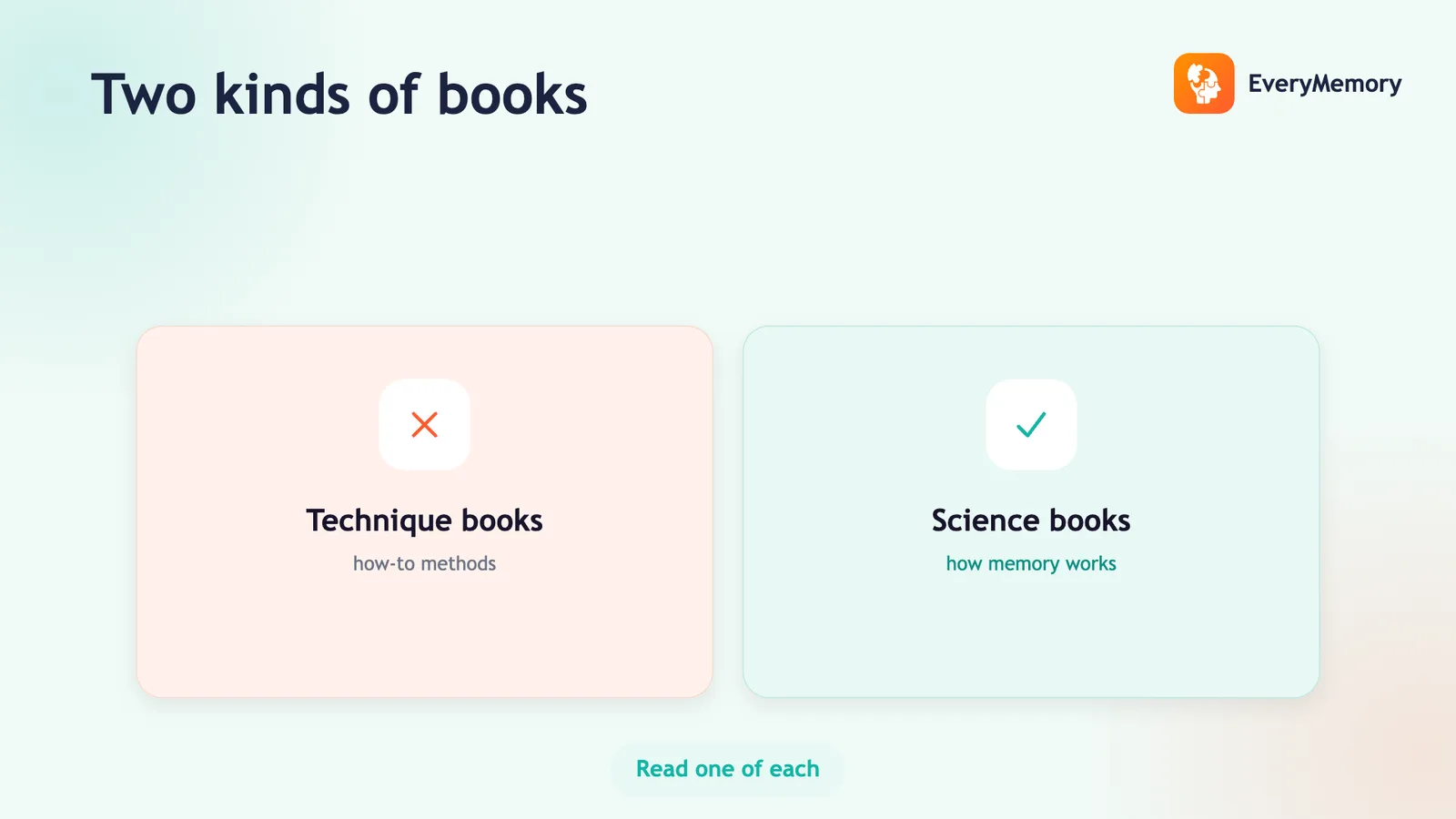
⚡ Quick answer
Memory improvement books fall into two camps: practical guides to techniques (the memory palace, association, numbers) and accessible explanations of how memory works. Start with one practical technique book and apply it as you read - a book you act on beats five you only finish. Our Library lists vetted, non-medical recommendations.
Key takeaways
- Memory books split into practical technique guides and accessible explanations of how memory works - start with a technique book.
- Treat a technique book as a workbook: apply each method to a real task and recall the key points instead of rereading.
- Look for clear step-by-step techniques, real exercises, and an honest non-medical tone.
- Vetted, non-medical recommendations live in the EveryMemory Library; the free guides cover the core techniques first.
A good book can take your memory further than scattered tips - but only if you pick the right kind and actually use it. Most people finish a memory book and apply none of it.
Here's how memory books divide, how to choose, and how to make sure you get the benefit rather than just the read.
Two kinds of memory book
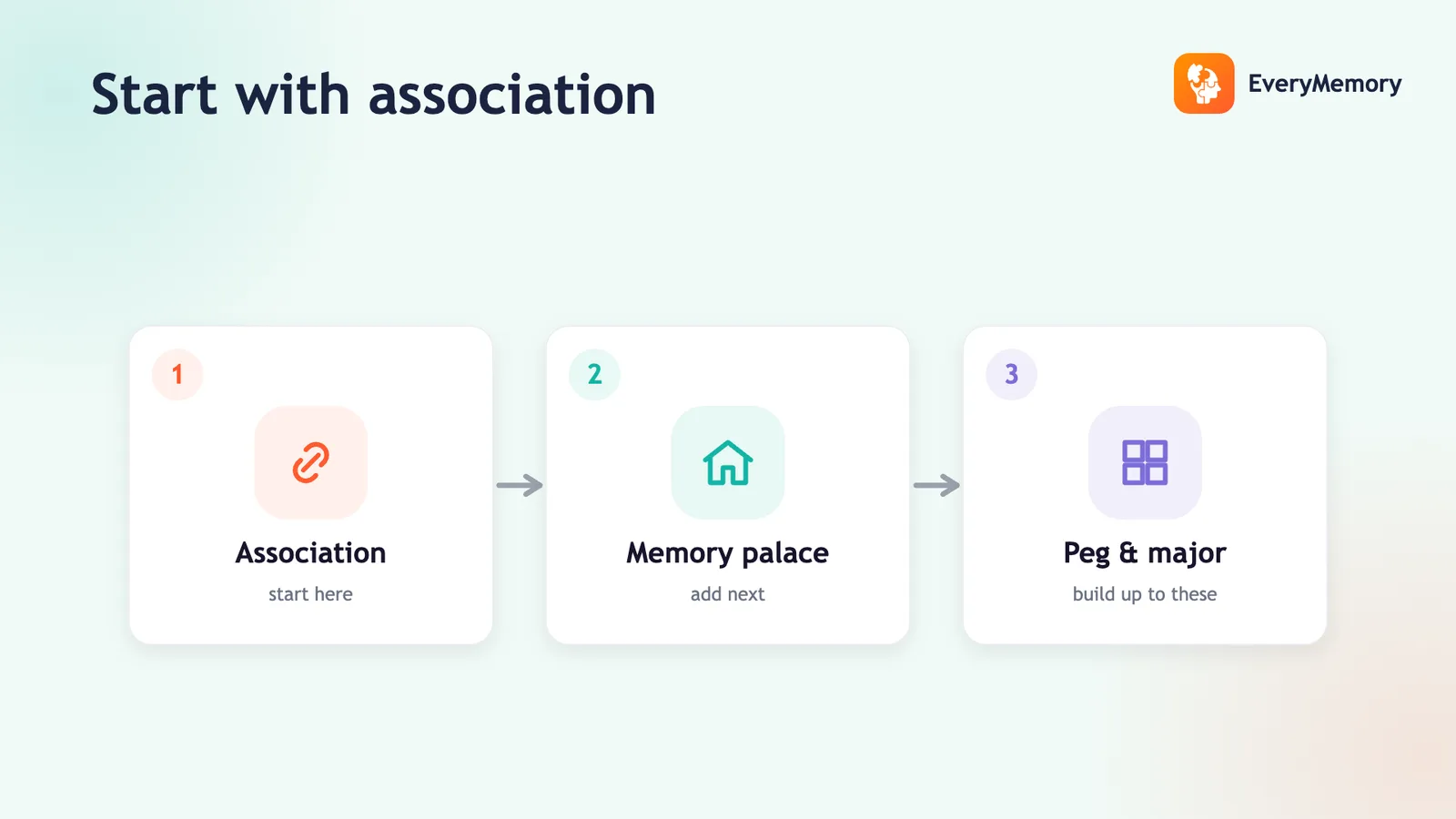
Practical technique guides teach you methods - the memory palace, association, systems for numbers and names - with exercises to practise. Science-of-memory books explain how memory works, why we forget, and what helps, which builds understanding and motivation but fewer hands-on skills. Most people benefit from one of each, in that order: a technique book to do, then a science book to understand.
How to actually get value
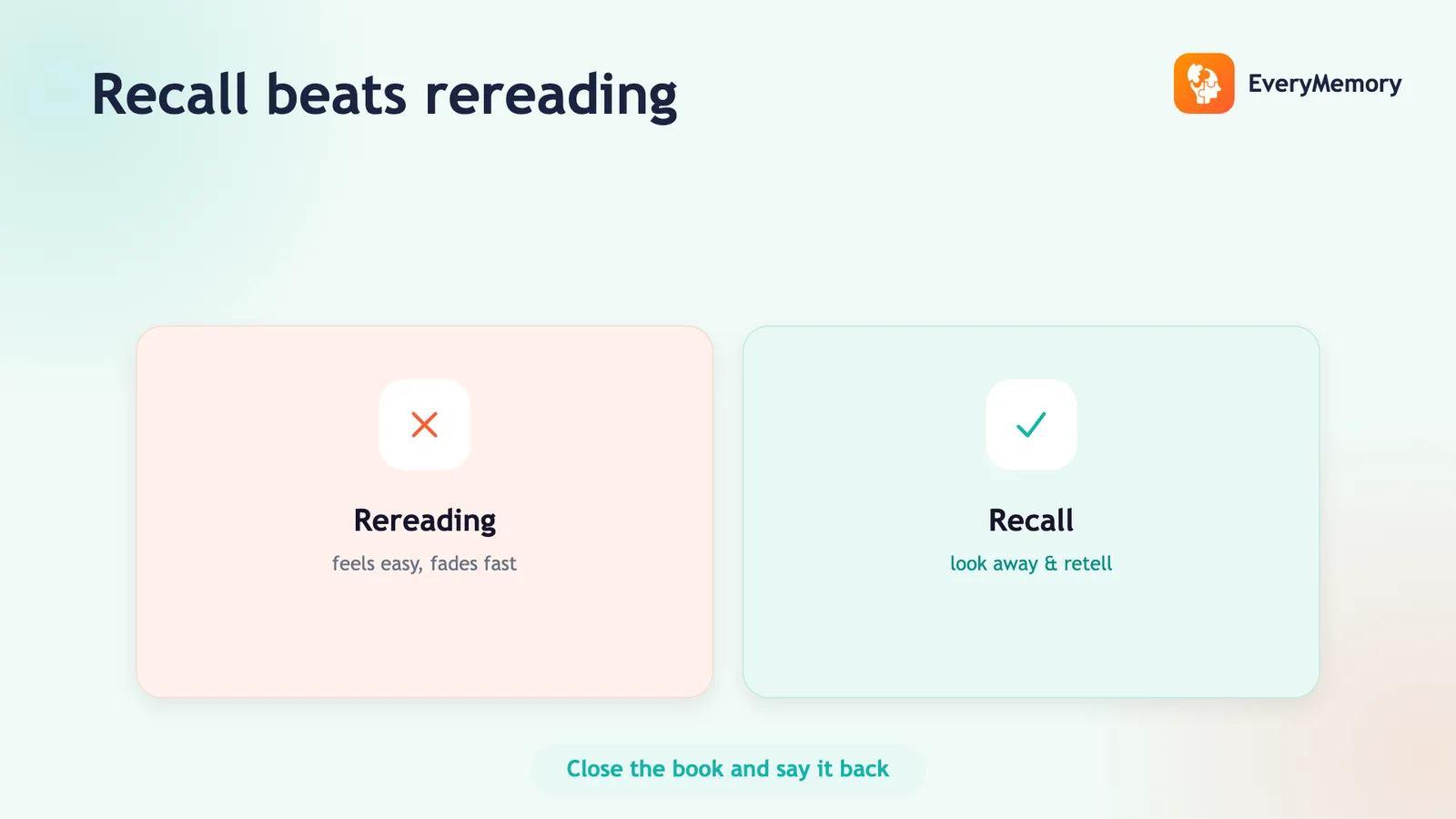
The mistake is reading a memory book like a novel - straight through, applying nothing. Treat a technique book as a workbook: try each method on a real task before moving on, and recall the key points after each chapter rather than rereading. That's the same active approach in how to remember what you read, applied to the book teaching you memory.
What to look for
- Clear, step-by-step techniques you can practise, not just theory.
- Real examples and exercises rather than promises.
- An honest, non-medical tone - no claims to prevent or cure anything.
- A scope that matches your goal: techniques to do, or science to understand.
Where to find recommendations
We keep a vetted, non-medical reading list in the EveryMemory Library, so you're not guessing from a retailer's bestseller list. And before you buy anything, the free guides here cover the core techniques - start with memory techniques and how to learn them.