 EveryMemory
How to Learn Memory Techniques: A Beginner Path
Don't learn all the techniques at once. The order to learn them in, why to start with association, and a two-week plan that builds real skill.
Part of the guide: How to Improve Your Memory: The Complete Beginner's Guide →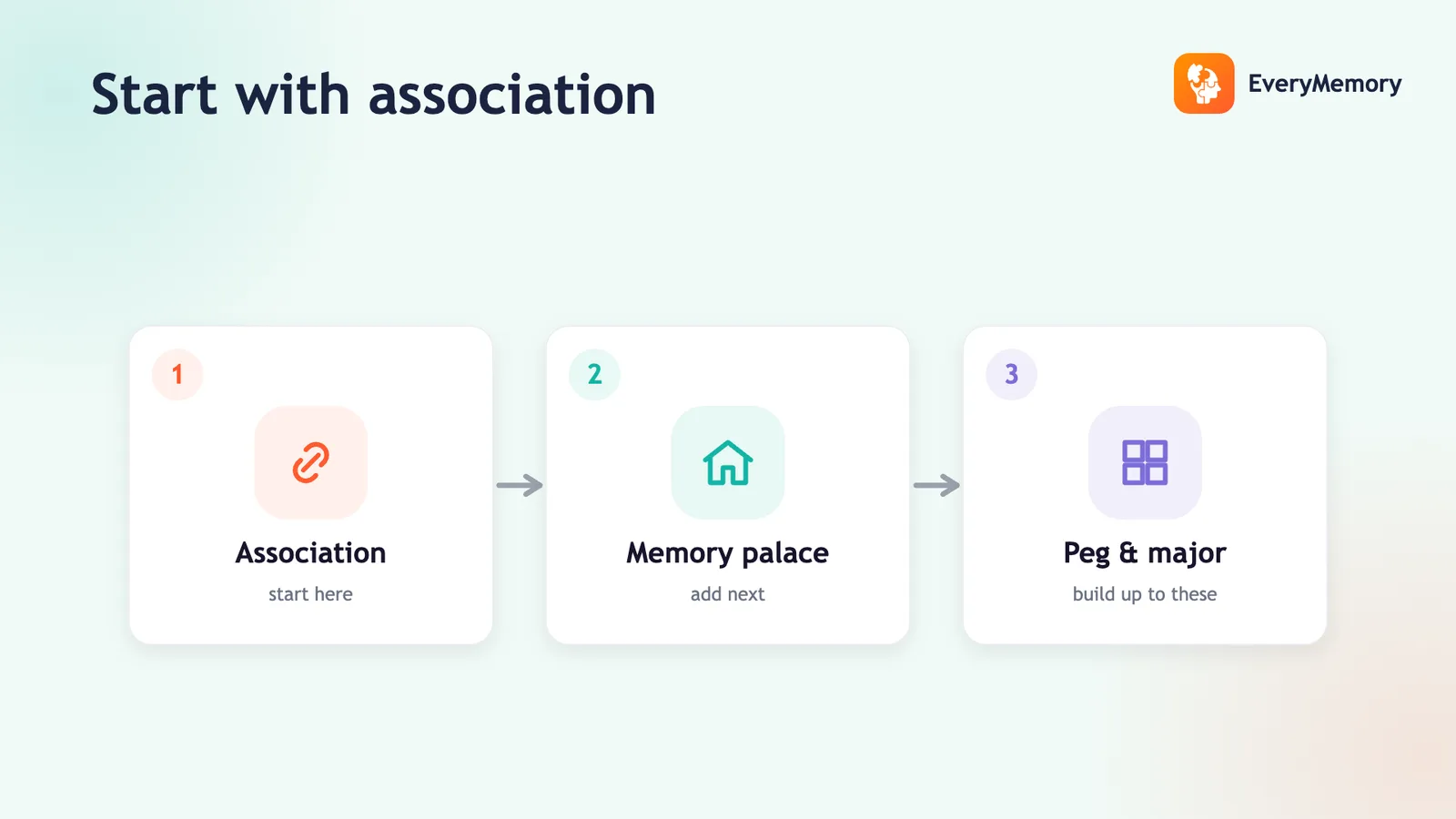
⚡ Quick answer
Start with one technique, not all of them. Learn association first because every other technique is built on it, then add the memory palace for lists. Practise on small real tasks - a shopping list, a few names - daily for a week before adding another. Memory techniques are skills: they feel slow at first and become fast with practice.
Key takeaways
- Learn one technique at a time on real tasks - trying to learn them all at once is why most beginners quit.
- Start with association (the engine inside every technique), then add the memory palace for lists.
- Practise on things you genuinely need to remember - real stakes make it stick and show the value.
- Expect the first week to feel slow and clumsy; images come fast within a couple of weeks of daily practice.
The mistake most beginners make is trying to learn every technique at once, getting overwhelmed, and quitting. Memory techniques are skills - they're learned one at a time, on real tasks, with a little daily practice.
Here's the order to learn them, and a two-week plan that turns reading about them into actually using them.
Start with one technique
Trying to juggle the palace, pegs, the Major System, and link method in week one guarantees you'll learn none of them. Pick one, get it working on real tasks, then add the next. Depth first, breadth later.
The order to learn them
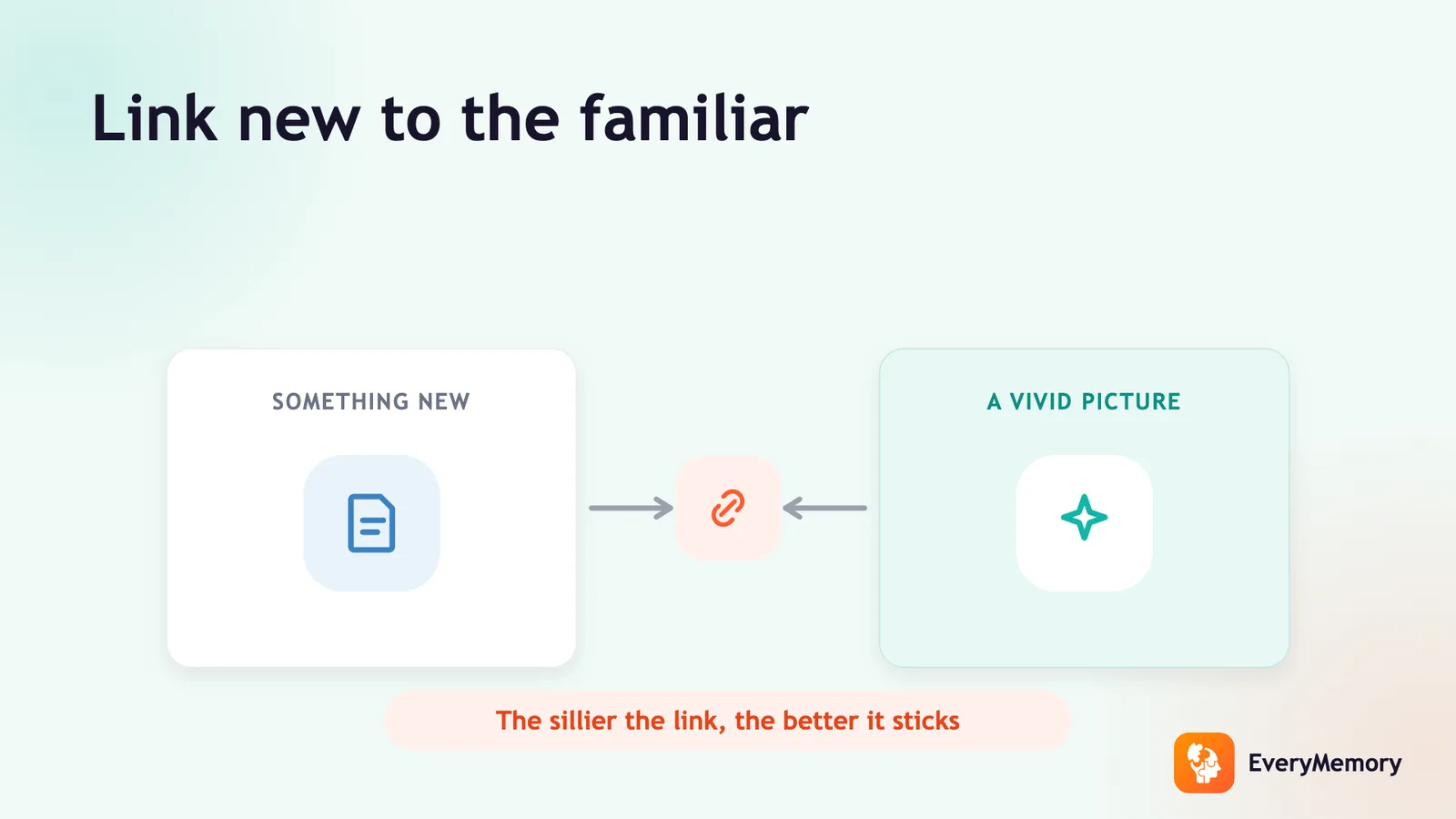
- Association first. Turning information into vivid images and links is the engine inside every other technique. Learn it on its own - see using association.
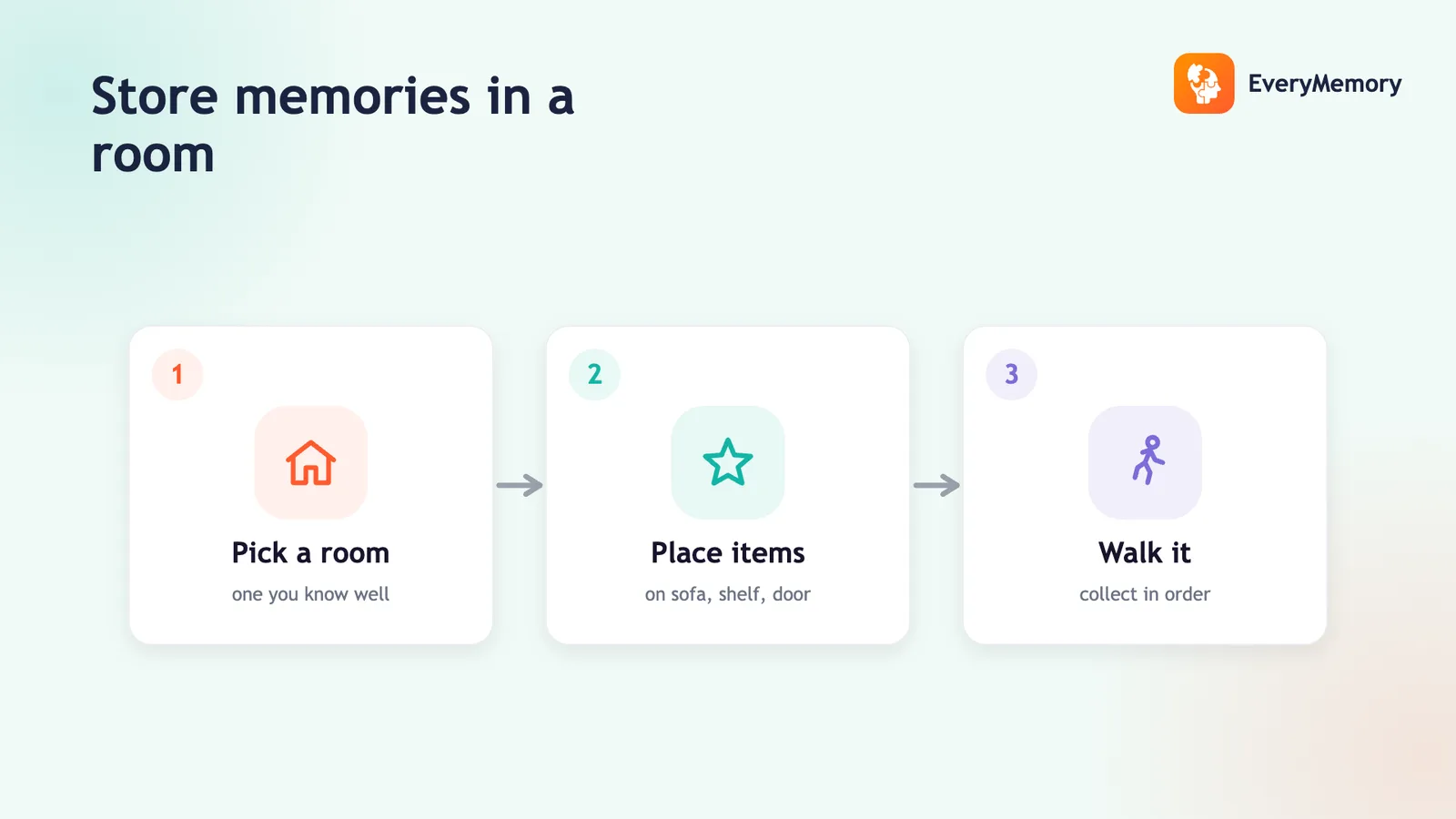
- The memory palace next. It puts association to work on ordered lists - see the memory palace.
- Then a number method. Add chunking or the peg system when you hit numbers or positions.
- Mnemonics as needed. Pick up acronyms and the link method for specific small jobs.
Practise on small, real tasks
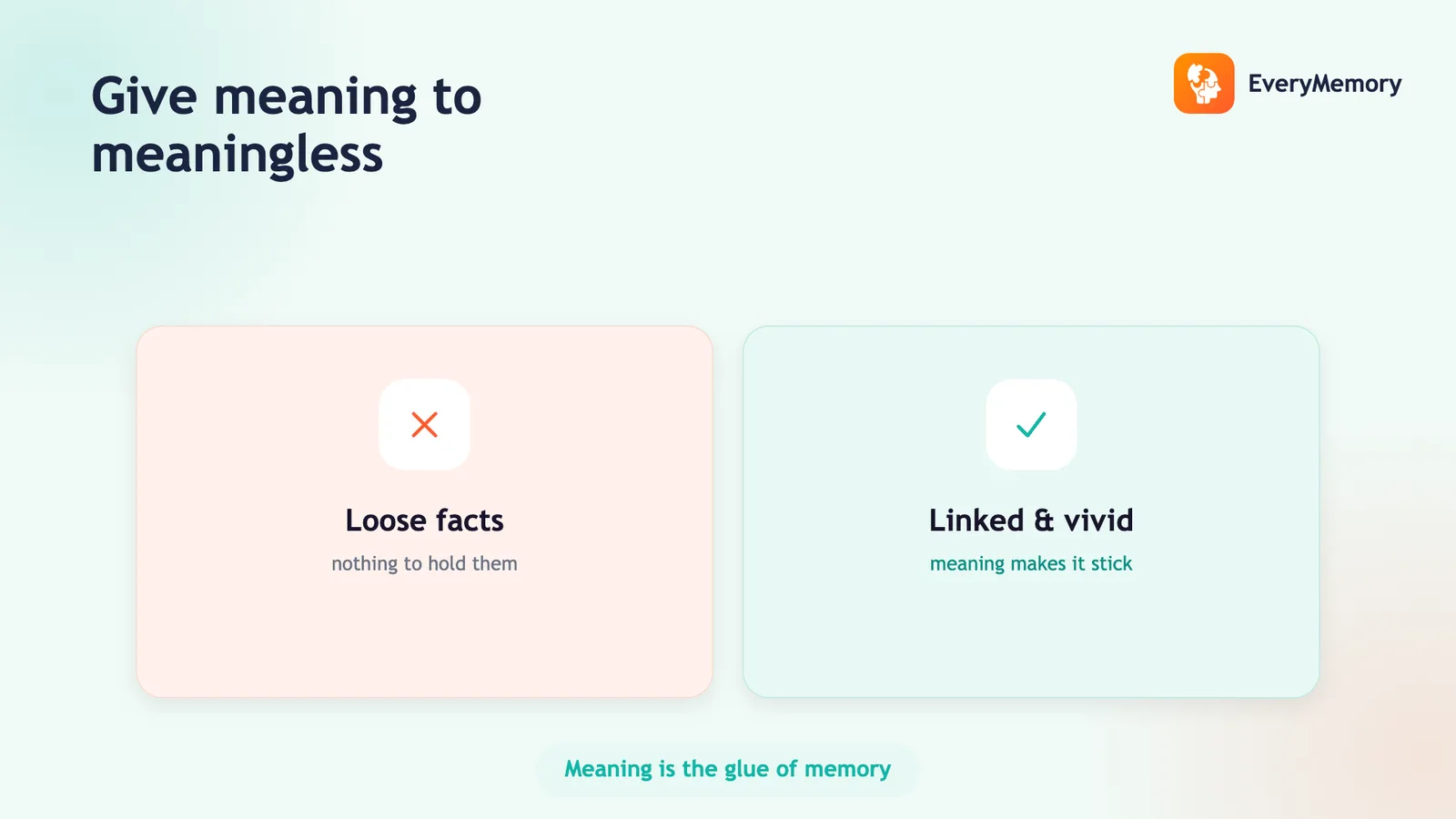
Don't practise on made-up lists - use things you genuinely need to remember. Your actual shopping list. The names of three new colleagues. A four-digit code. Real stakes make it stick and show you the technique's value, which keeps you doing it.
Expect it to feel slow at first
The first week, building images feels clumsy and slower than just rereading. That's normal - every skill does. By the second week the images come faster, and within a month they're near-automatic. Push through the slow start; that's where most people quit just before it clicks.
A two-week starter plan
- Days 1–4: practise association - turn five everyday items into vivid images each day.
- Days 5–10: build one memory palace and store a daily shopping list or to-do list in it.
- Days 11–14: add chunking to memorise one real number, and recall last week's palace lists to test durability.
Two weeks of ten minutes a day will leave you with two working techniques - more than enough to feel the difference. The full map of where to go next is the memory techniques guide.