 EveryMemory
Memory Quiz vs Memory Test: What's the Difference?
A memory quiz is a casual for-interest check; a memory test is more structured and repeatable. Neither is medical - here's how they differ and when to use each.
Part of the guide: Understanding Memory Loss and Forgetfulness: A Calm, Reassuring Guide →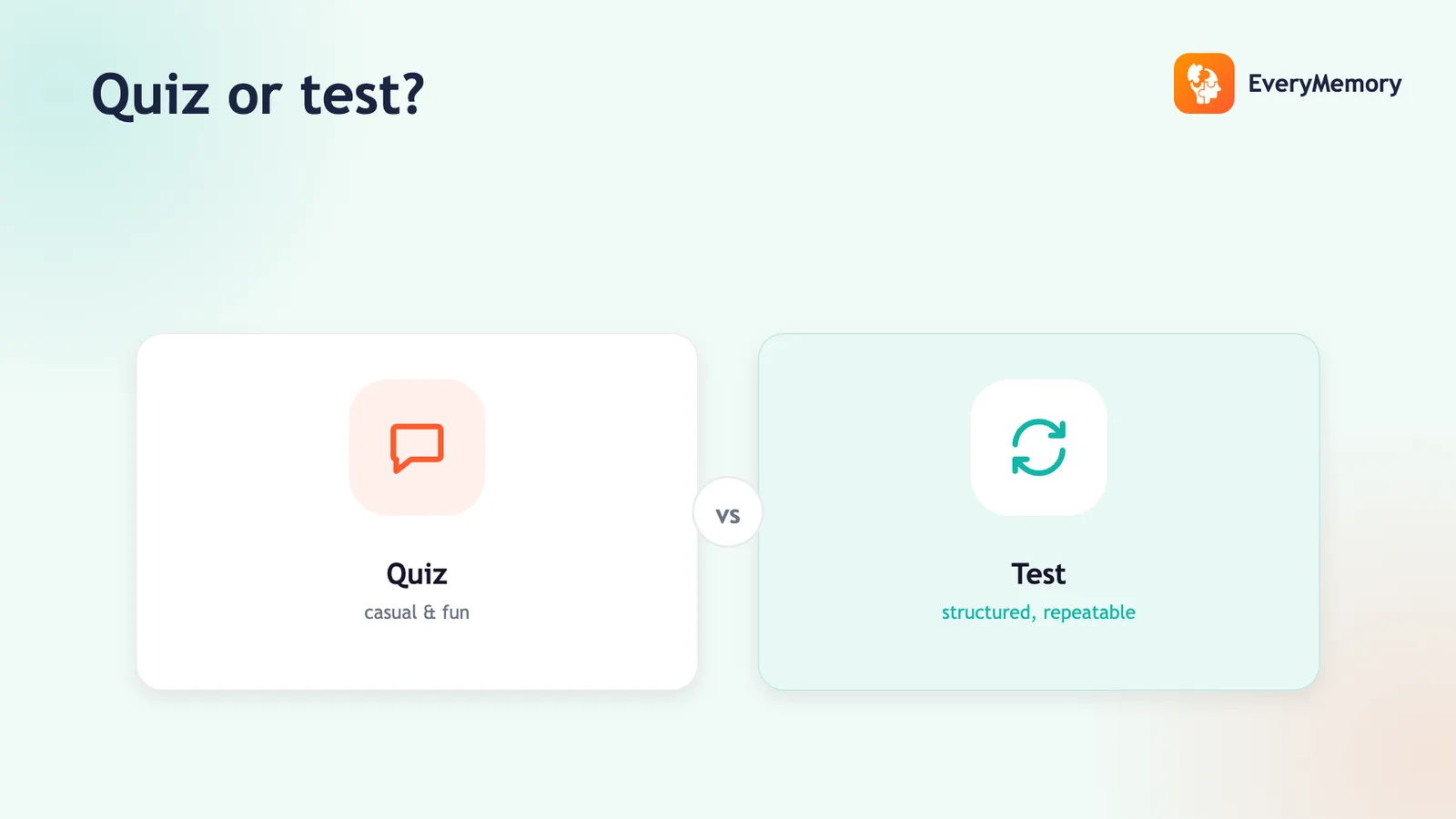
⚡ Quick answer
A memory quiz is a casual, for-interest check - quick, varied, often gamified, fine for a one-off. A memory test is more structured: standardized tasks, consistent scoring, built to be retaken under the same conditions so the trend is reliable. Both are non-medical and can't diagnose anything; choose a quiz for fun, a test for tracking your own baseline over time.
Key takeaways
- A quiz is casual and for fun; a test is structured and built to be repeated reliably.
- Use a quiz for a quick one-off, a structured test for tracking your baseline.
- What matters is structure and repeatability, not the word used.
- Neither is a medical diagnosis; persistent concerns need a professional.
People use "memory quiz" and "memory test" interchangeably, but they sit at different points on a scale. One is casual and for fun; the other is more structured and built to be repeated reliably.
Here's the real difference, when to reach for each, and the line both of them share: neither is a medical diagnosis.
The core difference
| Memory quiz | Memory test | |
|---|---|---|
| Purpose | Fun, curiosity, a quick snapshot | Track a baseline over time |
| Structure | Loose, varied, often gamified | Standardized, consistent tasks |
| Scoring | Sometimes vague or invented | Consistent and repeatable |
| Best for | A one-off check | Watching your own trend |
| What it isn't | A diagnosis | A diagnosis |
The labels overlap in practice - a well-built quiz can be a good test, and a casual test is just a quiz. What matters is structure and repeatability, not the word.
When to use a quiz
Reach for a memory quiz when you want a quick, low-stakes check or some fun - testing yourself out of curiosity, playing with friends, or sampling several skills at once with a brain quiz. Don't read too much into a single playful score.
When to use a test
Reach for a structured memory test when you actually want to track yourself - to see whether practice is paying off. Consistent tasks and repeatable scoring mean the trend reflects your memory, not the format. The honest comparison is always to your own past results (reading your progress), never a ranking against strangers.
What neither one is
Quiz or test, casual or structured, it's still a non-medical self-check. Neither can diagnose a condition or replace a professional assessment. If memory changes are persistent and affect daily life, that's a conversation for a qualified healthcare professional - not a quiz or an app.
⚠ When to talk to a professional
Both memory quizzes and memory tests are non-medical self-checks, not diagnostic tools. If you're worried about persistent memory changes that affect daily life, speak with a qualified healthcare professional.