 EveryMemory
Memory Tips for Exams
Remembering more in an exam comes down to how you study - self-testing, spacing, and memory tricks like chunking and mnemonics beat re-reading every time.
Part of the guide: Brain Exercises for Seniors: The Complete Guide →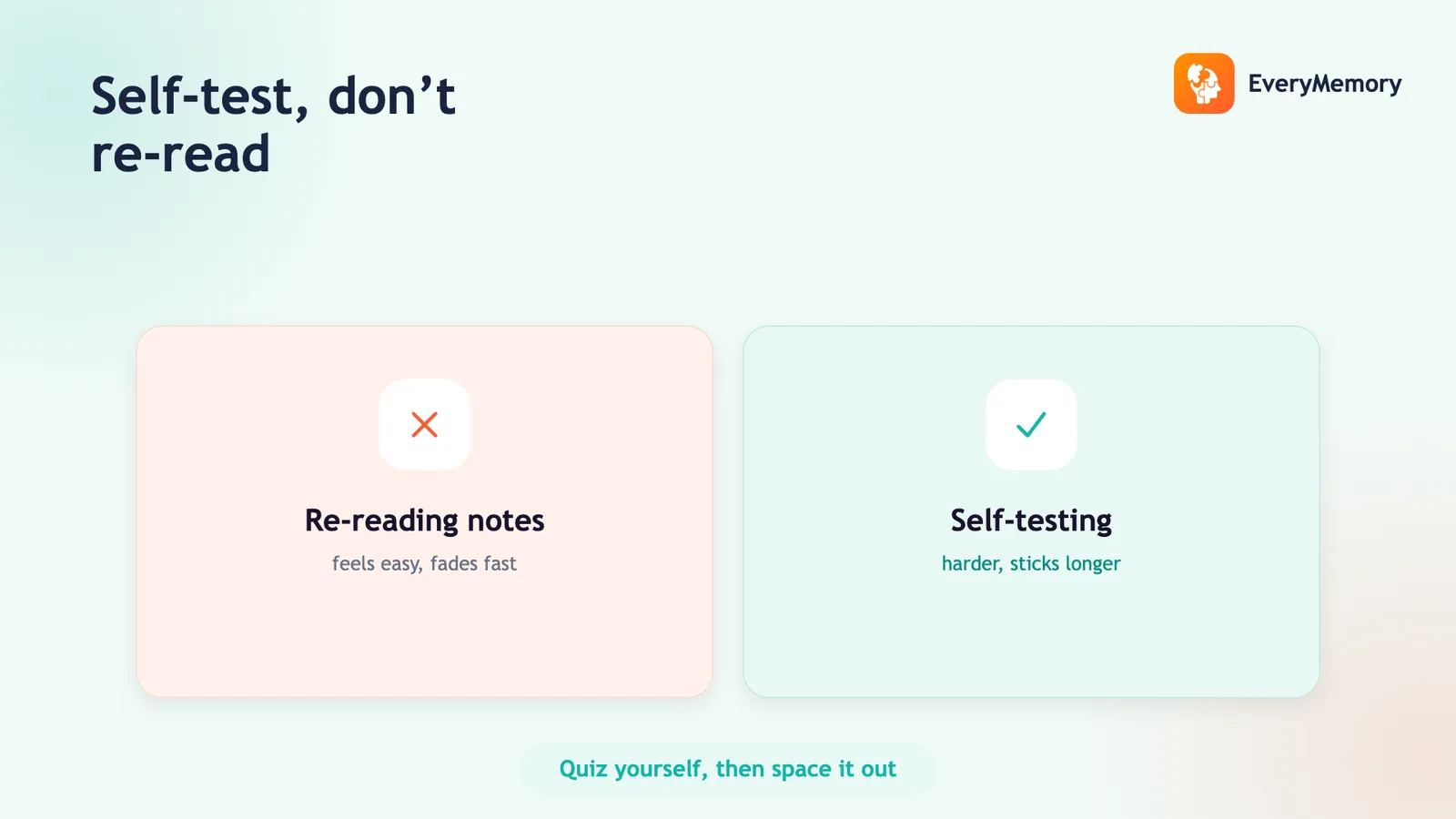
⚡ Quick answer
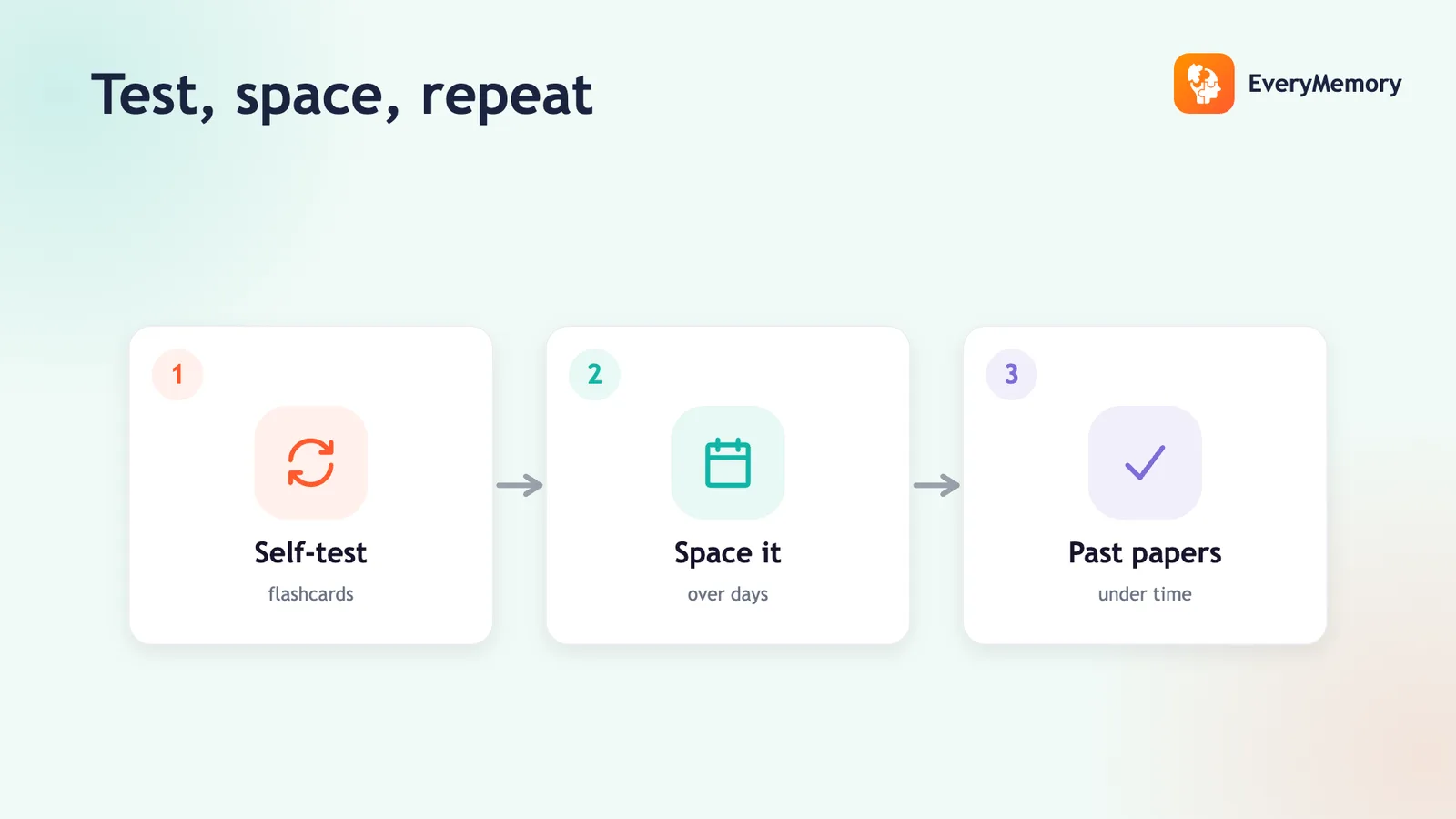
To remember more for exams, practise active recall (test yourself instead of re-reading) and spaced repetition (revisit material over several days). For facts and lists, use mnemonics, chunking (grouping items into meaningful sets), and the memory palace (linking facts to places). Sleep well, since memory consolidates overnight. These methods beat re-reading because they make you retrieve, which is what an exam demands.
Key takeaways
- Retrieval is the real trick - self-testing beats re-reading because exams demand recall.
- Use mnemonics, chunking and the memory palace for specific facts and lists.
- Space practice across several days; each return strengthens the memory.
- Sleep consolidates memory, so treat it as part of revision, not a sacrifice.
Forgetting in an exam usually isn't a memory problem - it's a studying problem. Information that went in through re-reading tends to feel familiar but won't come back under pressure. Information you practised retrieving comes back because you've literally rehearsed the act of recalling it.
On top of that core habit, a few classic memory tricks - mnemonics, chunking, the memory palace - make specific facts far easier to hold. Used together, they mean you walk in able to pull information out, not just recognise it when you see it on the page.
Retrieval is the real memory trick
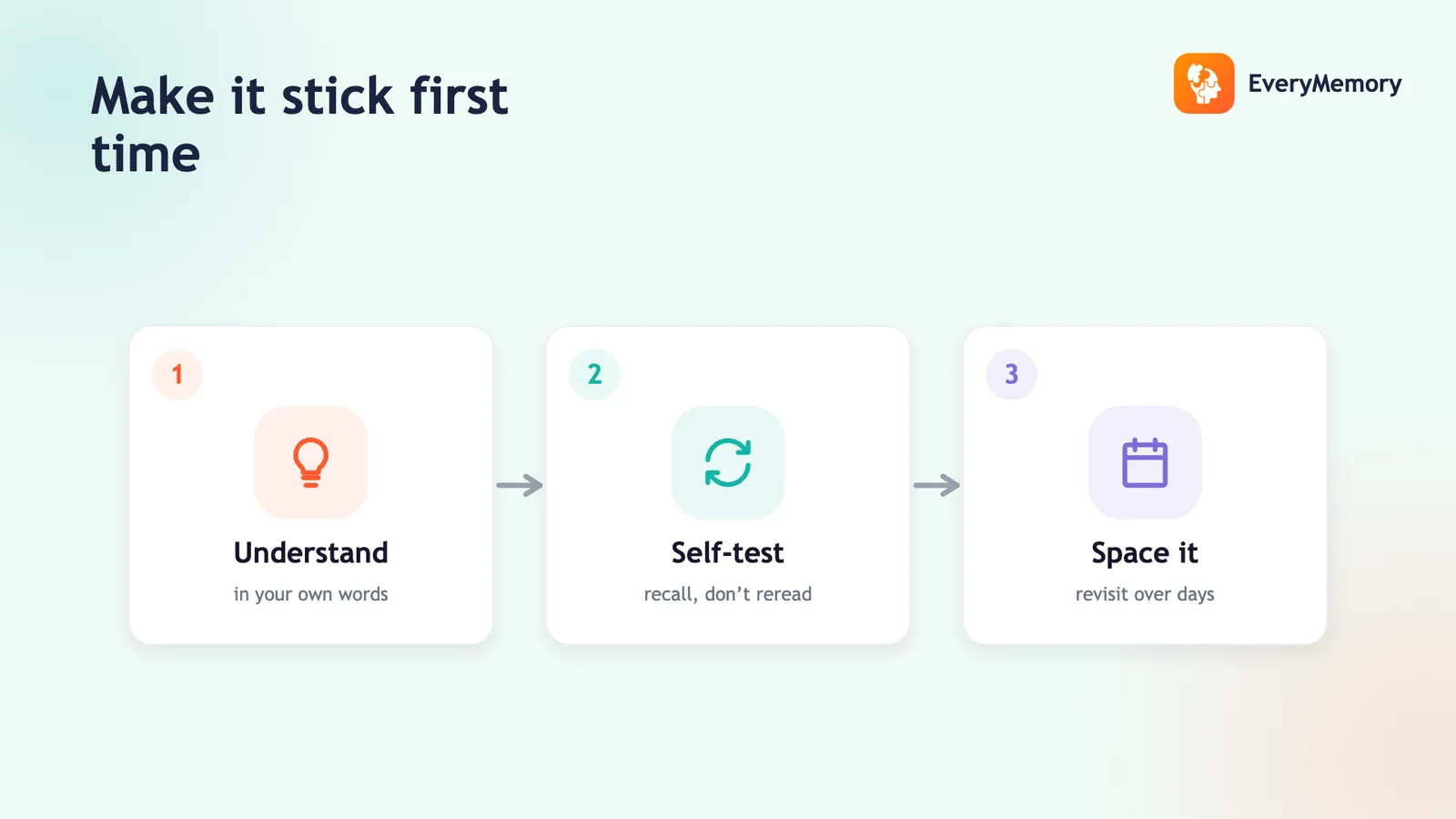
Every time you pull a fact out of your head, you make it easier to pull out next time. That's why self-testing beats re-reading: re-reading strengthens recognition, but retrieval strengthens recall, and an exam asks you to recall.
Build it into every session. Read a section, close the book, and write what you remember before checking. Doing this across several days - spaced repetition - is what turns short-term familiarity into something that holds. Start with the active recall study method and you'll need fewer tricks on top.
Memory techniques for facts and lists
When you have to memorise specific things - formulae, dates, sequences - these classic tools do the heavy lifting.
| Technique | How it works | Best for |
|---|---|---|
| Mnemonics | A phrase or acronym cues a list | Ordered lists, steps |
| Chunking | Group items into meaningful sets | Numbers, long lists |
| Memory palace | Place facts along a familiar route | Lots of items in order |
| Acrostics | First letters spell a memorable word | Short sets of terms |
| Stories | Link facts into a vivid scene | Unrelated items |
Build a memory palace
The memory palace sounds advanced but is simple in practice, and it's remarkably good for remembering things in order.
- Pick a place you know inside out - your home, your route to school.
- Choose a fixed path through it: front door, hallway, kitchen, stairs.
- Turn each fact into a vivid image and "place" it at a spot on the path.
- Make the images odd or exaggerated - strange sticks better than dull.
- To recall, walk the path in your mind and collect each image in order.
Don't forget sleep and spacing
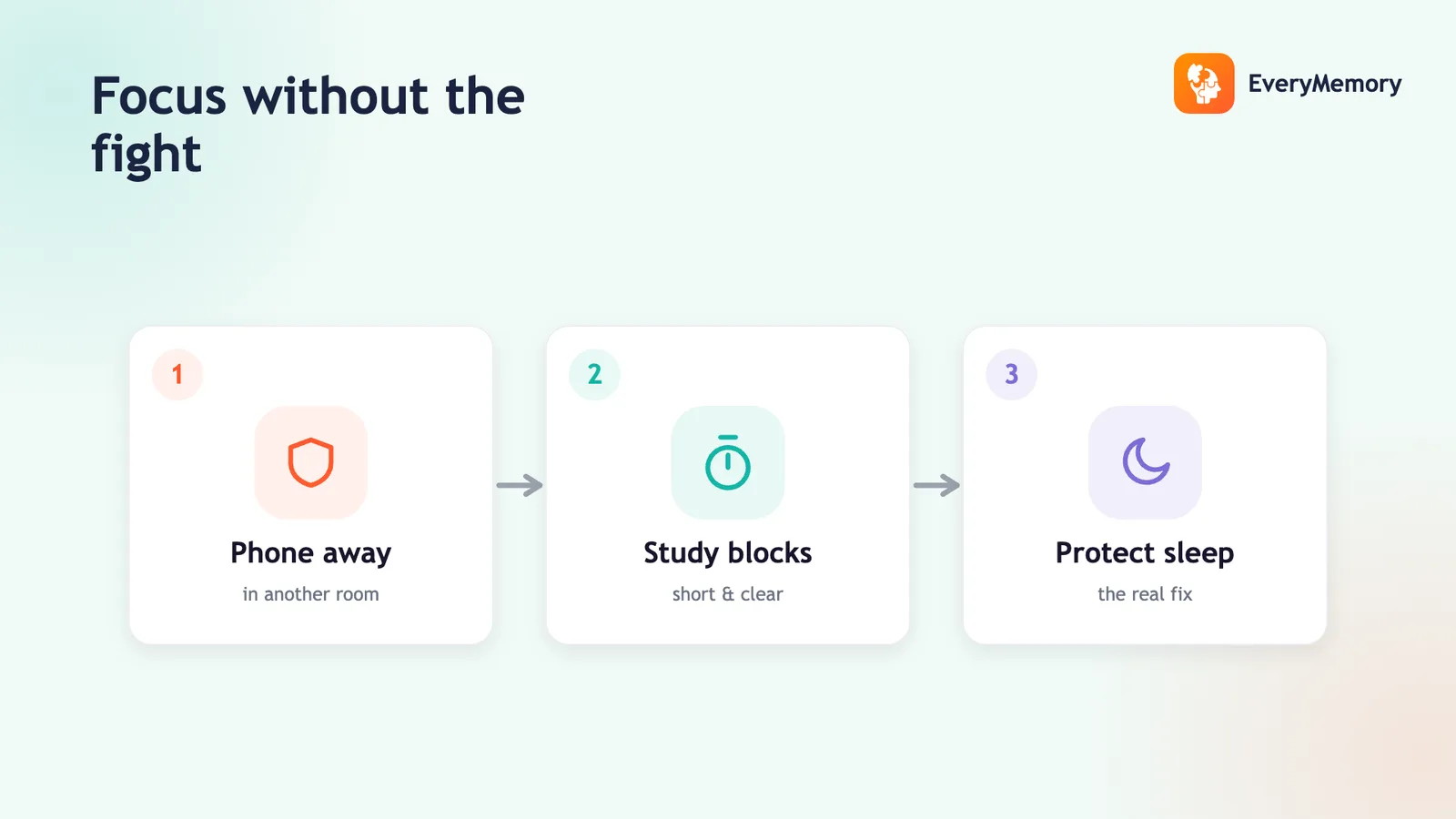
Memory consolidates while you sleep, so a full night after studying does real work and an all-nighter before an exam usually costs more than it gains. Treat sleep as part of revision, not the thing you sacrifice for it.
Spacing matters as much as any trick. Revisiting a topic across several days beats cramming it into one, because each return strengthens the memory a little more. For the wider study picture, see study tips for exams.
✅ Try this today - Mnemonic in five minutes
Turn a list you keep forgetting into something memorable.
- Write out the list or sequence you need to remember in order.
- Take the first letter of each item and try to make a word or phrase.
- If that's awkward, build a short silly sentence using those letters.
- Picture the phrase vividly - the odder, the more it sticks.
- Test yourself an hour later, then again the next day, to lock it in.