 EveryMemory
Study Tips for Exams
The study methods that actually move exam grades are active recall, spaced practice and past papers - here's how to use them, plus what to skip when time is short.
Part of the guide: How to Improve Your Memory: The Complete Beginner's Guide →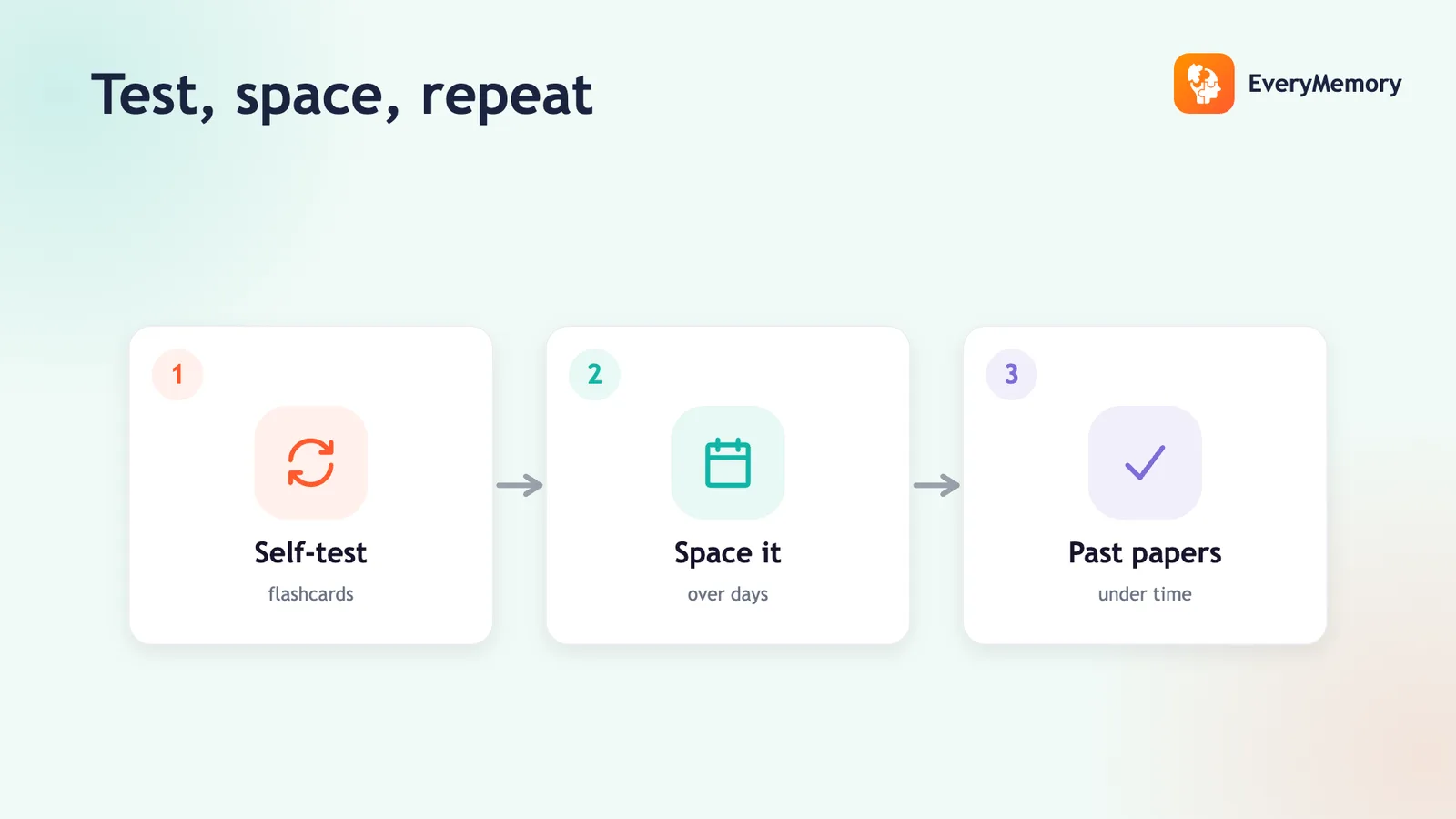
⚡ Quick answer
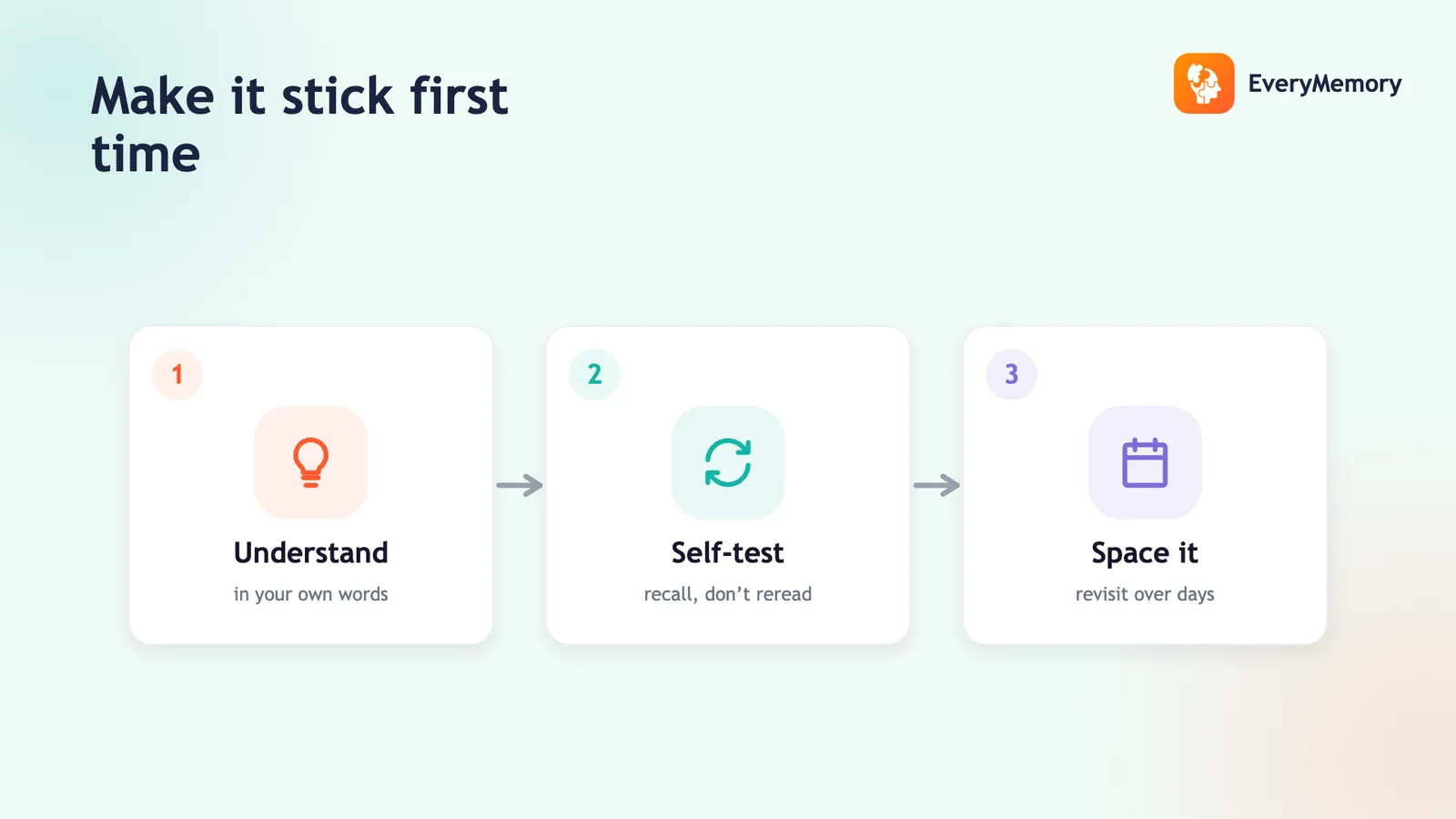
The most effective exam study methods are active recall (test yourself instead of re-reading), spaced practice (revise a topic across several days, not in one block), and past papers under timed conditions. Pair them with short focused sessions and proper sleep. Re-reading and highlighting feel productive but stick poorly, so spend your time on retrieval and self-testing instead.
Key takeaways
- Active recall, spaced practice and past papers do most of the work - re-reading and highlighting don't.
- Build a plan backwards from the exam date, prioritising weak topics first and most often.
- Short focused sessions beat long distracted ones; the phone goes in another room.
- Sleep is part of revision - memory consolidates overnight, so skip the all-nighter.
Most exam stress comes from studying hard in low-value ways - re-reading notes, highlighting, copying things out - and then panicking that none of it stuck. The methods that actually move grades feel harder while you do them, because you're pulling information out of your head instead of pushing it back in.
You don't need more hours. You need the few techniques that the evidence backs - testing yourself, spacing practice over days, and working through past papers - plus a plan that fits the time you actually have. Here's how to spend your revision where it pays off.
Use the methods that actually work
Decades of research point to the same short list. These three do most of the heavy lifting, and they're worth prioritising over anything that just feels busy.
| Technique | What it is | When to use it |
|---|---|---|
| Active recall | Close the book and write what you remember | Every session - the core method |
| Spaced practice | Revisit a topic over days, not in one block | Across the whole revision period |
| Past papers | Answer real questions under timed conditions | Last 2–3 weeks before the exam |
| Interleaving | Mix topics in a session instead of blocking | Once basics are solid |
| Self-explanation | Say why an answer is right, out loud | Tricky concepts you keep forgetting |
For the core technique done properly, see the active recall study method.
Stop doing what feels productive but isn't
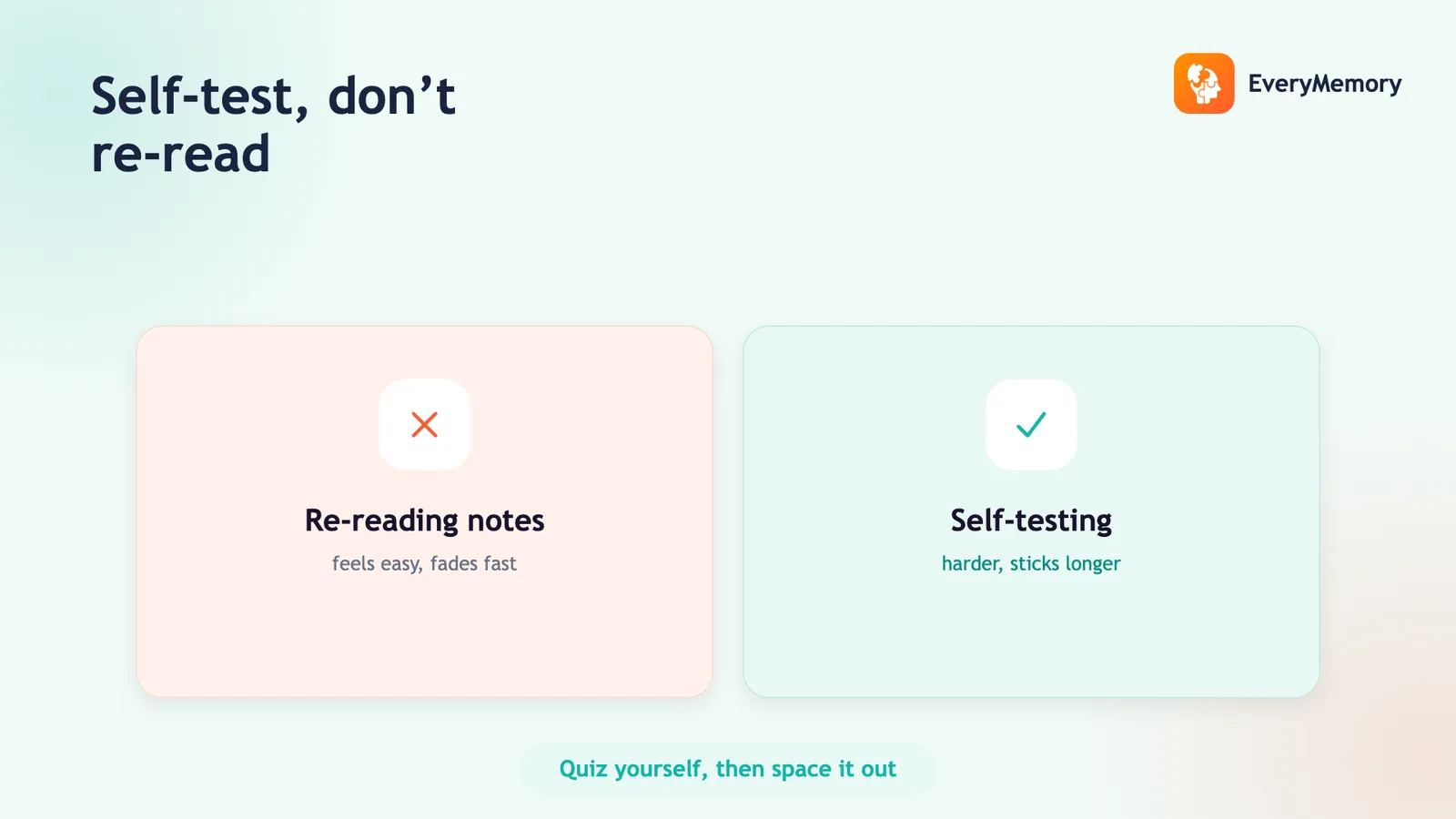
Re-reading and highlighting are the most common revision habits, and among the least effective. They create a feeling of familiarity - "I've seen this" - that gets mistaken for knowing it. Come exam day, recognition isn't recall.
Swap passive review for retrieval. Instead of reading a page again, cover it and write down everything you remember, then check. The gap between what you wrote and what's on the page is exactly what to study next. It's slower and less comfortable, which is the point.
Build a revision plan that fits real life
A plan beats willpower. Work backwards from the exam date, list your topics, and spread them so each one comes up several times before the day - that spacing is what makes it stick.
- List every topic the exam could cover.
- Mark each one red, amber or green for how shaky you feel.
- Schedule reds first and most often; greens just need a quick check.
- Block revision into short focused sessions, not marathon days.
- Build in past papers for the final stretch and one rest day a week.
Protect focus and sleep
Short, focused sessions beat long, distracted ones. A timed block with the phone in another room gets more done than an afternoon of half-attention. The Pomodoro technique for studying is a simple way to structure this.
Sleep is part of revision, not the opposite of it. Memory consolidates overnight, so a full night after studying does real work, while an all-nighter before an exam usually costs more than it gains. Revise across days, sleep properly, and walk in rested.
✅ Try this today - The recall-and-check loop
One topic, one round of real self-testing.
- Read a section once, then close the book or notes.
- Write down everything you can remember - bullet points are fine.
- Open the book and check; mark what you missed in a different colour.
- Re-study only the gaps, then close up and recall again.
- Come back to the same topic in two or three days to lock it in.