 EveryMemory
Memory Tips for Public Speaking
Memory tips for public speaking: speak from a structured outline anchored to a mental route, rehearse out loud, and build recovery cues so a blank never becomes a freeze.
Part of the guide: How to Improve Your Memory: The Complete Beginner's Guide →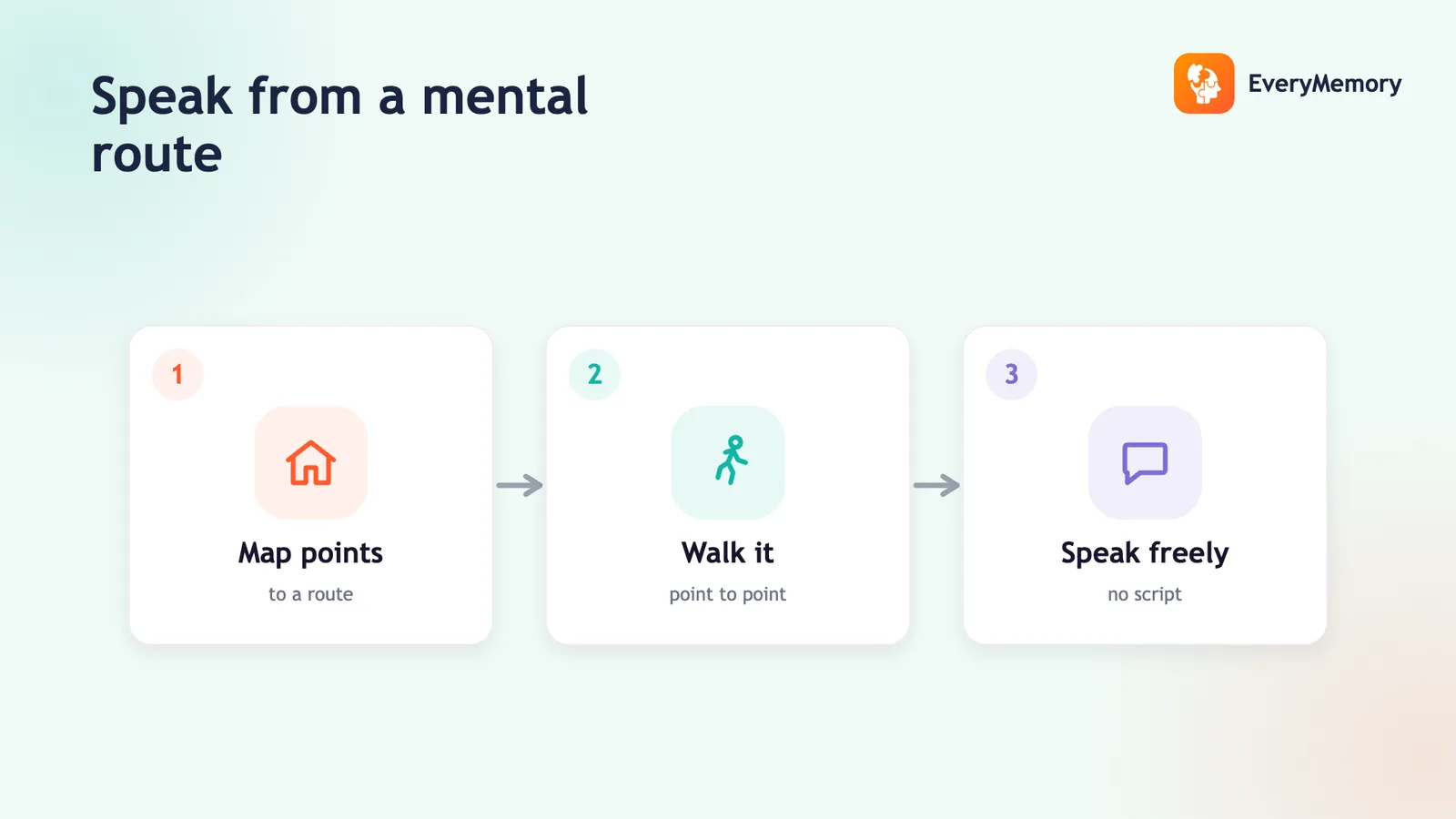
⚡ Quick answer
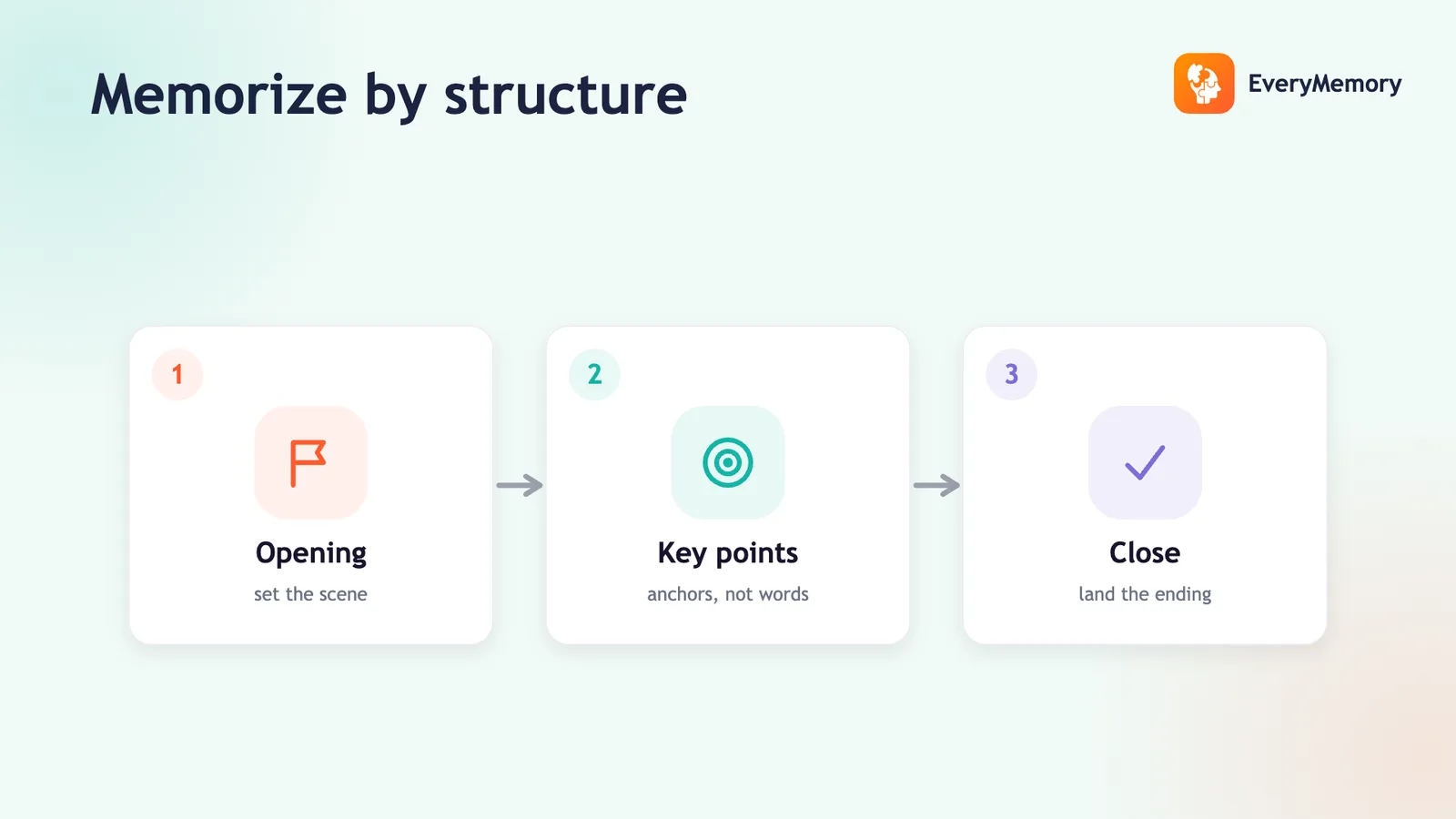
The best memory tips for public speaking are to speak from structure rather than a script: outline your key points, anchor each to a spot on a familiar mental route, and rehearse the transitions out loud. Learn only your opening and closing verbatim, build in recovery cues so a blank never becomes a freeze, and practise across several days so nerves can't erase what's deeply rehearsed.
Key takeaways
- Speak from a structured outline anchored to a mental route, not a memorized script.
- Rehearse out loud on your feet to surface clumsy transitions and desensitise nerves.
- Stress narrows attention and stutters recall - calm the body to protect the memory.
- Build recovery cues so a momentary blank becomes a brief pause, not a freeze.
The fear of forgetting is what makes public speaking terrifying for most people. And nerves make it worse - stress narrows attention and makes recall stutter exactly when you need it smooth.
Good speakers aren't fearless; they've built memory that survives nerves. The fix is partly technique and partly designing your talk so a blank moment can never become a freeze. Here are the memory tips that matter most on stage.
Speak from structure, not a script
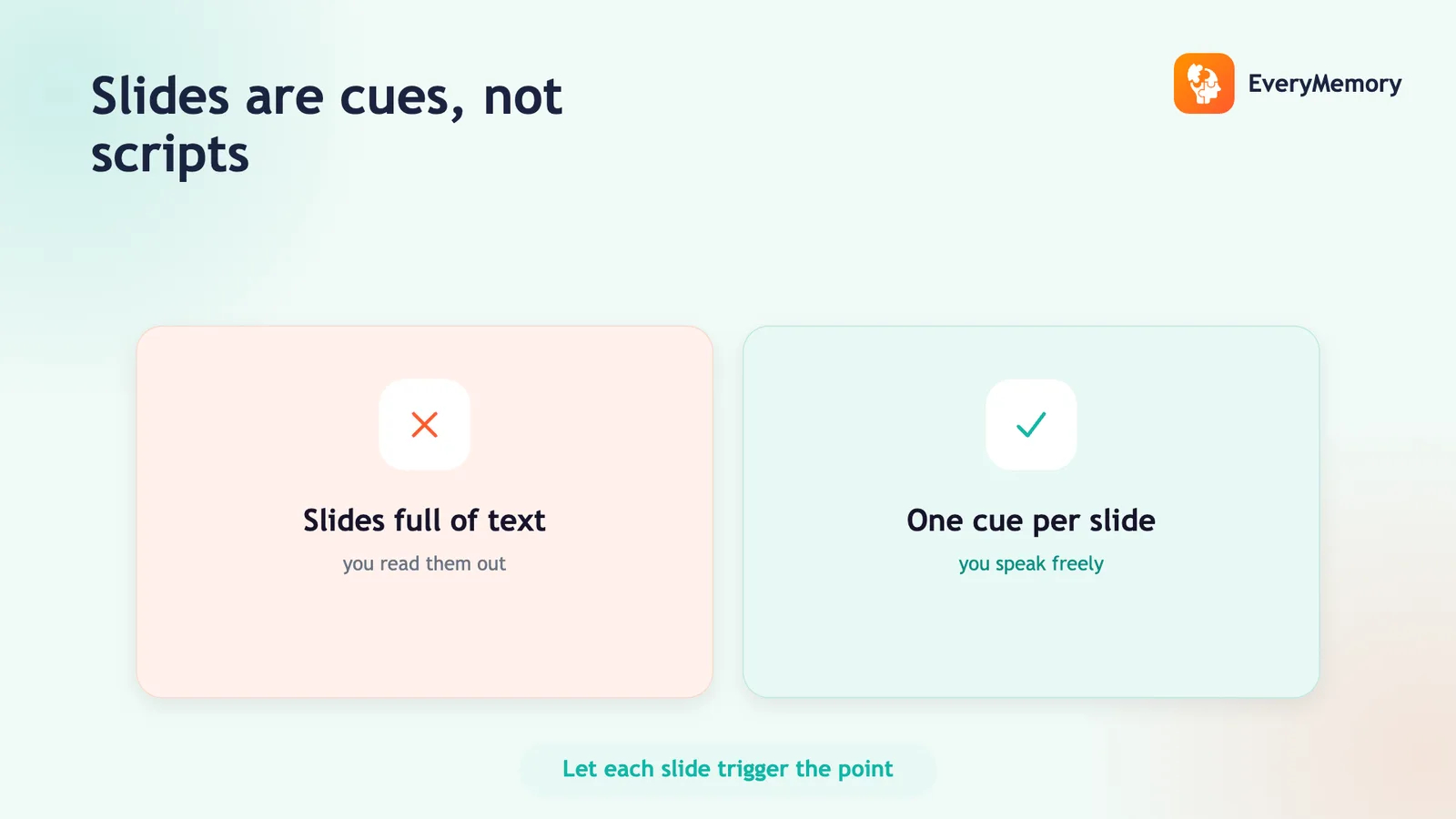
Memorizing word for word is the trap - one lost phrase and you freeze, hunting for the exact sentence. Instead, hold the sequence of points and let the wording come fresh. Structural memory bends; verbatim memory snaps. This is the core of memorizing a speech, and it's even more important under the pressure of a live audience.
Anchor points to a mental route
Put each key point at a spot on a familiar path - a memory palace through your home or the venue. Walking the route in your mind hands you the points in order, so you never lose your place. It also gives nerves something solid to lean on: even rattled, you can find the next door on the route.
Rehearse out loud, on your feet
Silent rehearsal in your head doesn't prepare the real act. Stand up and say the talk aloud, gestures and all. Speaking rehearses the actual verbal and motor performance, surfaces the clumsy transitions, and - crucially - desensitises the nerves so your recall isn't ambushed by the sound of your own voice in a room.
Manage the nerves that wreck recall
Stress narrows attention and makes working memory stutter, so calming the body protects the memory. A few slow breaths before you start, a learned-cold opening to steady the first minute, and a glance at one note card if you need it. None of this is weakness - it's protecting the recall you worked to build. Sharpening your everyday focus and concentration makes that recall steadier under pressure too.
Build recovery cues
Plan for the blank so it can't become a freeze. Keep a single index card with just your point headings - not a script - as a safety net you rarely need but always have. Know that if you lose the thread, you mentally step back to your last route location and the next point is there. A calm two-second pause reads as deliberate to the audience; the panic of a hunt does not.
✅ Try this today - The stand-and-deliver rehearsal
Before your next talk, run this three times across three days:
- Stand up and deliver the whole talk out loud from your route - no reading, fresh words each time.
- Each run, note the one transition where you stumbled most and drill just that handoff five times.
- On the final run, speak your opening and closing verbatim and time the whole thing.