 EveryMemory
Can a Short Afternoon Nap Boost Your Memory?
A well-timed afternoon nap can restore alertness, lift mood, and help your brain consolidate what you have learned. Here is what the evidence says and how to nap well.
Part of the guide: How to Keep Your Brain Healthy: A Complete Lifestyle Guide →
⚡ Quick answer
A short afternoon nap, roughly 10 to 30 minutes, can restore alertness and support memory consolidation. The key is keeping it brief and taking it early in the afternoon so it does not interfere with your night sleep or leave you feeling groggy.
There is a reason so many cultures build a rest into the middle of the day. Whether it is a siesta or a quick doze on a lunch break, the afternoon nap has survived thousands of years of daily life. Now researchers are starting to understand exactly what it does for the brain, and the findings are worth knowing.
Memory is not a simple recording that plays back on demand. It is a process that unfolds over time, and sleep is one of its most important ingredients. Even a short nap can give your brain a chance to do work it cannot do while you are busy and awake.
This article breaks down what a nap actually does for memory and alertness, how long to sleep for the best results, and a few simple habits that make afternoon rest more effective, without keeping you up at night.
How sleep helps memory stick
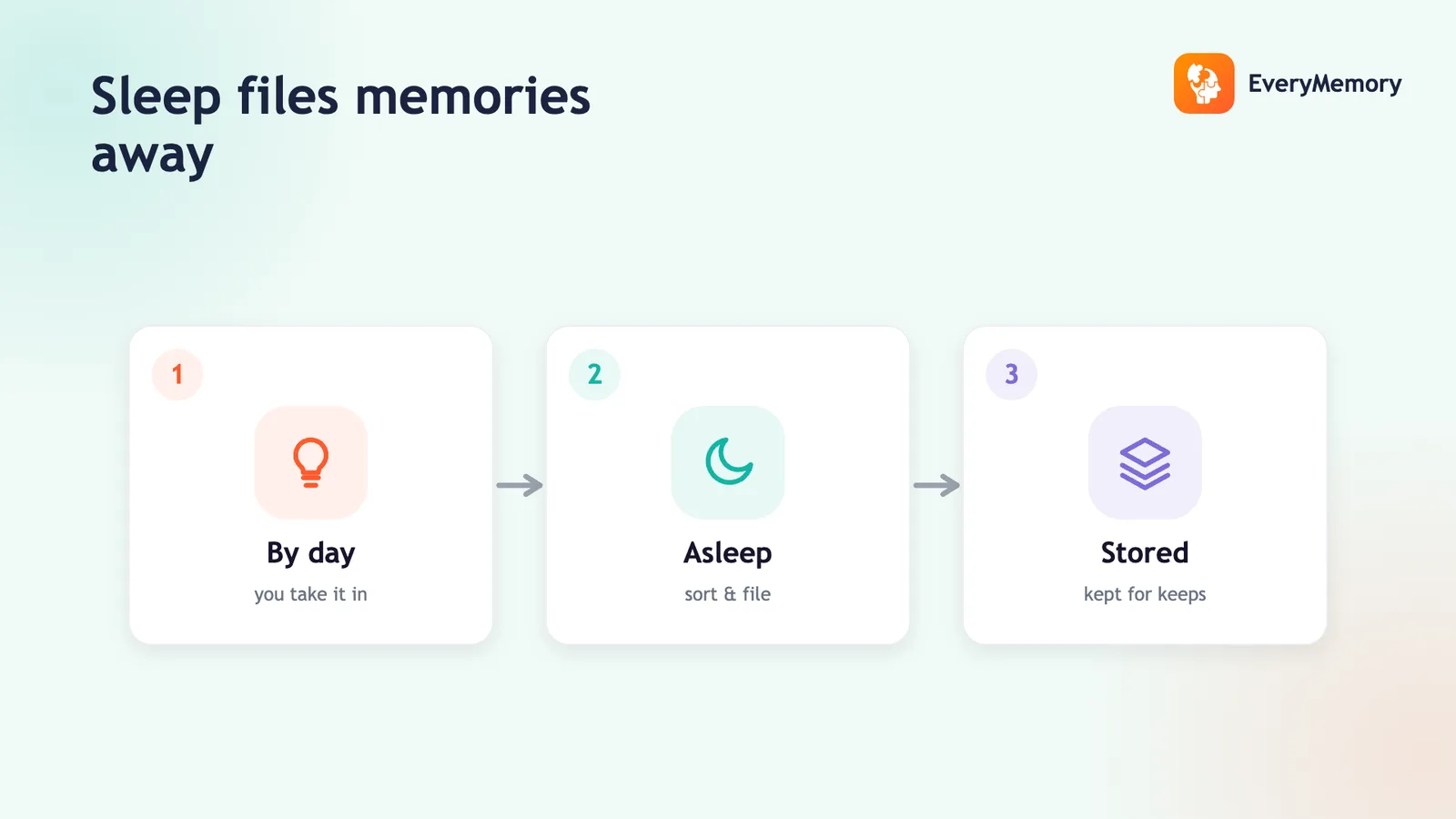
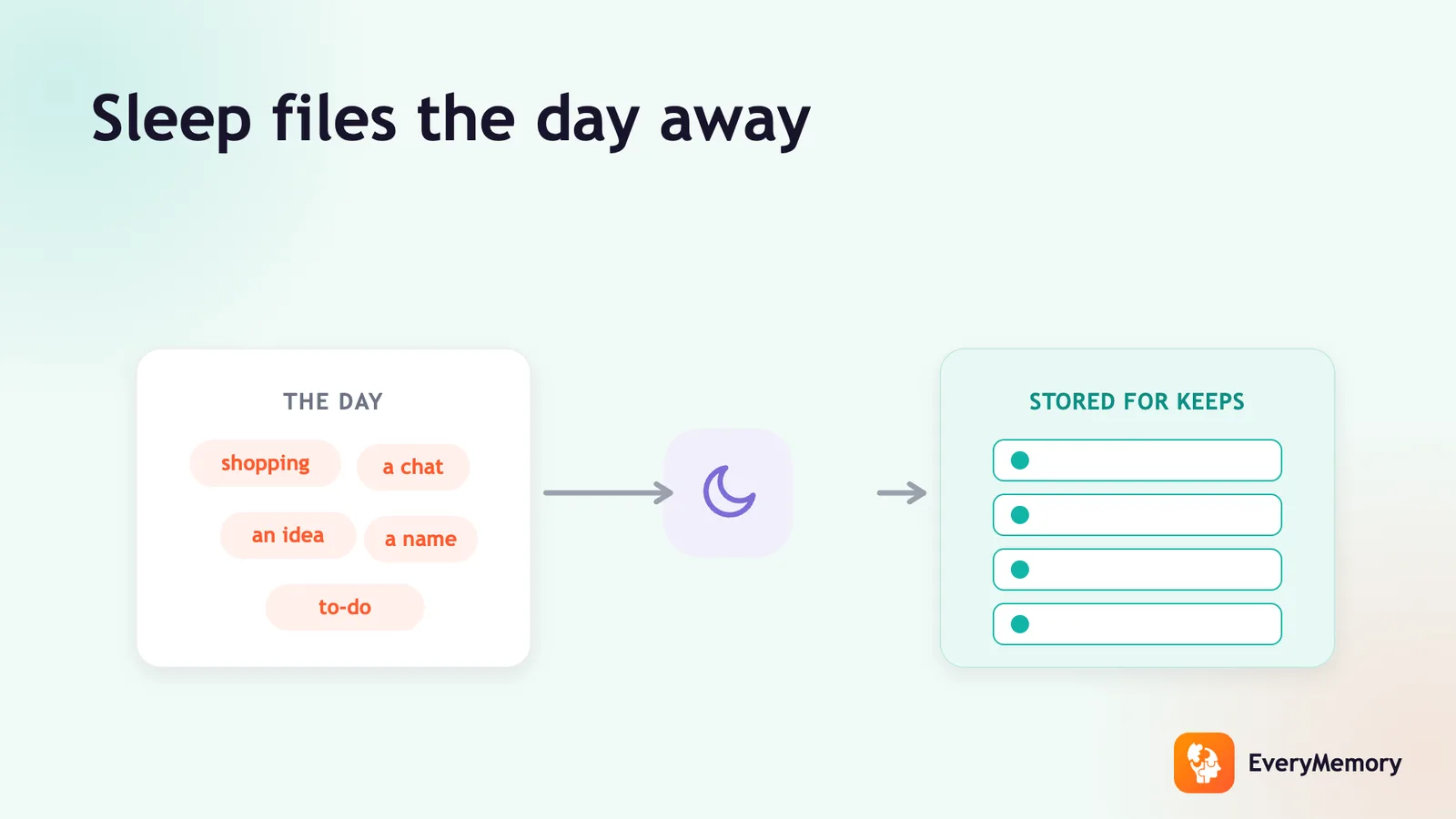
Every time you learn something new, a name, a route, a skill, your brain begins a process called memory consolidation. During this process, fresh, fragile memories are gradually transferred from short-term storage into more stable, long-term networks. Much of this transfer happens during sleep.
Specific sleep stages play distinct roles. Light sleep is linked to sharpening procedural skills. Deeper slow-wave sleep is associated with consolidating facts and events. REM sleep appears to help with emotional memories and creative connections between ideas. You can read more about the full picture in our article on how sleep affects memory.
The practical point is that sleeping, even briefly, gives your brain a window to begin this consolidation work, which is why researchers have been interested in whether naps can do some of the same job as a full night's rest.
What a nap does for the brain
The most obvious benefit of an afternoon nap is restored alertness. The post-lunch dip in energy is a real biological phenomenon, tied to your circadian rhythm rather than just what you ate. A short sleep during this window can sharpen reaction time, improve focus, and lift mood for several hours afterward.
Beyond alertness, there is growing evidence that naps support recall specifically. Studies have found that people who nap between a learning session and a later test tend to remember more than those who stay awake. One explanation is that the hippocampus, a brain region central to forming new memories, has a limited capacity buffer. During waking hours it fills up with incoming information. Sleep, including nap sleep, appears to help clear that buffer and transfer contents to the cortex, making space for new learning when you wake up.
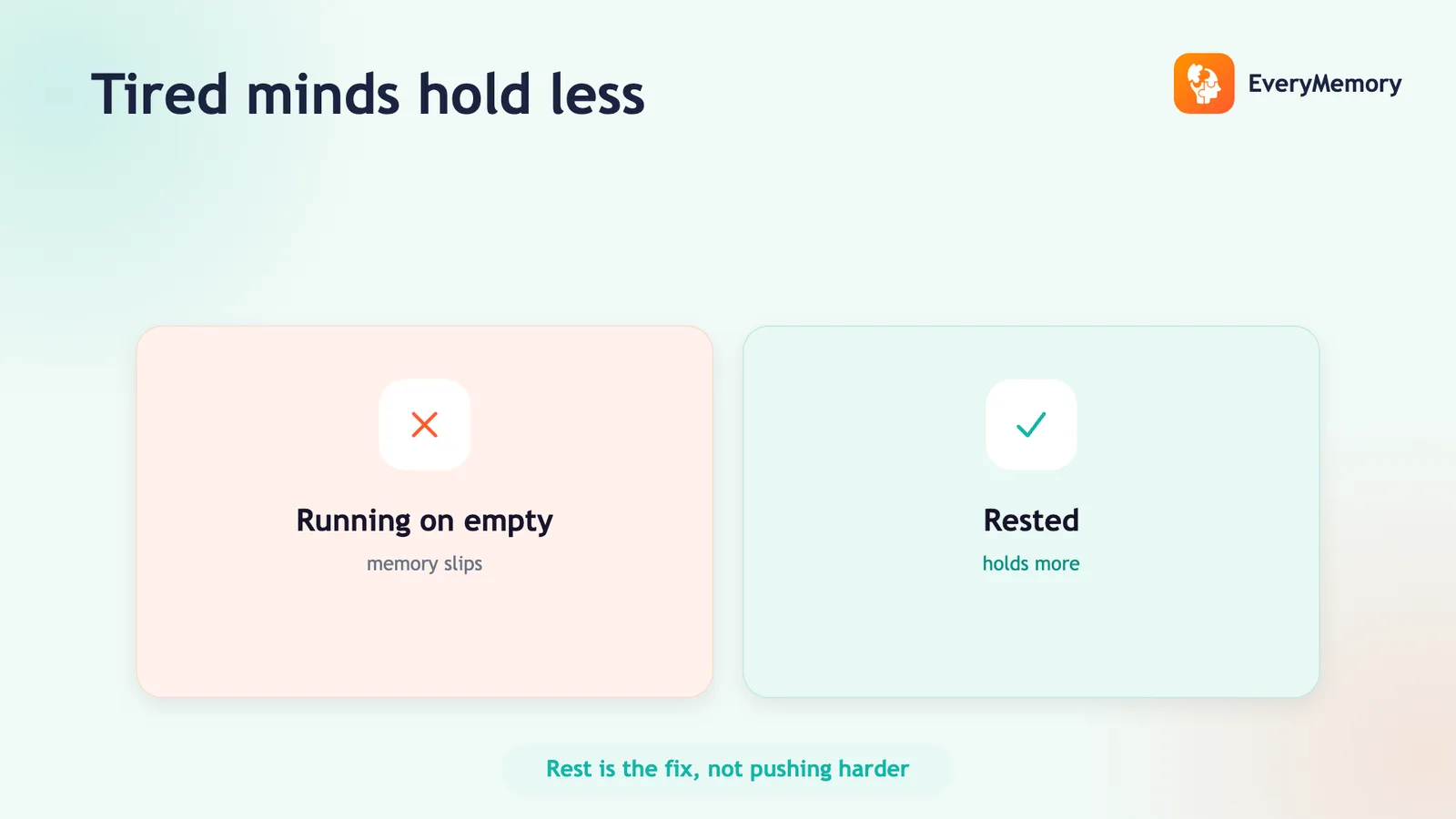
Mood is part of the picture too. A rested brain is a more flexible brain. When you are tired and irritable, attention narrows, and learning becomes harder. Even a brief nap can soften that edge, making the hours after it more productive for both practice and recall.
The sweet spot: how long to nap
Duration matters more than most people realise. Napping too long or at the wrong time can leave you more groggy than refreshed, and can chip away at the night sleep that does the heaviest memory work.
- 10-20 minutes (the power nap): You stay in lighter sleep stages and wake up feeling alert rather than sluggish. This is the easiest duration to fit into a day and the least likely to cause sleep inertia, that heavy, disoriented feeling when you wake mid-cycle.
- Around 60-90 minutes (a full cycle): This can include slow-wave and REM sleep, offering deeper consolidation. Some research suggests a 90-minute nap can meaningfully improve complex memory tasks. The trade-off is a higher risk of grogginess on waking and a greater chance of disrupting night sleep if taken too late.
- Over 90 minutes, or napping late in the afternoon: Long naps or those taken after 3-4 pm can reduce sleep pressure, the built-up drive to sleep that helps you fall asleep at night. For most people, this is not worth the trade-off.
For everyday use, the 10-20 minute power nap hits the best balance: meaningful benefit, minimal downside, and easy to fit into a real schedule.
How to take a better nap
A few small habits make the difference between a nap that refreshes and one that leaves you worse off. None of them are complicated.
- Time it early in the afternoon. Aim for roughly 1-3 pm, when your circadian rhythm naturally dips. Napping later than mid-afternoon makes it harder to fall asleep at night.
- Keep it short and set an alarm. Decide on your duration before you lie down, 15 or 20 minutes is a sensible default. An alarm removes the anxiety of oversleeping, which itself can stop you from actually relaxing.
- Make the environment sleep-friendly. A dark, quiet, and cool space works best. An eye mask and earplugs are cheap and surprisingly effective if your environment is less than ideal.
- Consider the coffee nap (optional). This is a quirky but evidence-backed idea: drink a small coffee immediately before your nap. Caffeine takes about 20 minutes to kick in, so it is clearing the adenosine receptors right as you wake up, adding an alertness boost on top of the nap itself. It will not suit everyone, especially anyone sensitive to caffeine or napping close to the evening.
When napping is a signal, not a strategy
For most people in good health, an afternoon nap is simply a useful tool for managing energy and supporting recall. But napping can also be a signal worth paying attention to.
Consistently needing long naps to get through the day, or noticing a sudden, significant increase in daytime sleepiness that is new for you, can sometimes point to something worth discussing with a professional. This is not a reason to panic, but it is a reason not to just reach for more coffee and push on. A doctor can help rule out sleep disorders, medication effects, or other factors that extra napping will not fix.
If you are interested in how tiredness affects thinking more broadly, our piece on mental fatigue and memory covers the overlap between cognitive load and recall in more depth.
✅ Try this today - The 20-minute power nap
Try this simple protocol on your next free afternoon and notice how your alertness and recall feel in the two hours afterward.
- Pick a time between 1 pm and 3 pm. Set two alarms: one for 20 minutes from now, and a backup 5 minutes later.
- Find a quiet, reasonably dark spot. Lie down or recline comfortably. Use an eye mask if light is an issue.
- Let go of the pressure to fall fully asleep. Even resting with your eyes closed reduces fatigue. If you do drift off, the alarm has you covered.
⚠ When to talk to a professional
This is general, non-medical information. If you feel an unusual or sudden increase in daytime sleepiness, or you sleep poorly at night, consider speaking with a qualified professional.