 EveryMemory
Productivity Techniques That Actually Work
Time-blocking, focused intervals, ruthless prioritising, and batching - the simple techniques that beat busyness. Pick one or two, not ten.
Part of the guide: How to Improve Your Memory: The Complete Beginner's Guide →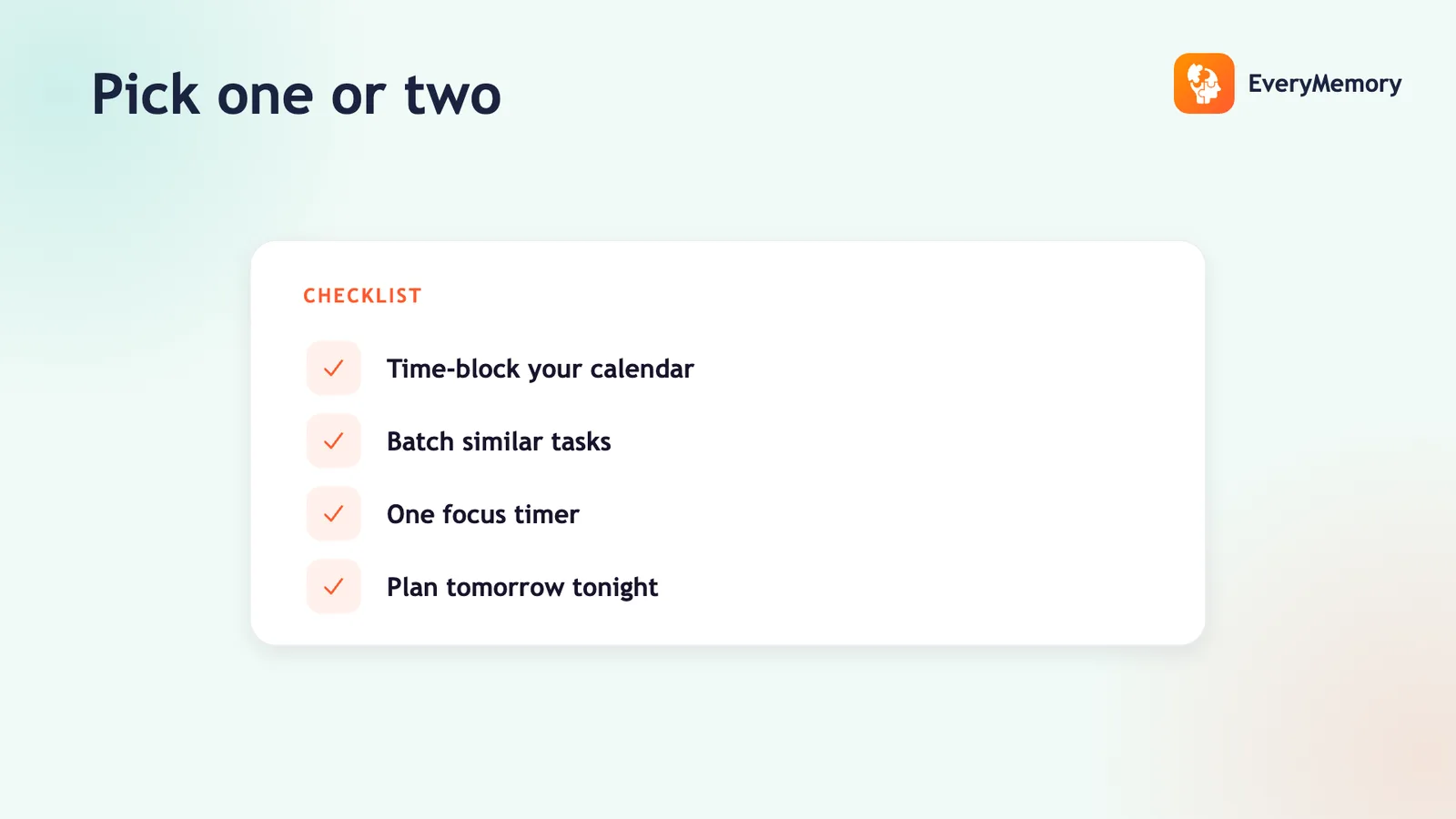
⚡ Quick answer
The productivity techniques that actually work are simple: time-block your day so important work has protected slots, use focused intervals like Pomodoro, prioritise with a method like eat-the-frog (hardest first), batch similar tasks, and protect your attention from distractions. The best technique is the one you'll keep using - pick one or two, not ten.
Key takeaways
- The techniques that work are simple: time-blocking, Pomodoro intervals, eat-the-frog, batching, single-tasking.
- Pick one or two that fit your biggest problem and make them habits - don't adopt ten at once.
- Simple techniques survive busy weeks; elaborate systems quietly get abandoned.
- No technique works without protected attention and energy underneath it.
There are hundreds of productivity systems, and collecting them is its own form of procrastination. A handful of simple techniques do nearly all the work.
Here are the ones worth knowing - and the advice to pick just one or two.
The techniques worth knowing
- Time-blocking - assign tasks to specific slots so important work gets protected time, not leftover time.
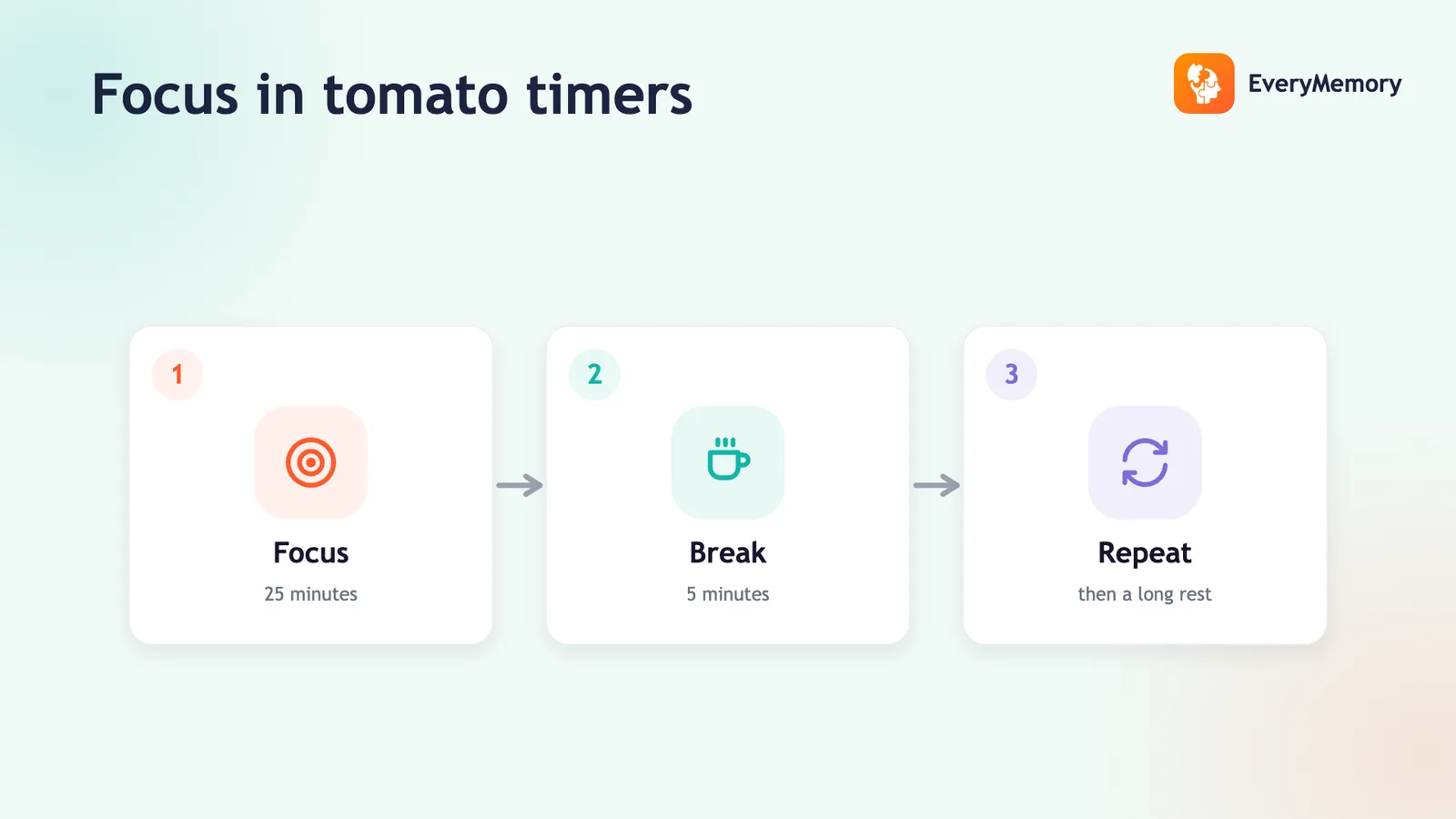
- Pomodoro intervals - focused 25–50 minute blocks with short breaks (how it works).
- Eat the frog - do your hardest, most important task first, before the day fills up.
- Batching - group similar shallow tasks (email, calls) into set windows instead of all-day switching.
- Single-tasking - one thing at a time; multitasking is just costly switching.
- The two-minute rule - if it takes under two minutes, do it now rather than tracking it.
Pick one or two - not ten
The mistake is adopting every technique at once and abandoning them all. Choose one or two that fit your biggest problem - time-blocking plus eat-the-frog is a strong default - and make them habits before adding more. A technique only works if you keep using it (making a habit stick).
Why simple beats elaborate
Complex systems have more to maintain and more ways to break, so they quietly get abandoned. Simple techniques survive busy weeks. The goal isn't an impressive system - it's consistent focused progress on what matters (how to be more productive).
The foundation under every technique
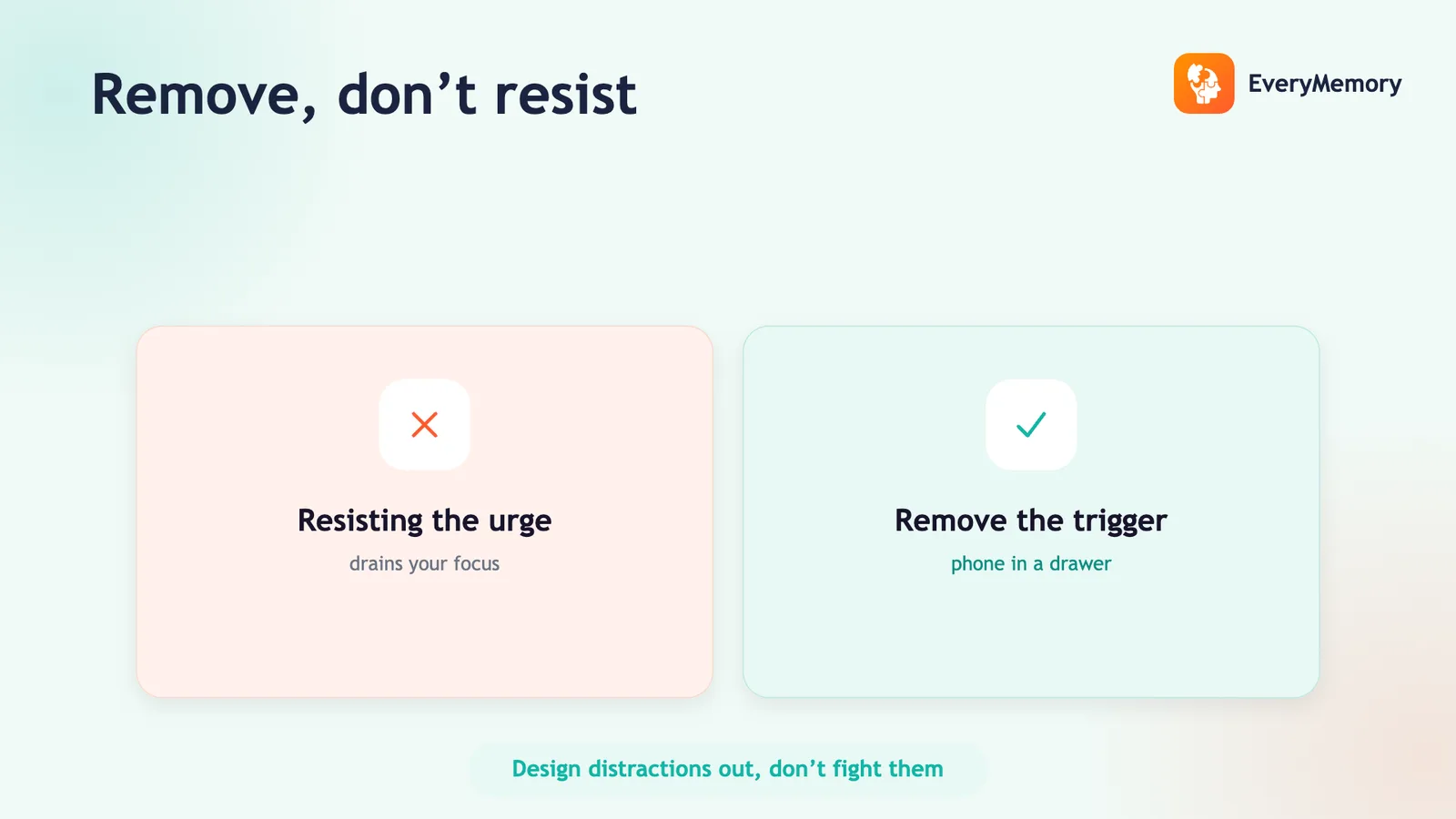
No technique works if your attention is shattered by distractions or you're running on no sleep. Protect your focus and energy first (avoiding distractions), and the techniques have something to work with.