 EveryMemory
Vitamins and Memory: What the Evidence Shows
An honest, calm look at the nutrients most linked with brain health - B12, omega-3, vitamin D, and more - and why food comes first.
Part of the guide: How to Keep Your Brain Healthy: A Complete Lifestyle Guide →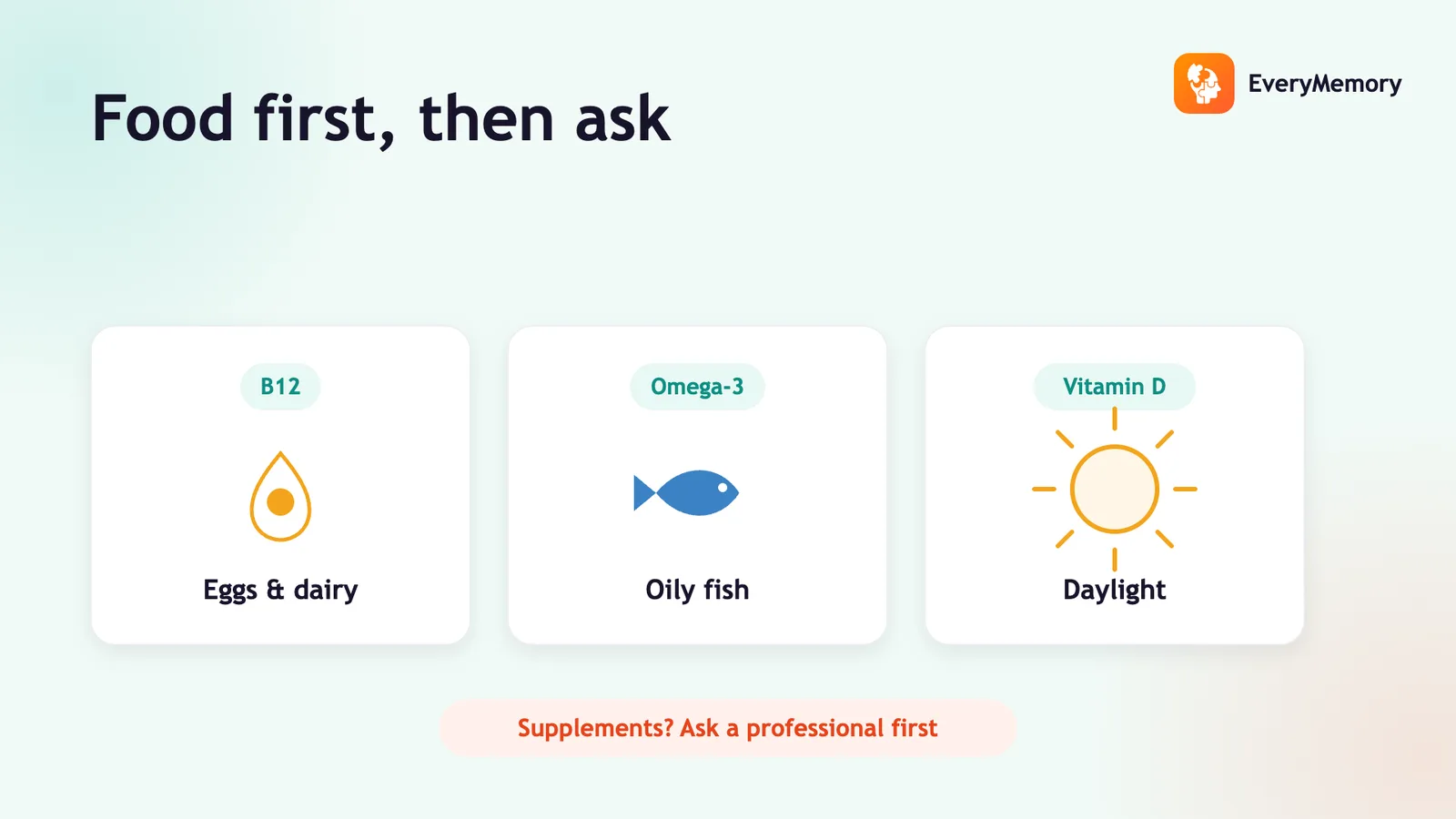
⚡ Quick answer
Nutrients like vitamin B12, omega-3 fatty acids, and vitamin D are linked with brain health, and deficiency in any of them can affect how you think and feel. The evidence most consistently supports getting these nutrients through a varied, balanced diet rather than supplements. If you're concerned about a possible deficiency, the right first step is a conversation with your doctor or pharmacist - not a trip to the supplement aisle.
Key takeaways
- Nutrients like B12, omega-3s, and vitamin D are linked with brain health, but deficiency - not general intake - is what most affects cognitive function.
- The evidence for getting brain-health nutrients from a varied, balanced diet is more consistent than the evidence for supplements.
- Food sources of omega-3s (oily fish), B12 (fish, eggs, dairy), and vitamin D (oily fish, eggs, sunlight) should come before reaching for supplements.
- If you suspect a nutritional deficiency or are considering any supplement, ask your doctor or pharmacist - a blood test confirms deficiency, not guesswork.
Walk through any pharmacy and you'll see shelves of products promising better memory, sharper focus, and a more resilient brain. It's understandable to wonder whether a capsule or two might help. The honest answer is more nuanced than the packaging suggests.
Several nutrients genuinely are linked with brain health, and getting enough of them matters. But the strongest evidence points to getting those nutrients from a balanced, varied diet - not from supplements added on top of an already adequate intake. This guide covers the key nutrients, what the research does and doesn't show, and why talking to your doctor or pharmacist is the right first step.
Why nutrients matter for the brain
The brain depends on a steady supply of specific nutrients - for building cell membranes, supporting the chemical signals between nerve cells, managing inflammation, and protecting against cellular wear-and-tear over time. When certain nutrients are in short supply, the brain can feel it: slower thinking, poorer recall, low mood, or reduced concentration.
This is why genuine deficiency is worth taking seriously. It is also why a balanced, varied diet is the foundation of brain health. No single supplement replicates the full range of compounds that whole foods provide, and nutrients from food often behave differently in the body than the same nutrient in isolated pill form. The best foods for memory and brain health covers the dietary patterns most linked with sharper recall and slower cognitive ageing.
Vitamin B12: essential, but supplements are not always the answer
Vitamin B12 plays a fundamental role in maintaining the protective covering around nerve fibres, supporting neurotransmitter production, and keeping homocysteine - a compound associated with neurological effects when elevated - within a healthy range. B12 deficiency is not rare in older adults: the ability to absorb it from food tends to decline with age as stomach acid reduces, and people following a plant-based diet are at higher risk since B12 occurs mainly in animal products.
Some studies suggest low B12 is associated with poorer memory performance and, in some people, with greater risk of cognitive decline over time. However, research reviews indicate that supplementing when you are already replete does not appear to meaningfully improve memory or thinking. The benefit is most relevant to those with an actual deficiency, confirmed by a blood test.
If you suspect you may be low - because of your diet, age, or certain medications - ask your doctor for a test. Our article on medications and memory covers how common drugs, including metformin and acid-reducing medications, can affect nutrient absorption. Good food sources: salmon, tuna, eggs, milk, yoghurt, and fortified plant milks.
Omega-3 fatty acids: food evidence is stronger than supplement evidence
Omega-3 fatty acids - particularly DHA and EPA - are structural components of brain cell membranes and are involved in reducing inflammation. Some studies suggest that lower levels are associated with faster cognitive ageing. People who regularly eat oily fish tend to show better cognitive outcomes than those who eat little or none, and the MIND diet specifically recommends fish at least once a week. Our guide to the MIND diet for beginners explains why.
The supplement picture is less clear. Several large trials of omega-3 capsules have produced mixed results, and researchers suggest that omega-3s from whole fish come packaged with other nutrients that may work together - something an isolated capsule does not fully replicate. Eating oily fish two or three times a week is a well-supported habit; whether a supplement is appropriate for you is a question for your doctor or pharmacist. Good food sources: mackerel, salmon, sardines, trout, herring; for plant-based omega-3s: flaxseed, chia seeds, and walnuts.
Vitamin D: the sunshine nutrient and its brain connection
The brain contains vitamin D receptors, and lower blood levels have been associated in multiple studies with poorer cognitive performance. Vitamin D deficiency is common in older adults - particularly those who spend less time outdoors, live at higher latitudes, or are in care settings. Addressing a genuine deficiency, with medical guidance, may support both general and cognitive wellbeing.
However, randomised trials of vitamin D supplementation in adults without a deficiency have generally not shown clear cognitive benefits. The gap between "deficiency is linked with worse outcomes" and "supplements will improve memory" remains important. If you're concerned about your levels - especially with limited winter sunlight - a blood test and a conversation with your doctor is the right route.
Good food sources: oily fish, eggs, fortified cereals, and fortified plant milks. Sunlight remains the main source for most people in spring and summer.
Other nutrients worth knowing about
A few more nutrients come up regularly in brain health research:
- Folate (vitamin B9) works alongside B12 to manage homocysteine levels and support the nervous system. Found in dark leafy greens, legumes, and fortified foods.
- Vitamin E is an antioxidant found in nuts, seeds, and vegetable oils. Some studies link higher dietary vitamin E with slower cognitive ageing, though supplement evidence is mixed.
- Magnesium is involved in hundreds of biochemical processes, including those in the brain. Low intake is common in people eating few vegetables, whole grains, or nuts.
- Antioxidants from colourful vegetables and berries - including flavonoids and vitamin C - are associated with brain health in dietary research, likely by reducing oxidative stress in brain tissue.
For all of these, the consistent pattern is that eating a varied, plant-rich diet is linked with better outcomes. Individual supplements have a much more uncertain and often absent benefit for people who are not deficient.
What supplements can and cannot do
Most people who take "brain health" supplements do not have the deficiencies those supplements are designed to address. Reputable reviewers have found no solid proof that these products improve memory or thinking for people who are already nutritionally adequate.
Nutrients clearly matter for the brain - but the evidence points to food as the way to get them, not capsules added on top of a sufficient diet. Where supplementation does make sense is for genuine, medically identified deficiency. Some supplements also interact with medications or carry risks at higher doses, which is why talking to your doctor or pharmacist comes before anything else. Our article on medications and memory is a useful starting point.
✅ Try this today - A food-first nutrition check
Run through this checklist to see how well your diet covers the key brain-health nutrients.
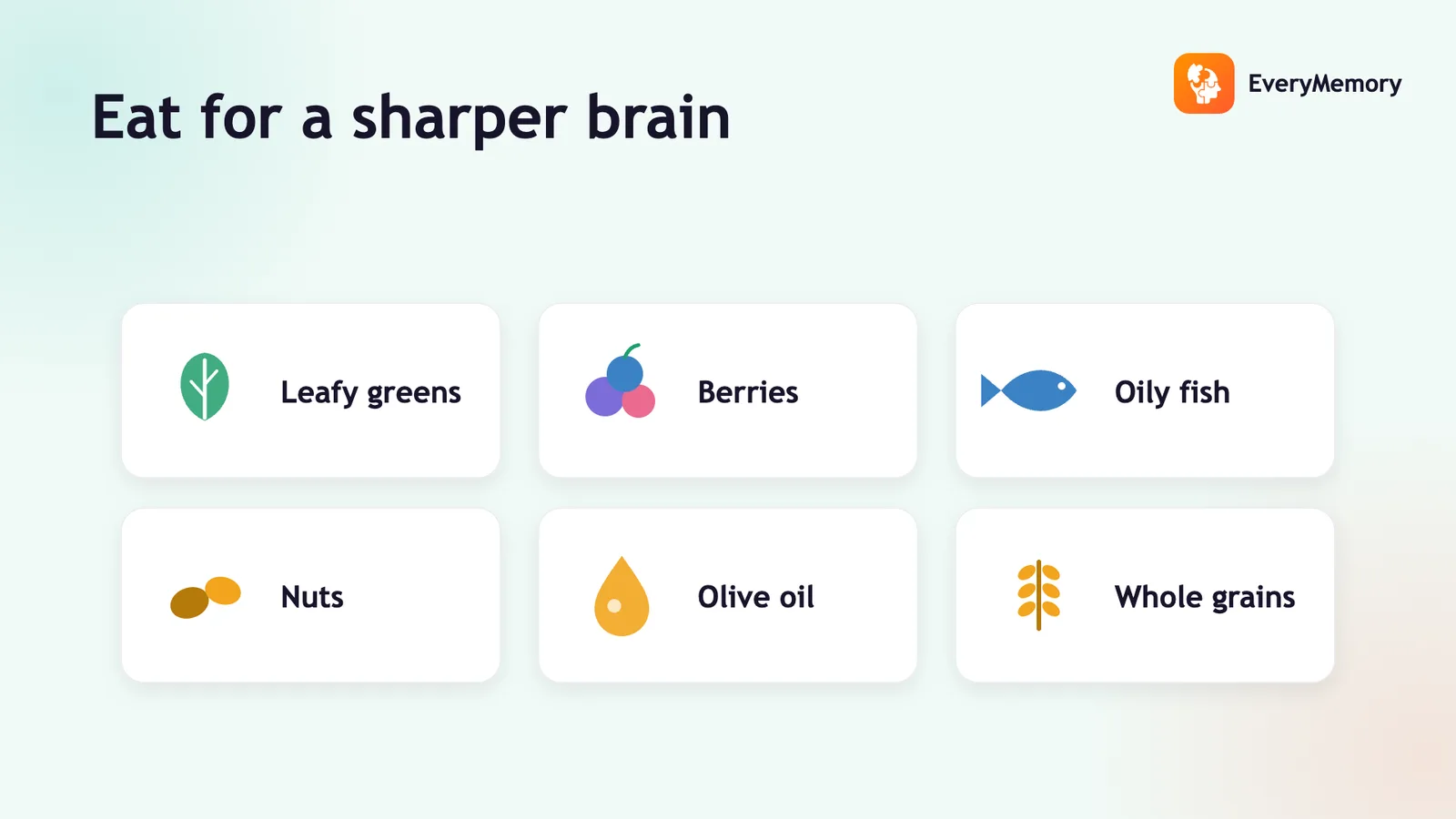
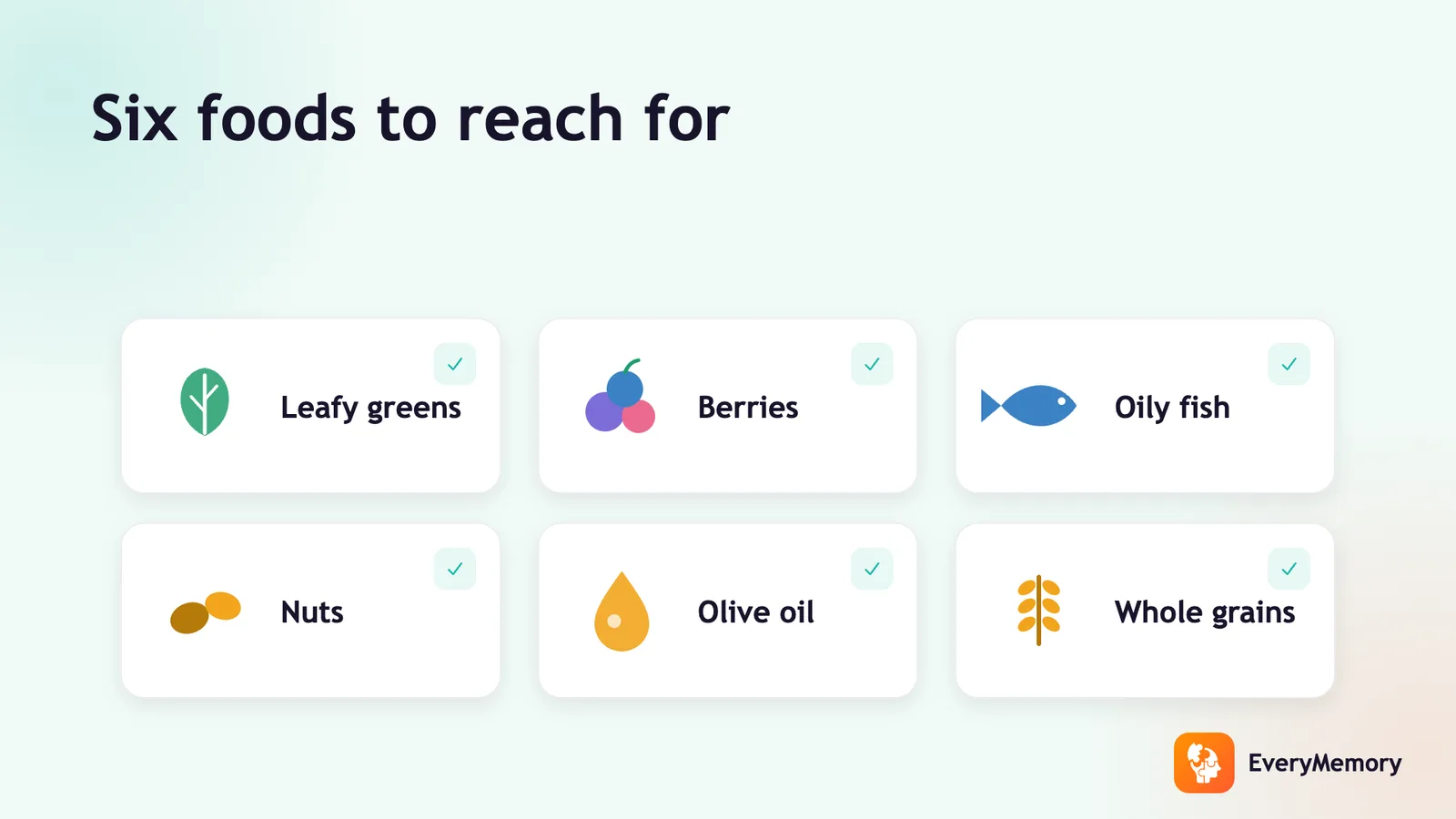
- Oily fish: Eating salmon, mackerel, sardines, or trout once or twice a week is one of the most straightforward dietary improvements you can make.
- Leafy greens: Spinach, kale, and broccoli most days provide folate, antioxidants, and magnesium.
- Eggs and dairy (or fortified alternatives): These are among the most accessible food sources of B12 and vitamin D.
- Nuts and seeds: A small handful of walnuts, almonds, or flaxseed most days covers vitamin E, magnesium, and plant omega-3s.
- Vitamin D: If you have limited sun exposure in winter, ask your doctor whether a blood test is worthwhile.
⚠ When to talk to a professional
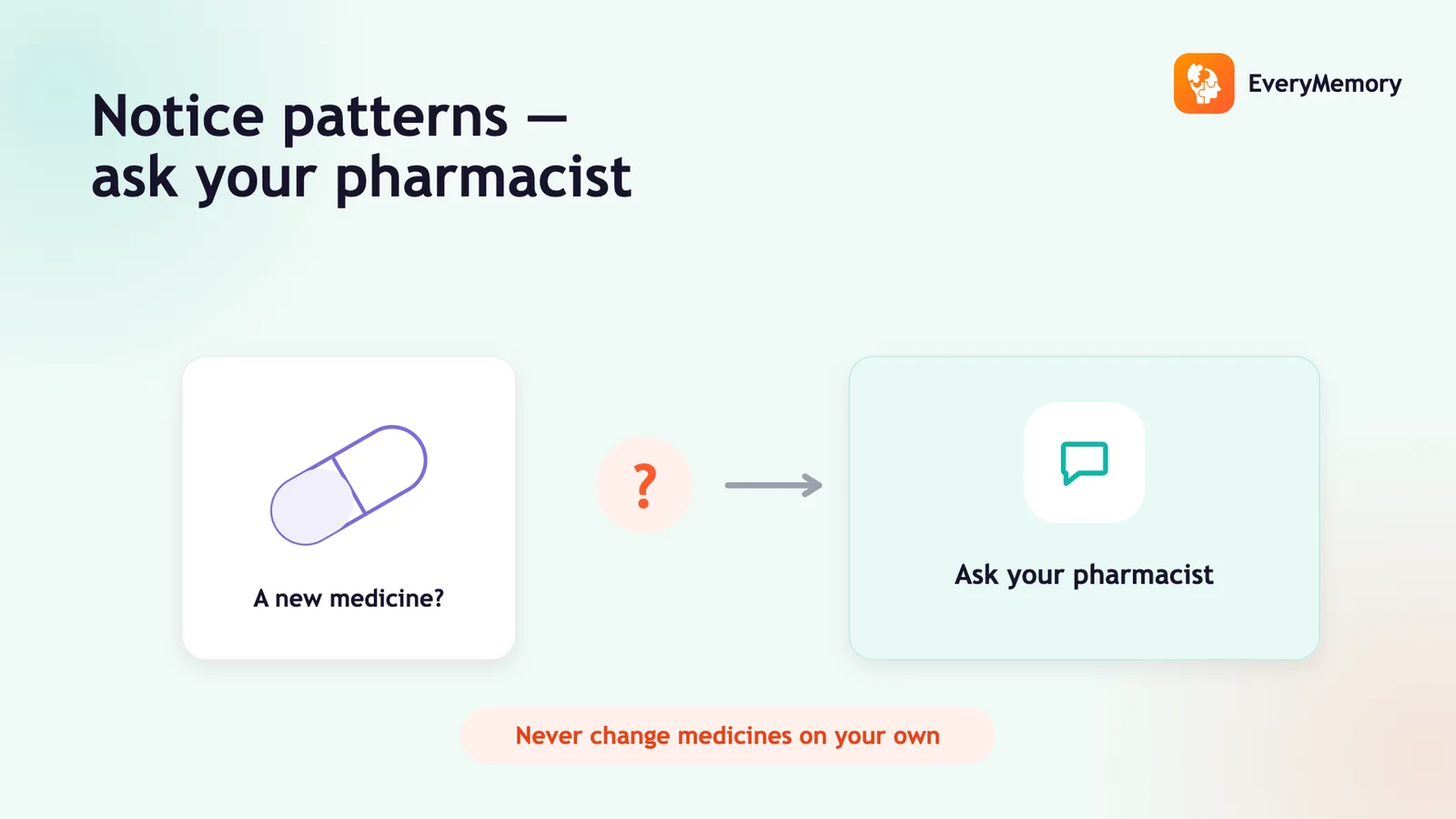
If you notice sudden, rapid, or worsening changes in memory or thinking, speak with a healthcare professional promptly. And before starting any supplement - even a widely available one - speak with your doctor or pharmacist, particularly if you take regular medications.