 EveryMemory
Why Focus Fades With Age - and How to Support It
Concentration does shift as we get older - but the reasons are more manageable than most people assume. Here's what's actually happening and what genuinely helps.
Part of the guide: How to Keep Your Brain Healthy: A Complete Lifestyle Guide →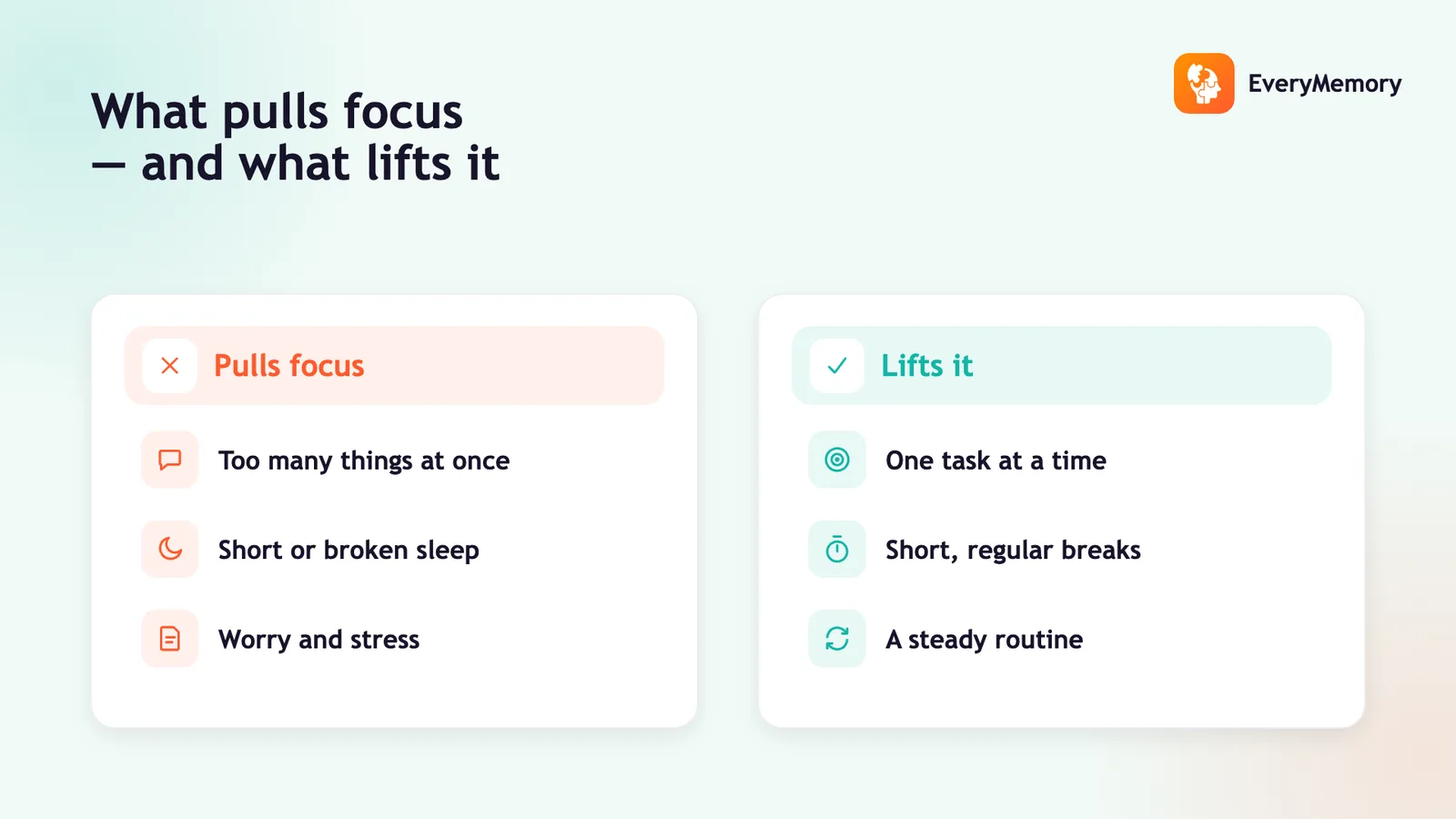
⚡ Quick answer
Focus tends to become less automatic with age partly because the brain's filtering system - which blocks out irrelevant information - becomes somewhat less efficient. But sleep quality, stress levels, and habitual multitasking often play an equal or larger role. Addressing these practical factors typically produces a noticeable improvement in concentration.
Key takeaways
- The brain's filtering system for blocking out irrelevant information becomes a little less automatic with age, meaning distractions are slightly harder to dismiss and refocusing after interruption takes a moment longer.
- Much of what feels like age-related focus decline is actually sleep-related: the prefrontal cortex, which handles focused attention, is particularly sensitive to poor sleep quality.
- A day full of small interruptions from devices and notifications creates cumulative attention fatigue that can feel indistinguishable from a genuine concentration decline.
- Protecting one 15-minute window of undistracted focus each day, moving the body daily, and reducing ambient digital distraction are among the highest-return changes most people can make.
If you've noticed that staying focused on a book, a conversation, or a task takes a little more effort than it used to, you're not imagining it - and you're not alone. Concentration does shift as we get older, and that shift is real and worth understanding.
The good news is that the story is far more nuanced than "the brain just gets worse." Many of the factors behind reduced focus are practical, addressable, and have nothing to do with age-related brain changes at all. Understanding which is which makes a real difference in what you can do about it.
The brain's filtering system and how it changes
One of the clearest changes in attention with age involves what researchers call inhibitory control - the brain's ability to filter out irrelevant information and hold its focus on what matters. When this system is working well, a conversation in a noisy room is easy to follow. Background noise stays background. An irrelevant thought surfaces and passes without derailing you.
As we get older, this filtering becomes a little less automatic. Irrelevant details are slightly harder to screen out. Distractions take a moment longer to dismiss. Getting back to a task after an interruption can require a deliberate effort that it didn't require at 35. This is a real, well-documented change - but it's one of degree, not of kind. It doesn't mean concentration becomes impossible; it means it may require a more intentional environment and approach.
Understanding this helps reframe a lot of common frustration. It's not that you've "lost" focus - it's that your attention system now asks for a little more support than it used to. Our article on how attention works gives a fuller picture of the underlying mechanics.
Sleep is the biggest underappreciated factor
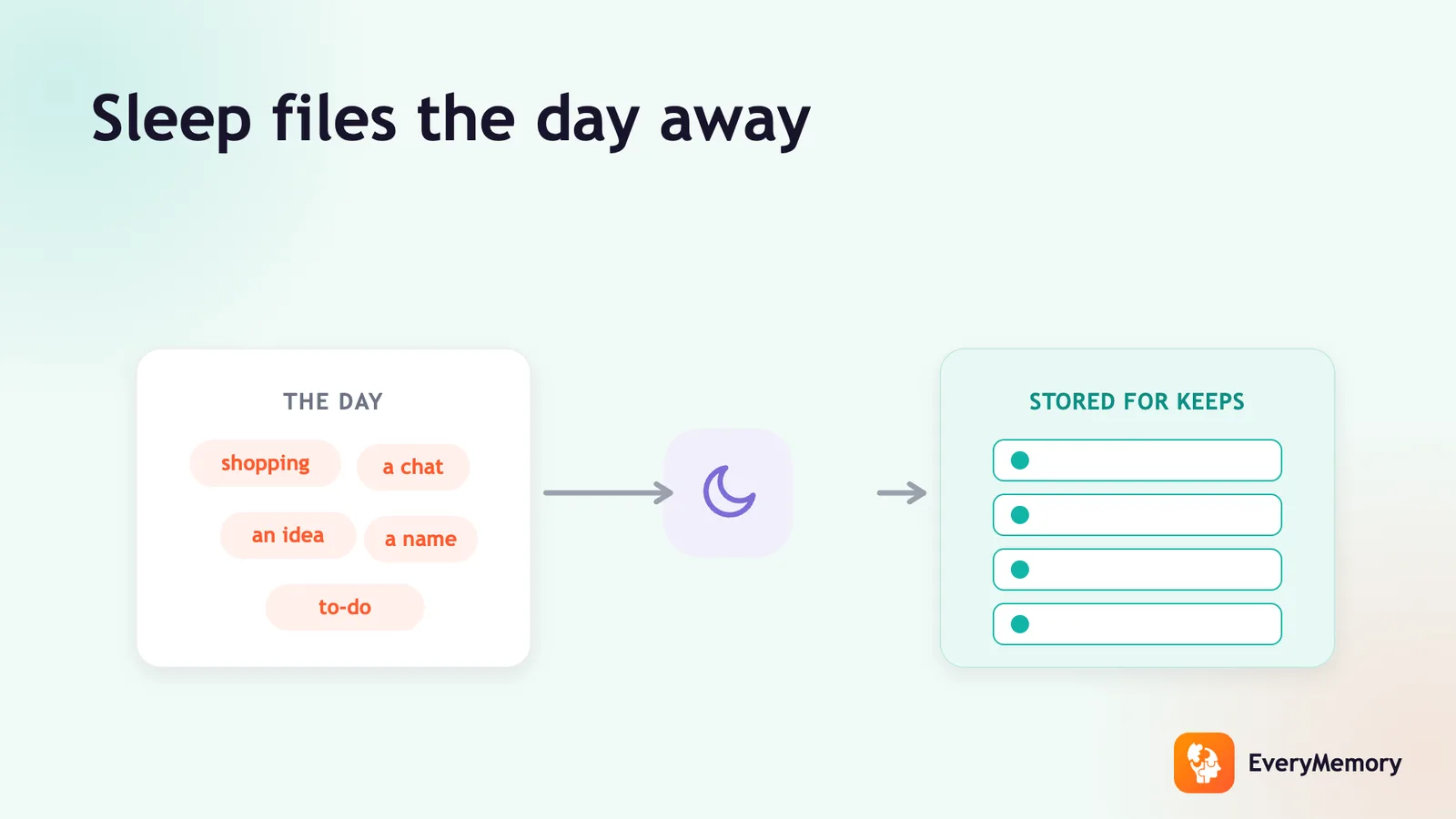
Sleep quality changes significantly for many adults after 60. Lighter sleep, more nighttime waking, earlier rising - these are common, and they have a direct, substantial impact on the ability to concentrate the next day. The prefrontal cortex, which handles focused attention and filtering, is particularly sensitive to sleep deprivation.
This means that a significant portion of "age-related" focus difficulty is, in practical terms, sleep-related focus difficulty. When sleep improves - often with attention to sleep hygiene, reduced alcohol in the evening, consistent wake times, and a cooler bedroom - focus often improves alongside it.
If you've been accepting poor sleep as an inevitable part of aging, it's worth revisiting that assumption. Our piece on the sleep and memory connection explains what good sleep does for recall and how to give your sleep the conditions it needs.
The role of stress and mental load
Chronic low-level stress is one of the most common and least recognized contributors to poor focus at any age - and it tends to accumulate quietly in later life. Financial concerns, health worries, caregiving responsibilities, grief, and social isolation all add to a background mental load that quietly consumes the attention resources that concentration depends on.
The brain under stress is essentially a brain running a competing background process. The spotlight of attention keeps getting pulled toward whatever the worry is, making it harder to hold on a book, a conversation, or a task. This is not a character weakness - it's a predictable feature of how the stress response works.
Habits that reliably reduce stress load - regular physical movement, time with people whose company you enjoy, a consistent routine - directly support better concentration. It's not a coincidence that the lifestyle factors linked with better memory and focus are often the same ones.
Multitasking habits and digital distraction
Something that doesn't get enough attention in conversations about aging and focus: the sheer volume of interruption that modern life creates. Notifications, background screens, and the habit of checking devices repeatedly all fragment attention in ways that accumulate across the day.
The research on interruption recovery is clear: after a significant distraction, it can take several minutes to return to the same level of focused engagement you had before. For older adults, that recovery window is often slightly longer. A day full of small interruptions can produce cumulative attention fatigue that feels indistinguishable from concentration "decline."
Reducing ambient distraction - keeping a phone in a different room during focused tasks, turning off non-urgent notifications, designating certain times as screen-free - often produces an almost immediate improvement in sustained focus. It's one of the highest-return changes most people can make. Try pairing this with a consistent daily routine, which takes some of the decision-making load off your attention system.
What genuinely helps: a practical summary
Rather than looking for a single solution, the evidence points toward a cluster of habits that together support attention:
- Protect sleep. Treat sleep quality as a direct focus investment. Consistent sleep and wake times matter more than total hours for most people.
- Move your body daily. Even a 20-minute walk is linked with better attention and mood for hours afterward.
- Reduce distraction deliberately. Create at least one daily window of uninterrupted focus - even 15 minutes of undistracted reading trains the sustained attention habit.
- Single-task for important things. Give conversations, instructions, and new information your full attention rather than partial attention alongside something else.
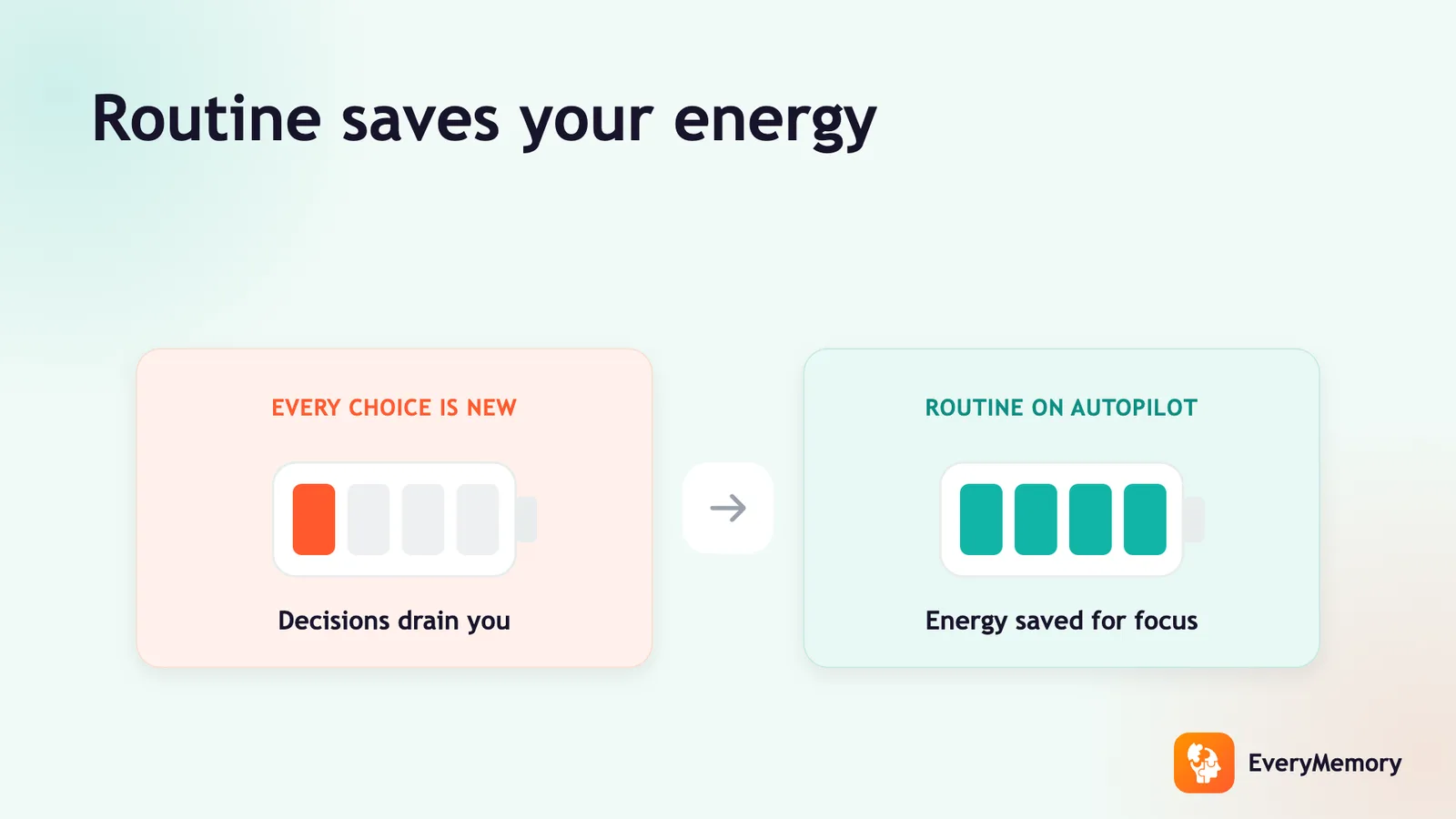
- Build predictable routines. Routines reduce cognitive overhead and leave more mental energy available for tasks that actually require focus.
None of these require large lifestyle changes. Small, consistent adjustments typically produce real improvement over weeks, not months.
Staying patient with the process
It's easy to interpret every moment of distraction as evidence of a problem. The more useful frame is to see focus as a skill that responds to conditions - and to treat yourself with the same patience you'd offer a friend who was rebuilding any other habit after a period of neglect.
Tracking how your concentration changes over time - particularly in relation to sleep and stress - can be genuinely informative. Our guide on memory loss versus normal aging gives useful context for separating what's typical from what warrants more attention.
When to have a conversation with a professional
Most of the focus changes described here are gradual and connected to manageable factors. But if changes in concentration feel sudden, are noticeably more severe than typical fluctuations, or are significantly disrupting daily life - things like losing the thread of a familiar task, confusion in familiar settings, or major personality changes - it's worth talking to a qualified healthcare professional.
Not to diagnose, not to worry - but because rapid or severe changes deserve a proper look, and a conversation early is almost always better than waiting. For most people, that conversation will be reassuring. And if something does need attention, earlier is better.
✅ Try this today - The 15-minute focus window
Create one protected focus window every day this week. Keep a simple note of how it goes.
- Choose a fixed 15-minute window each day - ideally during your natural peak-alertness time (for most people, mid-morning).
- During that window: phone in another room, notifications off, one task only. It can be reading, a puzzle, writing - anything that requires sustained attention.
- After the window, note one word describing how your focus felt. At the end of the week, look for any pattern in what days were clearer and what conditions surrounded them.
⚠ When to talk to a professional
This article contains general, non-medical information. If you notice changes in focus or memory that feel sudden, rapid, or are significantly disrupting daily activities - especially if accompanied by confusion, disorientation, or other new symptoms - it's worth speaking with a qualified healthcare professional. These changes deserve a proper evaluation, and there is almost always more that can be done. Most people find the conversation reassuring.