 EveryMemory
Alcohol and Memory: What Actually Happens
Even moderate drinking can leave next-day gaps in recall and muddy focus - here's what happens inside the brain and why those effects tend to grow more noticeable with age.
Part of the guide: How to Keep Your Brain Healthy: A Complete Lifestyle Guide →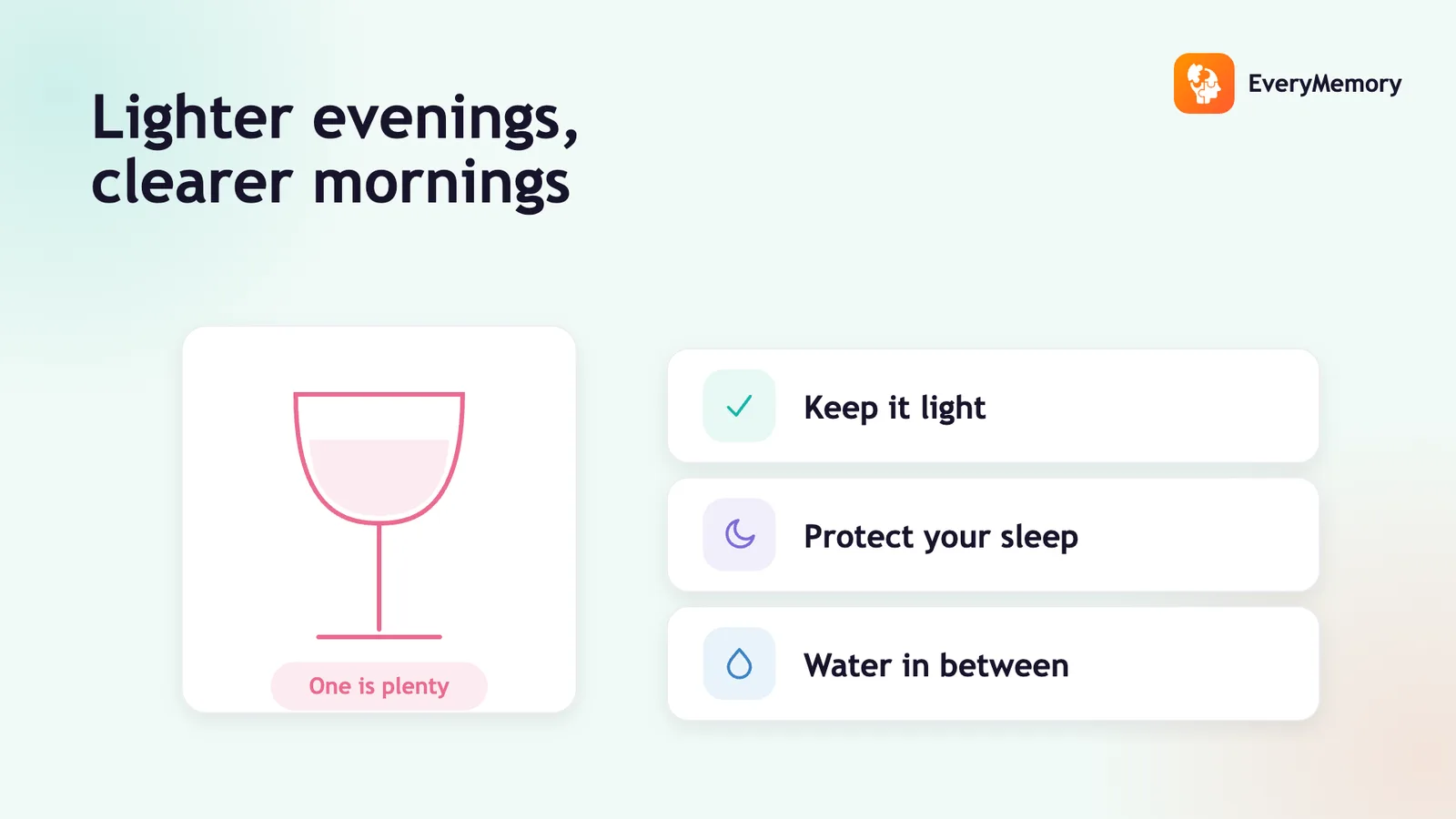
⚡ Quick answer
Alcohol affects memory in two main ways: it temporarily interferes with the hippocampus - the brain structure responsible for forming new memories - and it disrupts the sleep stages where memory consolidation happens. Both effects are dose-dependent, meaning larger amounts cause more pronounced gaps. As the body ages, it processes alcohol more slowly, so the same drink can produce stronger and longer-lasting effects on focus and recall than it did at a younger age.
Key takeaways
- Alcohol disrupts the hippocampus, the brain region that records new memories - higher amounts can create gaps that aren't retrievable later.
- Even modest drinking close to bedtime suppresses REM sleep, the stage most important for memory consolidation.
- The aging body processes alcohol more slowly, so the same amount can have a stronger and longer-lasting effect on focus and recall.
- Timing, quantity, and food intake all influence how pronounced the next-day cognitive effects are.
Most of us have experienced some version of it: a hazy recollection of the end of an evening, a slower-than-usual morning, or a stretch of concentration that just won't arrive the day after a few drinks. These aren't imaginary - they reflect real, measurable changes in how the brain processes and stores information.
The relationship between alcohol and memory isn't simple, and the tone here isn't about alarm or abstinence advice. It's about understanding what's actually happening so you can make sense of your own experience. If you've ever wondered why even light drinking can affect how sharp you feel the next day, understanding how memory works makes those effects much easier to interpret.
How alcohol interrupts memory formation
The hippocampus plays a central role in converting short-term experiences into lasting memories. Alcohol at sufficient concentrations disrupts chemical signalling in the hippocampus, making it harder - and sometimes impossible - for new experiences to be recorded.
At low to moderate levels, this shows up as slightly hazy recall for details: the name of someone you met, the sequence of events late in an evening. At higher blood-alcohol levels, the disruption can become complete, producing what researchers call an en bloc blackout - a period of hours for which no memories form at all, even though the person remains awake and active.
A more common experience is a fragmentary blackout: patchy recall with islands of memory separated by gaps. According to the National Institute on Alcohol Abuse and Alcoholism (NIAAA), fragmentary blackouts are far more frequent than complete ones. The key point is that these gaps aren't retrieved later - the memories were never recorded, which is different from ordinary forgetting where a memory exists but is hard to access.
The sleep connection: why next-day fog lingers
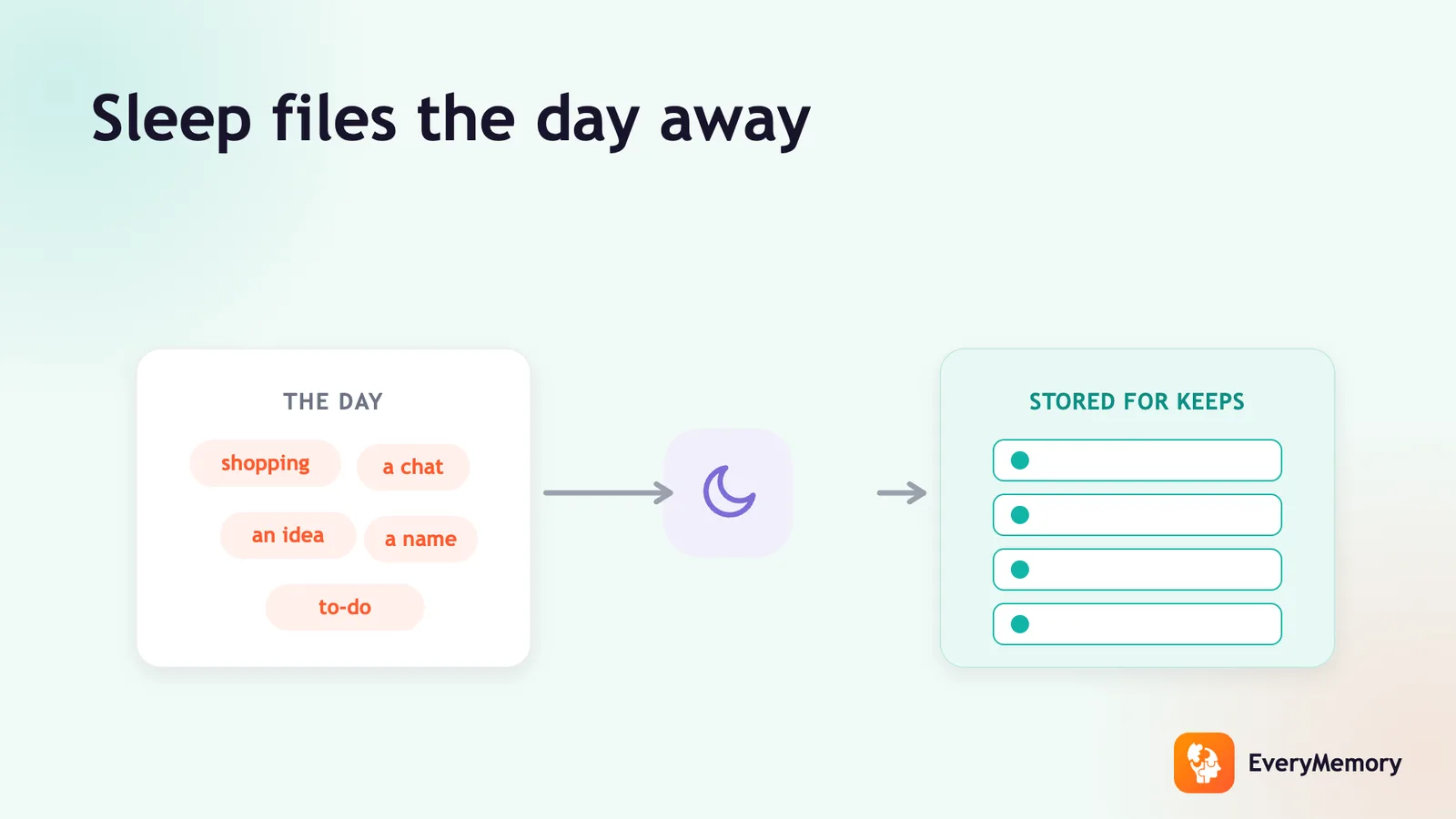
Alcohol has a sedative effect that makes falling asleep feel easier, which is why it has a long history as a so-called nightcap. The catch is that it substantially alters what happens during those hours of sleep - and much of that altered architecture directly undermines memory.
In the first part of the night, alcohol suppresses REM sleep (the lighter, dream-rich stage) in favour of deeper, heavier sleep. This might sound like a good trade, but REM sleep is when the brain does much of its consolidation work - replaying the day's experiences and integrating new information into existing knowledge. Less REM means less of that processing gets done.
Later in the night, once the body has metabolised the alcohol, sleep becomes fragmented: lighter, more restless, punctuated by wakings. The result is that even if you clocked a full eight hours, the architecture of that sleep was significantly compromised. This is explored more fully in our article on the sleep and memory connection.
- Alcohol suppresses REM sleep, particularly in the first half of the night.
- Sleep fragmentation in the second half of the night reduces restorative quality.
- Dehydration from alcohol further impairs morning alertness and working memory.
- Even one or two drinks close to bedtime can measurably alter sleep architecture.
Why the effects tend to grow with age
The aging body processes alcohol more slowly. Total body water decreases over the decades, meaning alcohol becomes more concentrated in the bloodstream from the same amount consumed. The result is a higher peak blood-alcohol level and a longer overall exposure than a younger person drinking identically.
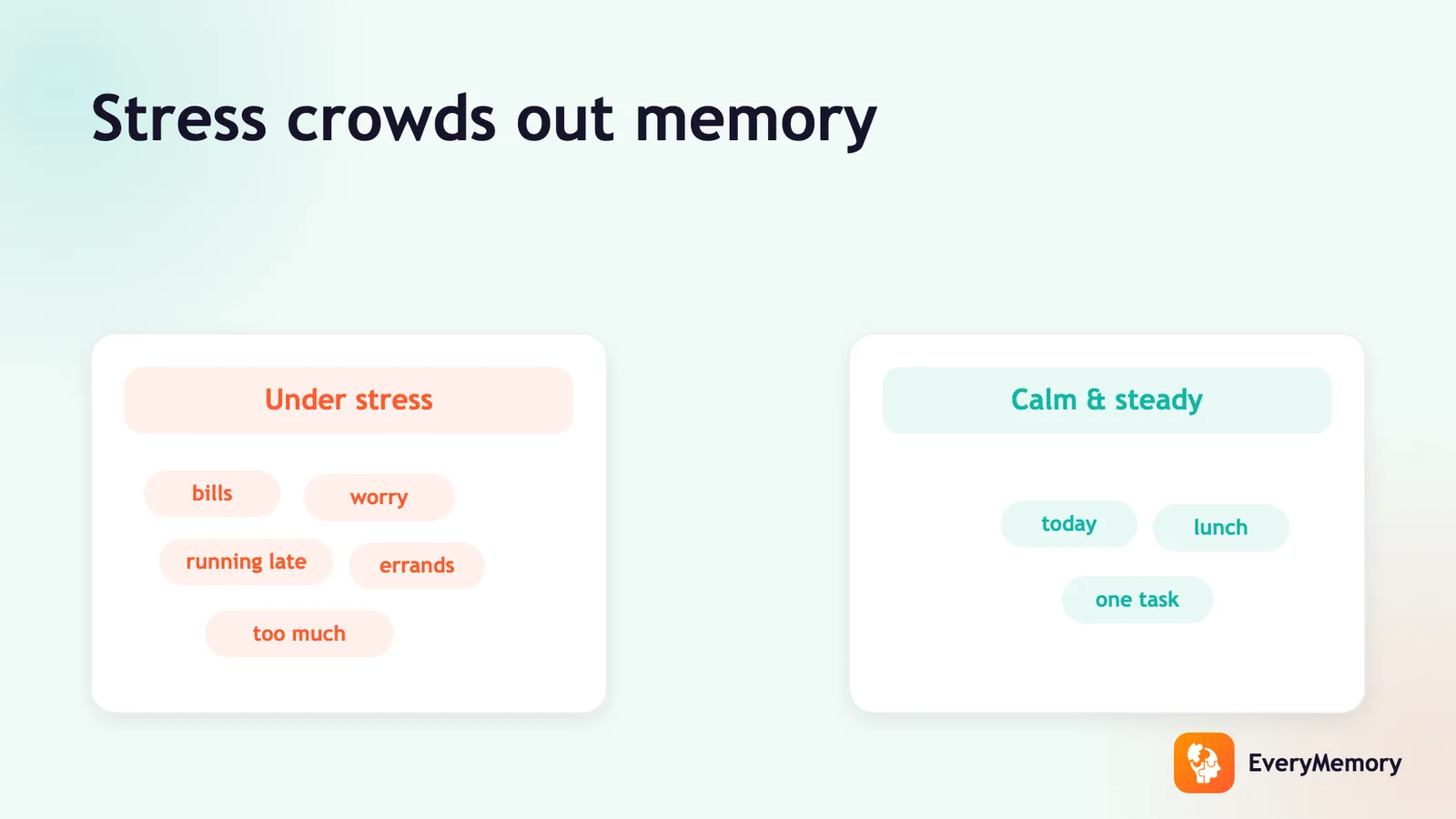
Sleep architecture also naturally shifts with age - lighter, more fragmented sleep becomes more common - so alcohol's disruption to REM consolidation lands on a system with less reserve capacity. Stress and poor sleep already load the same memory systems that alcohol affects, and their combined impact on any given day can be larger than any single factor alone suggests.
Quantity, timing, and the day-after picture
Effects are dose-dependent. A single drink consumed early in the evening with food produces far smaller disruptions to sleep and next-day memory than two or three drinks consumed late. Rate of consumption matters as much as total amount - blood-alcohol concentration rises faster when drinks are consumed quickly or on an empty stomach.
The day-after fog that many people notice involves more than tiredness: disrupted sleep, mild dehydration, and lingering metabolic by-products all contribute. Focus, word retrieval, and the ability to hold information in working memory are the functions most commonly affected. Brain fog has several overlapping causes, and alcohol-related fog fits squarely within that broader picture.
What the evidence on moderation actually says
Research on light-to-moderate drinking and long-term cognitive health is genuinely mixed. Some studies in older adults have found associations between light consumption and preserved cognitive scores; others find no benefit. Heavy or binge drinking, however, is consistently linked with worse outcomes across all age groups.
The honest summary is that there is no established "brain-healthy" level of alcohol - but there is a clear dose-response relationship, and the acute effects on sleep and memory are well established. For anyone who notices that modest drinking is consistently followed by foggy mornings or patchy recall, that pattern is worth noting on its own terms. Tracking your drinking alongside sleep quality and stress is one of the simplest variables you can add if you're monitoring how your memory and focus vary day to day.
✅ Try this today - A three-evening attention experiment
You don't need to change anything - just observe for three evenings and the following mornings.
- On one evening, have your usual amount of alcohol and note the time of your last drink. The next morning, rate your mental sharpness and ease of word recall on a 1–5 scale.
- On a second evening, skip alcohol entirely (or stop two hours earlier than usual) and note the same things the next morning.
- Compare the two mornings honestly. If you notice a consistent difference in sharpness or recall, that's useful personal data - no conclusions required, just information you now have.
⚠ When to talk to a professional
If you notice sudden, rapid, or severely worsening memory changes - particularly ones that feel unrelated to sleep or drinking - it's worth speaking with a qualified healthcare professional. Similarly, if you have concerns about your own drinking or its effects on your health, a doctor or pharmacist is the right person to talk to.