 EveryMemory
Caffeine and Memory: What Coffee and Tea Actually Do
Caffeine sharpens alertness and attention reliably - but its relationship with memory is more nuanced, and timing matters more than most people realise.
Part of the guide: How to Keep Your Brain Healthy: A Complete Lifestyle Guide →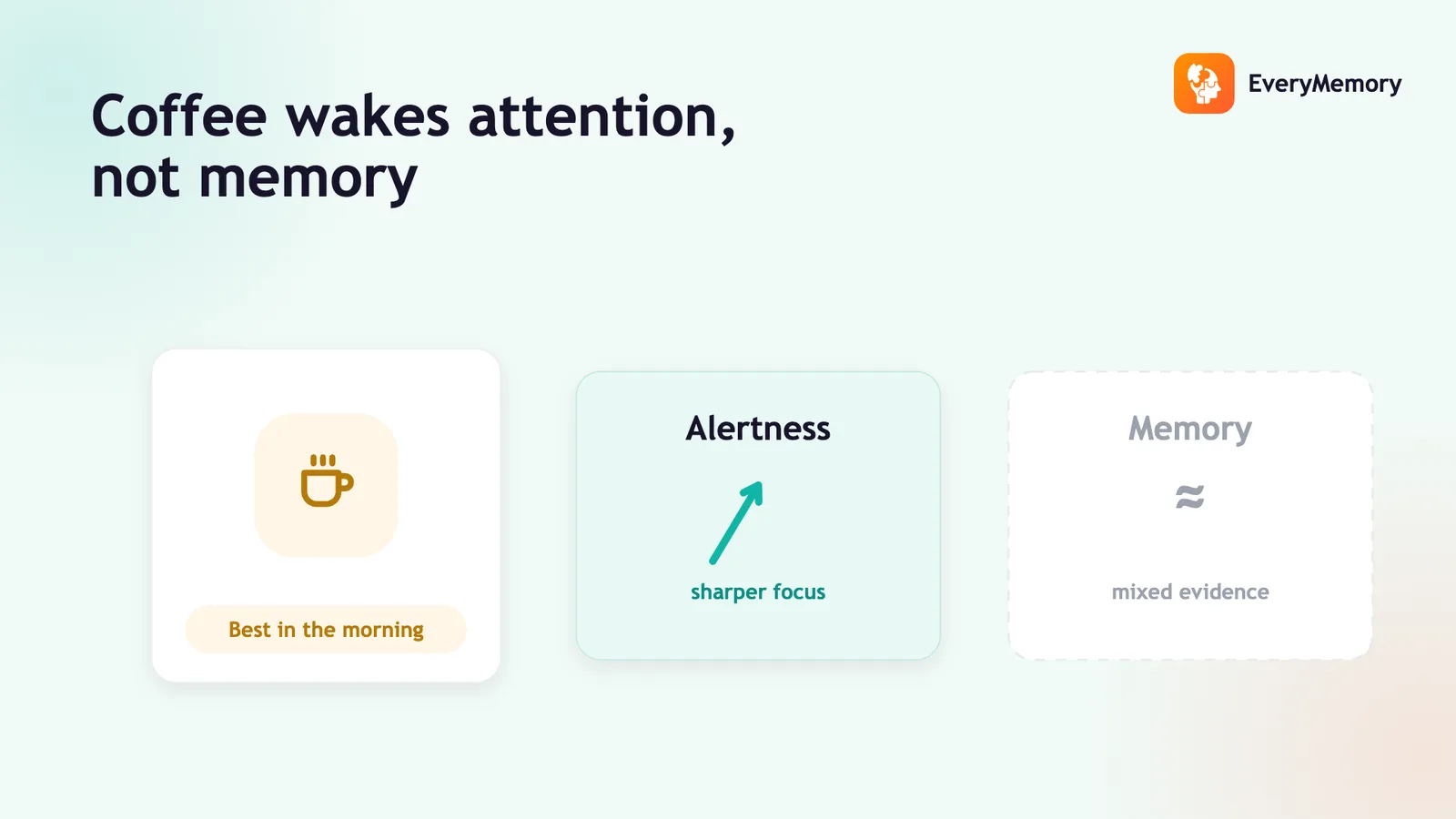
⚡ Quick answer
Caffeine reliably improves alertness, attention, and reaction time - its effects on direct memory storage are more mixed. It can support the conditions for good recall by keeping you alert and focused, but late-day caffeine often disrupts sleep, which is one of the most critical factors in how well memory consolidates. Moderate, well-timed caffeine is the key.
Key takeaways
- Caffeine reliably improves alertness and attention; its direct effects on memory storage are more variable.
- Late-day caffeine can disrupt sleep, which is the brain's primary mechanism for consolidating memories.
- A cut-off around 2 PM (earlier for older adults) protects sleep quality without sacrificing morning focus.
- Moderate intake - two to three cups daily - is where research suggests the best balance of benefit and low risk.
For most people, coffee or tea is the first thing that happens each morning - and for good reason. Caffeine does something measurable to the brain: it sharpens attention, speeds up reaction time, and makes sustained focus feel easier.
What it doesn't do is just as important. Caffeine is not a memory enhancer in the direct sense many people assume. Understanding the actual mechanisms - and the role that timing and moderation play - helps you get more from your daily cup and avoid habits that quietly undermine the recall you're hoping to support.
How caffeine works in the brain
Caffeine's main mechanism is surprisingly simple: it blocks adenosine receptors. Adenosine is a chemical that builds up throughout the day and signals increasing sleepiness to the brain. By occupying those receptors, caffeine prevents that signal from getting through - so you feel more awake and alert even when your body has been active for hours.
The result is a measurable improvement in vigilance, sustained attention, and processing speed. Studies consistently show that moderate doses - roughly the amount in one to two cups of coffee - produce clear gains on attention tasks: faster reaction times, better accuracy on sustained focus tests, and reduced mind-wandering. What's more nuanced is what this means for memory specifically.
Attention versus memory: an important distinction
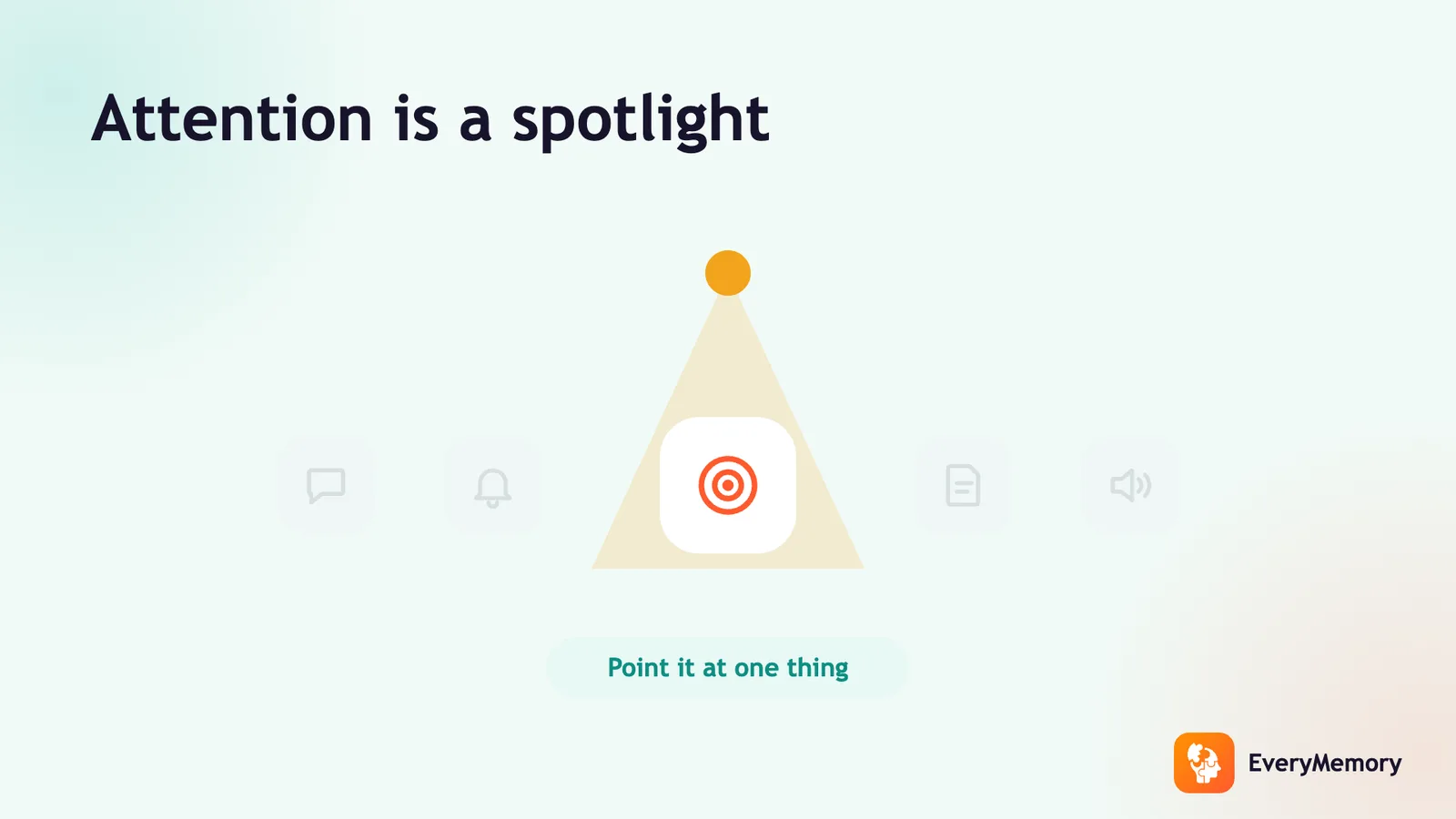
It's easy to conflate alertness with memory, but they're not the same thing. Attention is how well you process incoming information right now; memory is whether that information gets encoded, stored, and later retrieved.
Caffeine's clearest benefit is on the attention side. When you're more alert, you're more likely to fully process what you're reading, hearing, or observing - which supports how much of it makes it into memory. In that indirect sense, caffeine helps recall by creating better conditions for encoding. But it doesn't strengthen the memory consolidation process itself in the way that sleep does. Our article on how attention works explains this clearly: information you never fully attended to was never properly encoded, and no amount of trying to recall it later will help.
The sleep trade-off: the part most people underestimate
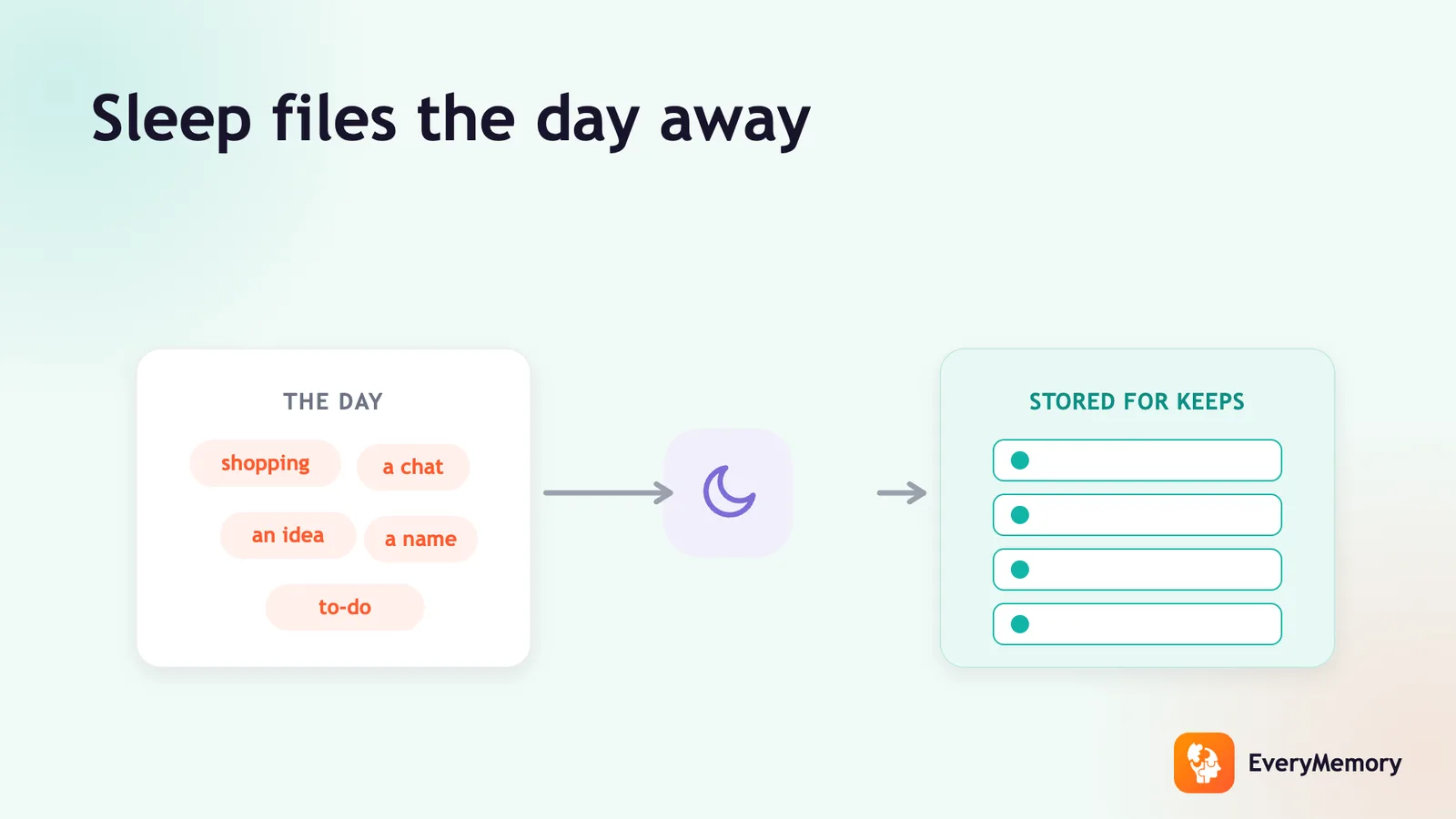
Sleep is the primary mechanism through which the brain consolidates the day's experiences into longer-term memory. During certain sleep stages, the brain replays and strengthens new memories - transferring them from fragile short-term storage into more durable form.
Caffeine has a half-life of roughly six to eight hours. A cup at 3 PM still has meaningful caffeine circulating at 9 or 10 PM. Research suggests this can delay sleep onset and suppress the deep-sleep stages most important for memory consolidation - even when people feel they slept "fine". Our article on the sleep and memory connection covers this in detail. Good sleep matters more for memory than the short-term alertness boost caffeine provides, so any caffeine habit that compromises it is a poor trade.
- Most sleep researchers recommend stopping caffeine at least six hours before your intended bedtime.
- For adults who sleep at 10 PM, this means a cut-off around 2 PM.
- Older adults tend to metabolise caffeine more slowly, meaning the effective cut-off may need to be earlier.
Tolerance, timing, and the morning window
Regular caffeine use leads to tolerance quickly - often within a few days. The alertness boost you felt from your first cup becomes less pronounced once your brain has adapted. The receptors that caffeine blocks become more numerous, partially offsetting its effect.
Tolerance doesn't eliminate the benefit entirely, but it changes its character. For habitual drinkers, caffeine often does less to enhance focus and more to restore baseline function - preventing the dip that withdrawal brings. Part of what you're doing with your morning cup is addressing a deficit created by yesterday's coffee.
Timing within the day also matters. Cortisol - a hormone associated with alertness - peaks naturally between 8 and 9 AM. Waiting until mid-morning, when cortisol begins to drop, may give you more noticeable benefit. And for context on how stress and cortisol affect memory more broadly, that article explores the mechanisms in more depth.
Coffee, tea, and moderation: what the research suggests
Large studies have found associations between moderate coffee and tea consumption and better cognitive function in older adults. One study following over 130,000 participants found that those who drank two to three cups of caffeinated coffee daily showed lower rates of subjective cognitive decline. Tea drinkers showed similar patterns; decaffeinated coffee did not, suggesting caffeine is the active factor. These are observational findings - a link, not a proven cause - but they do suggest that moderate caffeine consumption, as part of an overall healthy lifestyle, is not something to worry about for most people.
Roughly 200 to 300 mg of caffeine per day - two to three standard cups of coffee - appears to be the range where benefits are most reliably reported and risks are low. Beyond that, anxiety, disrupted sleep, and an elevated heart rate become more common. Tea offers a gentler option at roughly half the caffeine per cup. Our article on hydration and focus in older adults is a useful companion here - caffeine is mildly diuretic, and keeping up with water intake alongside your coffee habit matters more than many people realise.
| Drink | Typical caffeine | Good to know |
|---|---|---|
| Brewed coffee (1 cup) | ~95 mg | Strongest quick lift - best kept to the morning |
| Black or green tea (1 cup) | ~30–50 mg | Gentler and steadier; green tea adds L-theanine |
| Espresso (1 shot) | ~63 mg | Small volume, fast hit |
| Decaf coffee | ~2–5 mg | Nearly caffeine-free - friendly for the afternoon |
| Energy drinks | ~80–150 mg+ | Often high in sugar and easy to overdo |
A balanced picture for everyday life
For most adults, moderate caffeine consumed earlier in the day is a reasonable habit with real but modest benefits - and no meaningful downside if sleep is protected. The single most important variable is timing. If your caffeine habit is concentrated in the morning and early afternoon, you're likely getting the benefits without much cost.
If afternoon and evening coffee is a regular pattern, the cumulative effect on sleep quality may be quietly working against the memory consolidation you're counting on. The fix is simple: shift the cut-off earlier and notice whether your sleep and next-day sharpness improve. Caffeine is one piece of a larger picture that includes sleep, movement, hydration, and regular mental practice - and keeping all those conditions in reasonable shape matters more than optimising any single one.
✅ Try this today - The afternoon cut-off experiment
Try this for one week to see how caffeine timing affects your sleep and next-day sharpness:
- For three days, have your last caffeinated drink before 2 PM (or 1 PM if you sleep before 10 PM). Note how easily you fall asleep and how rested you feel the next morning.
- On one day that week, have a late-afternoon cup as you normally might. Notice whether sleep or morning alertness differs.
- At the end of the week, ask honestly: did your next-day recall and focus seem clearer on the earlier cut-off days? Even modest improvements in sleep quality often translate to noticeably sharper memory.
⚠ When to talk to a professional
This article contains general, non-medical information. If you're noticing sudden or significant changes in memory, concentration, or mental clarity that aren't explained by sleep or lifestyle factors, it's worth discussing with a qualified healthcare professional.