 EveryMemory
Do Memory Supplements Actually Work?
The memory supplement market is worth billions, but does the evidence keep up with the claims? Here is an honest look at what the research actually says, and what to do instead.
Part of the guide: How to Keep Your Brain Healthy: A Complete Lifestyle Guide →
⚡ Quick answer
For healthy adults without a nutrient deficiency, most popular memory supplements show weak, inconsistent, or no meaningful benefit in rigorous studies. A true deficiency identified by a doctor is a different matter and worth addressing medically. For everyday brain wellness, sleep, exercise, a varied diet, and mental engagement have considerably stronger evidence behind them.
Walk into any pharmacy or scroll through a social media feed and you will encounter a wall of brain supplements promising sharper focus, better recall, and a mind that stays quick as the years go on. Capsules of omega-3s, ginkgo biloba, lion's mane mushroom, phosphatidylserine, bacopa monnieri, the list grows every year, and so does the marketing budget behind each one.
The global brain health supplement market is valued in the tens of billions of dollars, and that figure is climbing. With that much money at stake, the claims tend to outrun the science considerably. Understanding the gap between what is promised and what has actually been demonstrated can save you real money, and, more importantly, steer you toward habits that genuinely have stronger support.
Nothing in this article is medical advice. If you are concerned about your memory, experiencing changes in cognition, or considering any supplement, especially if you take medications or have existing health conditions, please talk to your doctor or pharmacist before making any changes.
Why the marketing is so convincing
Memory supplement advertising is extraordinarily good at one thing: identifying a real, relatable anxiety and offering a simple solution. Most adults have experienced a forgotten name, a misplaced set of keys, or a moment of mental fog. Marketers understand that these experiences are unsettling, and they have built an entire visual and verbal language around them, brain scans, white-coated spokespeople, testimonials, and phrases like "clinically studied" that sound more definitive than they are.
"Clinically studied" does not mean "clinically proven to work in you." A single small study, a study in older adults with cognitive decline, or a study showing a biological effect in a lab dish can all technically justify that phrase. What matters is whether large, well-controlled trials in healthy people show a meaningful benefit, and for most popular brain supplements, those trials are either absent, mixed, or negative.
Supplements are also regulated very differently from medications. In most countries, supplement makers do not have to prove their product works before putting it on shelves. They only need to avoid making explicit disease claims. So they describe effects in careful, vague terms: "supports memory", "promotes focus", "nourishes the brain." These phrases carry no regulatory burden of proof.
What the evidence actually says about popular ingredients
Ginkgo biloba is one of the most studied herbal supplements for memory. Large, well-funded trials, including the long-running Ginkgo Evaluation of Memory study, found it did not prevent cognitive decline or dementia in older adults. Effects in healthy younger and middle-aged adults are, at best, small and inconsistent across studies.
Omega-3 fatty acids (particularly DHA and EPA from fish oil) are genuinely important for brain structure, and diets low in them are associated with various health concerns. But "important for brain structure" is not the same as "taking more will improve your memory." Most trials in cognitively healthy adults show little to no benefit from supplementation. Where omega-3s may matter most is in people whose diets are genuinely low in fatty fish, and a varied diet that includes oily fish may be the more practical route.
Lion's mane mushroom has attracted significant attention and some interesting early research, particularly around nerve growth factor. However, most human trials are small, short, and not yet replicated at scale in healthy adults. The excitement in the popular press is running well ahead of what the science can currently support.
Bacopa monnieri has some promising trial data, mostly showing modest improvements in certain memory tasks, particularly in older adults and over longer supplementation periods. The effect sizes are generally small, side effects (particularly digestive) are common, and the research in healthy younger adults is thinner. It is one of the more interesting candidates, but "interesting" is not the same as "proven."
The honest summary: for a healthy adult who is not deficient in any nutrient, the evidence that any supplement meaningfully improves memory is, at best, modest and inconsistent. That does not mean the ingredients are necessarily useless for everyone, it means the bar for "this works" has not been cleared reliably in healthy populations.
The genuine exception - when a deficiency is the issue
There is one scenario where supplements have a genuinely strong case: when you have a confirmed nutrient deficiency. Vitamin B12 deficiency, for example, is associated with real cognitive symptoms, and correcting a true B12 deficiency (identified via a blood test, managed with a doctor) can matter significantly. The same applies to severe vitamin D deficiency, folate, and iron in specific populations.
The key word is confirmed. Taking extra B12 when your levels are already normal does not give you a cognitive boost, your body simply excretes what it does not need. This is why a conversation with your doctor and a blood panel, not a trip to the supplement aisle, is the right starting point if you are genuinely worried about deficiency. Your pharmacist can also advise on whether a supplement is appropriate given your diet, health status, and any medications you take.
Certain populations, older adults, people following strictly plant-based diets, those with absorption issues, are more likely to have genuine deficiencies worth addressing. But this is a medical conversation, not a consumer one.
The risks people tend to underestimate
The most obvious cost is financial. A monthly supplement habit can run from twenty to over a hundred dollars depending on what you are taking. Over a year or several years, that adds up to real money spent on a benefit that may not exist for you.
Less obvious is quality control. Because supplements are not regulated the way medications are, independent testing organisations have repeatedly found that supplements contain the wrong dose, undisclosed ingredients, or in some cases, none of the labelled ingredient at all. If you do take supplements, looking for those verified by an independent third-party testing body (such as USP, NSF, or ConsumerLab) provides at least some assurance that what is on the label is in the bottle.
Drug interactions are a serious and underappreciated concern. Ginkgo biloba, for example, has blood-thinning properties and can interact with anticoagulants. St John's Wort, sometimes marketed for mood and focus, has well-documented interactions with a wide range of medications. Always tell your pharmacist every supplement you take, not just prescription drugs.
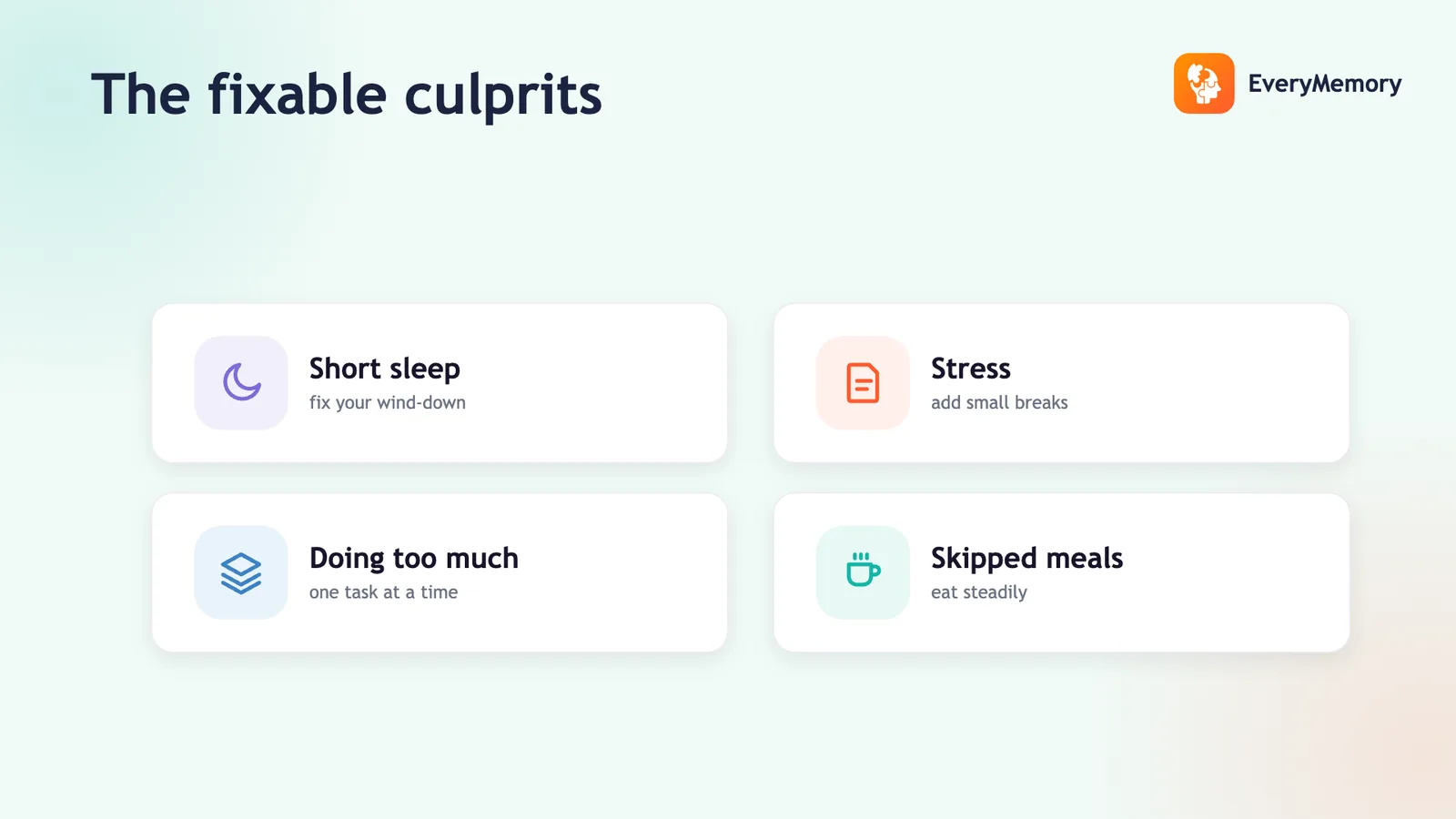
Finally, there is the risk of false reassurance. Someone who believes a pill is handling their brain health may feel less urgency about the habits that actually have the strongest evidence, sleep, exercise, diet, and staying mentally active. That trade-off is hard to see but worth taking seriously. As our article on what actually harms your memory covers, chronic sleep deprivation and inactivity are far more reliably damaging than any supplement deficiency in the general population.
What actually has stronger support
The lifestyle factors with the most consistent evidence for supporting everyday cognitive wellness are, perhaps unsurprisingly, the ones that feel less exciting than a capsule. Sleep is where your brain consolidates memories, chronic poor sleep impairs recall in ways that are measurable and well-replicated. Getting enough of it is not optional for brain function.
Physical exercise, particularly aerobic activity, has some of the strongest evidence in cognitive research, associated with better memory performance, increased hippocampal volume, and reduced risk of decline over time. It is free, has no drug interactions, and the evidence dwarfs most supplement research.
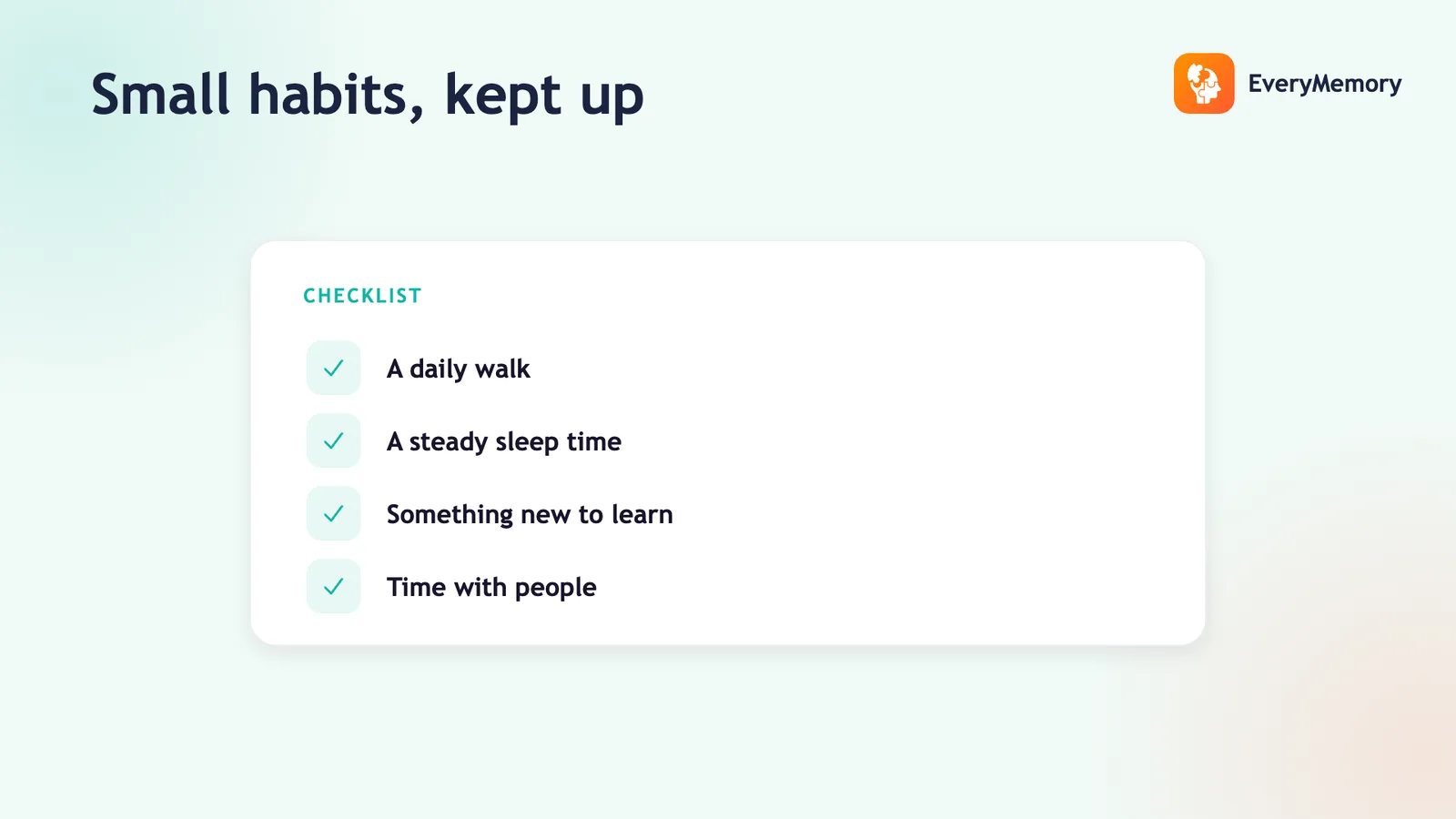
Diet matters too, not in the form of isolated supplements, but as a pattern. A diet rich in vegetables, legumes, whole grains, and oily fish provides the nutrients your brain actually uses. Our piece on brain foods for memory covers the specifics without the hype. Mental and social engagement, challenging yourself with new skills, maintaining social connection, staying curious, also has genuine support in the research. And when it comes to building those habits for a healthy brain, consistency matters far more than any single intervention.
None of this is as marketable as a capsule. But the evidence does not really care about marketability.
✅ Try this today - Before you buy a brain supplement, check these
If you are seriously considering a memory supplement, a few steps can save you money and protect your health.
- Talk to your doctor or pharmacist first - ask whether you might have a deficiency worth testing for, flag any medications you take for interaction checks, and ask them directly what they know about the evidence for the specific supplement you are considering.
- Look for independent third-party verification on the label (USP, NSF, or ConsumerLab) so you have some assurance the product contains what it claims, then compare the cost of several months' supply against what that money could buy in terms of gym access, better food, or other evidence-backed habits.
- Ask yourself honestly whether you have consistently covered the basics - seven to nine hours of sleep, regular physical activity, a varied diet, and some form of daily mental challenge - because if those are not in place, they are a far higher-return investment than any supplement currently on the market.
⚠ When to talk to a professional
If you take any medications or have an existing health condition, always check with your doctor or pharmacist before starting any supplement, including those marketed as "natural."