 EveryMemory
Forgetfulness in Your 40s and 50s: What's Going On?
Feeling more forgetful in midlife is common and usually about load, not loss. Why this stage feels forgetful, and what genuinely helps.
Part of the guide: Understanding Memory Loss and Forgetfulness: A Calm, Reassuring Guide →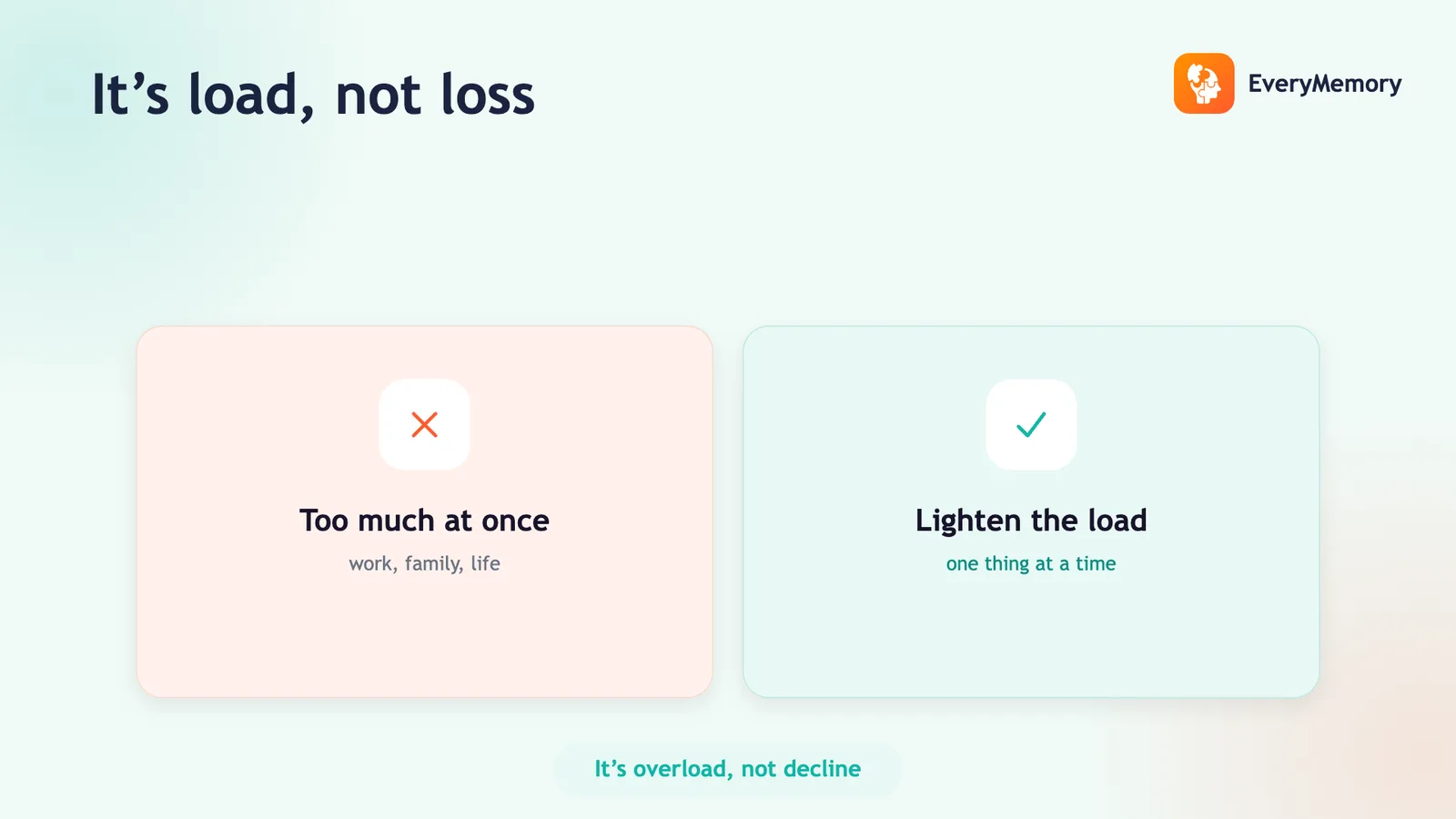
⚡ Quick answer
Becoming more forgetful in your 40s and 50s is common and usually has nothing to do with decline. This is often the busiest, most divided-attention stage of life - careers, family, stress, broken sleep - and all of those reduce how well you focus and recall. Add a slight natural slowing of retrieval, and ordinary slips feel more frequent. They're almost always about load, not loss.
Key takeaways
- Feeling more forgetful in midlife is common and usually about load, not decline.
- The 40s and 50s are often the busiest, most divided-attention years - careers, family, stress, broken sleep all reduce focus and recall.
- A slight natural slowing of retrieval adds to it, making ordinary slips feel more frequent.
- Offloading tasks, single-tasking, protecting sleep, and a couple of memory techniques clear up most of the worry.
Plenty of people hit their 40s and 50s and quietly panic that their memory is going. It's one of the most common worries at this stage - and one of the most over-diagnosed by the people having it.
Midlife is, for most, the busiest and most divided-attention decade there is. That, far more than aging, is usually what's going on.
Why midlife feels forgetful
Your 40s and 50s tend to pile on demands: a busy career, children or aging parents, finances, and a calendar that never empties. Attention is split a dozen ways, and split attention is the main reason things don't get stored. The forgetfulness is real, but it's a symptom of load, not a failing memory.
The usual causes at this stage
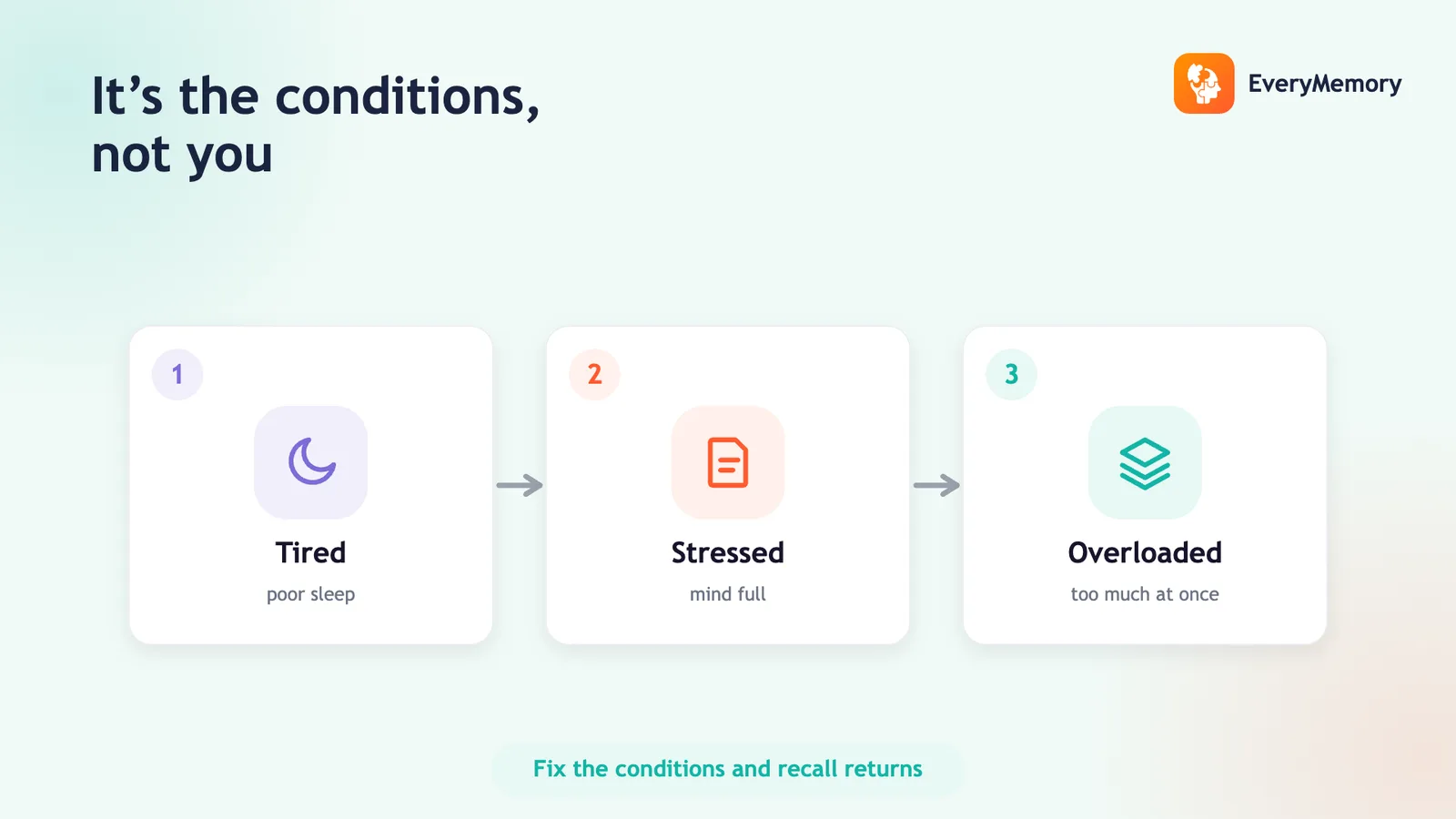
- Divided attention - juggling many roles means fewer things get full focus, so fewer encode.
- Stress - a preoccupied mind has little capacity for new information; see does stress cause forgetfulness?
- Broken sleep - common in these years, and a major drag on memory; see how sleep affects memory.
- Doing everything at once - true multitasking guarantees some things slip.
A slight natural slowing, too
On top of the load, retrieval does begin to slow gently from midlife - names and words take a moment longer to surface. This is normal and gradual, the start of the same age-related change covered in how memory changes with age. Combined with a hectic life, it's enough to make ordinary slips feel more frequent than before.
What genuinely helps
Because the cause is mostly load, the fixes target load: offload dates and tasks to a calendar, single-task on what matters, and protect sleep where you can. Add a couple of memory techniques to offset slower recall. Small changes here often clear up most of the 'midlife memory' worry.
When to check
Midlife forgetfulness that tracks with how busy and tired you are is normal. It's worth speaking with a qualified professional if memory changes are clearly and steadily worsening regardless of how calm life is, starting to disrupt work or daily tasks, or noticed by others before you - particularly alongside confusion.
⚠ When to talk to a professional
Midlife forgetfulness usually reflects busyness, stress, and sleep, not decline. If it's steadily worsening regardless of your stress levels, disrupting daily life, or noticed by others alongside confusion, talk to a qualified professional.