 EveryMemory
When Grief or Illness Makes You Forgetful
Big emotional events and physical illness often bring a temporary mental fog - forgetting where you put things, losing words mid-sentence, struggling to concentrate. Here's why it happens and how it often eases.
Part of the guide: Understanding Memory Loss and Forgetfulness: A Calm, Reassuring Guide →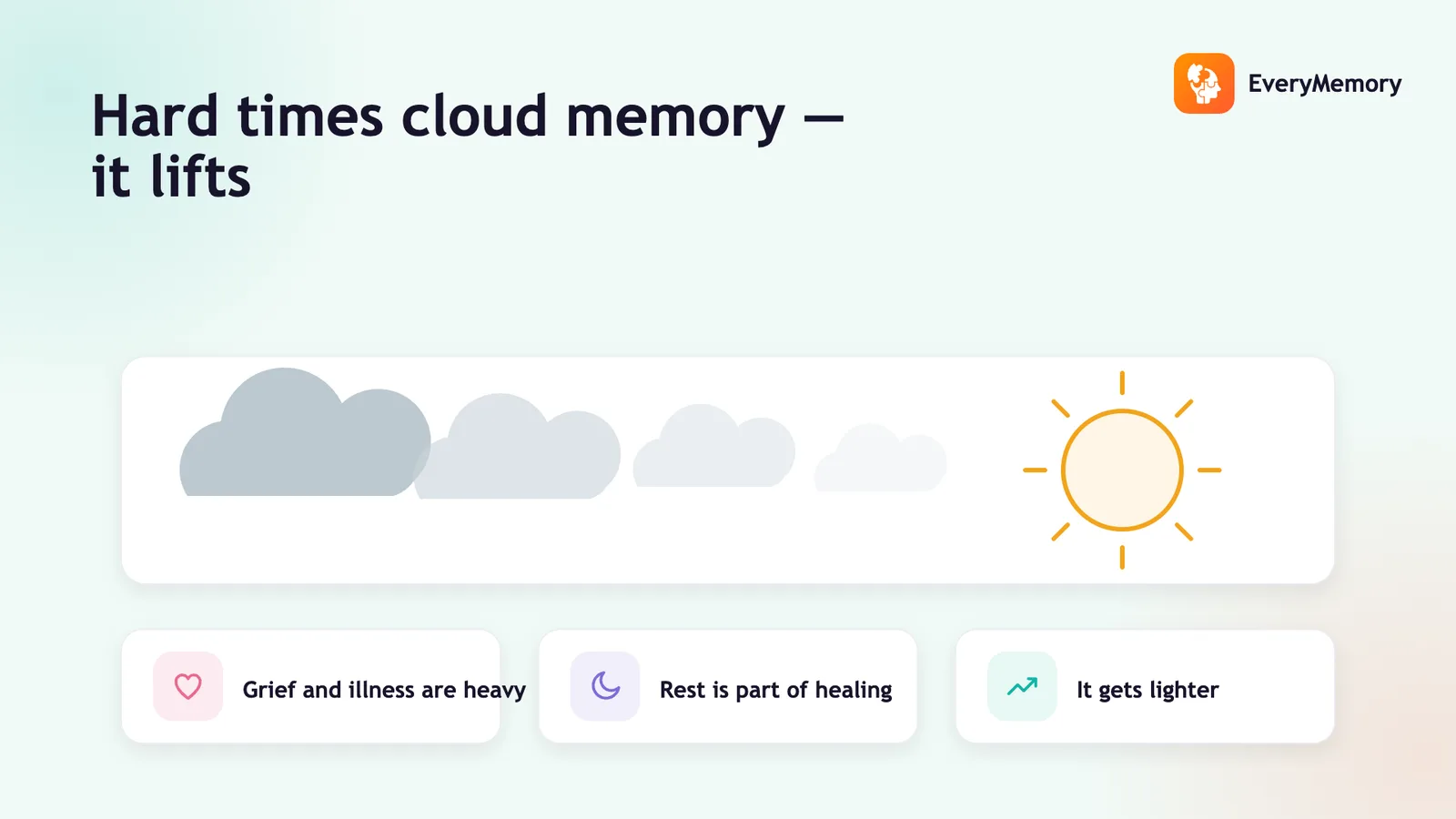
⚡ Quick answer
Grief, bereavement, and physical illness place huge demands on the brain and body. The resulting fog - forgetting things, struggling to concentrate, losing words - is a recognised response to stress, sleep disruption, and the sheer mental weight of a hard time. For many people it gradually lifts as they recover and life finds its footing again. If the fog is deep, lasting, or worsening, it is always worth a conversation with a healthcare professional.
Key takeaways
- Grief and physical illness commonly cause temporary memory fog through stress, sleep disruption, and depleted mental capacity.
- The fog is a recognised response to being under pressure - not a sign that the brain is permanently changed.
- Writing things down, keeping a consistent routine, and prioritising rest are the most practical supports during a difficult period.
- For most people the fog gradually eases as they recover; if changes feel sudden or worsening, it is worth talking to a healthcare professional.
You walk into a room and have no idea why. You read the same paragraph three times and none of it lands. You reach for a name that has always come easily - a close friend, a grandchild's teacher - and it simply isn't there. If this has happened during a period of loss, illness, or major life upheaval, you are not imagining it.
A mental fog that settles around hard times is one of the most commonly reported - and least talked about - parts of grief and physical recovery. Many people worry that something is seriously wrong with their brain. For most, what they are experiencing is the mind's honest response to being under extraordinary pressure, and it is something that, with time and care, commonly eases.
Why the brain struggles during grief
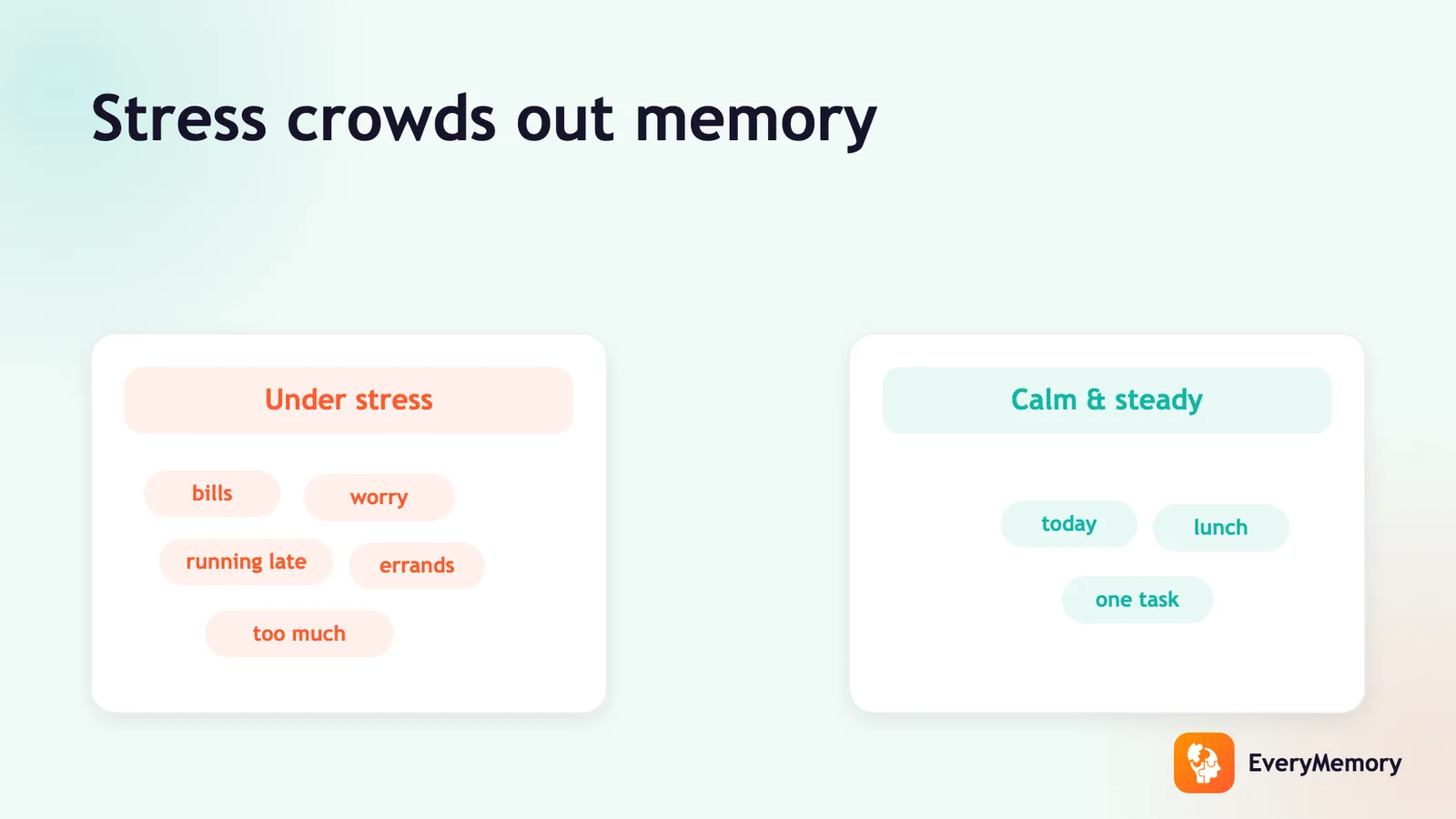
When someone we love dies, or when a major loss reshapes daily life, the brain does not simply grieve in one dedicated corner. The stress response activates broadly. Cortisol - a hormone the body releases in challenging times - rises, and at high levels over a sustained period, it can interfere with the parts of the brain responsible for attention, working memory, and the ability to hold and organise new information.
Brain imaging research shows that acute grief measurably reduces activity in the prefrontal cortex - the area that handles planning, word retrieval, and staying organised. At the same time, the amygdala, the brain's emotional alarm, is working intensely. The result is a system that is simultaneously flooded and depleted, leaving less cognitive capacity for the ordinary business of remembering where you left your keys.
Our article on whether stress makes you more forgetful explores these mechanisms in more depth - much of what applies to chronic stress applies, even more intensely, during bereavement.
The role of sleep - and the weight of mental load
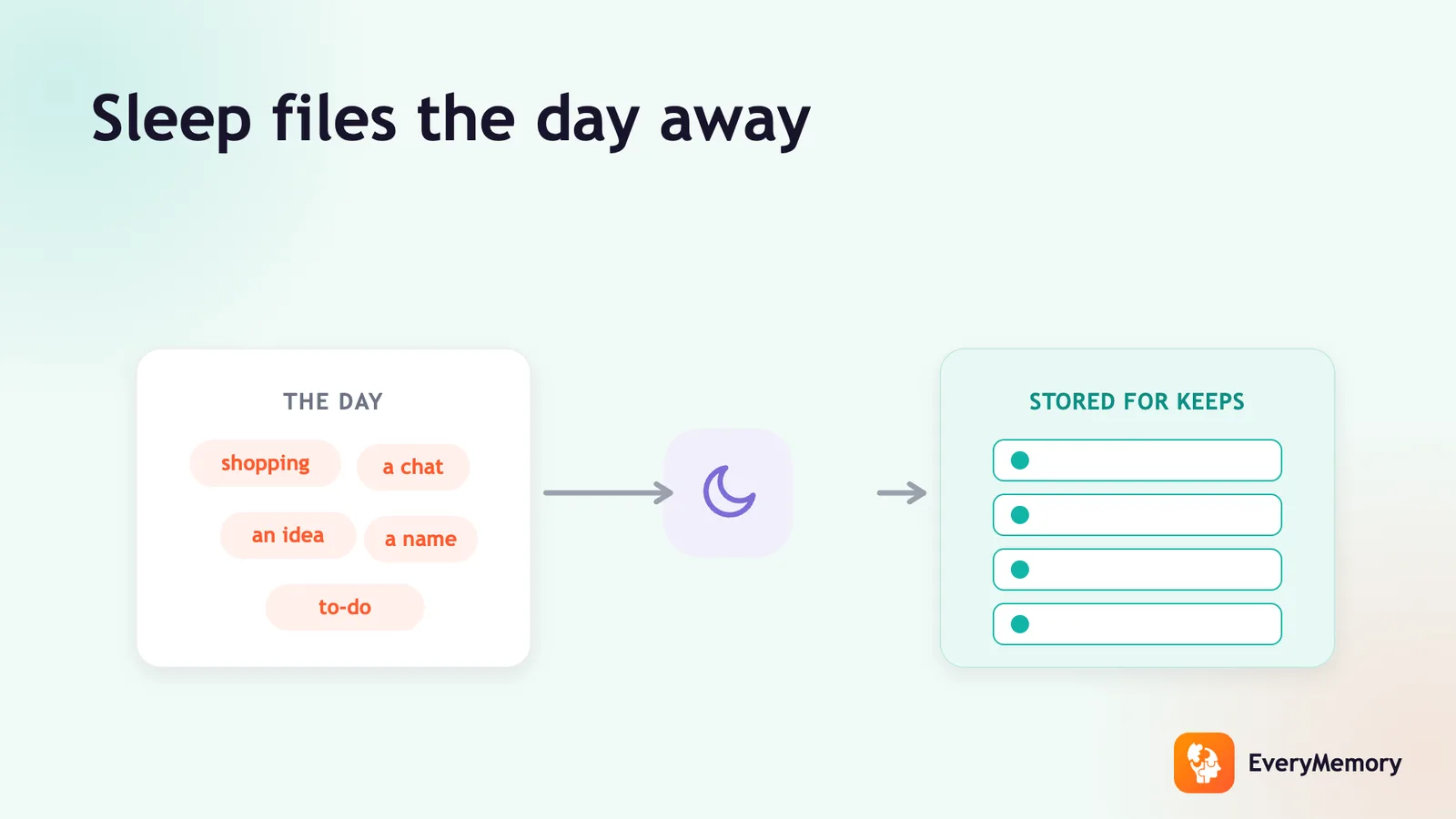
Almost everyone going through grief or a serious illness reports disrupted sleep: lying awake in the early hours, waking repeatedly, or sleeping far more than usual but never feeling rested. Sleep is the time when the brain consolidates the day's experiences into memory. When sleep is broken night after night, memory formation and recall both suffer. The connection between sleep and memory is well established - even a few weeks of poor sleep is enough to blunt concentration and word retrieval noticeably.
There is also the question of mental load. Grief carries an enormous administrative and emotional weight: arrangements to make, finances to review, family to contact, paperwork to navigate, and all of it against a backdrop of raw feeling. The brain only has so much working memory. When that capacity is entirely occupied by the business of surviving a loss, there is simply less available for the ordinary tasks of daily recall.
- Elevated stress hormones can temporarily impair working memory and attention.
- Disrupted sleep reduces the brain's ability to consolidate and retrieve memories.
- The mental load of grief and illness leaves little spare capacity for ordinary recall.
- Low mood, which commonly accompanies loss, is itself associated with slower thinking and word-finding difficulties.
When physical illness clouds thinking
The brain fog that follows a serious illness - a hospital stay, surgery, a prolonged infection, or a difficult flare of a chronic condition - has a different but related set of causes. The body in recovery redirects energy to healing: immune activity, tissue repair, and the management of inflammation are all metabolically expensive. The result is that the brain gets less of the body's resources for a time, and many people find their thinking feels slower, their memory patchier, and their attention harder to hold.
Inflammation, in particular, is now understood to play a role in the temporary cognitive changes that accompany physical illness. The experience of feeling mentally dull and forgetful while recovering from even a moderate illness is not a sign that anything has gone wrong - it is the body's sensible prioritisation in action. Our article on brain fog and what helps covers many of these mechanisms in a practical way.
For those who have experienced lingering cognitive symptoms after a respiratory illness, the article on long-COVID brain fog in older adults looks specifically at that experience and what is being learned about it.
How long does the fog usually last?
There is no single answer, because the experience varies widely depending on the nature and depth of the loss, the person's general health, and the support around them. Research on bereavement suggests that for many people, the sharpest cognitive effects - the worst of the attention problems and the most frustrating memory slips - begin to ease within the first several months, and many people find their thinking noticeably clearer by the end of the first year.
Recovery from physical illness follows a similar pattern of gradual return. The fog often lifts in stages, not all at once, and it is common to have good days and harder days within the same week. That variability is normal and does not mean the recovery has stalled.
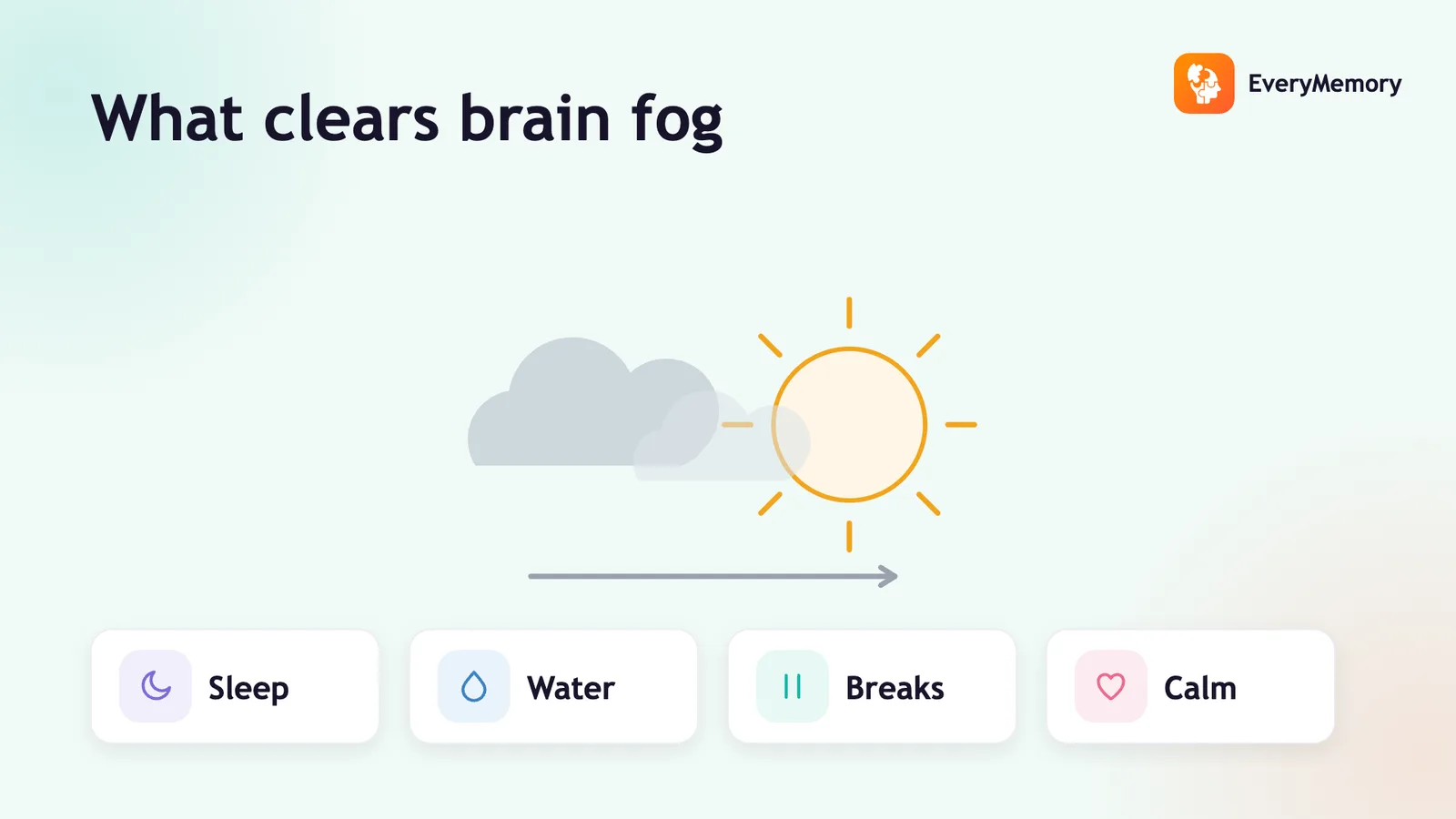
What tends to help the fog lift - across both grief and illness - is time, rest, gentle re-engagement with the routines of daily life, and, wherever possible, not fighting the limitations of the difficult period but working gently with them.
Gentle ways to support yourself through the fog
The most important thing to know is that forcing concentration when the brain is depleted rarely works, and often adds a layer of self-criticism that makes things worse. Many people find it genuinely helpful to externalise memory during this period: writing things down immediately, using a whiteboard near the door for daily reminders, keeping keys in the same place every time without exception.
Short, low-pressure engagements tend to be more sustainable than long demanding ones. A brief walk, a short conversation, ten minutes of something absorbing - these give the brain gentle stimulation without overwhelming it. Sleep, however imperfect, should be prioritised. Even lying quietly in a darkened room has some restorative value when true sleep is elusive.
- Write it down: a small notebook or phone note removes the need to hold everything in working memory.
- Lower the bar: aim for 'good enough' in ordinary tasks and save careful attention for what matters most.
- Keep one consistent daily routine, even a small one - it reduces the mental effort needed to navigate the day.
- Accept help when it is offered, especially for tasks that require sustained concentration.
- Be honest with people close to you - letting them know you're in a foggy patch means they can support rather than misread you.
Self-kindness is not optional
The frustration of forgetting things when you are already depleted can spiral quickly into shame or fear. Many people in the middle of grief worry that the fog means something is permanently wrong with them, or that they are failing to cope. Neither is generally true. The brain under pressure is not a broken brain - it is a brain doing exactly what brains do when asked to carry a great deal.
Speaking to a trusted friend, a GP, or a counsellor about what you are going through is a form of support for your thinking, not just your feelings. Human connection is itself associated with better cognitive function over time, as the research discussed in our section on stress and memory makes clear. You do not have to manage this alone.
✅ Try this today - The one-page daily anchor
During a foggy period, one small written anchor at the start of the day can do a lot of the memory work your tired brain would otherwise struggle to carry.
- Each morning, write down just three things: one thing you need to do today, one thing you are grateful for (however small), and one person you might be in touch with. Keep it brief - three lines is enough. The act of writing consolidates it better than a mental note.
- Put the note somewhere you will pass it several times: on the kettle, near the front door, beside where you sit for breakfast. Glancing at it during the day is not a failure of memory - it is a practical strategy.
- At the end of the day, look back at the note. Notice what you did manage. During hard times the brain tends to focus on what was missed - the written record is a gentle corrective. Over days and weeks, this small habit can rebuild a sense of reliability and gentle continuity.
⚠ When to talk to a professional
If memory changes feel sudden, are rapidly worsening, or go beyond the ordinary fog of a hard time, it is worth speaking with a qualified healthcare professional to rule out any underlying cause. Equally, if grief or low mood feels overwhelming - if you are struggling to cope day to day, or having thoughts of harming yourself - please reach out to your doctor or a support service. You do not need to manage either of these things alone.