 EveryMemory
How to Avoid Cramming (and What to Do Instead)
Cramming fails because there's no time to consolidate. Start earlier, study in short spaced sessions, and test yourself - the plan that replaces the all-nighter.
Part of the guide: How to Improve Your Memory: The Complete Beginner's Guide →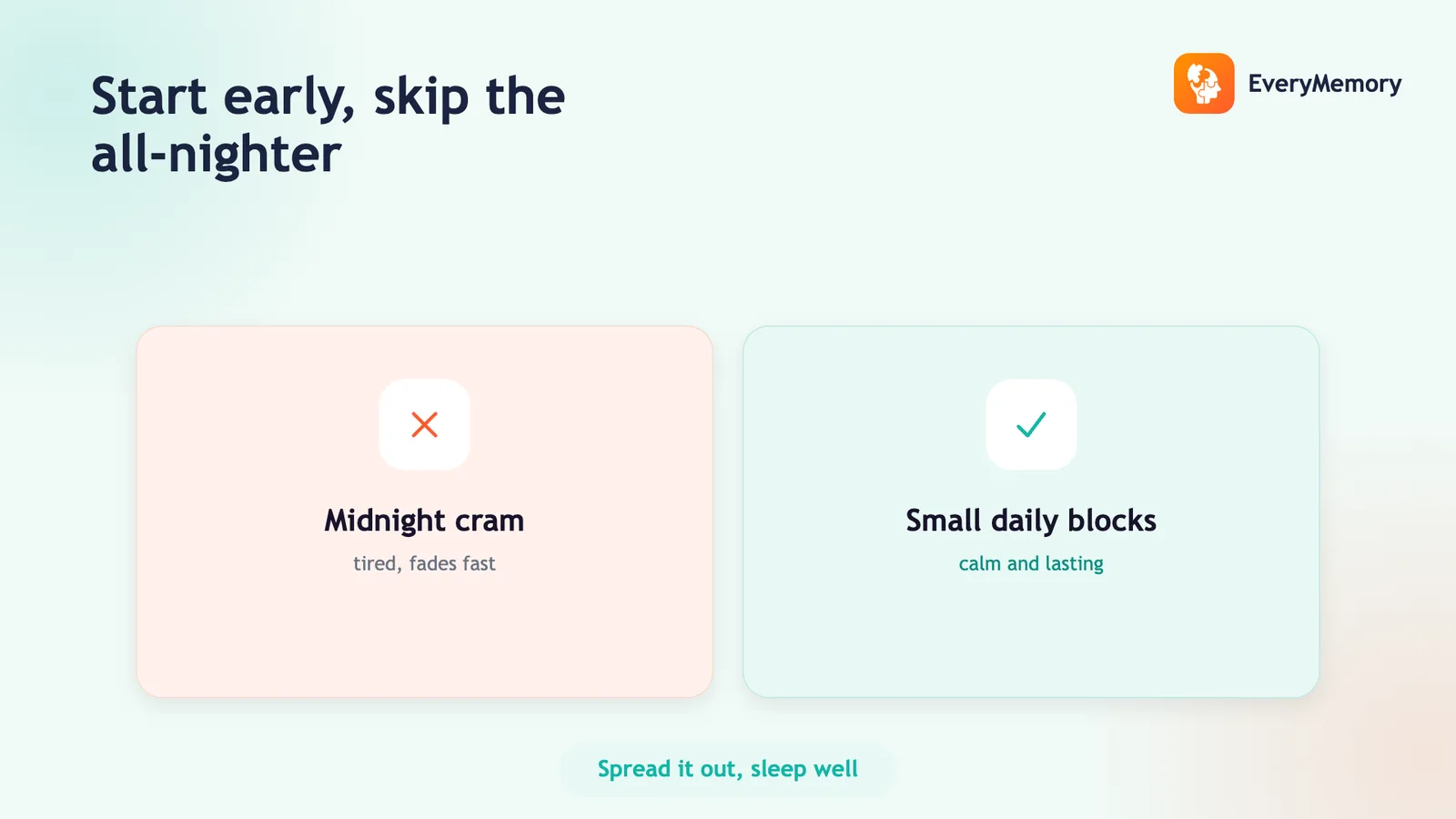
⚡ Quick answer
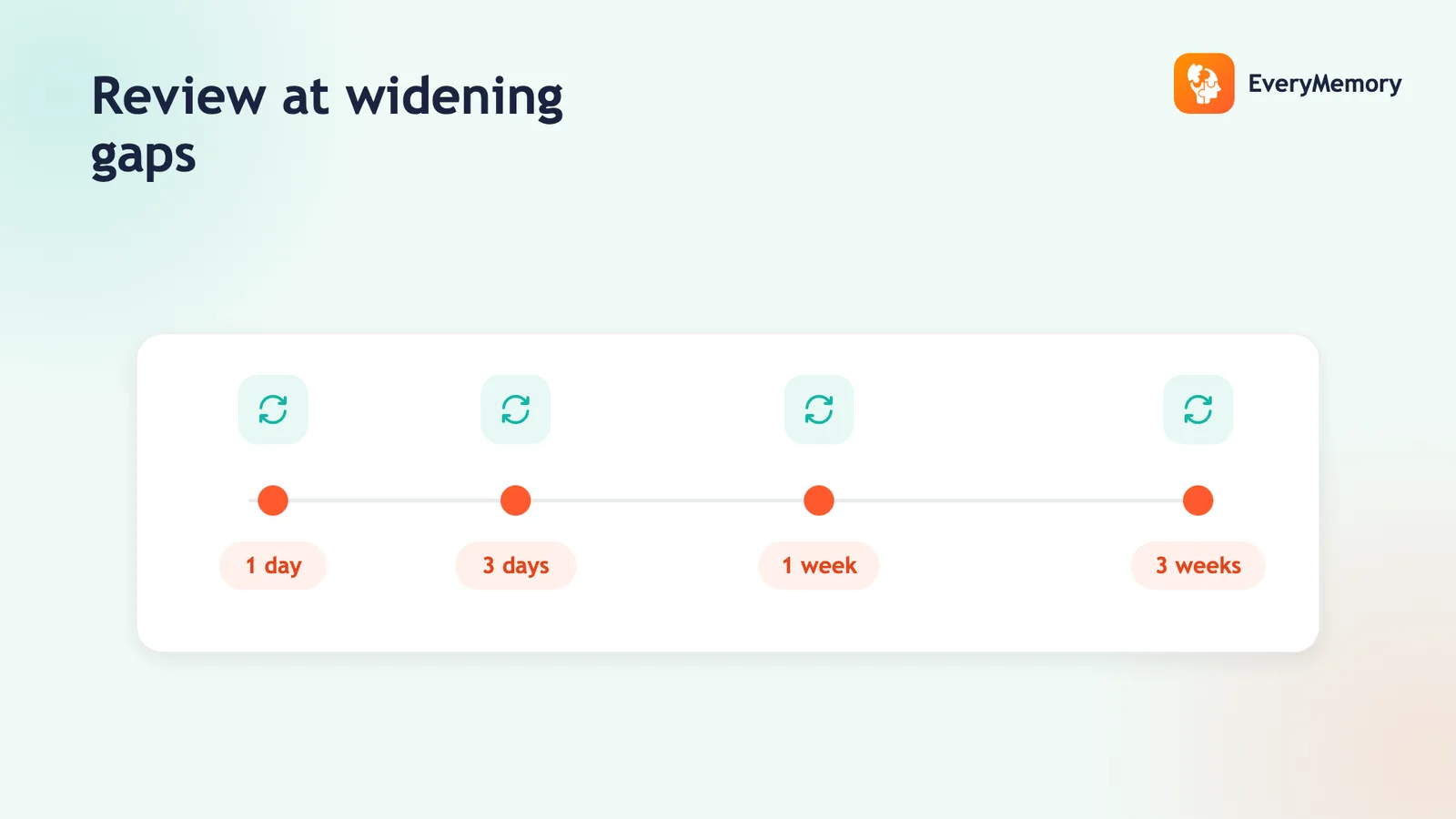
To avoid cramming, start earlier and study in short spaced sessions instead of one marathon. Break the material into chunks across the days you have, test yourself each session, and review on a widening schedule. Cramming loads everything in with no time to consolidate, so it drains away within days - spacing keeps it.
Key takeaways
- Cramming fails because there's no time to consolidate, so material fades together within days.
- Start earlier and plan backwards from the deadline, spreading material across the days you have.
- Break it into short focused sessions and make each one a self-test, not a reread.
- If you must cram, prioritise the highest-value topics, self-test, and still protect some sleep.
Everyone knows cramming is bad and almost everyone does it anyway, because the alternative was never actually planned. Avoiding cramming isn't about discipline - it's about setting up so you don't need to.
Here's the simple plan that replaces the all-nighter.
Why cramming fails
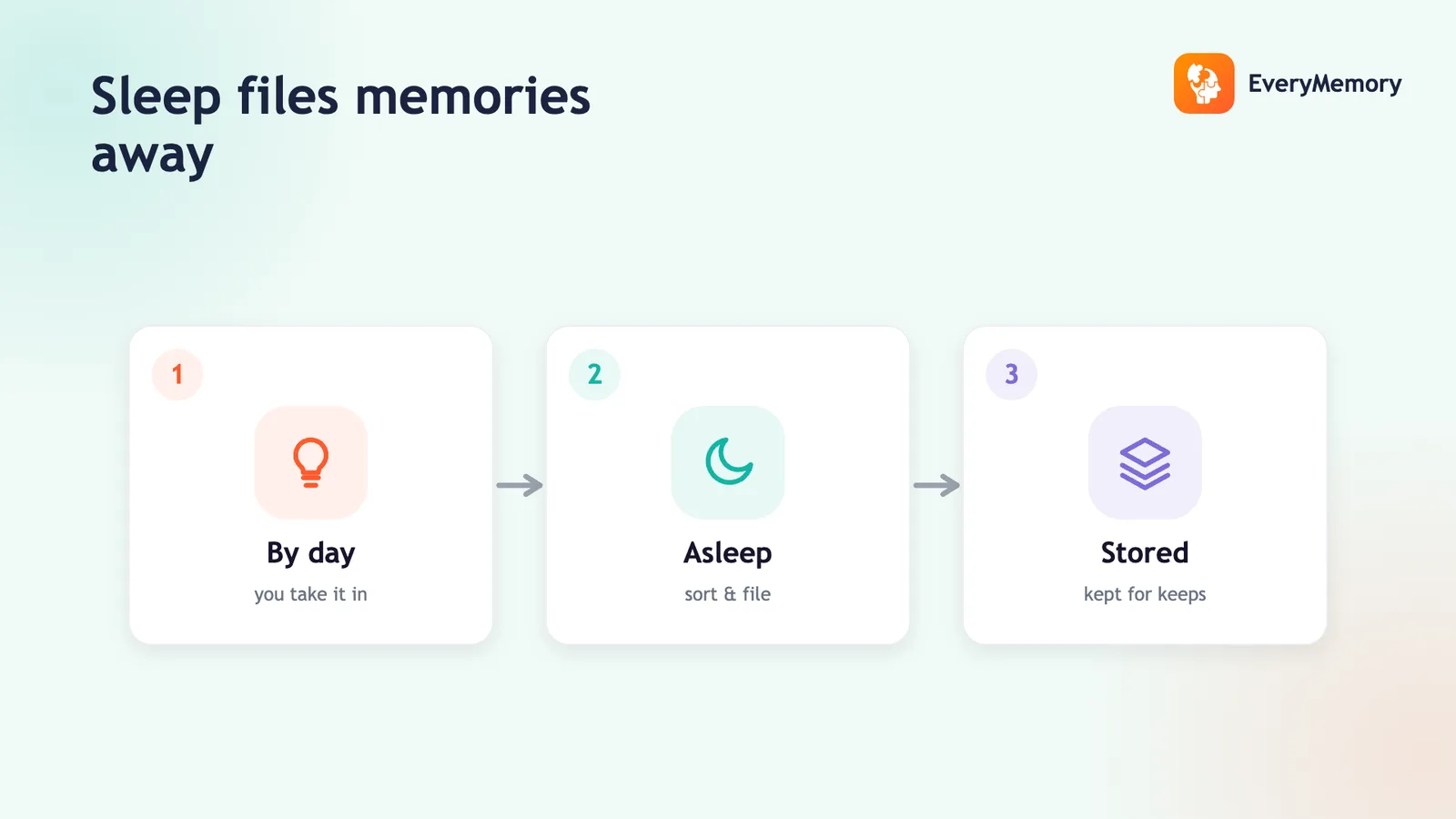
Newly learned material needs time and sleep to consolidate. Cramming gives it neither - everything goes in at once and fades together, often before the deadline. You also can't tell crammed familiarity from real knowledge until it's too late to fix. The mechanism is in spaced repetition.
Start earlier - plan backwards
Work backwards from the deadline and spread the material across the days you have. Even a few days turns one impossible session into several manageable ones with time to consolidate between them. Starting earlier is the whole game; everything else is detail.
Chunk it into short sessions
Break the material into small pieces and assign them to short, focused sessions across your days. Short and spaced beats long and crammed, and small sessions are far easier to actually start - which is half the battle.
Test yourself every session
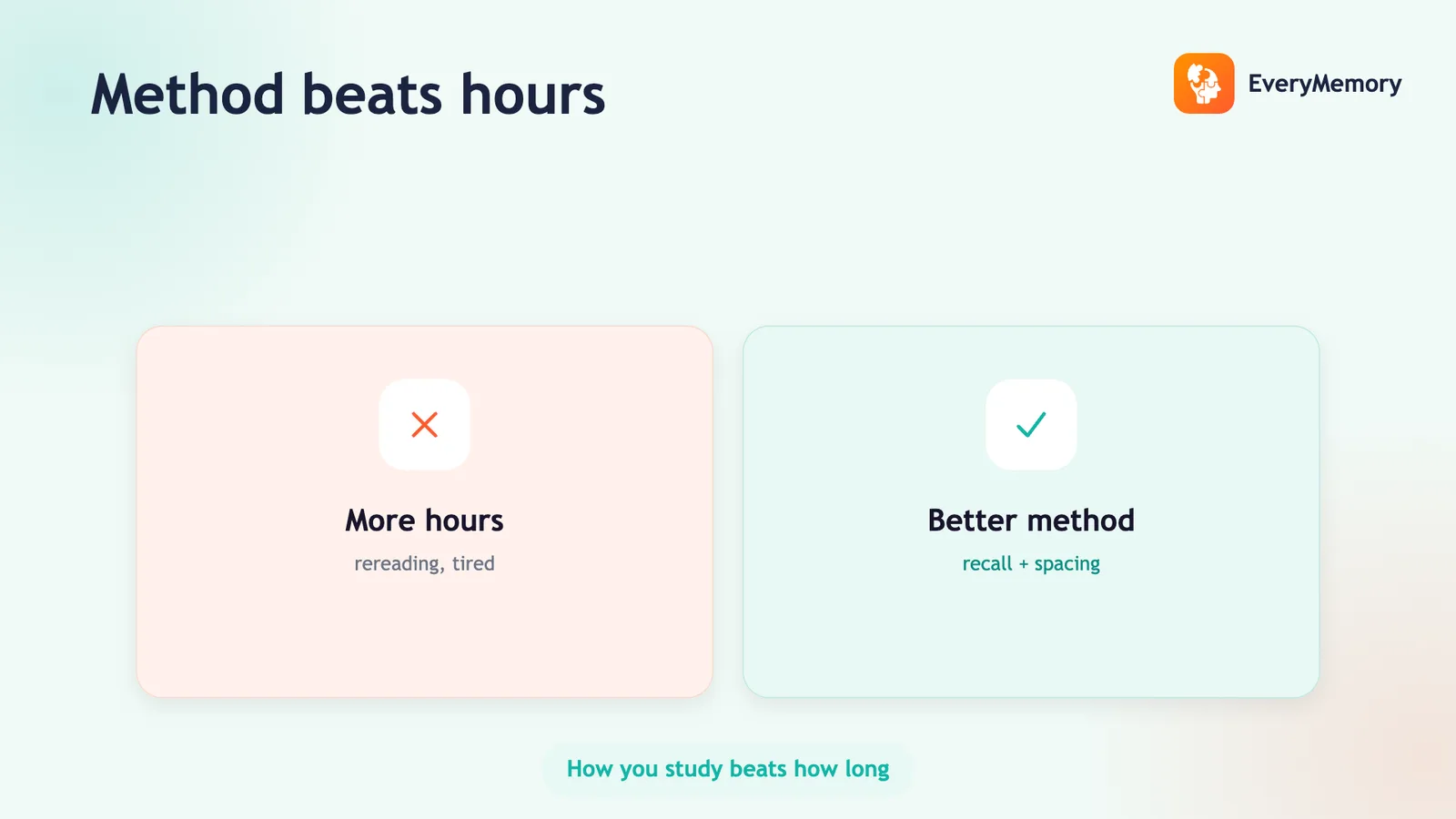
Make each session a retrieval, not a reread: recall what you covered before, then learn the next piece. This active recall both strengthens memory and shows you what still needs work, so your time goes where it counts.
If you must cram: damage control
Sometimes time runs out. If so, prioritise ruthlessly - the highest-value topics only - self-test rather than reread, and still protect some sleep, because exhaustion undermines the recall you're cramming for (how sleep affects memory). A focused, tested, partly-rested cram beats a sleepless reread of everything.
✅ Try this today - plan backwards in five minutes
Turn one deadline into spaced sessions:
- Write the deadline and count the days you have.
- Split the material into that many small chunks.
- Assign one chunk to a short session each day, and start each session by recalling the last.