 EveryMemory
How to Increase Your Memory Power
'Memory power' isn't a fixed tank you can pump up. The levers that genuinely raise how much you remember - and the shortcuts to skip.
Part of the guide: Brain Exercises for Seniors: The Complete Guide →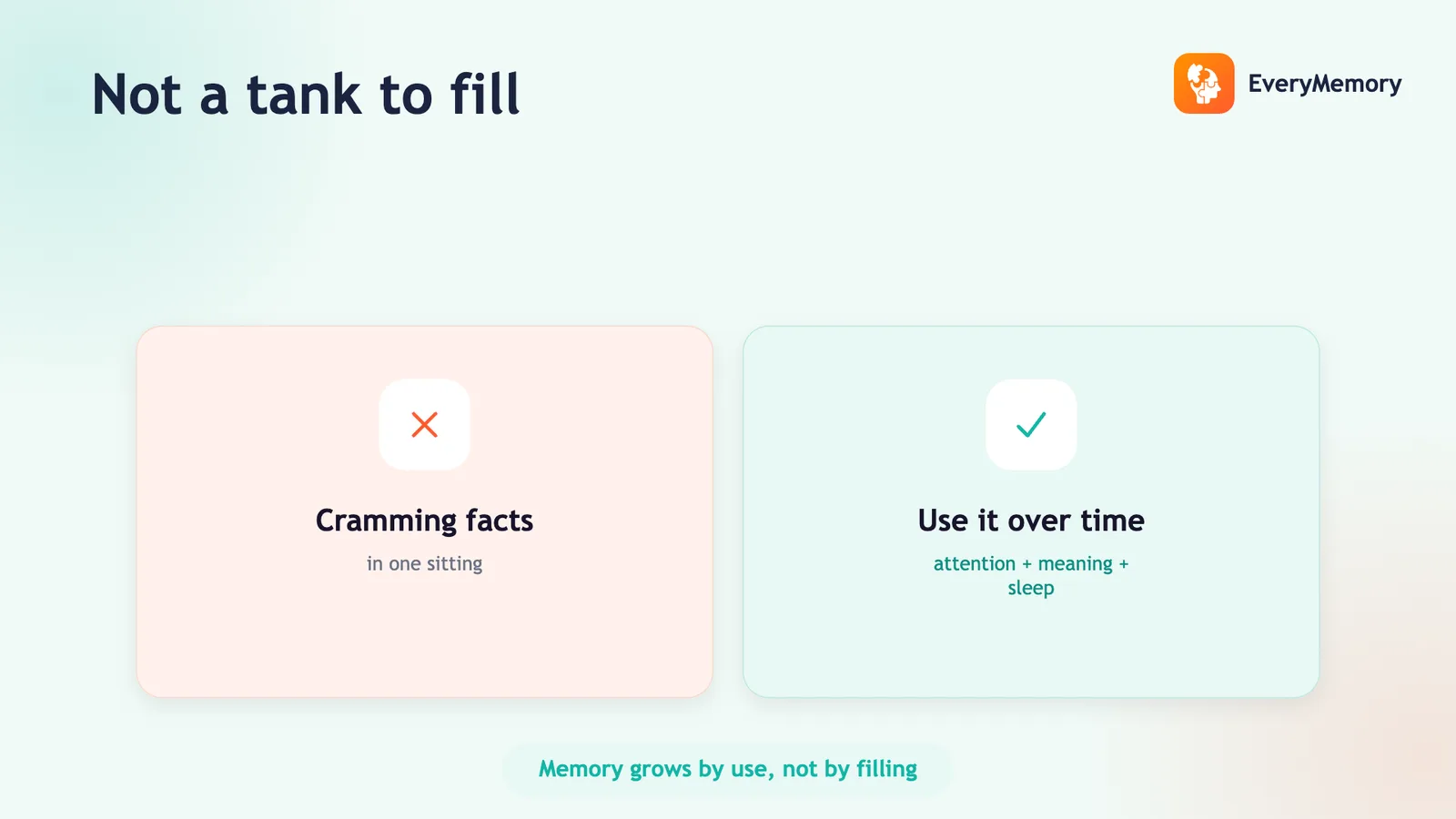
⚡ Quick answer
You increase your 'memory power' less by training some raw capacity and more by working with how memory forms: pay attention, give information meaning, retrieve it rather than reread, and protect the sleep that consolidates it. Add physical activity and learning new things, and use techniques like association for the hard-to-hold items. Habits, not a single boost, do the work.
Key takeaways
- There's no fixed 'memory power' tank - what you remember depends on encoding, meaning, and retrieval, all improvable.
- The levers are attention, meaning (association), retrieval over rereading, sleep, movement, and novelty.
- Use techniques like the memory palace for arbitrary facts; they change the information's form, not your capacity.
- Be skeptical of pills and supplements; the dependable boosters are everyday habits.
"Memory power" sounds like a dial you could turn up. It isn't - there's no single capacity to boost. But how much you actually remember is very much within your control, once you work with how memory forms.
Here are the levers that genuinely raise it, and the shortcuts worth ignoring.
There's no fixed 'tank' to top up
Memory isn't a single reservoir you can fill. What you remember depends on how well information is taken in, given meaning, and pulled back out - each of which you can improve. So 'increasing memory power' really means getting better at those steps, not unlocking hidden capacity.
The levers that actually raise it
- Attention - nothing encodes without it; single-task on what matters.
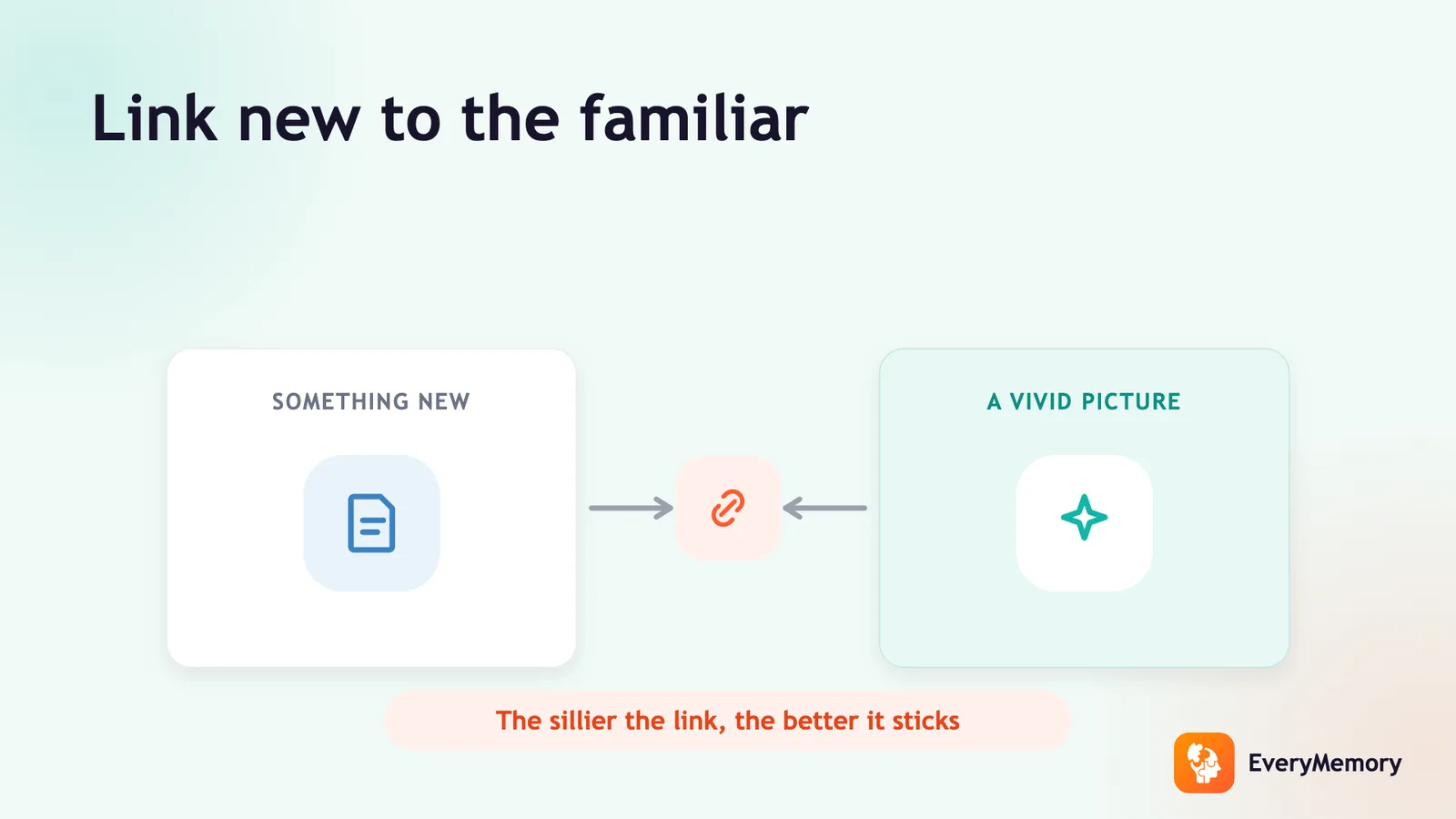
- Meaning - link new information to what you already know. See association.
- Retrieval - recall from memory instead of rereading; it strengthens the memory.
- Sleep - it consolidates what you learned; see sleep and memory.
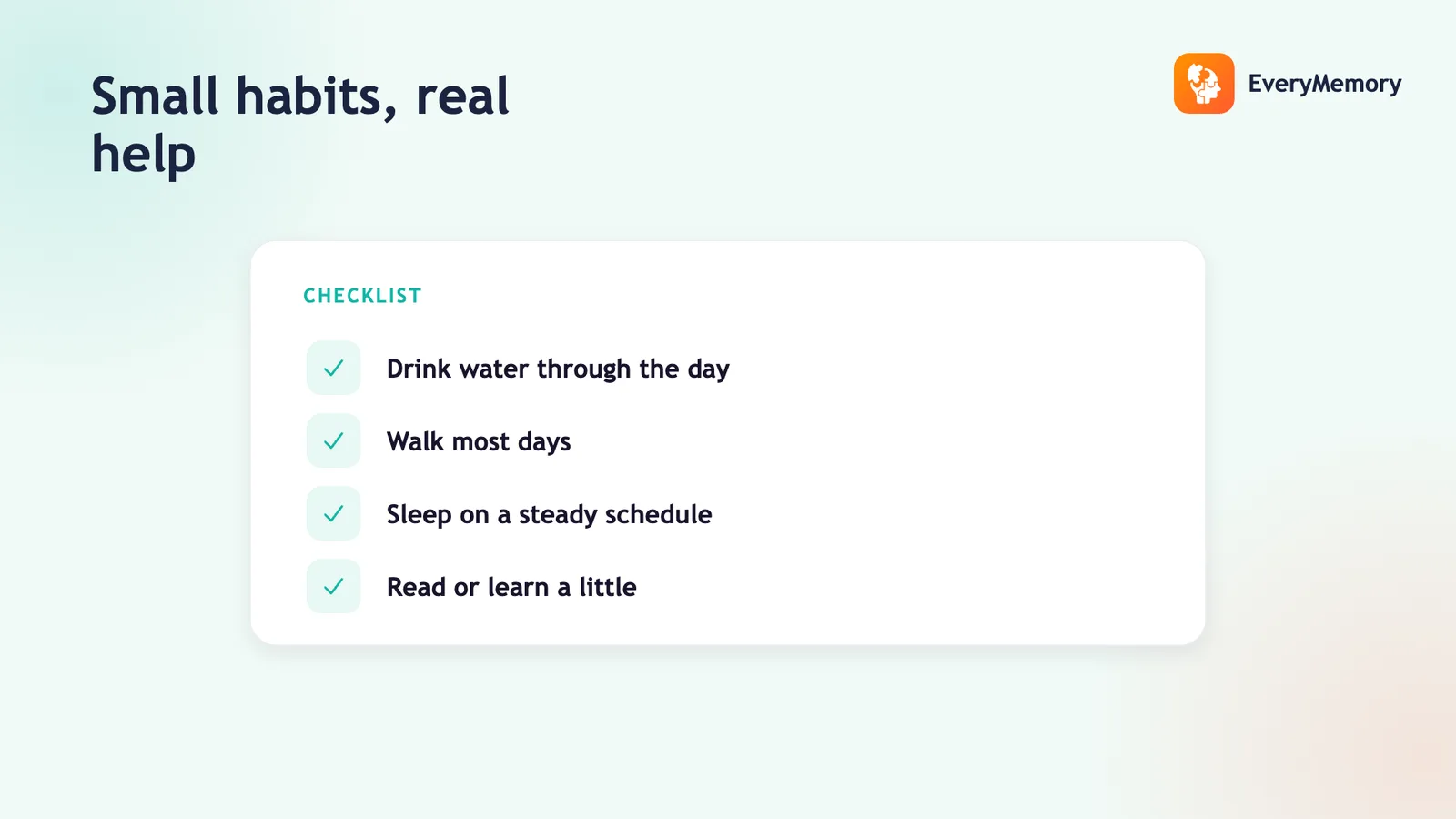
- Movement and novelty - physical activity and learning new things keep the brain adaptable.
Use techniques for the hard-to-hold stuff
For arbitrary information - names, numbers, lists - willpower won't help, but technique will. The memory palace and chunking give that information the structure memory needs; start with memory techniques. They don't raise general capacity; they change the information into a form you hold easily.
Make it a small daily habit
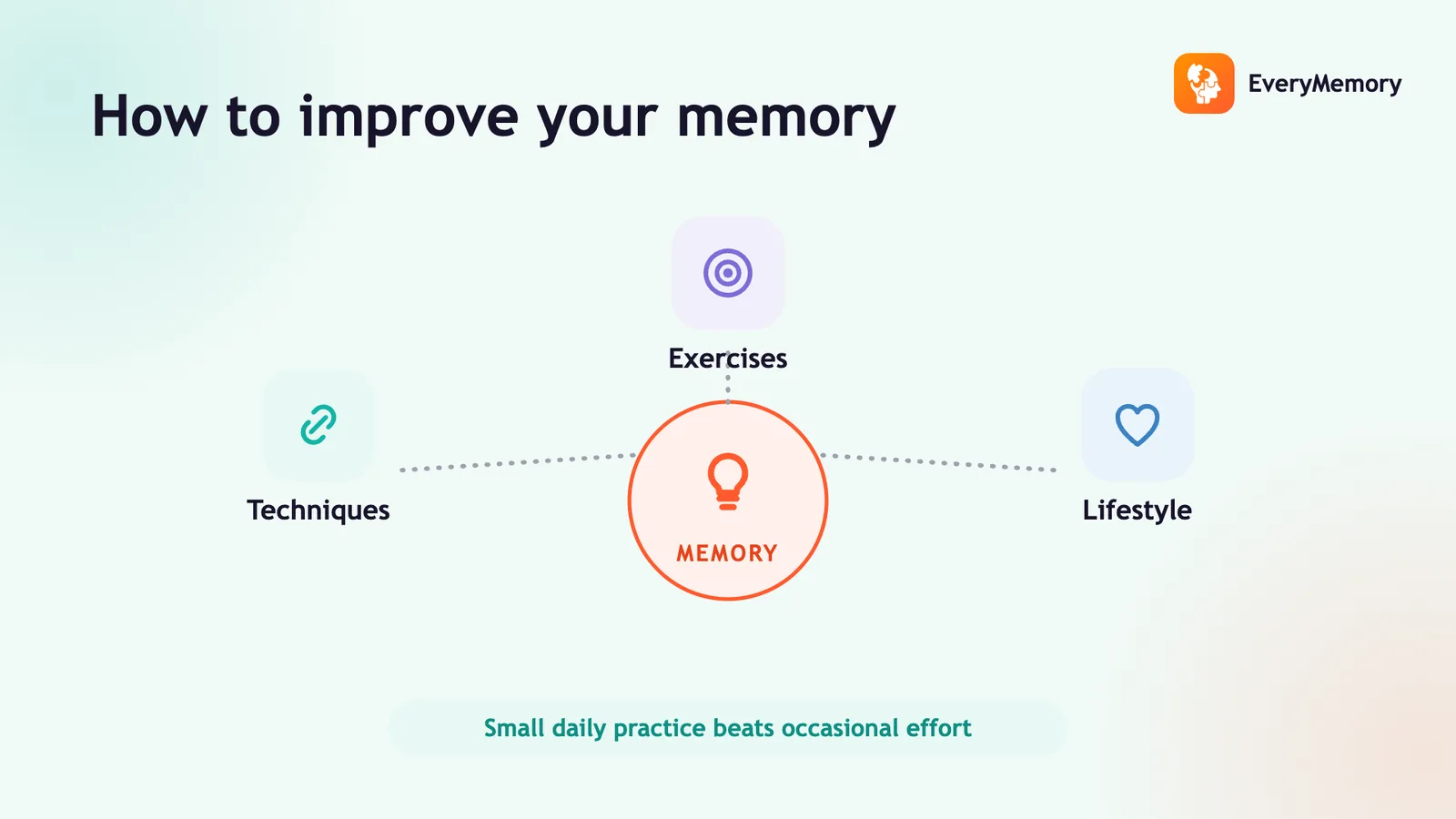
These levers compound when used consistently. A few minutes of effortful recall most days, plus the lifestyle basics, does far more than an occasional push - the wider picture is in how to improve your memory and memory booster habits.
Skip the shortcuts
Be skeptical of pills, supplements, and apps promising dramatic 'memory power' gains - the claims outrun the evidence. The dependable boosters are attention, meaning, retrieval, sleep, and movement, none of which come in a bottle.