 EveryMemory
How to Memorise Anything: A Practical Workflow
There's no single trick, but there is a reliable order: understand, chunk, picture, place, and test. The workflow that handles almost anything.
Part of the guide: How to Improve Your Memory: The Complete Beginner's Guide →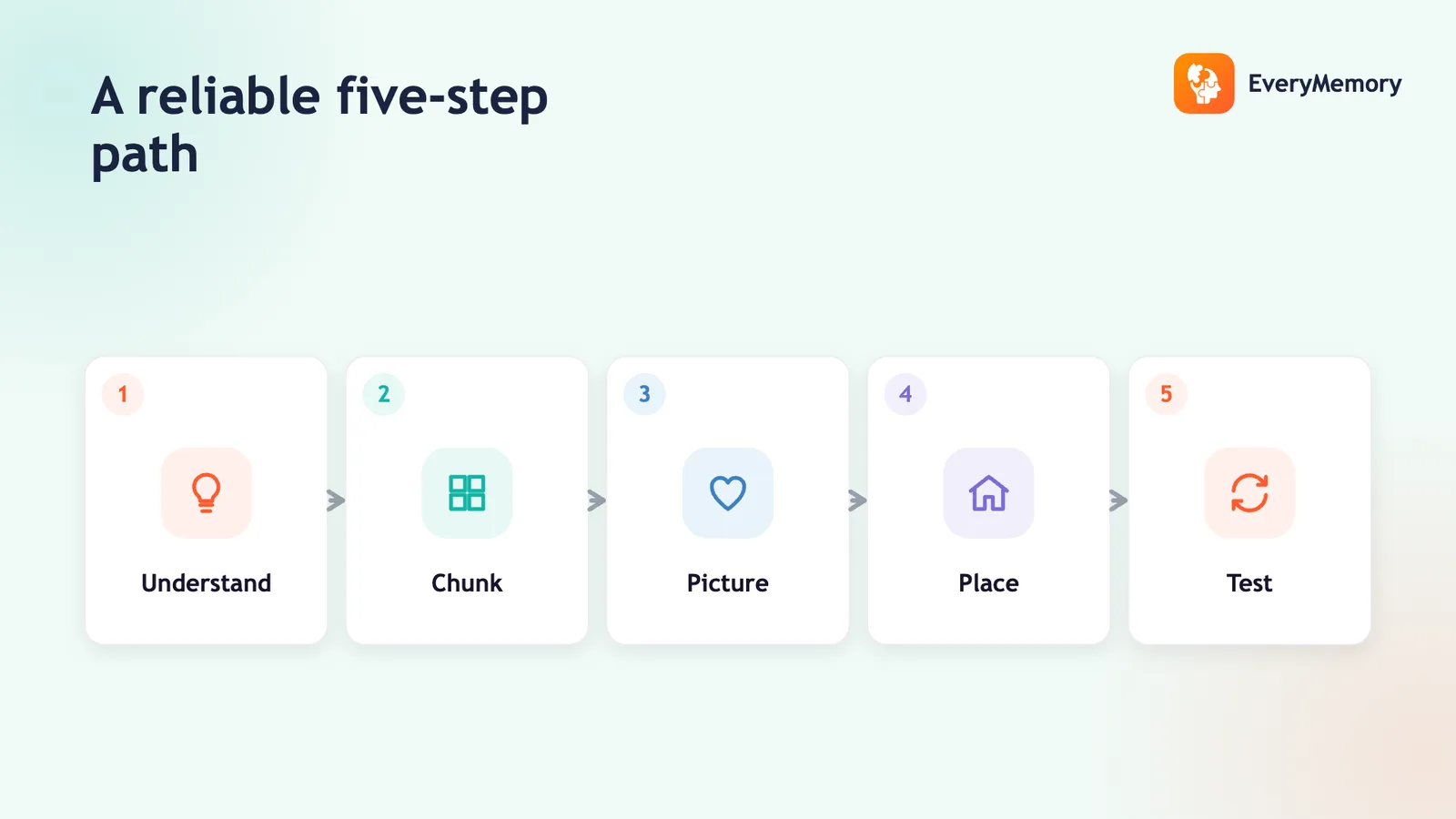
⚡ Quick answer
There's no single trick to memorise anything, but there is a reliable workflow: understand it first, break it into chunks, turn each chunk into a vivid image or link, place those in a memory palace or story, then test yourself with spaced recall. Understanding plus structure plus retrieval handles almost any material.
Key takeaways
- There's no single trick, but a reliable workflow: understand, chunk, picture, place, then test with spaced recall.
- Understand material first - there's far less to memorise by brute force once it makes sense.
- Structure beats repetition: one vivid, well-placed image outlasts a dozen dull rereads.
- Memorising is finished only when you can retrieve it on demand, so spaced self-testing is non-negotiable.
People want a single trick for memorising anything. There isn't one - but there is a dependable workflow that the techniques slot into, and following it in order handles most material.
Five steps: understand, chunk, picture, place, test.
The workflow, in order
- Understand it first. Memorising something you don't understand is the hardest, most fragile route. Grasp the meaning, then memorise.
- Chunk it. Break the material into a handful of manageable pieces.
- Picture each chunk. Turn it into a vivid image or link it to something you know.
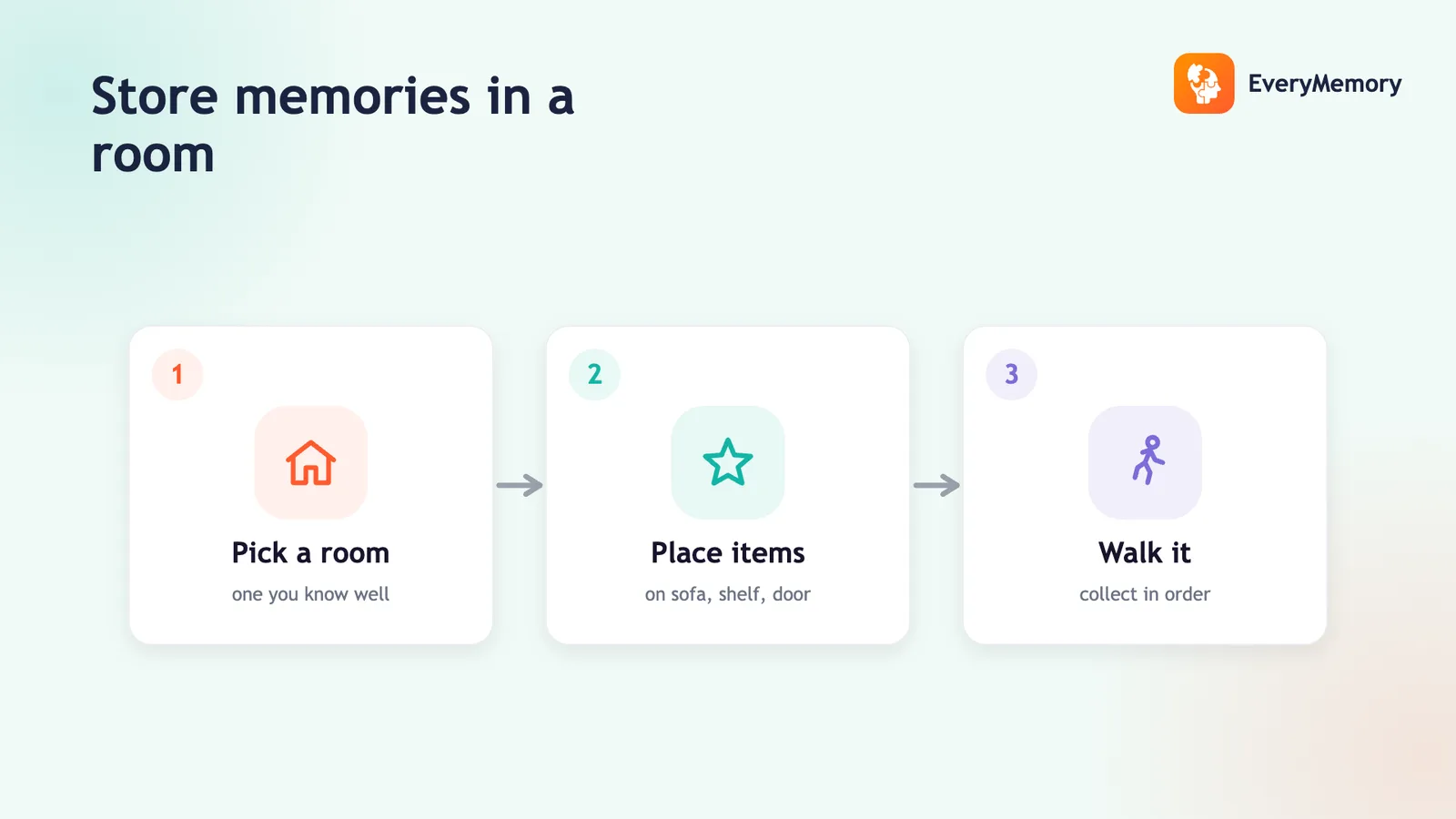
- Place the images. Put them in order using a memory palace or a story.
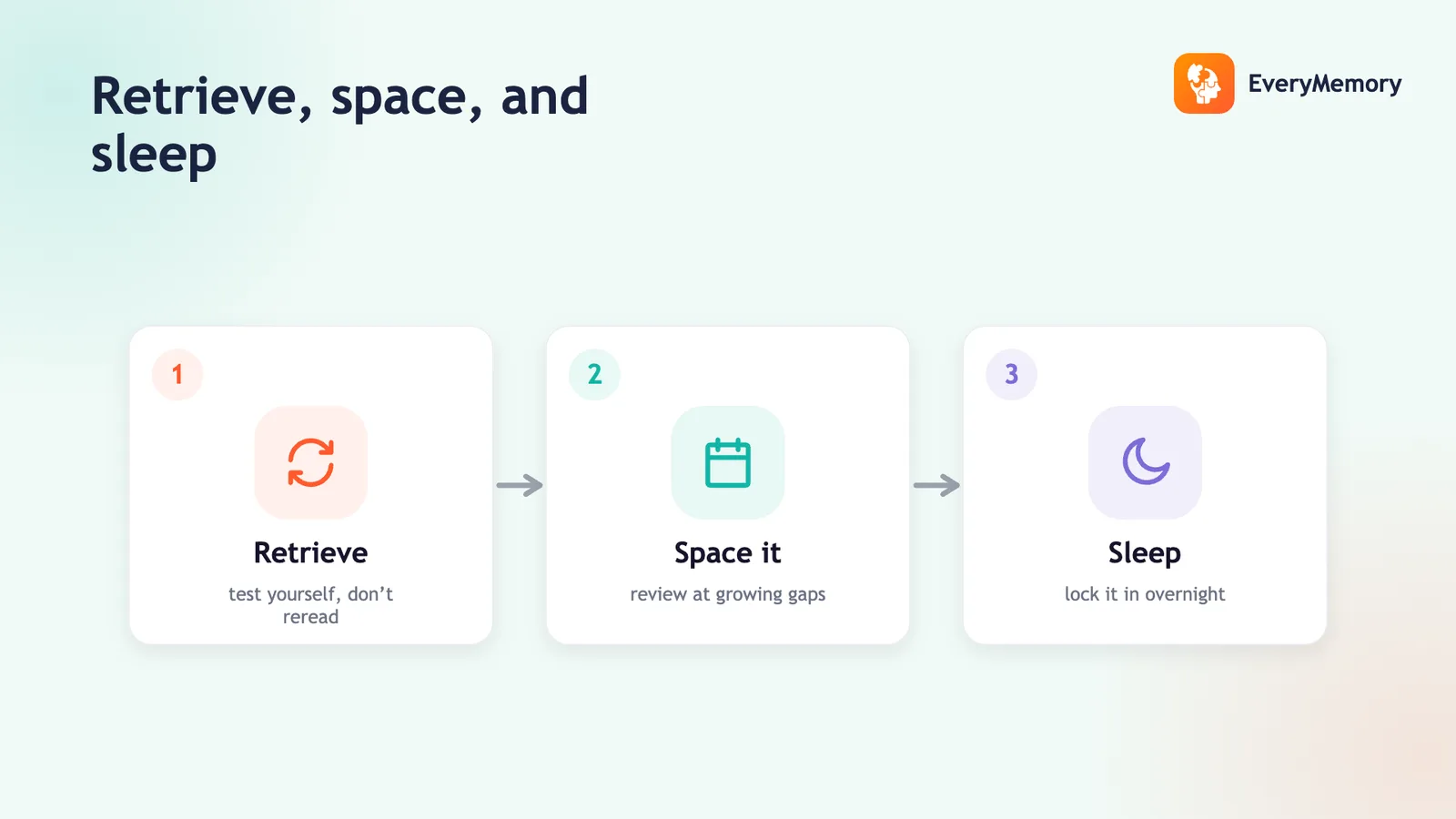
- Test with spaced recall. Retrieve it from memory today, tomorrow, and in a few days.
Understand before you memorise
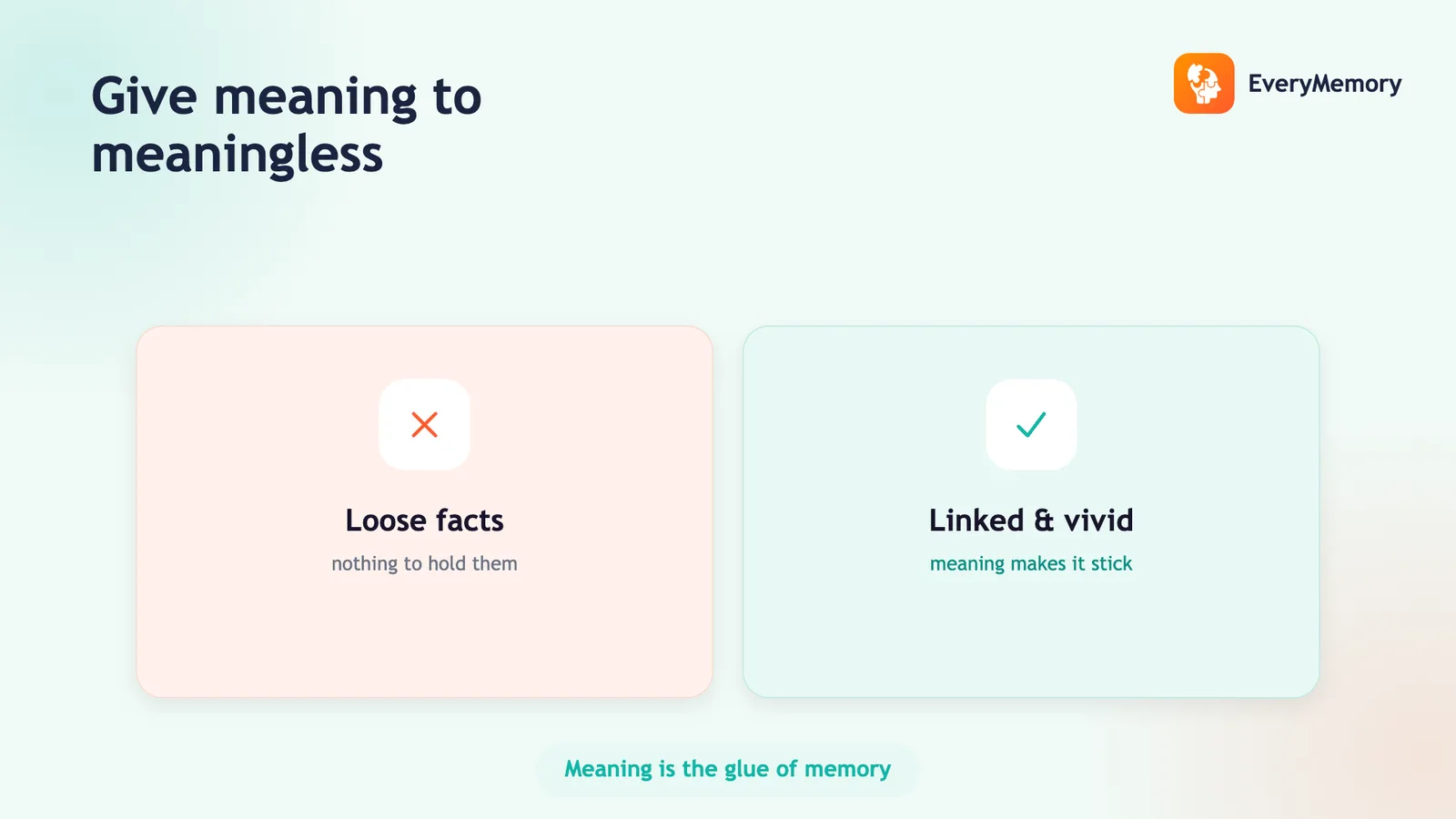
Material you understand has built-in structure and connections, so there's far less to memorise by brute force. Spend the first effort making sense of it - what depends on what, why it's true. Then the memorising step is short. Skipping this is why rote facts evaporate.
Structure beats repetition
Repeating something twenty times is weak; giving it structure once is strong. Chunking and imagery impose order and meaning, which is what memory holds. One vivid, well-placed image beats a dozen dull rereads.
Testing is non-negotiable
Memorising isn't finished when it goes in - it's finished when you can pull it out on demand. Test yourself from memory and space those tests across days. Retrieval is the step most people skip, and it's the one that makes it permanent - see improving retention.
Match the tool to the material
Ordered list - memory palace or peg system. Short errand list - link and story. Numbers - chunking. A fixed short list - an acronym. Names - association and attention. The workflow stays the same; only the 'picture and place' tool changes with the material.
✅ Try this today - run the workflow once
Pick something small you need to memorise:
- Make sure you understand it, then break it into 3–5 chunks.
- Turn each chunk into a vivid image and place them in order along a familiar route.
- Recall the lot from memory now, tomorrow, and in three days.