 EveryMemory
How to Memorize a Poem or Favourite Reading
Whether it's a poem you love, a wedding reading, or a passage of scripture, these gentle step-by-step techniques make memorizing meaningful text feel manageable - and even joyful.
Part of the guide: How to Improve Your Memory: The Complete Beginner's Guide →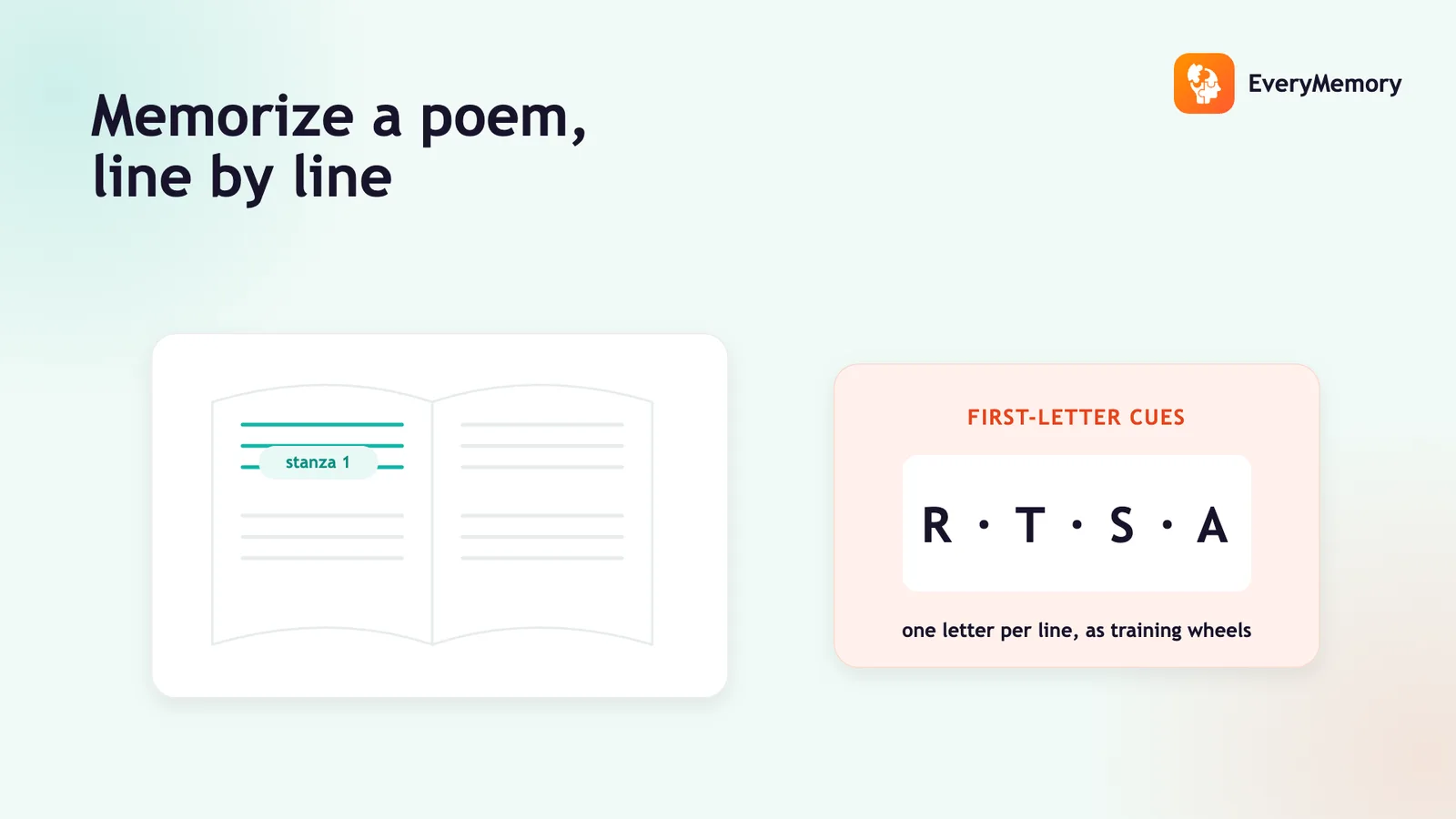
⚡ Quick answer
To memorize a poem or reading: read it slowly for meaning first, then break it into small chunks of two to four lines and learn one chunk at a time. Use the rhythm and rhyme as a built-in guide, create a first-letter cue for tricky lines, and rehearse the whole piece at spaced intervals - same evening, next morning, and a few days later. Understanding the text deeply is the single biggest shortcut to remembering it.
Key takeaways
- Understand the meaning of a piece fully before trying to memorize the words - semantic understanding is the biggest shortcut to recall.
- Break the text into chunks of two to four lines and learn one chunk at a time, always practising from the beginning.
- Read aloud and use the natural rhythm and rhyme as built-in memory cues - they carry you through gaps.
- Space your rehearsals over several days so sleep can consolidate each session; massed practice in one sitting produces fragile memory.
There is something deeply satisfying about carrying a poem, a reading, or a passage of scripture entirely in your own memory - able to bring it out at a wedding, a family gathering, a quiet moment of reflection. Yet many adults who would love to do exactly that assume the window for that kind of memorizing closed somewhere back in school.
It hasn't. The techniques that make text stick in memory are gentle, well understood, and well within reach. They work even better when the text carries meaning you care about - which is almost always the case when an adult chooses to memorize something. This guide walks through the whole process, from first reading to confident recall.
Start with meaning, not repetition
The most common mistake in memorizing text is reaching for repetition before understanding. Reading a poem twenty times in a row without really sitting with it produces a fragile memory that shatters under pressure - a change of setting, a moment of nerves, a single forgotten word.
Memory is built on connections, and meaning creates the richest connections of all. Psychologists call this semantic encoding: when you understand what something means, your brain links it to a deep web of existing knowledge and emotion. Those links are what retrieval follows.
Before you try to memorize anything, spend a few minutes reading the piece for meaning. What is it actually saying? What does each stanza mean in plain language? Once you can paraphrase the whole piece, memorizing the actual words becomes dramatically easier - you are filling in a shape you already understand.
Chunk by line or stanza, not all at once
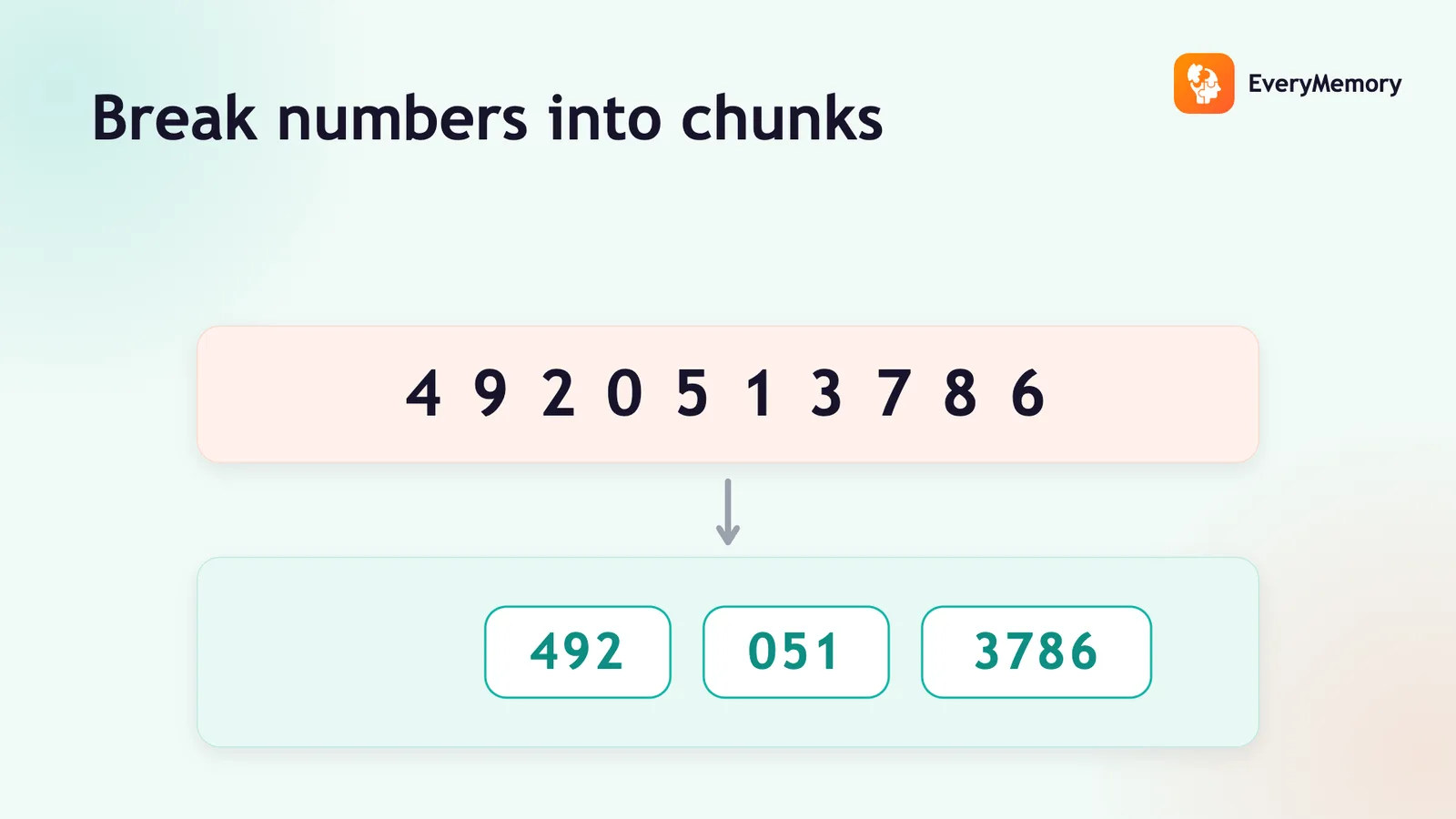
Once you understand the piece, break it into small working units. For most poems and readings, two to four lines is the right chunk size - enough to hold a complete thought, small enough to hold in working memory. Our guide to the chunking technique explains why this works so reliably across all kinds of information.
Work through the piece in order, adding one new chunk only when the previous one is solid. The most common mistake is rushing ahead - learning the first stanza shakily, then jumping to the second and finding neither holds. After each new chunk, always practise from the very beginning, not just the new section.
Let the rhythm and rhyme do the work
Rhythm and rhyme are memory technologies used for thousands of years - oral cultures preserved histories and stories in verse precisely because the musical structure of language makes it far easier to hold and reproduce. You are not fighting against anything when you lean on these features; you are using them as they were designed.
Read your piece aloud at a natural pace. Pay attention to where the stresses fall, where the pauses come, and where the lines end. When you rehearse, keep the same rhythm and intonation. The sound pattern itself becomes a cue: if you lose a word mid-line, the rhythm will often carry you to it.
This is also where association becomes powerful: link each stanza to a feeling, an image, or a personal memory. The emotional tone of a stanza is a strong retrieval cue. If a verse feels like a quiet autumn afternoon, that feeling is an anchor you can find your way back to.
First-letter cues for the tricky lines
Every piece has two or three lines that simply won't stick - lines where word choices feel arbitrary or the syntax is unusual. For these, a first-letter cue is a reliable lifeline.
Write out the first letter of each word in the difficult line on a small card. Practise until you can recite the full line from those letters alone, then practise without the card. The letters act as scaffolding - just enough to prompt your memory without doing the work for it.
For an event, some readers write only the first letter of the opening word of each stanza on a palm card. This gives confidence without becoming a crutch. The same idea underpins the strategy in how to remember a speech - anchor cues for key transitions, not a full script.
Space your rehearsals to make it last
Massed practice - running the poem over and over in one sitting - feels productive but produces brittle memory. The same rehearsal time spread across several days produces memory that is far more durable under the mild pressure of a real event.
Sleep plays an active role in consolidating what you practised during the day. Rehearsing once in the morning, once in the evening, then again the next day gives sleep two opportunities to solidify the material. This is the logic behind spaced repetition applied to meaningful text: each rehearsal should be a genuine test - no looking - followed by filling in whatever went wrong.
If you are preparing for a specific event, do a full dress rehearsal at least two days before: stand up, say it aloud at the pace and volume you will actually use. The physical experience of delivering the piece is its own kind of memory.
Recovering when you lose your place
Even well-prepared speakers lose a line under the mild pressure of a real event. The instinct is to stop and panic - which makes retrieval harder. The better response is to pause for one breath, return to the last line you're sure of, and let the rhythm carry you forward. Almost always, the next line surfaces.
If it genuinely doesn't come, paraphrase the meaning of the missing section in your own words, then pick up the text at the next line you know. Most audiences are moved by presence and meaning, not word-for-word accuracy.
Practise small recoveries in rehearsal: deliberately stop mid-stanza, pause, then find your way back. A few repetitions and the recovery becomes automatic.
✅ Try this today - The three-day poem plan
Choose any piece of six to twelve lines - a poem, a verse, a short reading - and follow this schedule:
- Day 1 morning: read the whole piece slowly for meaning. Paraphrase each stanza aloud in your own words. Then learn the first two chunks (2–4 lines each) until you can say them without looking.
- Day 1 evening: add the next two chunks. Practise the whole piece from the top - out loud, at the natural pace.
- Day 2: rehearse the full piece morning and evening, treating each session as a real test - no peeking until you have genuinely tried. Fill in any gaps, then run it again.
- Day 3: one full rehearsal, standing up, at the pace and volume you will actually use. Note any first-letter cues you need for tricky lines and write them on a small card.
⚠ When to talk to a professional
If you notice sudden, rapid, or worsening changes in your ability to recall familiar words or material you have known for years, it is worth mentioning to your GP - not as a cause for alarm, but so they have the full picture.