EveryMemory
How to Remember a Speech or What to Say
Whether it's a wedding toast, a doctor's appointment, or a few words at a family gathering, these practical techniques help you speak confidently without blanking.
Part of the guide: How to Improve Your Memory: The Complete Beginner's Guide →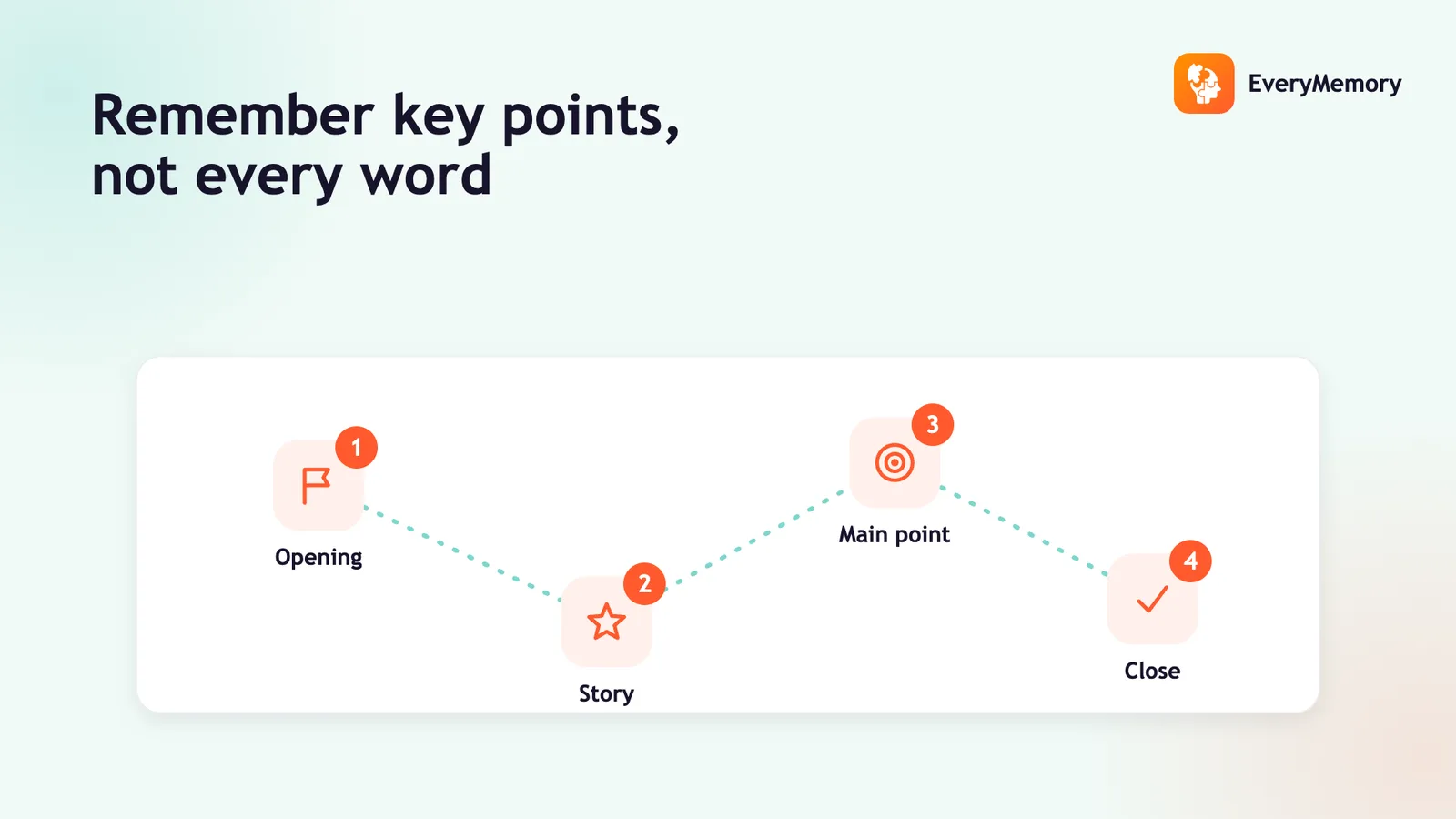
⚡ Quick answer
To remember a speech or what you want to say, organise your content around a small number of key points rather than trying to memorise every word. Use the memory palace technique to anchor each point to a familiar location, chunk your material into manageable pieces, rehearse across several short sessions spread over days, and keep a simple cue card as a backup. Structure and rehearsal together eliminate most of the blanking that people worry about.
Key takeaways
- Memorising key points rather than exact words is more reliable and sounds more natural under pressure.
- The memory palace links each point to a familiar location, giving your brain a spatial route to follow when you speak.
- Spaced rehearsal - short sessions spread over several days - produces far better retention than one long session the night before.
- A simple cue card with key words (not sentences) is a smart backup that reduces anxiety and keeps you on track.
You have something important to say - a toast at your grandchild's wedding, a few prepared words at a retirement party, or the questions you must not forget at your next doctor's appointment. You know the content. The worry is that the moment you stand up, your mind will go blank.
That fear is very common, and it has a practical solution. The best approaches are not about memorising every word - they are about structuring your thoughts so well that the words come naturally when you need them.
Why word-for-word memorisation usually backfires
The instinct when you have something important to say is to try to memorise it word for word, as if you were learning lines for a play. This approach is harder than it sounds and often makes things worse. When you are nervous, a single forgotten word can derail the whole chain - because the words were the structure, and the structure has now broken.
A more reliable method is to memorise the shape of what you want to say, not the exact words. Think of it as a mental map with a handful of landmarks - you know where you are going and the stops along the way, but the exact path between them can vary. This also sounds more natural and warm, which matters enormously in a toast or family speech.
Step one: structure around key points, not sentences
Before you think about memorisation at all, work out what you actually want to say - and reduce it to three to five key points. Each point should be something you could explain in one or two sentences if someone asked you about it.
For a wedding toast, those might be: (1) how you know the couple, (2) a short story that shows their character, (3) what you wish for them, (4) raise your glass. For a doctor's appointment: (1) my main symptom, (2) when it started, (3) what makes it worse, (4) the question I most need answered.
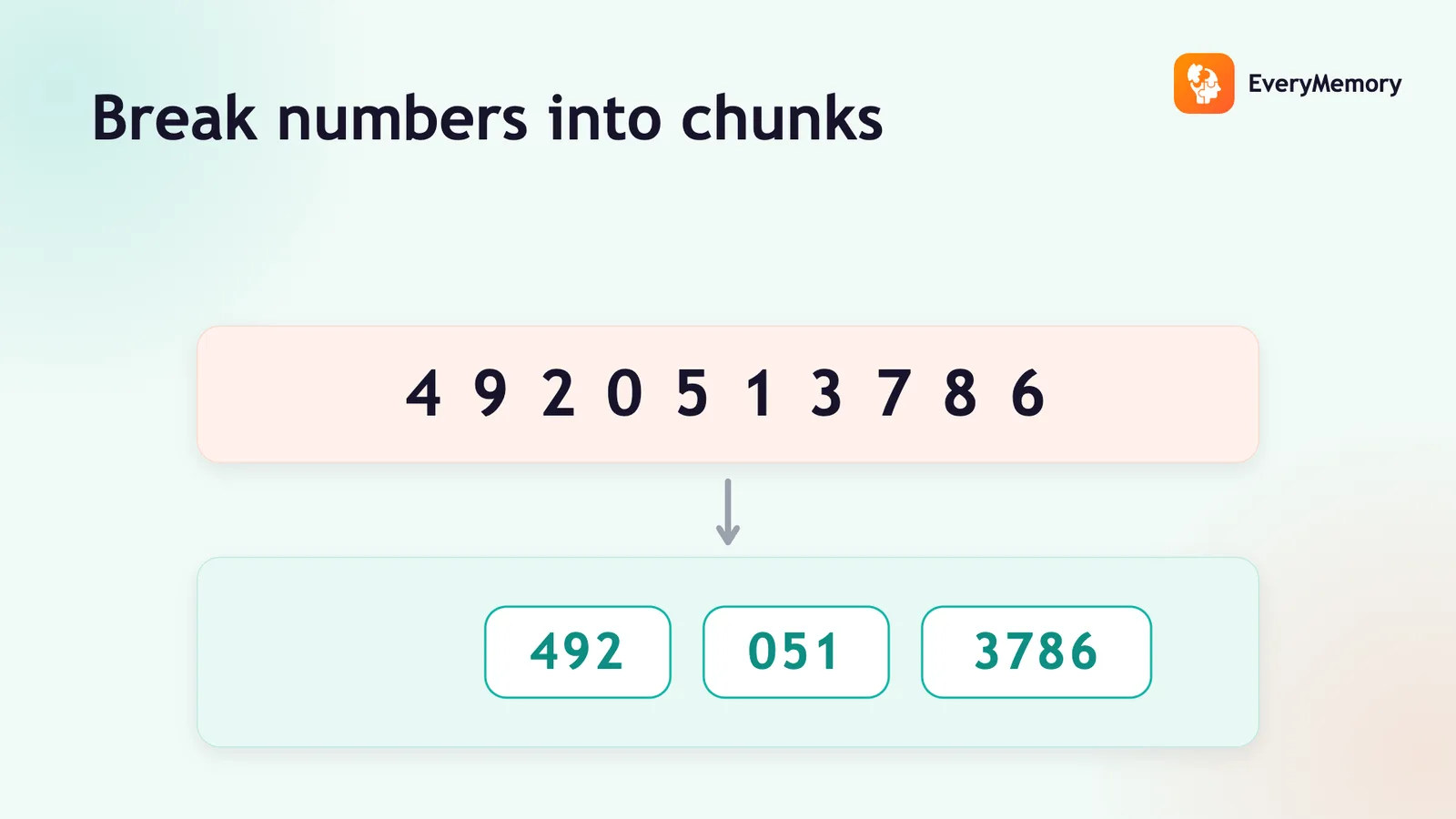
Write these points down by hand - doing so encourages you to distil rather than transcribe, and the act of writing reinforces them. Once you have a clear list of three to five points, you have the backbone of everything you want to say. Chunking is the memory principle at work: instead of holding thirty sentences in mind, you hold four or five meaningful units, which your brain can manage comfortably.
Step two: use the memory palace to lock in the sequence
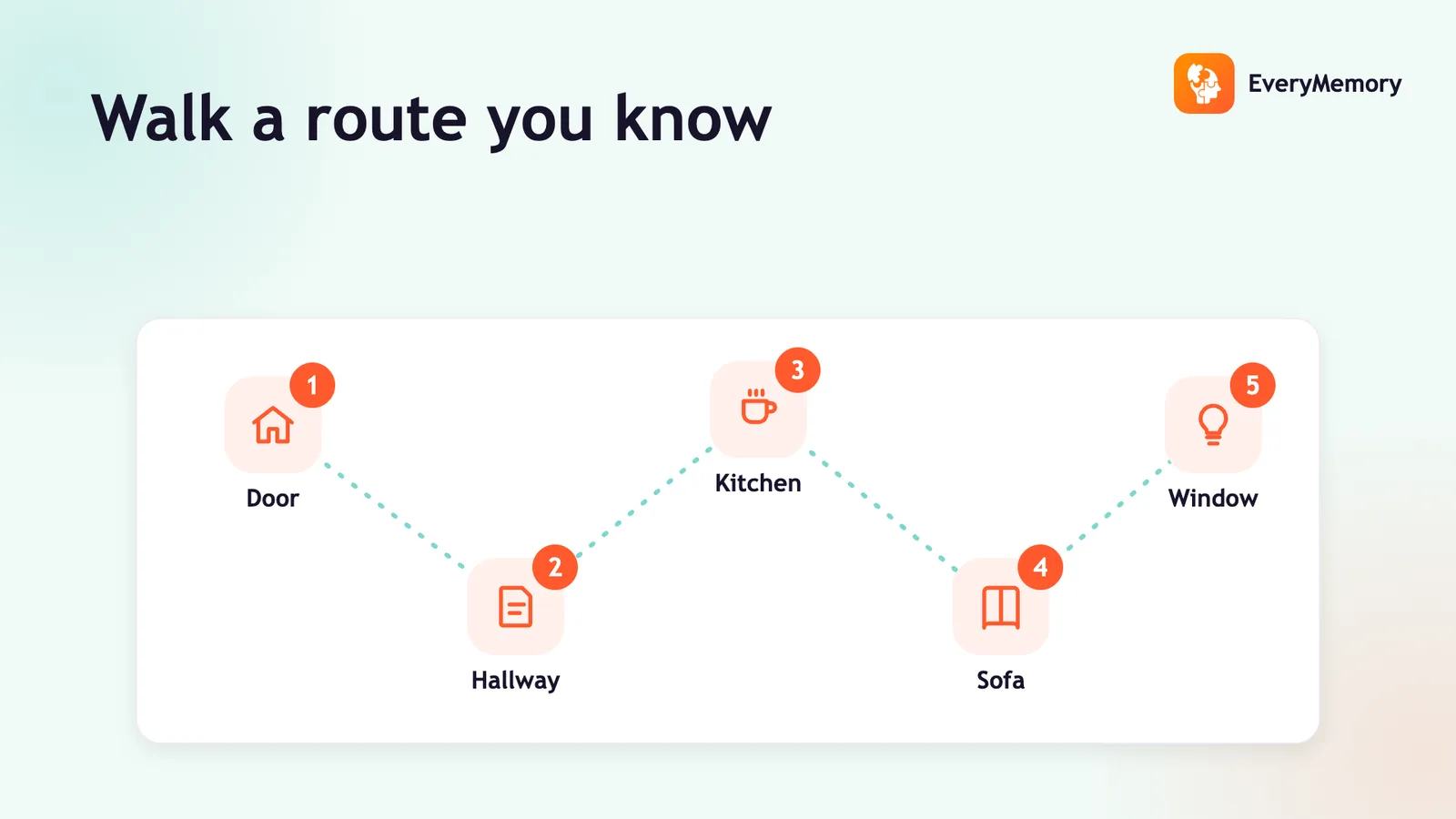
Once you have your key points, the memory palace technique is one of the most effective ways to keep them in sequence. It works by linking each point to a specific spot in a familiar place - your home is ideal. Assign each key point to a distinct location as you move through the space: the front door, the coat rack, the kitchen table, the sofa.
Give each spot a vivid mental image that represents that point. For the toast: at the front door, picture the moment you first met the couple; at the coat rack, see the story you plan to tell; at the kitchen table, feel the wish you want to give them. When you speak, you mentally walk through the house and each location cues the next thought - spatial memory is one of the brain's strongest systems. Three to five locations is all you need.
Step three: rehearse with spacing, not in one long session
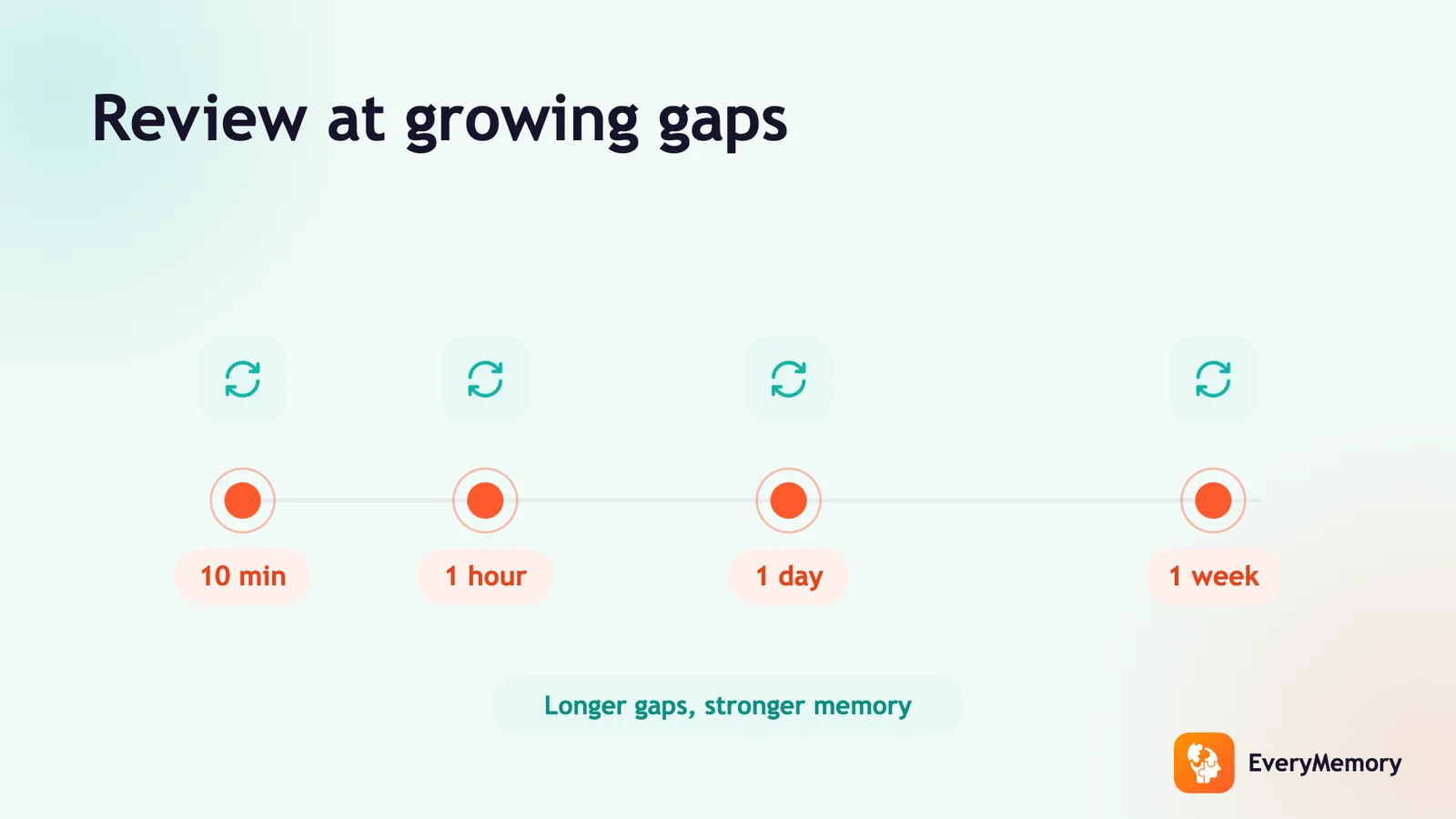
A common mistake is to practise many times in a single sitting the night before. It feels productive but produces weak recall. Spaced rehearsal is far more effective: shorter sessions spread over several days. If your event is a week away, practise briefly on day one, revisit it on day three, run through it on day five, and do a final light rehearsal the day before.
Always practise aloud - speaking activates different memory processing than silent review. Standing while you rehearse helps too; movement associated with specific thoughts can itself become a retrieval cue on the day.
- Five to ten minutes per session is enough - consistency matters more than length.
- If you stumble at the same point every time, simplify that point or split it into two.
Step four: use association to make points stick
For each key point, spend a moment connecting it to something vivid and personal - a specific memory, a face, an image. Instead of the abstract phrase "ask about side effects", picture your actual pill bottle sitting on the doctor's desk. That concrete image is far easier to retrieve than abstract language.
Our guide on how to use association to remember more shows how to build these links deliberately. The principle is simple: the more personal and vivid the connection, the more reliably you can retrieve it under pressure.
The cue card backup: sensible, not a crutch
Even with solid preparation, a small cue card in your pocket is a sensible backup. A cue card is not a script - it is your three to five key points written in the fewest possible words. Knowing it is there reduces anxiety, and reduced anxiety improves recall. Most people who prepare well never need to glance at it.
For a doctor's appointment, bringing written notes is entirely normal - many healthcare professionals encourage it. The key rule: write key words, not sentences. "Story - the Lisbon trip" is a cue. A full sentence is a script that will tempt you to read rather than speak.
✅ Try this today - Prepare any speech in 20 minutes
Use this sequence to prepare a toast, appointment notes, or a short talk - from blank page to confident delivery.
- Write down three to five key points (not sentences) that cover everything you want to say. Give each point a single word or short label - this is your structure.
- Walk through a familiar room in your mind and assign each point to a specific spot in order: front door, hallway, kitchen, sitting room. Pause at each spot and picture something vivid that represents that point.
- Rehearse aloud - just the key points, in order - for five minutes now, again in two days, and once more the day before. Write the key words on a small card as your backup.
⚠ When to talk to a professional
This article contains general, non-medical information about memory techniques for everyday speaking situations. If you notice sudden, rapid, or worsening changes in memory or concentration - beyond the normal nerves of a big occasion - it is worth mentioning to a qualified healthcare professional.