 EveryMemory
How to Remember Phone Numbers and PINs
Practical techniques for learning phone numbers and PINs by heart - using chunking, rhythm, and association - with a brief privacy note on keeping sensitive numbers safe.
Part of the guide: How to Improve Your Memory: The Complete Beginner's Guide →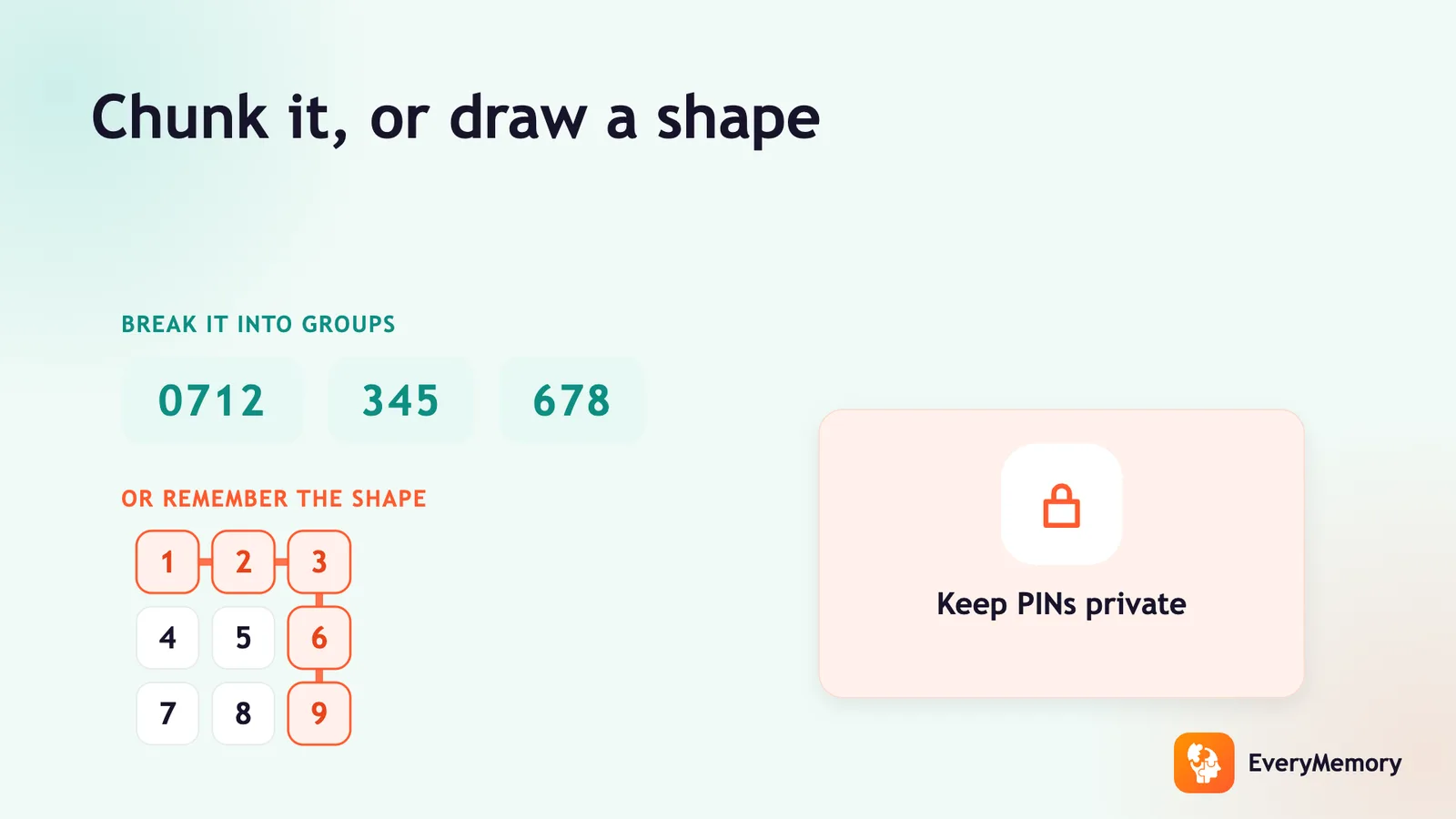
⚡ Quick answer
The fastest way to memorise a phone number or PIN is to chunk it into groups of 2-3 digits, say the groups aloud with a rhythm or tune, then link those chunks to a short story or visual image. Repeat the number on three separate occasions spaced a few hours apart, and it will stick for most people within 24 hours.
Key takeaways
- Split any number into two or three groups of digits and use the same grouping every time you rehearse it.
- Say the chunks aloud with a clear rhythm or to a familiar tune at least three times immediately after learning.
- Link the chunked groups to a brief visual story to anchor numbers you need to hold for the long term.
- Test yourself 1 hour later, again the next morning, and once more three days on - those three reviews are usually enough to own the number.
There was a time when most people had a dozen phone numbers memorised without trying. The number lived in your head because you dialled it regularly from a rotary phone. Today, your contacts list dials for you, which means those numbers never get repeated - and repetition is the engine of memory.
The result is that many adults find themselves unable to recall even close family members' numbers if their phone dies. And four-digit PINs, which we use several times a day, somehow remain stubbornly hard to hold. This article walks through the specific techniques that work best for strings of digits - chunking, rhythm, and visual association - and shows exactly how to apply each one.
Why digits are harder to remember than words
Your brain stores words and ideas by linking them to existing networks of meaning - images, sounds, emotions, related concepts. Digits are almost entirely stripped of meaning. "7" doesn't automatically connect to anything personal; "741" even less so. Without those hooks, a string of 10 digits falls out of working memory almost as fast as it entered.
The techniques in this article all work by giving those digits meaning. You're not asked to remember "07700 912 345" - you're asked to remember a vivid scene that encodes those numbers in a form your memory can actually hold. This is the same principle explained in chunking explained simply - breaking information into manageable, meaningful units.
Step 1 - Chunk the number
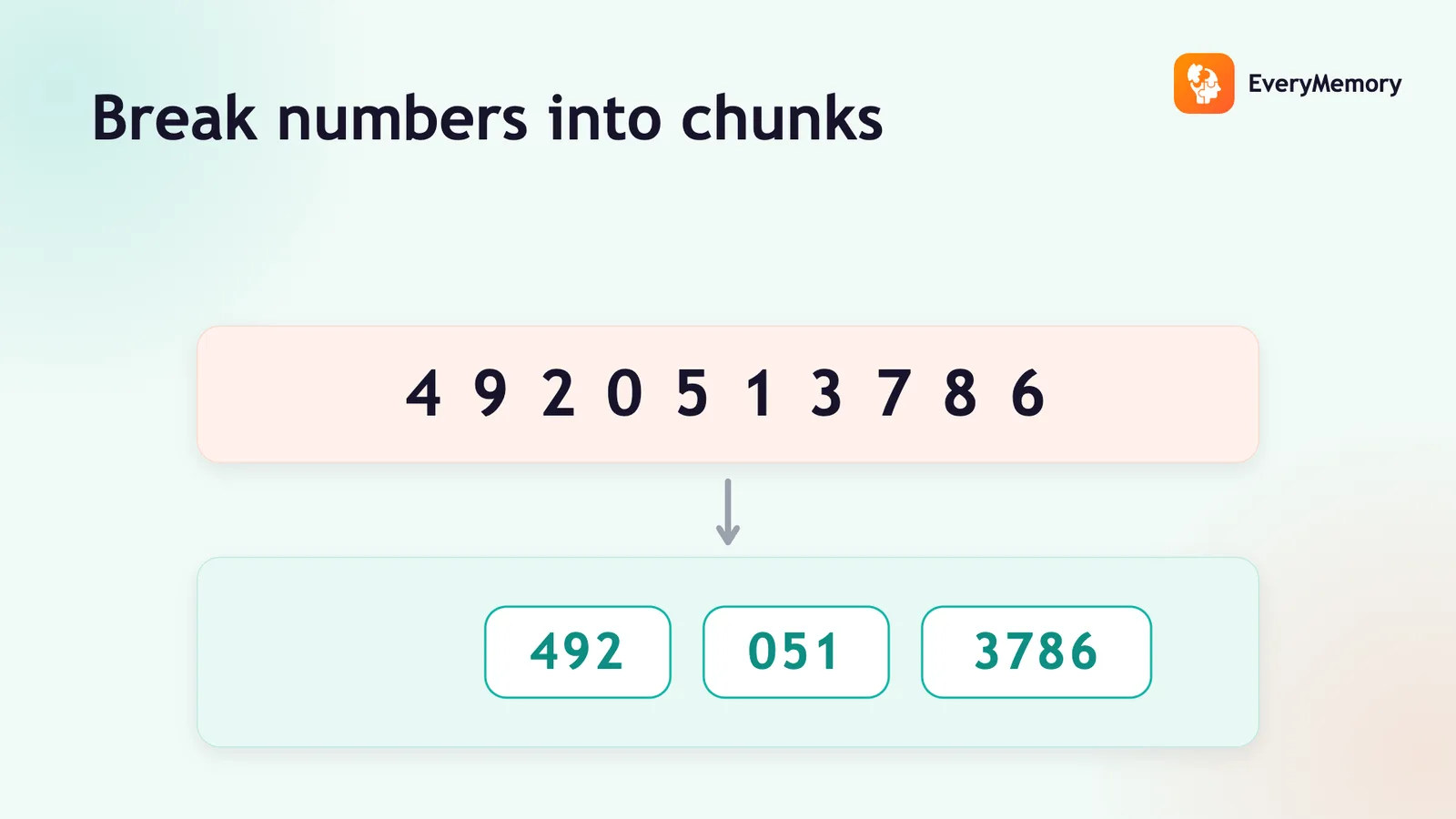
Chunking is the single most effective technique for digits. Instead of treating a 10-digit number as 10 separate items, you break it into 3 or 4 groups of 2 or 3 digits each. Your working memory can hold about 4 chunks far more comfortably than 10 individual items.
Example: the number 07700 912 345 is already grouped by the phone format. You'd work with three chunks: 077, 009, 12345. Or, resplit it as: 077 - 009 - 123 - 45. Write it out with the grouping you find most natural and stick to that grouping every time.
For a 4-digit PIN like 8427, split it as 84 - 27. Two chunks of two is much easier to hold than four isolated digits.
- Phone number (10 digits): aim for 3 groups - e.g. 0770 - 091 - 2345.
- 4-digit PIN: split as 2+2 - e.g. 47 - 19.
- 6-digit code: split as 3+3 - e.g. 482 - 915.
Step 2 - Add rhythm or a tune
Once you have your chunks, say them aloud with a rhythmic pattern or to the tune of a familiar song. The rhythm turns a string of digits into a sequence with structure, which is far easier to recall. This is the same mechanism that makes phone jingles from decades ago impossible to forget.
Try this with the PIN 8427 (split as 84 - 27): say it to the rhythm of a two-beat drum - "eighty-FOUR, twenty-SEVEN." Or fit it to the opening notes of a tune you know well. A specific rhythm is better than a vague one - if you can tap it on a table while saying it, your motor memory is helping too.
Practice the rhythm three times immediately after creating it, then once more after dinner. By the following morning, most people can recall it cold.
Step 3 - Link the chunks to a vivid image or story
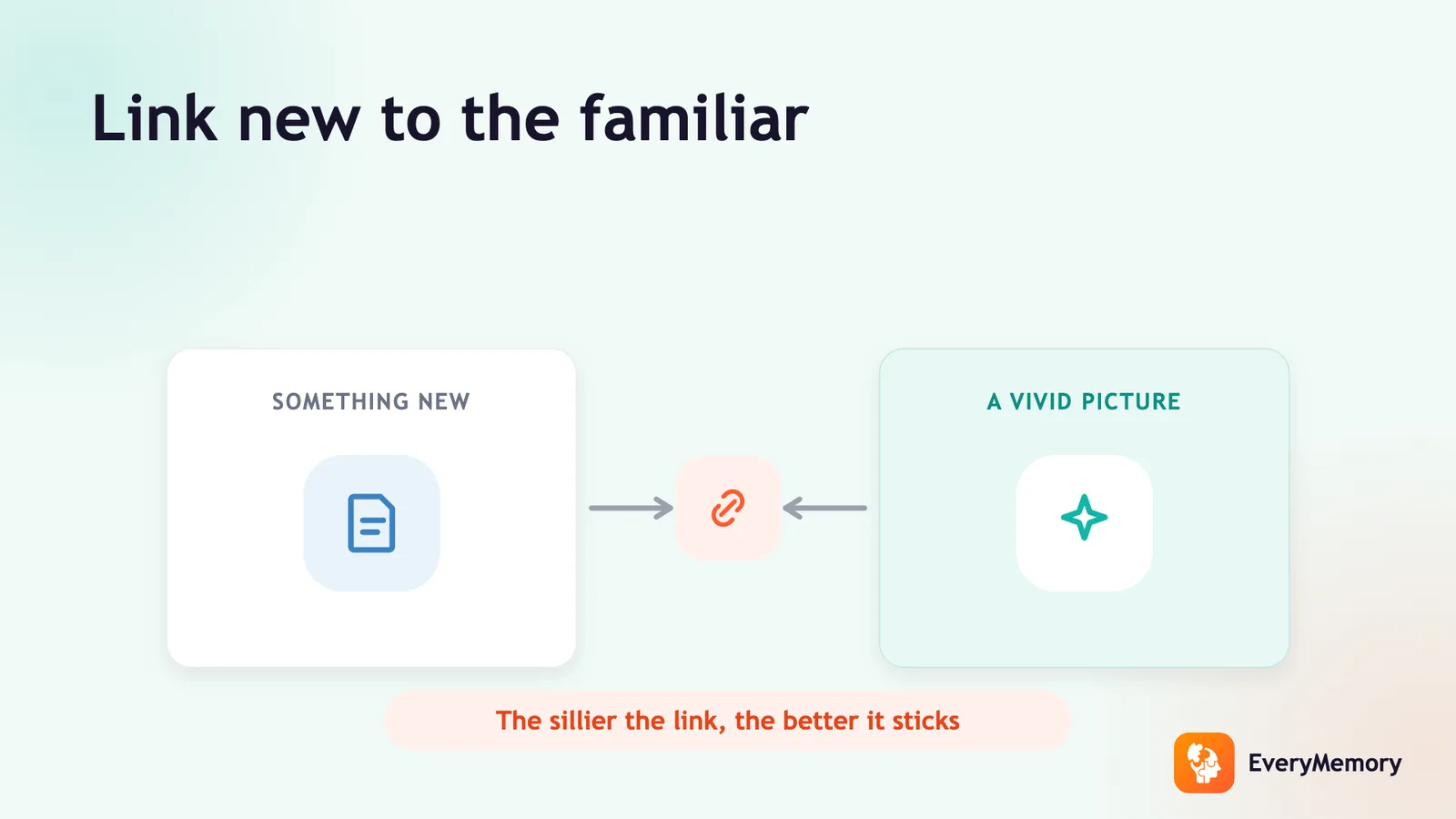
For numbers you need to hold for the long term - a home number you want memorised for emergencies, or a PIN you use on a card you rarely carry - rhythm alone may fade. Add a brief visual story that encodes the chunks.
Example: the phone number 0770 091 2345. You might picture: a 77-year-old owl (00 = wide eyes) sitting on a branch numbered 91, watching a queue of 2, 3, 4, 5 ducklings walk past. Absurd? Deliberately. The more unusual the image, the more reliably your brain retrieves it.
This approach is a simplified version of the technique described in memory palace for beginners and how to use association to remember more. You don't need the full palace - just a single vivid scene for each number.
Spaced repetition for long-term retention
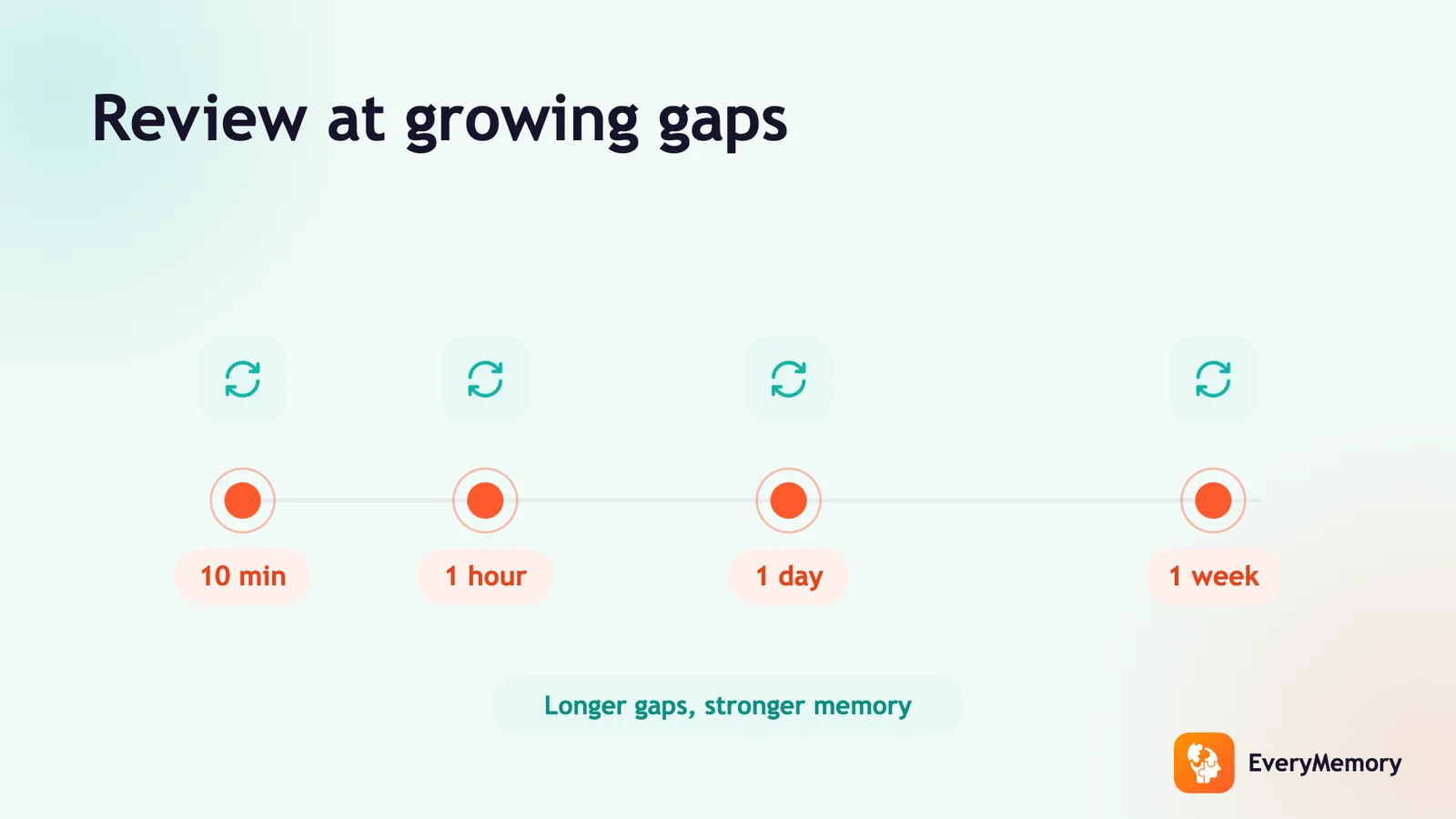
Chunking and rhythm get information into memory. Spaced repetition keeps it there. The idea is simple: review the number shortly after learning it, then again after a slightly longer gap, then again after an even longer gap.
- Learn the number with chunking and rhythm.
- Test yourself 1 hour later without looking.
- Test yourself again the following morning.
- Test yourself once more 3 days later.
- After that, occasional use is usually enough to maintain it.
Even two spaced repetitions dramatically outperform a single block of study. This principle is explored in depth in the companion article on spaced repetition for everyday memory.
A brief privacy note on PINs and sensitive numbers
Before writing any PIN or password down, think about where that note will live. A PIN written in a diary or on a sticky note near your wallet can be found by someone else if the bag or note is stolen or lost. A few simple habits keep sensitive numbers both memorable and secure:
- Don't write a PIN next to, or in the same item as, the card it belongs to.
- If you need a written backup of a PIN, store it separately from the card and disguise it - for example, embed it in a fake phone number in your contacts rather than labelling it 'Visa PIN'.
- For digital storage, a reputable password manager app is more secure than a text file or notes app.
- Once you've used the techniques above to memorise a PIN, the written backup becomes a safety net rather than a daily crutch - at which point you can keep it somewhere safe and rarely accessed.
Putting it all together: worked example
You need to memorise a new bank card PIN: 3 7 1 9.
- Chunk: 37 - 19.
- Rhythm: say 'thirty-SEVEN, nineteen' to a two-beat pattern. Do it three times aloud.
- Image: a 37-year-old runner crossing the finish line in position 19. Picture the number on her bib.
- Test yourself 1 hour later. If you need to look it up, that's fine - look, reset the image, test again.
- Test yourself the next morning before you look at anything else. If it comes cleanly, you own it.
Most people reach reliable recall on a 4-digit PIN within 24 hours using this sequence. A 10-digit number typically takes 2-3 days of the same spaced practice.
✅ Try this today - Learn one number today
Pick one phone number - a family member's mobile, your GP's number, or a frequently used local business - and run through these steps right now:
- Write it out and split it into 3 groups of digits.
- Say the groups aloud with a clear rhythm three times in a row.
- Create a brief, vivid image or mini-story that encodes the groups.
- Put the number away and test yourself 1 hour later. Write what you recalled, check it, and note any errors.