 EveryMemory
Loneliness and Memory: Why Connection Matters
Feeling socially isolated doesn't just affect your mood - research links it with less sharp memory and focus. Here's why human connection matters for the brain, and how to gently rebuild it.
Part of the guide: How to Keep Your Brain Healthy: A Complete Lifestyle Guide →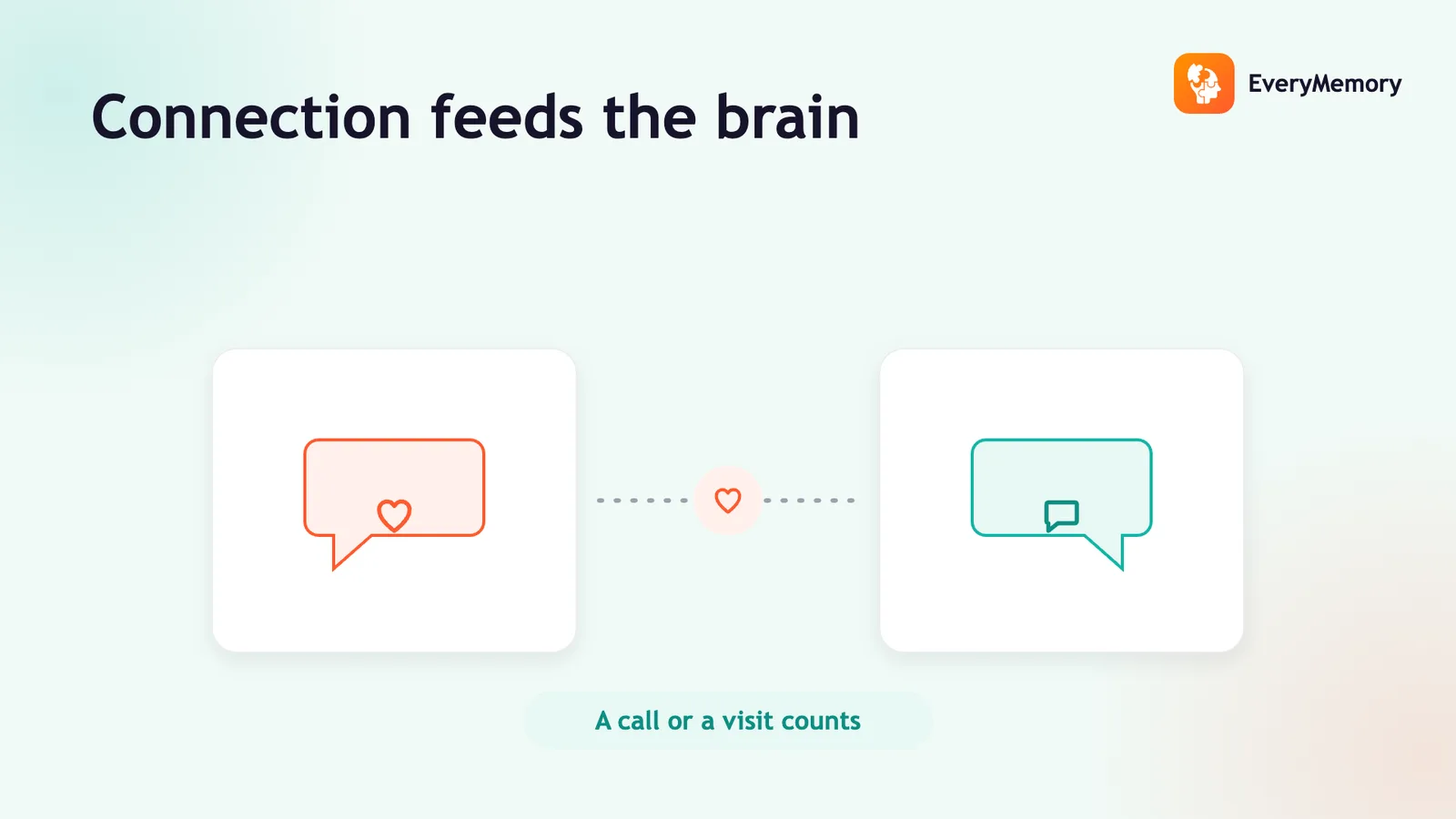
⚡ Quick answer
Loneliness and social isolation are associated with poorer memory and focus in older adults. The likely reasons include less mental stimulation from conversation, higher stress hormones, and lower mood - all of which affect how the brain encodes and retrieves information. Regular social contact, even in modest amounts, is one of the practical steps that may support mental sharpness over time.
Key takeaways
- Loneliness and social isolation are associated with less sharp memory and focus, according to multiple large research reviews.
- Conversation exercises memory, attention, and language simultaneously - making regular social contact a form of mental engagement.
- Quality of connection matters more than quantity: even one or two warm, reliable relationships carry much of the benefit.
- Small, consistent steps - a weekly call, a regular group, a returned message - accumulate into the reliable connection that supports the brain over time.
There are weeks when the phone barely rings. Days pass without a real conversation, meals are eaten in silence, and the outside world feels further away than usual. For many older adults living alone, this is simply the shape of daily life - not dramatic, but quietly isolating.
Research increasingly suggests that prolonged social isolation is associated with less sharp memory and greater difficulty concentrating. This isn't cause for alarm - it's an honest, and actually hopeful, piece of the picture. Connection is something many of us can gently work toward, at our own pace.
What the research suggests
Social isolation appears in several major reviews as one of the modifiable factors associated with cognitive health in later life. The 2024 Lancet Commission on Dementia - one of the most comprehensive reviews of its kind - listed social isolation among fourteen factors that, when addressed, could make a meaningful difference to brain health at a population level. The language used is always careful: "associated with", not "causes". But the pattern across studies is consistent enough to take seriously.
A large European study following more than 10,000 older adults over seven years found that people who felt lonely performed less well on memory tests - even after accounting for other health factors. The distinction between loneliness (a felt experience) and social isolation (objective lack of contact) matters: the two can exist separately, and research suggests both are associated with cognitive outcomes.
The studies underpinning these findings are among those collected in our Library.
Why connection is good for the brain
Conversation is cognitively demanding in the best possible way. Following what someone says requires holding meaning in working memory, recalling shared context, and choosing words precisely. This back-and-forth - memory, language, and attention firing together - is the kind of stimulation that structured games can only partially replicate. Our article on social activity and memory explores this in more depth.
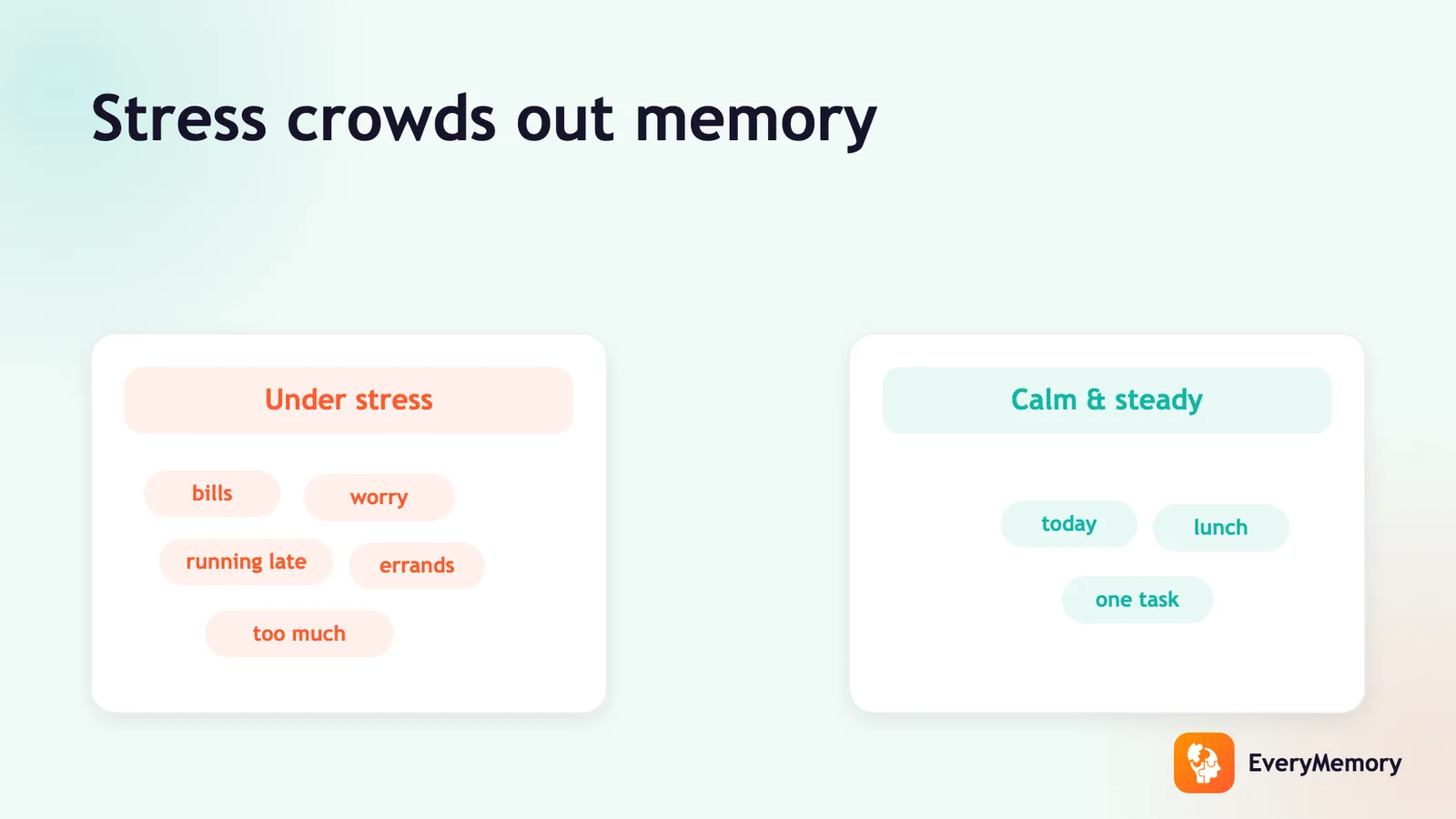
Loneliness also tends to raise cortisol, the body's stress hormone. Elevated cortisol over extended periods is linked with impaired memory consolidation - the process by which new experiences get properly stored. That mechanism is covered in our article on whether stress makes you more forgetful. Feeling isolated and feeling stressed often travel together.
- Conversation exercises working memory, language, and attention simultaneously.
- Social connection is associated with lower chronic stress.
- Feeling valued and engaged supports mood, which in turn supports clear thinking.
- A sense of purpose - feeling needed - is linked with better cognitive outcomes over time.
The flip side: what isolation tends to reduce
When regular social contact shrinks, so does a cluster of activities that support mental sharpness. Fewer conversations means less language practice, less planning, fewer occasions to recall names and shared memories. None of this happens suddenly - it accumulates quietly, over months and years.
Low mood is another part of the picture. Loneliness and depression often overlap, and depression is itself associated with poorer memory and concentration. The practical implication is similar: anything that genuinely improves mood and social connection tends to have knock-on benefits for thinking too. This is not a reason to feel guilty about living alone - the concern is specifically with unwanted isolation, not with preferring quieter days.
Connection doesn't have to mean a crowd
The quality of social contact matters more than the quantity. A single warm, genuine conversation can be more sustaining than a day of superficial interactions. Phone calls count. Video calls count. For older adults in rural areas or with mobility challenges, these are not a consolation prize - they are a legitimate source of connection.
For those who want to expand in-person contact, activities that combine conversation with a shared purpose tend to work well: book groups, choir, craft classes, walking clubs, or volunteering. Our article on staying mentally sharp in retirement covers how this kind of structured engagement fits into a broader routine.
Gently acknowledging loneliness
Many older adults are reluctant to name loneliness - it can feel like an admission of failure, or an imposition on others. But loneliness is not a character flaw. It is a human signal, as basic as hunger, that a need is not being met. Naming it honestly is the first step toward doing something about it.
Loneliness often arrives after a significant change: retirement, bereavement, a health event that limits mobility. Small steps tend to compound once started - one returned call becomes a weekly habit, one attended class becomes a familiar face. For families, the most effective support is usually not a grand gesture but consistent, low-pressure contact: a brief call at the same time each week, a standing invitation repeated gently.
Hearing and other barriers worth knowing
It is worth noting that some practical barriers to social engagement are often overlooked. Unaddressed hearing difficulty, for instance, can make conversation effortful and embarrassing, leading people to avoid the situations that would otherwise give them the most benefit. Our article on hearing and memory covers this connection - and why addressing hearing changes can be one of the most practical things an older adult does for their broader mental life.
Transport, energy levels, and confidence in unfamiliar settings are also real constraints. Acknowledging them honestly - rather than simply encouraging people to "get out more" - leads to more realistic and workable plans.
✅ Try this today - The connection check-in
Try this gentle audit of your current social landscape - it takes about five minutes and can be surprisingly clarifying.
- Think of three people you genuinely enjoy talking to. When did you last have a real conversation with each of them? If it's been more than a few weeks with all three, pick one and send a message or make a call today - not a long one, just re-opening the line.
- Identify one activity you used to enjoy that involved other people but has quietly dropped away. Ask yourself honestly whether the barrier is practical (transport, energy) or psychological (not wanting to impose, anxiety about going alone). Different barriers need different responses.
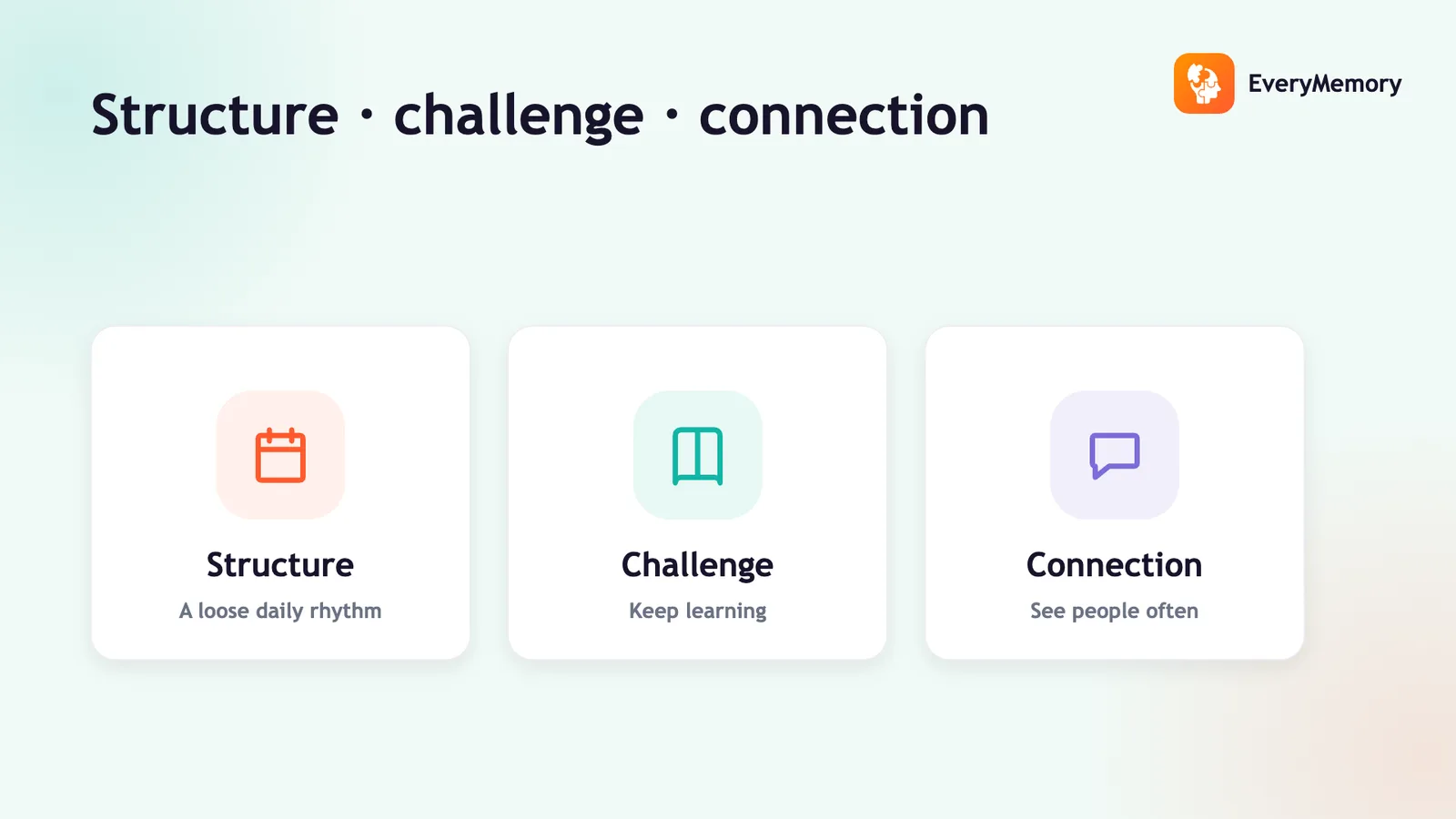
- Choose one small, repeatable social habit for this week - a call on a specific day, a walk with a neighbour, attending a class or group once. Aim for something small enough that it doesn't feel daunting, because regularity matters more than scale.
⚠ When to talk to a professional
This article contains general, non-medical information. If loneliness is accompanied by persistent low mood, significant changes in memory, or withdrawal from daily activities, it is worth speaking with a qualified healthcare professional - both to rule out any underlying cause and to discuss what support is available.