EveryMemory
Staying Mentally Sharp in Retirement
Retirement removes the three things that quietly keep the mind sharp - structure, challenge, and daily social contact. Here is how to rebuild all three deliberately.
Part of the guide: How to Improve Your Memory: The Complete Beginner's Guide →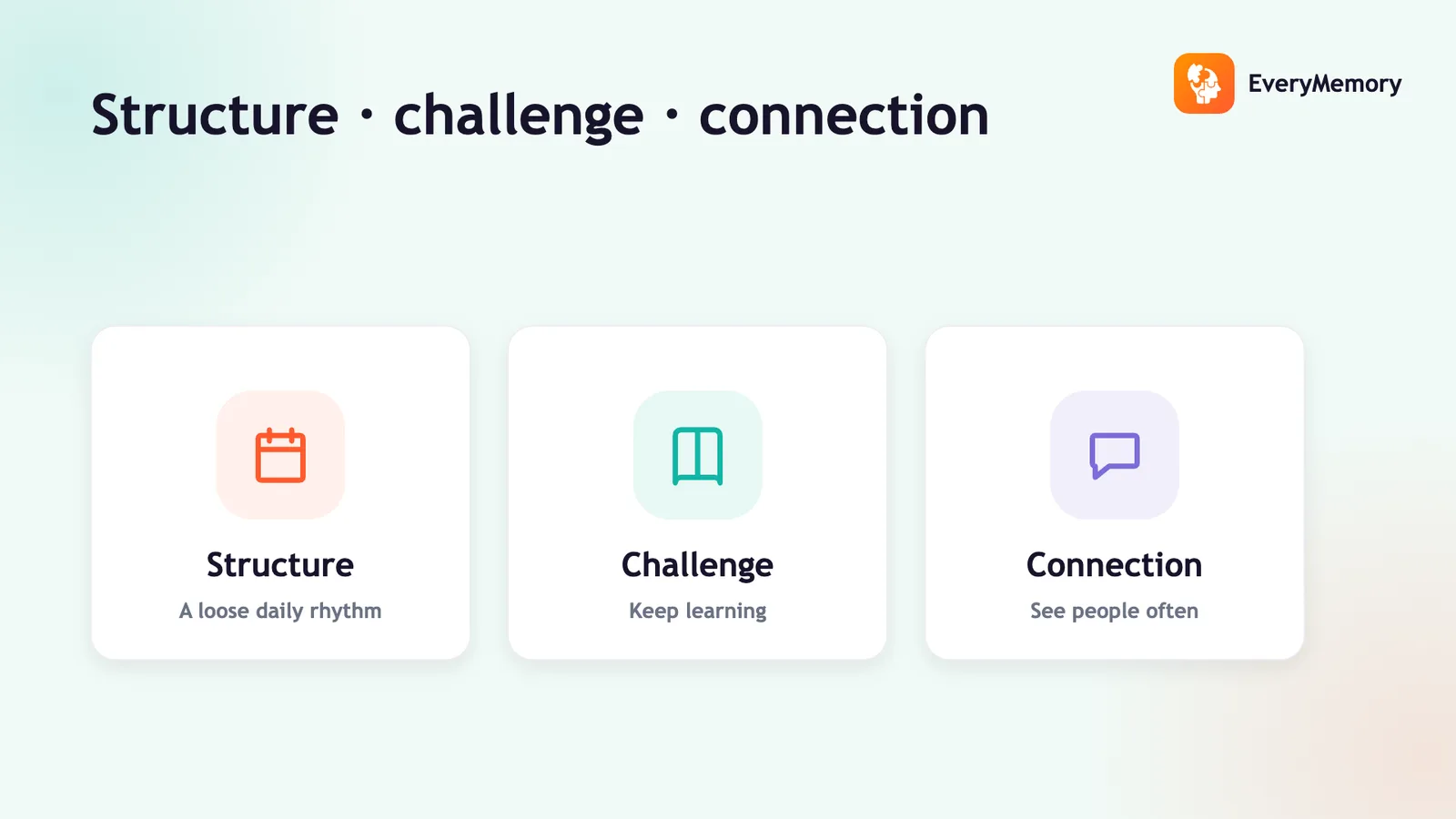
⚡ Quick answer
Retirement is good for wellbeing but can remove three things that quietly support mental sharpness: daily structure, ongoing challenge, and regular social contact. The most effective way to stay sharp is to rebuild all three intentionally - through a loose but consistent daily routine, continued learning, regular social connection, purposeful physical movement, and absorbing hobbies that stretch your mind.
Key takeaways
- Work quietly supplied structure, challenge, and social contact - retirement can remove all three at once.
- A loose daily routine with consistent anchor points supports mental clarity and makes purposeful activity easier to sustain.
- Learning something genuinely new, regular social connection, and daily movement are among the most consistently supported habits for staying sharp.
- A sense of purpose - however modest - gives the brain ongoing reasons to plan, engage, and keep growing.
Work, for all its frustrations, quietly did a lot for your brain. It gave you a reason to get up at a consistent time, a stream of small problems to solve, colleagues to talk to, and the low-level discipline of having somewhere to be. Retire, and all of that disappears at once - sometimes in the same week.
That shift is not trivial. Research supported by the National Institute on Aging suggests that a less stimulating daily environment is linked with accelerated cognitive drift. The reassuring flip side is equally well-supported: retirees who stay mentally and socially engaged tend to fare substantially better. This guide is about building that engagement deliberately - not by recreating the stress of a working life, but by putting its genuinely useful ingredients back in, on your own terms.
Why the transition matters for the brain
Work provides what researchers sometimes call a "structured cognitive environment" - deadlines, decisions, conversations, and novel problems that keep the brain producing and adapting. When that structure disappears without a replacement, the days can become long, flat, and repetitive, and that is precisely when mental sharpness tends to erode most quietly.
One large analysis reviewing studies from multiple countries found a consistent pattern: people who retired into unstructured, low-engagement days showed steeper cognitive changes over time than those who retired into active, socially connected lives. The takeaway is not that retirement is harmful - it's that the content of retirement matters far more than the fact of it. Most jobs offered a predictable rhythm, tasks requiring memory and concentration, regular conversation, and a sense of purpose. Rebuilding those four ingredients is the practical aim of this guide.
Build a loose daily structure
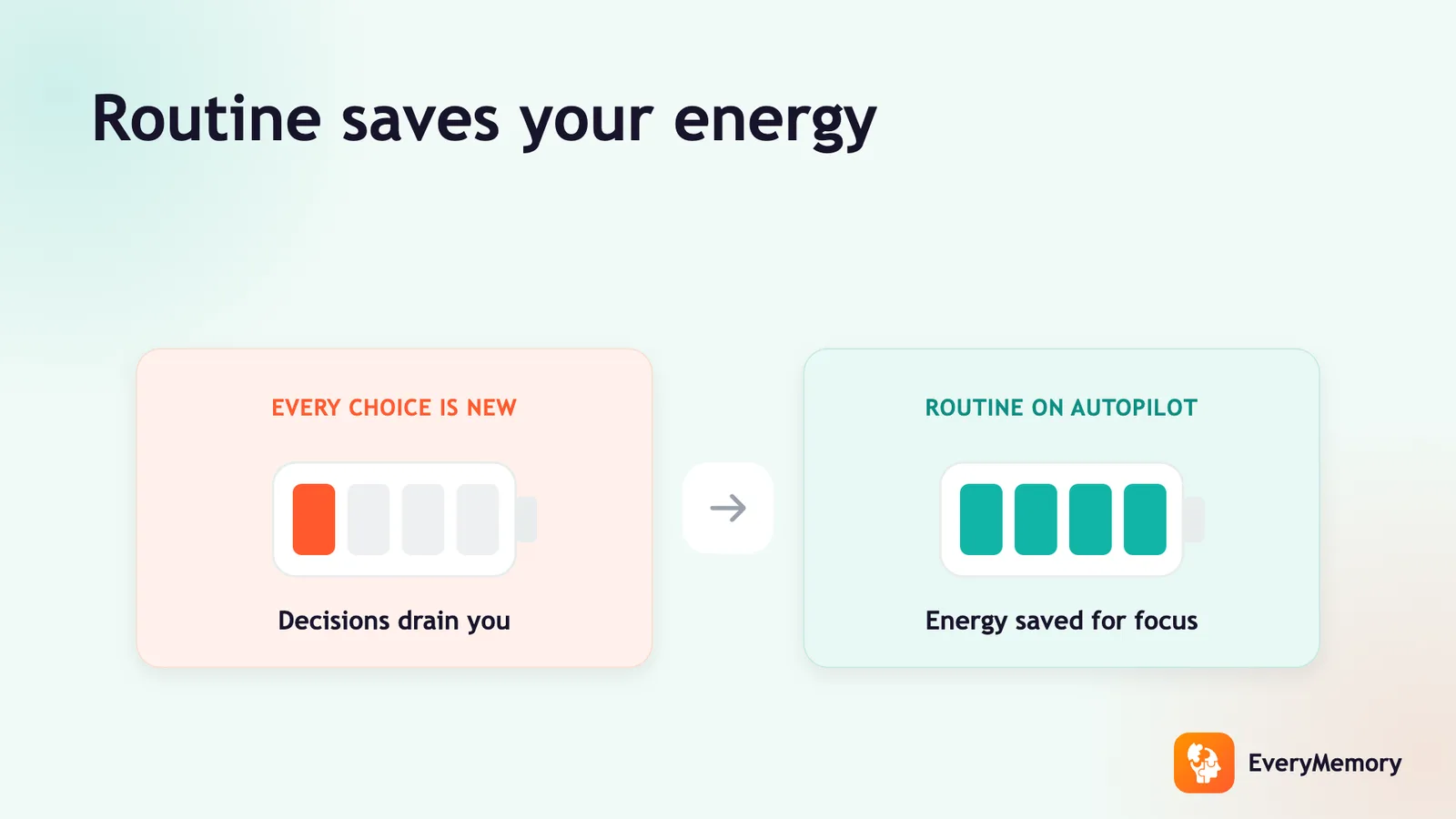
You don't need a packed schedule. What helps is a loose framework - anchor points that give shape to the day without rigidity. Research on why routine matters for focus shows that predictable rhythms reduce the low-level mental effort of deciding what comes next, freeing attention for what actually matters.
A workable structure might mean a consistent wake time, a morning habit you enjoy, a block of time for something absorbing, and an afternoon activity involving people or movement. The specifics are entirely yours to choose.
- Keep a rough wake time even without an obligation to. Irregular sleep patterns flatten mood and make thinking feel heavier.
- Leave genuine gaps - rest and reflection are part of what keeps the brain healthy.
- Build a weekly rhythm too: certain days for errands, others for social plans, one day for something new.
Keep learning something genuinely new
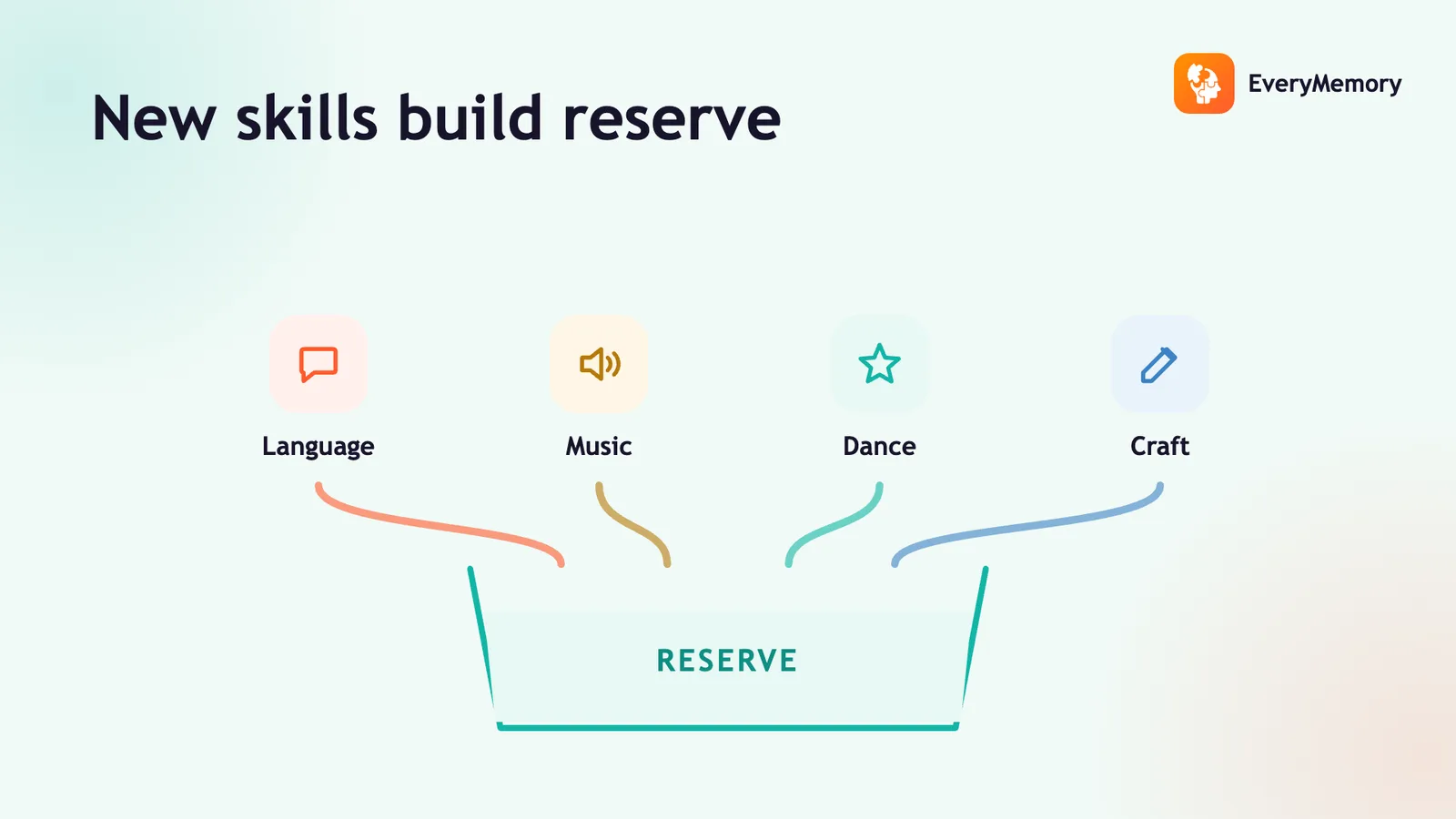
The brain maintains a degree of adaptability throughout life - a quality called neuroplasticity. This capacity is best exercised by learning that is genuinely unfamiliar and slightly challenging, not by practising things already mastered. A retired accountant doing arithmetic is not stretching much; that same person learning to paint watercolours or play a new instrument is. Language learning, genealogy research, a new craft, or a local history project all count. What matters is that the activity regularly asks something of your working memory, attention, and problem-solving. Our article on learning new skills and brain health explores this in more depth.
Local libraries, community colleges, and online platforms all offer structured learning at low or no cost. Many retirees find that committing to a class - something with a schedule and other people - works better than self-directed study, because it bundles learning with routine and social contact at the same time.
Protect and grow your social connections
Work was almost certainly your largest source of daily conversation, and losing it can happen so gradually that the gap goes unnoticed until the loneliness is fairly entrenched. The research on social activity and memory consistently shows that people with richer social lives tend to maintain sharper recall and better mental flexibility over time. What matters is quality - regular, meaningful contact with people you genuinely enjoy - more than sheer quantity.
- Treat one or two social commitments per week as non-negotiable appointments.
- Joining a group around a shared interest - a book club, walking group, community choir - bundles social contact with structured activity.
- If in-person contact is difficult, video calls offer more cognitive and emotional benefit than messaging alone.
Move regularly - your brain will notice
Physical movement is among the most consistently supported contributors to cognitive health across decades of research. Exercise increases blood flow to the brain, raises levels of a protein called BDNF that supports brain cell maintenance, and tends to improve both mood and sleep - two things that feed directly into mental sharpness.
You don't need a gym or a demanding programme. Walking and brain health are closely linked: 20–30 minutes of brisk walking most days is associated with measurable improvements in memory and attention. The key is consistency over intensity - daily movement beats an occasional hard effort. Activities that layer movement with mental engagement - dancing, swimming, or a group fitness class - may offer additional benefit by combining the physical and cognitive challenge at once.
Find a sense of purpose
Research has found that a strong sense of purpose in life is associated with better cognitive outcomes in older adults over time. Purpose does not require grand goals. It can be as modest as tending a vegetable garden, volunteering one morning a week, writing letters to grandchildren, or mentoring someone in a skill you spent decades developing. What purpose provides is a reason to plan, to show up, and to keep learning - all things that exercise the brain in ways passive leisure does not.
If you are newly retired and uncertain about what gives you meaning, that is normal. Trying different things over the first year - community roles, creative projects, learning experiments - is a reasonable way to discover what sticks. A simple daily memory routine can also give early retirement a helpful anchor while a longer sense of purpose takes shape.
✅ Try this today - Design your retirement week
Take 15 minutes to sketch a rough weekly template - not scheduling every hour, just making sure the four key ingredients are present.
- Structure: write down two or three daily anchor points - a wake time, a morning habit, a regular activity. These form the skeleton of your day.
- Learning: identify one new skill or subject to explore this month. Book a class, find a library programme, or commit to one weekly session of deliberate practice.
- Social: name two people or groups to see or speak with each week. Treat those contact points as fixed appointments.
- Movement: decide when you will move each day. Be specific - "after breakfast" - rather than vague.
⚠ When to talk to a professional
If you or someone close to you notices memory or thinking changes that are sudden, rapid, or clearly worsening - rather than the ordinary occasional forgetfulness described here - it is worth speaking with a healthcare professional. A qualified clinician can assess whether something needs attention and give you reliable guidance.