 EveryMemory
Does Meditation Help Memory and Focus?
Meditation trains attention and lowers stress - and since both strongly affect memory, a few minutes most days can indirectly help you focus and recall better.
Part of the guide: How to Keep Your Brain Healthy: A Complete Lifestyle Guide →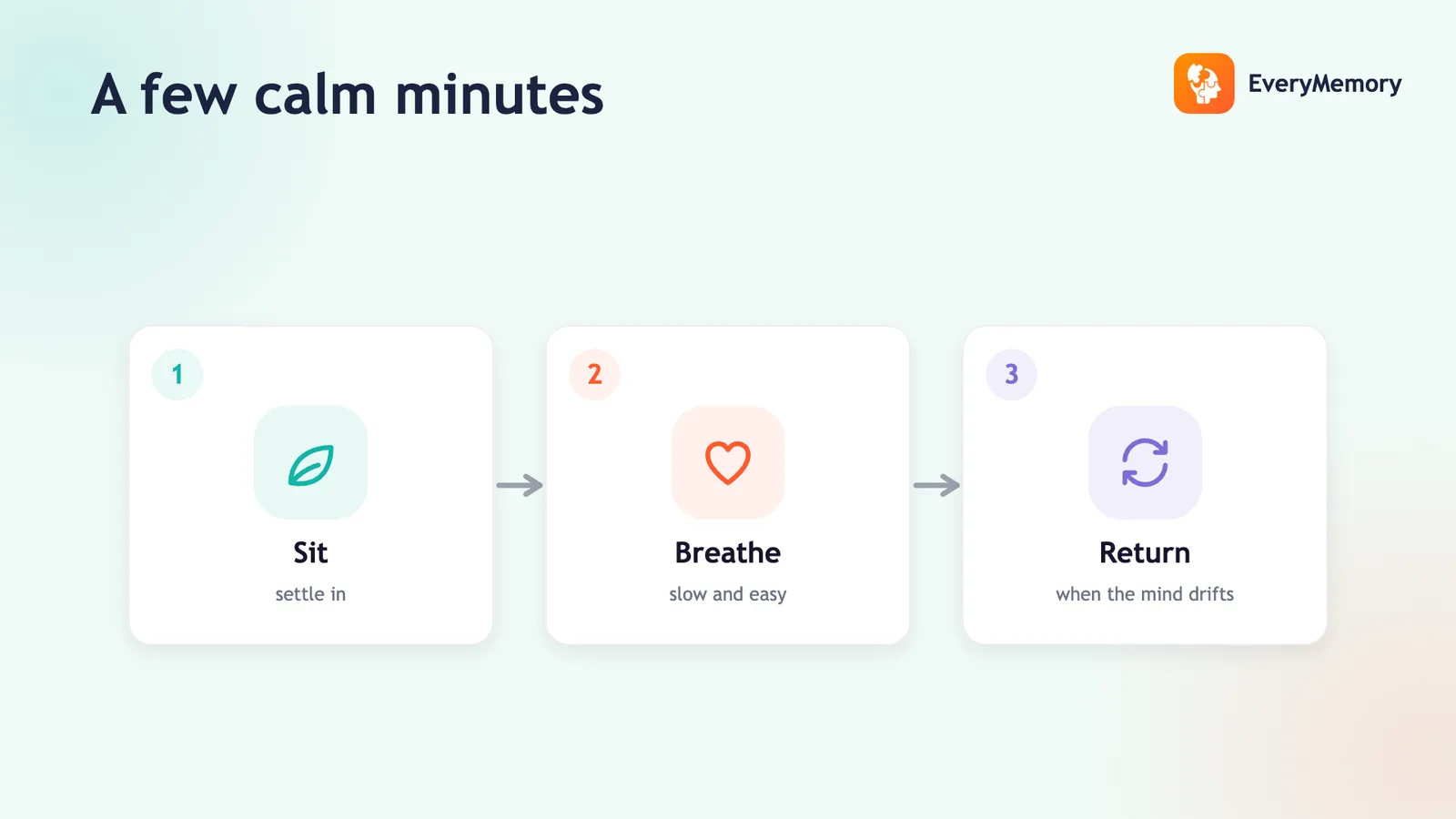
⚡ Quick answer
Meditation, especially mindfulness practice, can improve attention and reduce stress - and since attention and stress strongly affect memory, regular practice may indirectly help you take in and recall information better. It's not a memory cure, but a few minutes most days can sharpen focus and calm a busy mind, which supports memory.
Key takeaways
- Meditation helps memory indirectly by training attention and reducing stress - both of which strongly affect recall.
- Mindfulness is attention training: you notice when your mind wanders and gently bring it back, which is the rep.
- It's a supportive habit, not a memory cure, and benefits build gradually with regular practice.
- Start small - a few minutes most days beats a long session you'll skip.
Meditation is usually sold for calm, but it also has a quieter benefit for the mind: it's attention training. And attention is the foundation of memory.
Here's how meditation can support memory and focus - and a realistic view of what to expect.
How meditation helps memory - indirectly
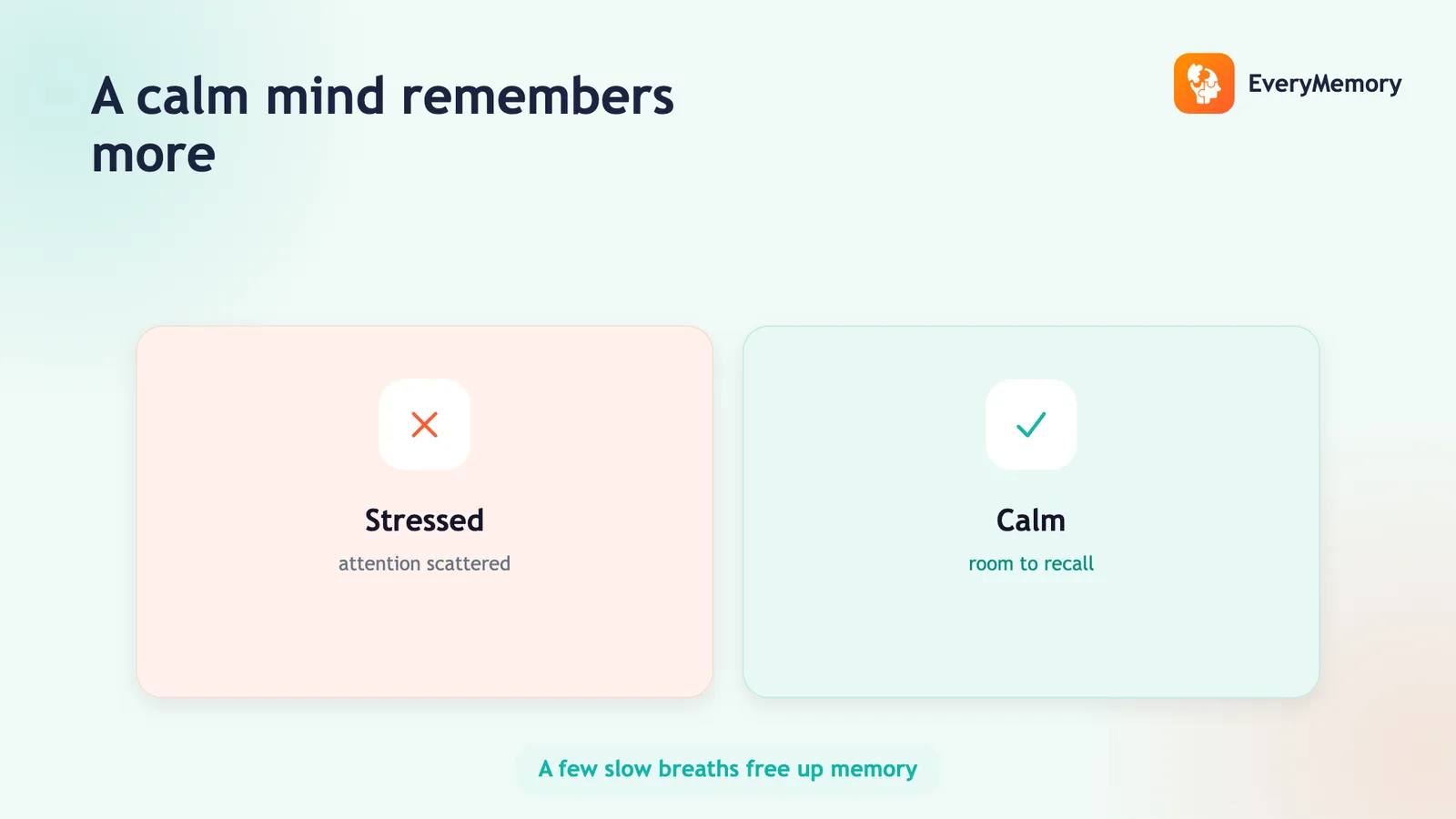
Mindfulness meditation is, at its core, the practice of noticing when your attention has wandered and gently bringing it back. Done regularly, that strengthens the same focus you rely on everywhere - and since nothing encodes without attention, better focus means you take in more (attention span). Meditation also lowers stress, and a calmer mind has more room for new information (stress and forgetfulness).
What the practice actually is
It's simpler than it sounds: sit comfortably, focus on something steady like your breath, and each time your mind drifts - which it will, constantly - notice and return. The 'returning' is the rep, exactly like a focus exercise. You're not trying to empty your mind; you're practising bringing it back.
Realistic expectations
Meditation is a supportive habit, not a memory cure. It works on the conditions for good memory - attention and stress - rather than memory itself, and the benefits build gradually with regular practice. Treat it as one helpful habit among several.
How to start
Begin small: a few minutes most days beats a long session you'll skip. Focus on the breath, expect your mind to wander, and gently return. Attaching it to an existing routine helps it stick - the same habit principles as making brain training a habit.
⚠ When to talk to a professional
This is general wellness information, not medical advice. If you're managing significant stress, anxiety, or low mood, consider speaking with a qualified professional.