 EveryMemory
The Method of Loci (Memory Palace), with Examples
The method of loci stores information along a familiar mental route. What it is, why it has worked since ancient Greece, and a clear worked example.
Part of the guide: How to Improve Your Memory: The Complete Beginner's Guide →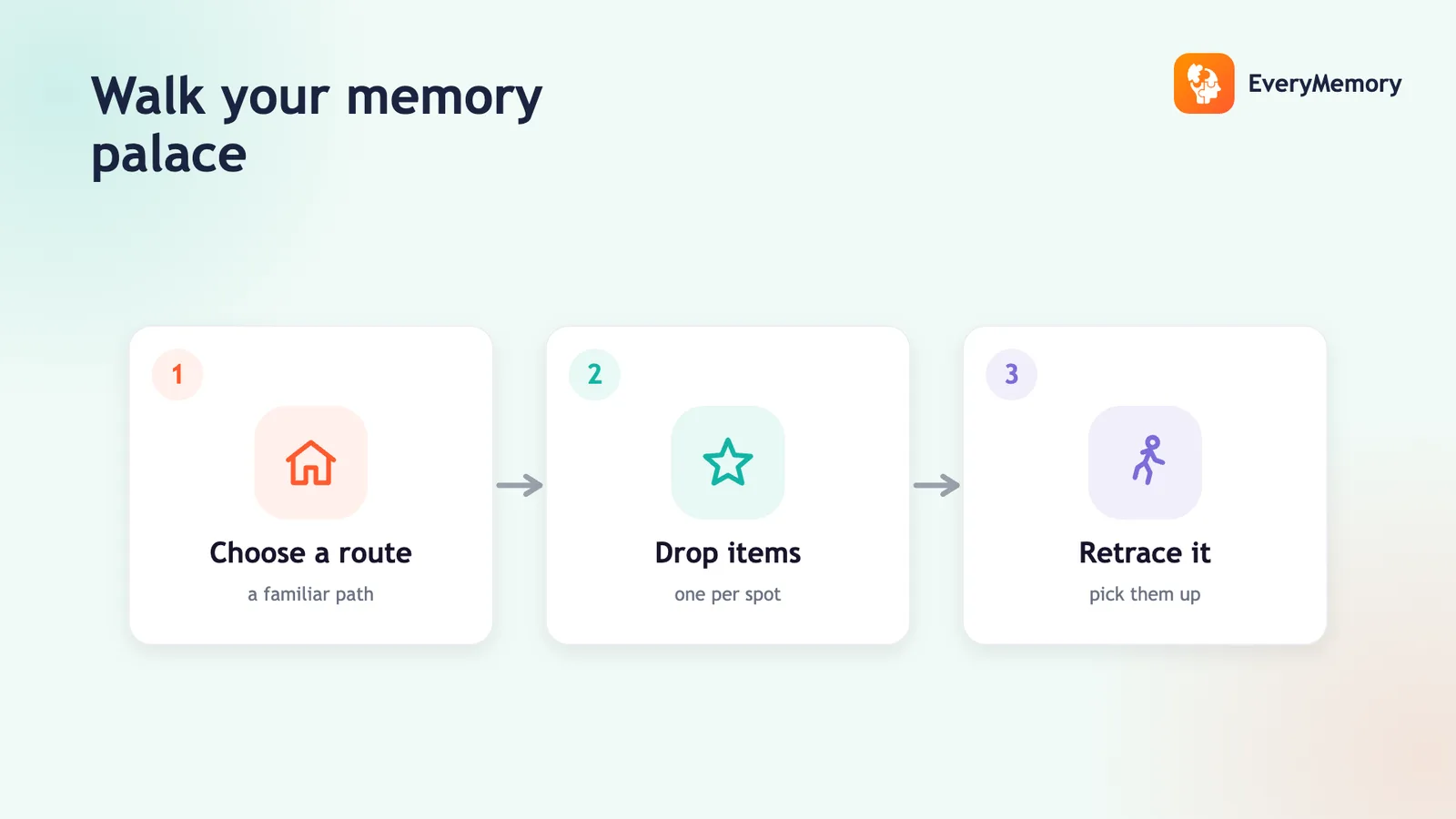
⚡ Quick answer
The method of loci - also called the memory palace - is a technique for remembering things in order by placing them, as vivid images, along a familiar route you walk in your mind. To recall, you retrace the route and the images are waiting. Used since ancient Greece, it works because spatial memory is one of the strongest kinds we have.
Key takeaways
- The method of loci (the memory palace) stores items as vivid images along a familiar mental route, recalled by retracing the route.
- It has worked since ancient Greece because it borrows your strong, effortless spatial memory of places you know.
- Memory palace, memory castle, and mind palace are all names for the same technique.
- Images must be vivid and exaggerated; bland ones don't stick.
The method of loci is the oldest serious memory technique on record - Roman orators used it to deliver hours of speech without notes, and today's memory champions use it to recall shuffled decks of cards. 'Loci' is just Latin for 'places'.
It's better known now as the memory palace. Here's what it is, why it works, and a worked example you can copy.
What the method of loci is
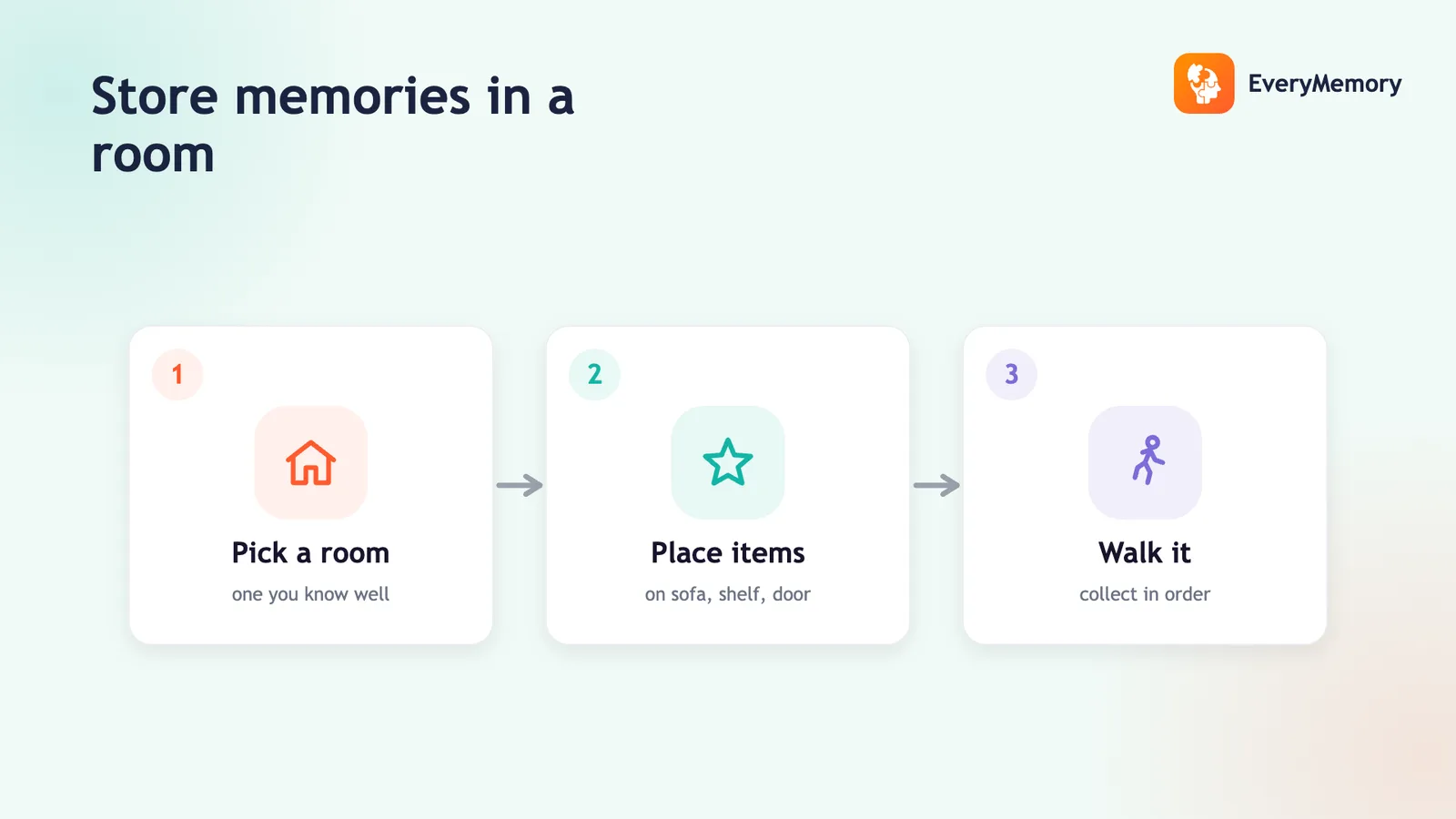
You take a place you know by heart - usually your home - and a fixed route through it. Along that route you choose specific spots, and at each spot you 'leave' a vivid image of something you want to remember. Because you can walk your home in your mind effortlessly, the route gives otherwise-slippery information a sturdy place to live.
Why it has worked for 2,000 years
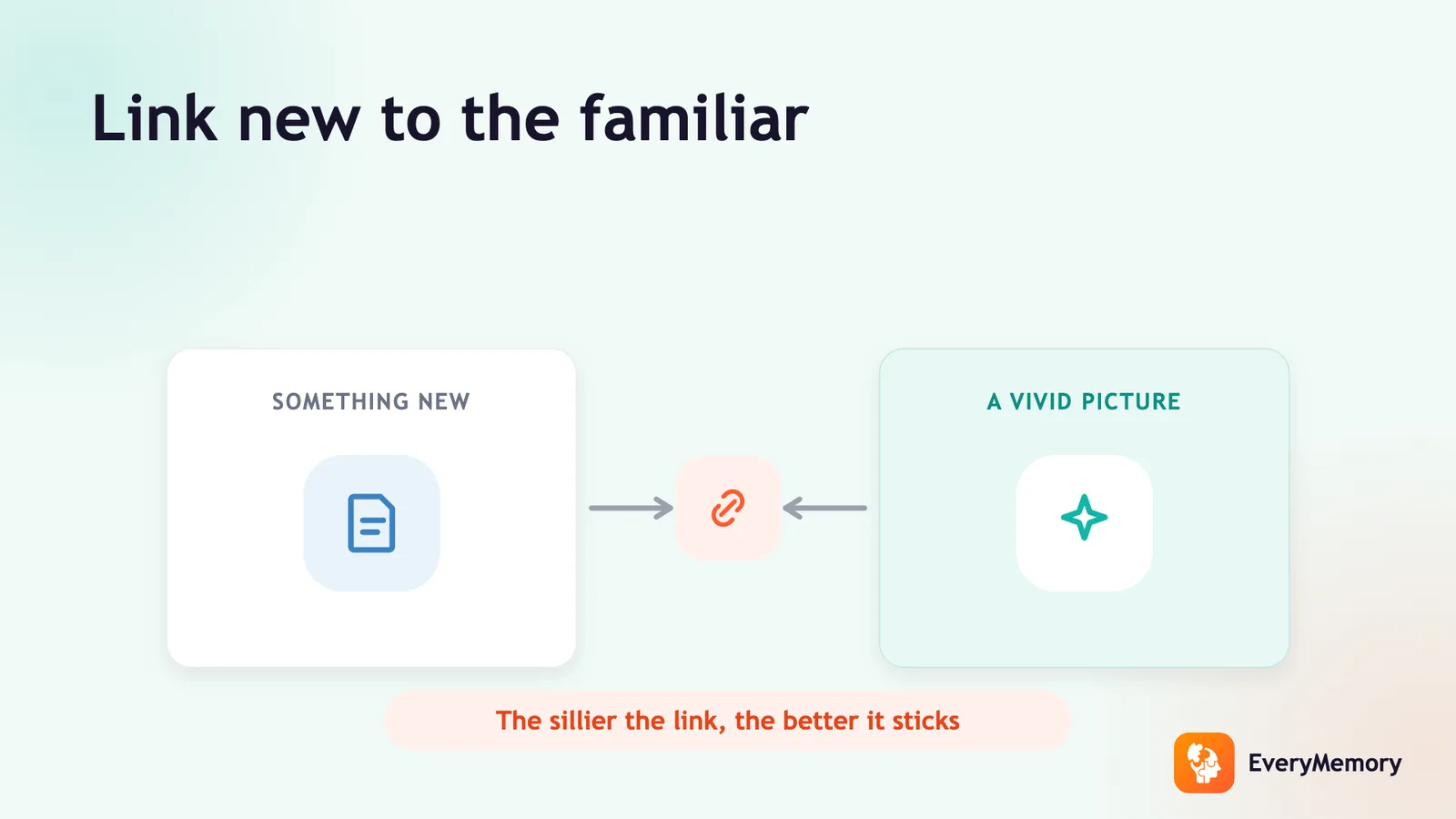
Human spatial memory is exceptional - you can picture rooms and routes you haven't seen in years. The method of loci piggybacks hard-to-hold information (lists, numbers, names) onto that effortless spatial map, converting a memory problem into a mental walk. That's the same engine behind all association techniques, organised by place.
A worked example
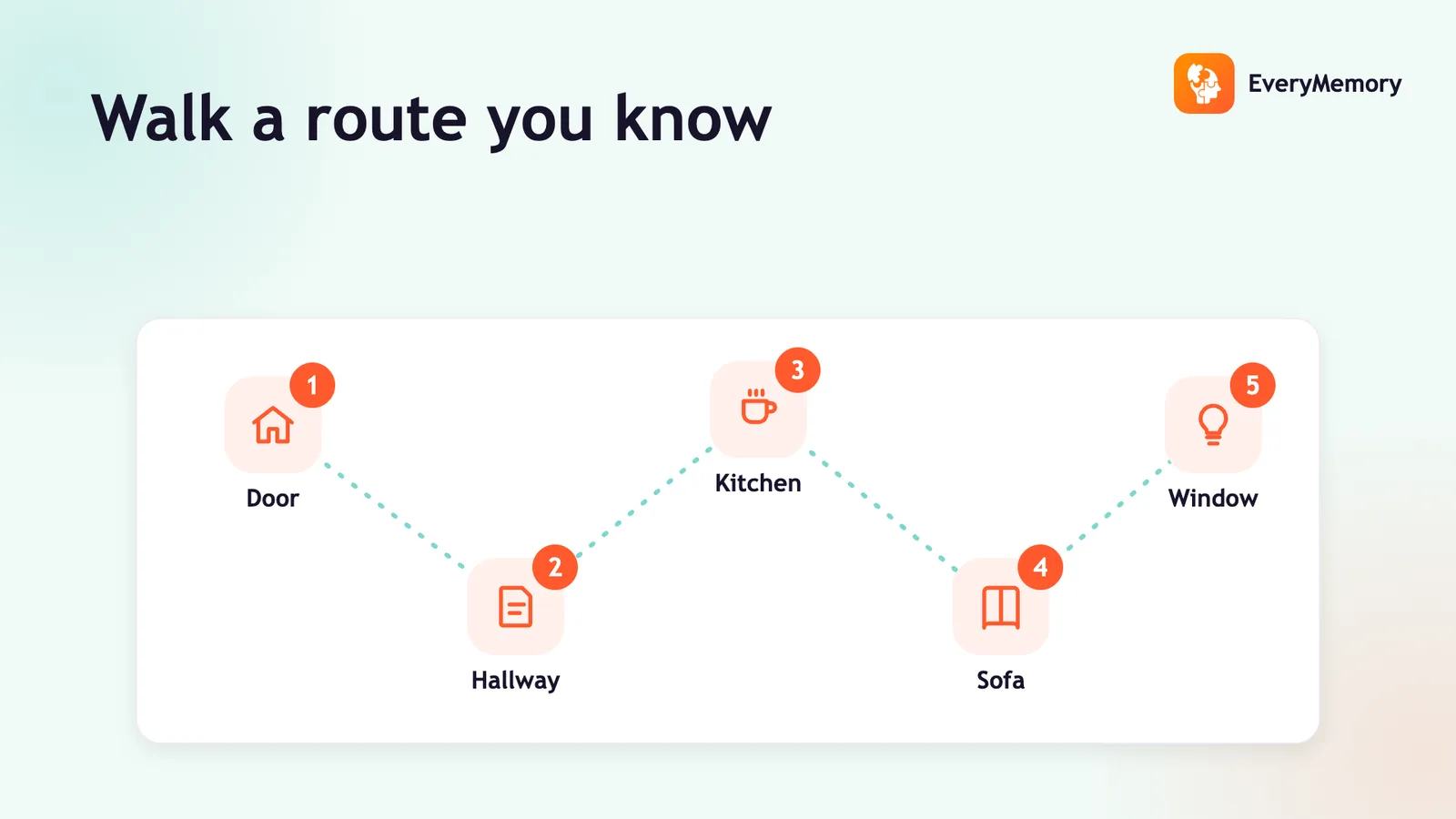
Say you need milk, stamps, and an umbrella. Walk your front door, hallway, kitchen:
- Front door - a cow (milk) blocking it, mooing to be let in.
- Hallway - giant postage stamps wallpapering the walls.
- Kitchen - an umbrella open over the sink, raining.
To recall the list, take the walk: door → cow → milk, hallway → stamps, kitchen → umbrella. Silly, exaggerated images are the point; bland ones don't stick.
'Memory castle' and other names
You'll see the same technique called a memory palace, a memory castle, a mind palace, or the journey method. They're all the method of loci - pick whichever name helps. The palace and castle versions simply use grander or longer routes to store more.
How to actually build one
This page is the what and why; for the full step-by-step build, see the memory palace technique, and for a gentle first attempt, the memory palace for beginners. For storing lists by number instead of place, the peg system is the close cousin.