 EveryMemory
Perimenopause and Memory: What to Expect
Many women in their 40s and early 50s notice word-finding trouble, foggy focus, and unexpected forgetfulness - and perimenopause is one of the most commonly cited reasons why.
Part of the guide: Understanding Memory Loss and Forgetfulness: A Calm, Reassuring Guide →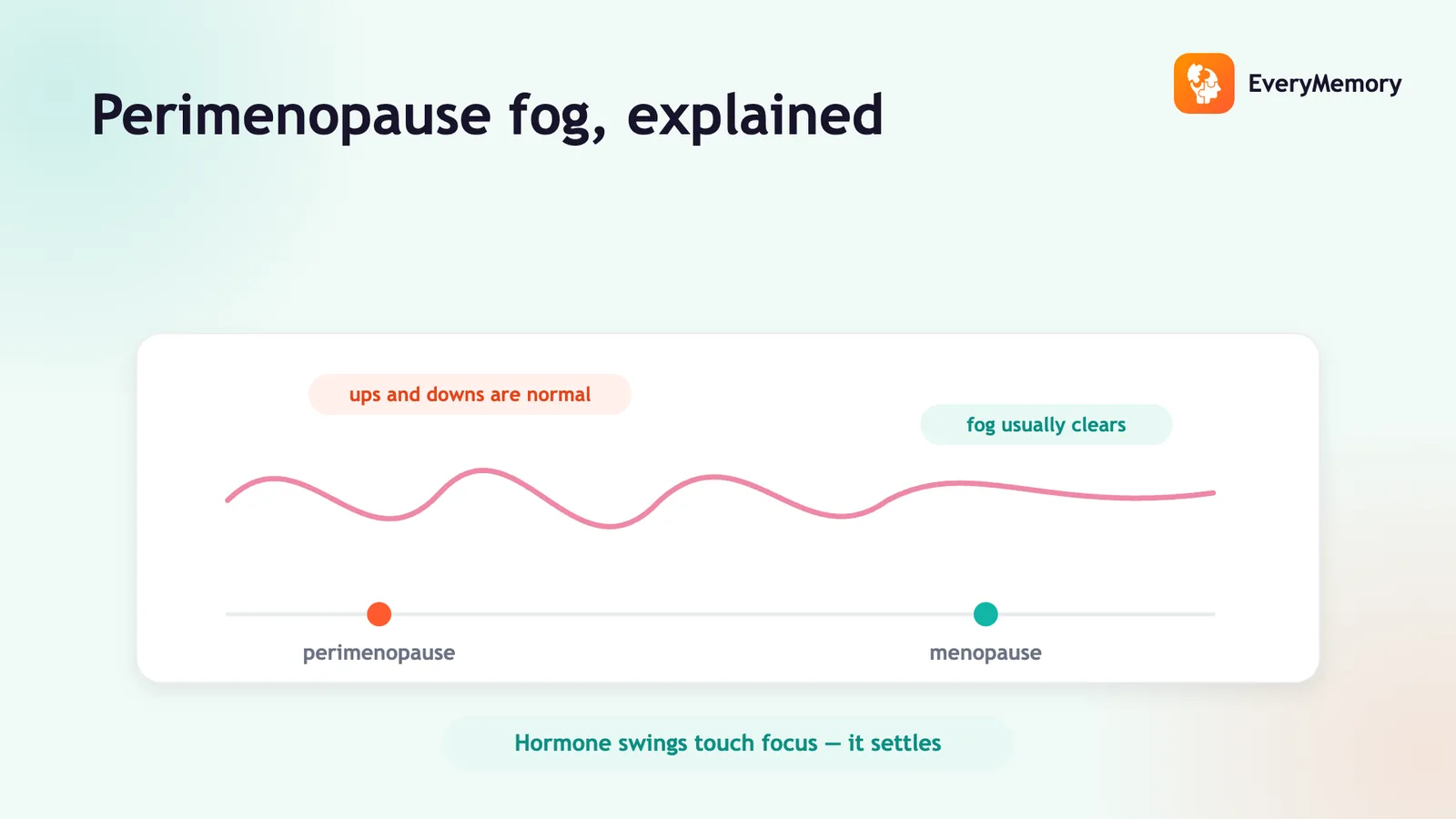
⚡ Quick answer
Memory changes and brain fog are commonly reported during perimenopause, the years before menopause when hormones fluctuate widely. The most typical complaints are word-finding difficulty, reduced focus, and everyday forgetfulness. These changes are generally linked to disrupted sleep, fluctuating hormone levels, and the cumulative stress of midlife - not permanent cognitive decline. Many women find the picture improves as the transition settles.
Key takeaways
- Brain fog, word-finding trouble, and forgetfulness are among the most commonly reported experiences during perimenopause.
- Disrupted sleep from night sweats is one of the strongest everyday contributors - improving sleep often brings noticeable gains in mental clarity.
- Sustained stress at midlife adds to cognitive load independently of hormonal changes; managing it actively is one of the most practical levers available.
- For many women, memory and focus improve once the hormonal transition settles - these changes are generally not a sign of permanent decline.
You're mid-conversation and the word you need simply won't come. You walk into the kitchen with a clear purpose and leave empty-handed. You read the same email three times. If you're in your 40s or early 50s and these moments have been multiplying lately, you're not imagining it - and you're very far from alone.
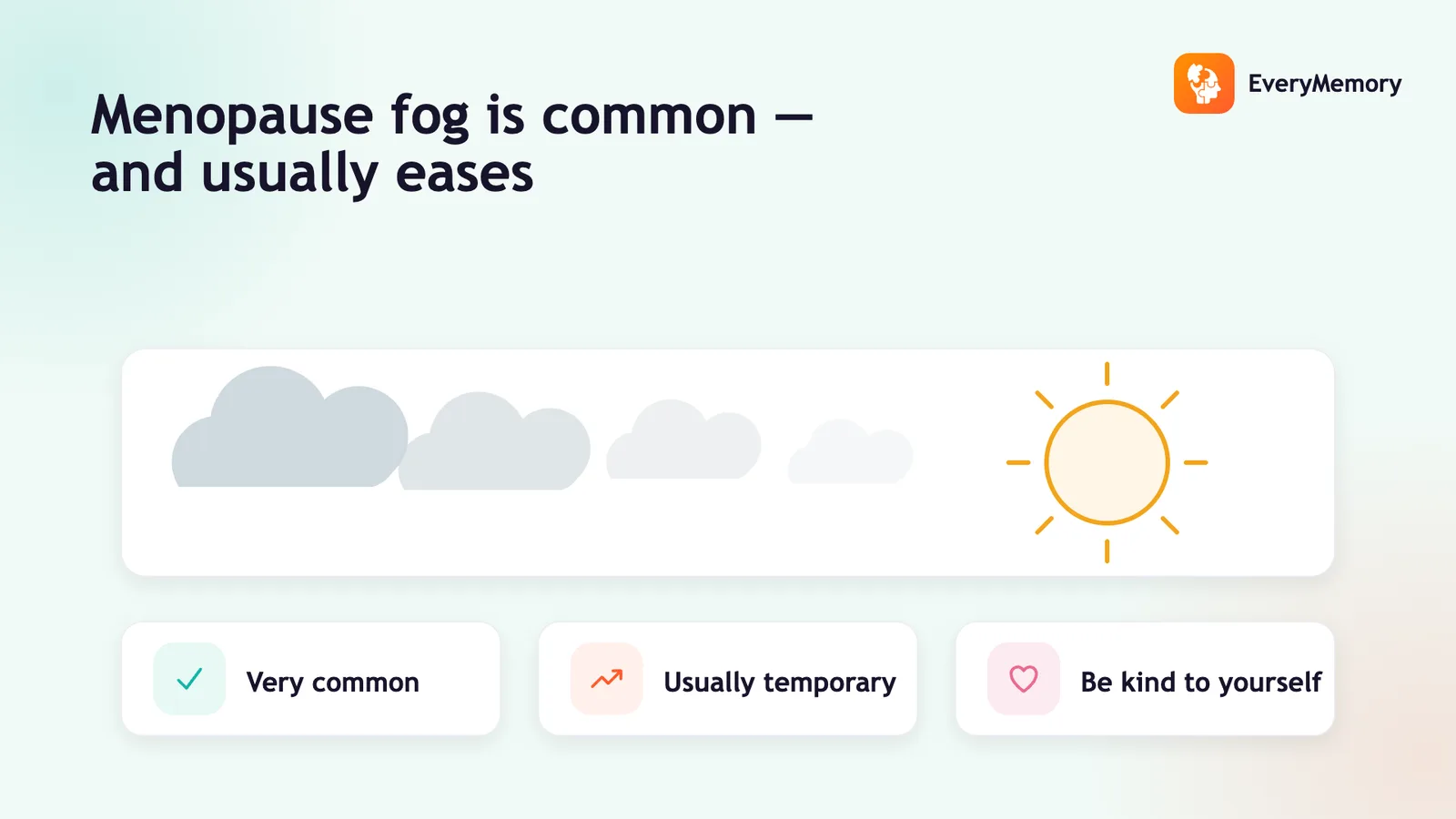
Cognitive changes are among the most commonly reported experiences during perimenopause, the transitional phase before the final menstrual period. Understanding what typically drives these changes - and why most women find them easing in time - can make the whole experience feel far less alarming.
What women commonly report
Studies suggest that over half of women going through perimenopause report some form of mental fogginess or memory difficulty. Word-finding is one of the most frequently described: the right word hovers just out of reach during conversation, or a familiar name refuses to surface. Concentration can feel shorter or less reliable, and short-term memory is often affected - forgetting where something was left, or arriving somewhere without being sure why.
What many women find helpful to know is that these changes, while genuinely disruptive, tend to remain within the normal range of cognitive function. They are not a sign of serious disease. Our article on brain fog causes and what helps covers fuzzy thinking more broadly, and our piece on menopause and memory looks at what happens once the transition settles.
Why this happens: hormonal shifts in plain terms
Perimenopause is defined by hormonal unpredictability. Rather than a steady decline, oestrogen levels during this phase rise and fall erratically, sometimes quite sharply. Progesterone, which tends to have a calming, sleep-supporting effect, also begins to drop. This volatility is distinct from the lower-but-stable pattern that follows after menopause.
Oestrogen is known to interact with brain systems involved in attention, verbal recall, and processing speed. When levels swing widely, some women notice that their sharpest and foggiest days come in waves - or no longer follow any pattern they can predict. Researchers who have followed women through the transition report that memory performance often rebounds once hormone levels settle, which is a genuinely reassuring finding for those in the thick of it now.
The sleep and memory connection
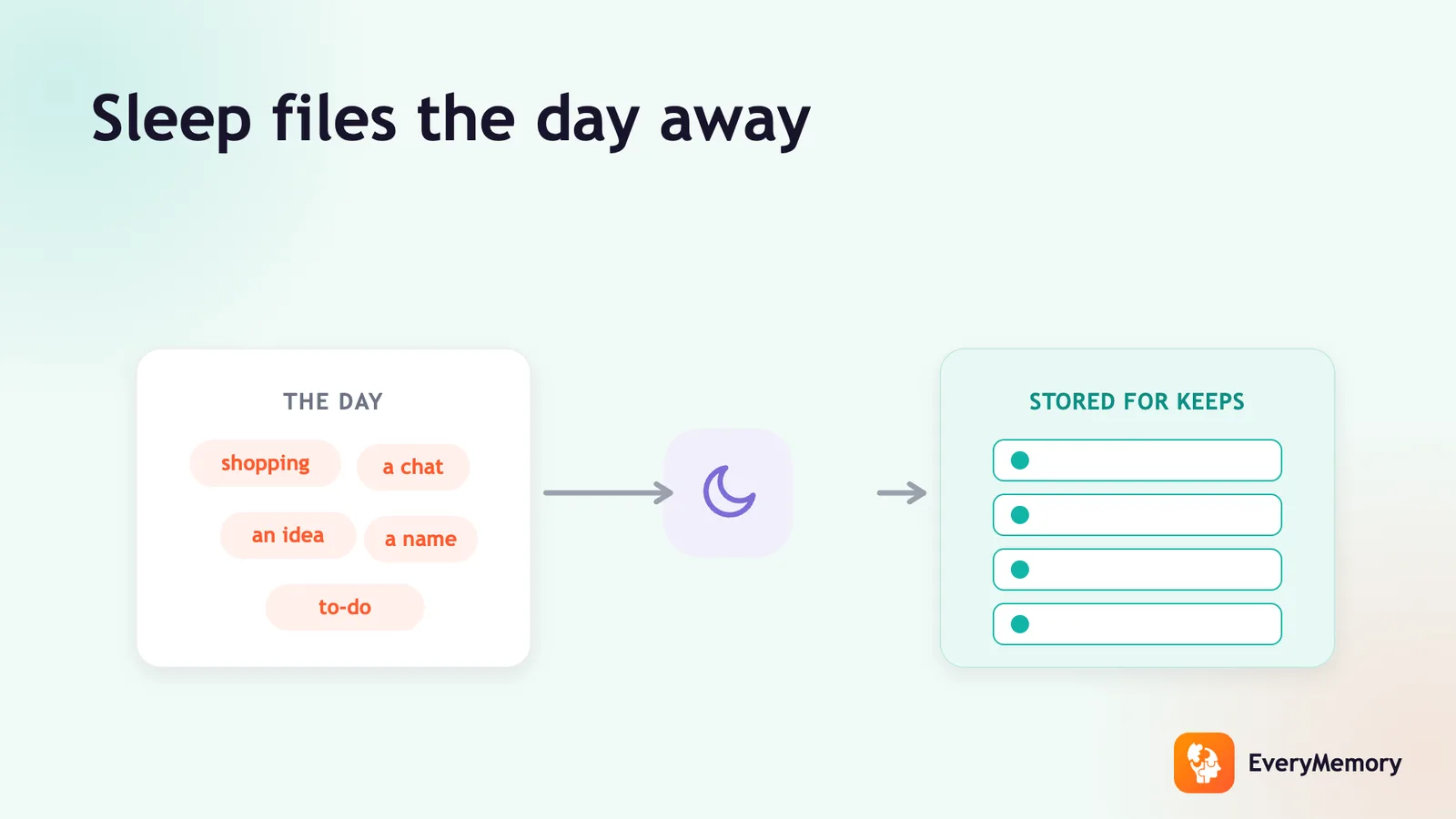
Of all the everyday contributors to perimenopausal brain fog, disrupted sleep is arguably the most powerful. Night sweats - the nocturnal version of hot flushes - wake many women repeatedly through the night, fragmenting the deep, restorative sleep that the brain relies on to consolidate memories and restore mental clarity. After a night of broken sleep, it is almost impossible to separate the effects of the hormone changes themselves from the effects of sheer sleep deprivation.
Research has found that women with severe night-time hot flushes are significantly more likely to report cognitive difficulties - and the link between broken sleep and brain fog is one of the strongest in this area. Our piece on the sleep and memory connection explains the mechanisms in plain terms.
- Keeping the bedroom cool - an open window, a lighter duvet, or a fan - can reduce the number of night sweats that break sleep.
- A consistent wake time, even after a difficult night, helps regulate the sleep-wake rhythm over time.
- Avoiding alcohol in the evenings is worth considering: it can initially feel sleep-inducing but tends to fragment the second half of the night and worsen night sweats for some women.
Stress and the weight of midlife
Perimenopause rarely arrives in a quiet life. Many women at this stage are simultaneously managing demanding careers, caring for children or ageing parents, and absorbing significant life changes - all while going through a major internal transition. This sustained load has real effects on cognition.
Chronic stress keeps the brain in a low-level alert state that is resource-intensive. Working memory - the mental workspace used to hold and act on information - is especially sensitive to stress and emotional fatigue. When it's overloaded, the result can look very much like forgetfulness: losing track of a conversation, forgetting what you came to do, or struggling to retain new information. Our article on whether stress makes you more forgetful examines this in detail.
Practical everyday supports
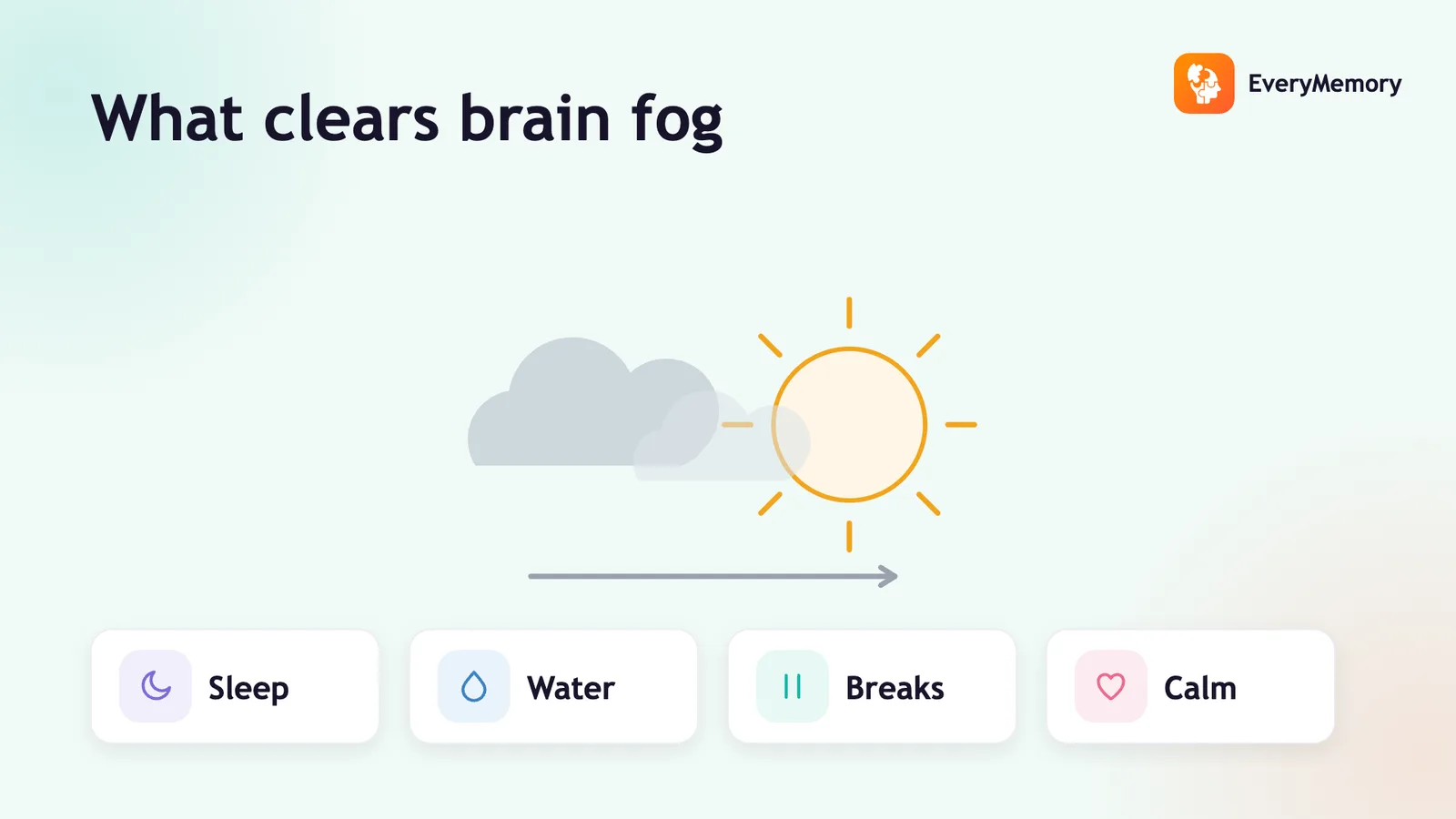
No single fix exists, but a consistent set of everyday habits is linked with meaningfully better cognitive wellbeing during this transition.
- Prioritise sleep quality - a cool bedroom, consistent schedule, and calming wind-down routine are the highest-leverage starting points.
- Move regularly - brisk walking for 20–30 minutes most days is associated with better mood, sharper attention, and more restorative sleep.
- Manage stress actively - one or two reliable forms of relief (a walk, breathing exercises, time outside, journalling) treated as non-negotiable matter more than any supplement.
- Use external memory aids - a phone list, sticky notes, calendar reminders - offloading routine information frees up mental bandwidth.
- Track patterns - a brief daily note on sleep, stress, and cognitive feel often reveals which factors most reliably affect your thinking.
Many women find that when sleep improves - even partially - mental clarity follows within days.
When will it ease?
Perimenopause can span several years, and the timeline varies between women. The honest answer is that cognitive symptoms tend to track the most actively fluctuating hormonal phase. Longitudinal research found that memory performance often rebounded after the final period, particularly when sleep and stress were reasonably managed.
These changes appear to be driven by the volatility of the transition itself, not by permanent shifts in brain function. Our article on menopause and memory covers what the post-transition picture typically looks like.
✅ Try this today - A three-day brain fog pattern check
Two minutes each evening for three days - patterns often emerge faster than you'd expect.
- Sleep quality: Rate last night's sleep 1–5 and note any wake-ups or night sweats. Do foggy mornings follow low-sleep nights?
- Stress level: Rate today's mental load 1–5 and write one word ("hectic", "calm", "scattered"). Do high-load days predict forgetful afternoons?
- Movement: Yes or no - did you take a walk or do any sustained activity today? Compare how active and still days feel.
- Fog moment: One sentence on any focus or memory difficulty - what were you doing, and had you slept well? After three days you'll have a useful starting pattern.
⚠ When to talk to a professional
If memory or focus changes feel sudden, severe, or are rapidly worsening - or if they're causing significant distress or affecting your daily life - please speak with a doctor or qualified healthcare professional. This is especially important for changes that feel very different from the mild, variable pattern described here. A doctor can assess the full picture, rule out other causes, and discuss perimenopause with you directly.