 EveryMemory
Are Smartphones Making Us Forgetful?
Phones aren't erasing your memory - but the way you use them can quietly undermine how information gets stored in the first place.
Part of the guide: How to Keep Your Brain Healthy: A Complete Lifestyle Guide →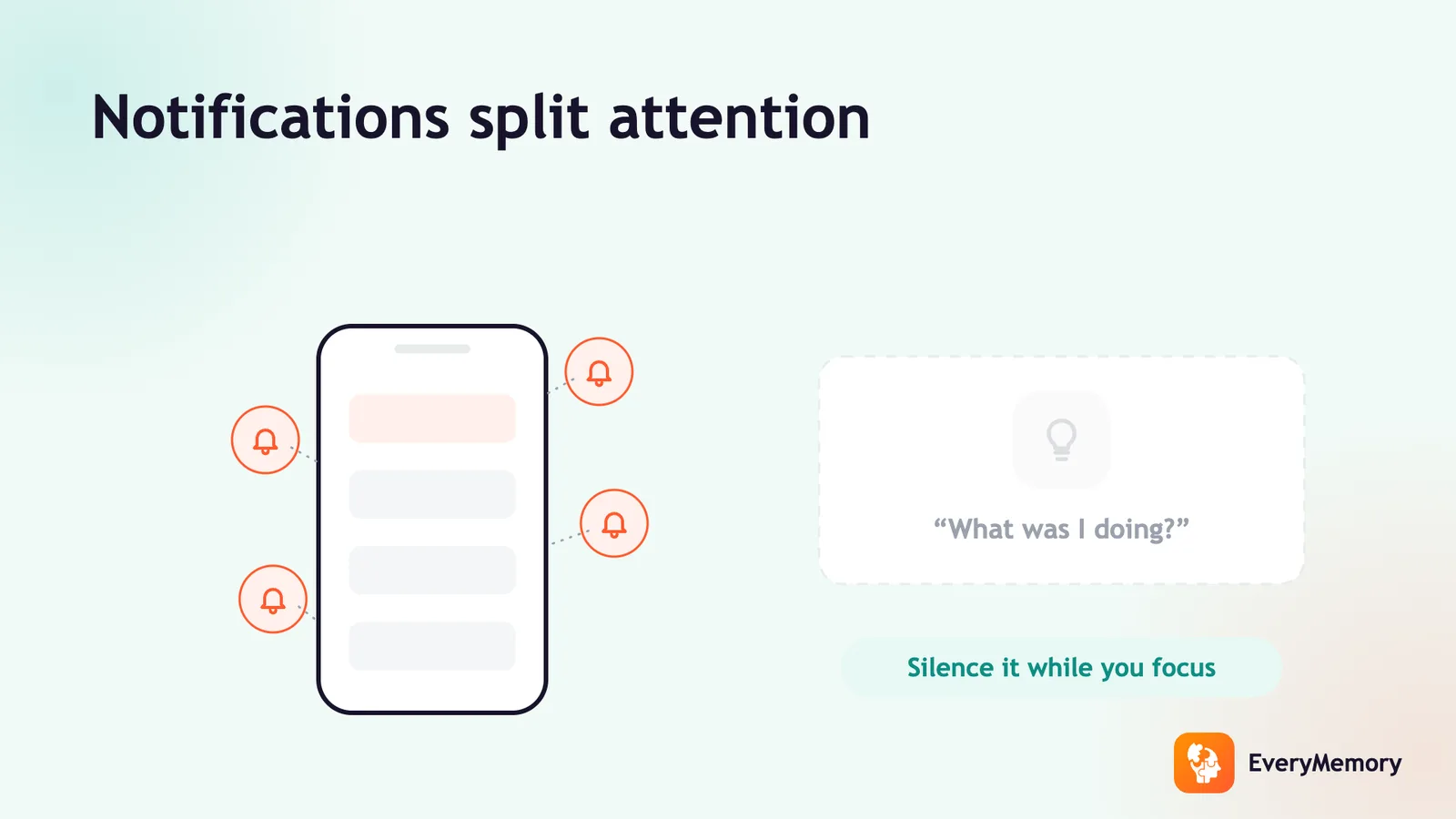
⚡ Quick answer
Smartphones can interfere with memory in two main ways: cognitive offloading (relying on the device to remember things so the brain never fully encodes them) and notification-driven attention fragmentation (interruptions that prevent information from being properly consolidated). The fix is not getting rid of your phone - it is building intentional habits around how and when you use it.
Key takeaways
- Smartphones change memory by encouraging shallow encoding and offloading, not by damaging the brain directly.
- The Google effect means we remember where to find information better than the information itself - a useful adaptation that has limits.
- Notifications interrupt the sustained attention that good memory encoding requires, even when not acted on.
- Small habits - batching alerts, pausing before searching, staying present during introductions - give memory the conditions it needs to work well.
You meet someone at a gathering, glance at your phone to check a notification mid-introduction, and the name is gone before the conversation ends. It feels like the phone is eating your memory - and you are not entirely imagining the connection.
The relationship between smartphones and recall is real, but more specific than the alarming headlines suggest. Phones do not damage memory the way an injury would. What they do is change the conditions under which memory forms - and once you understand how, a few straightforward habits can make a real difference.
Cognitive offloading: using the phone as an external hard drive
Cognitive offloading is the entirely normal, entirely human habit of using the environment to reduce mental effort. Writing a shopping list is offloading. Keeping a calendar is offloading. We have always done it, and it is genuinely useful.
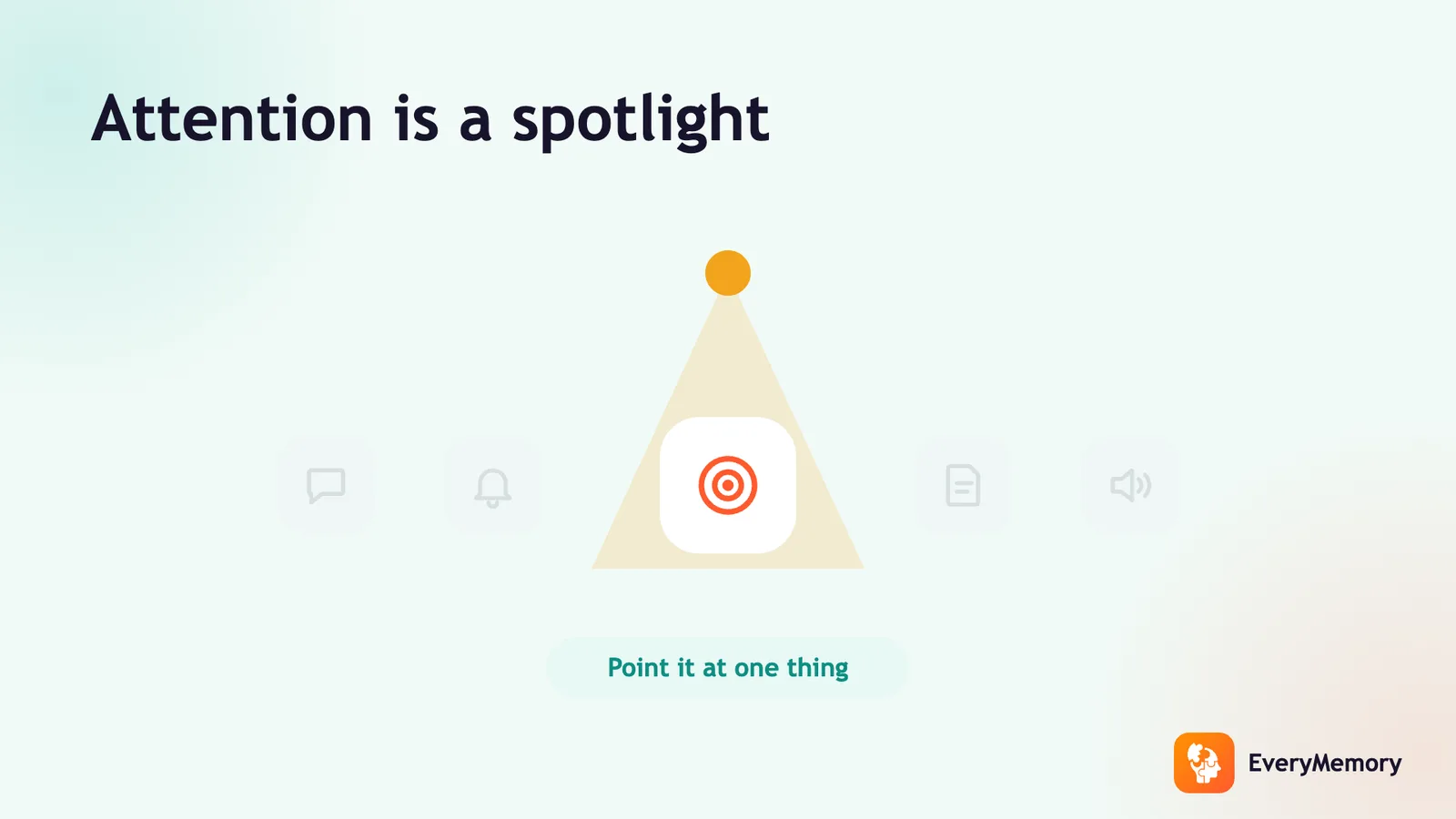
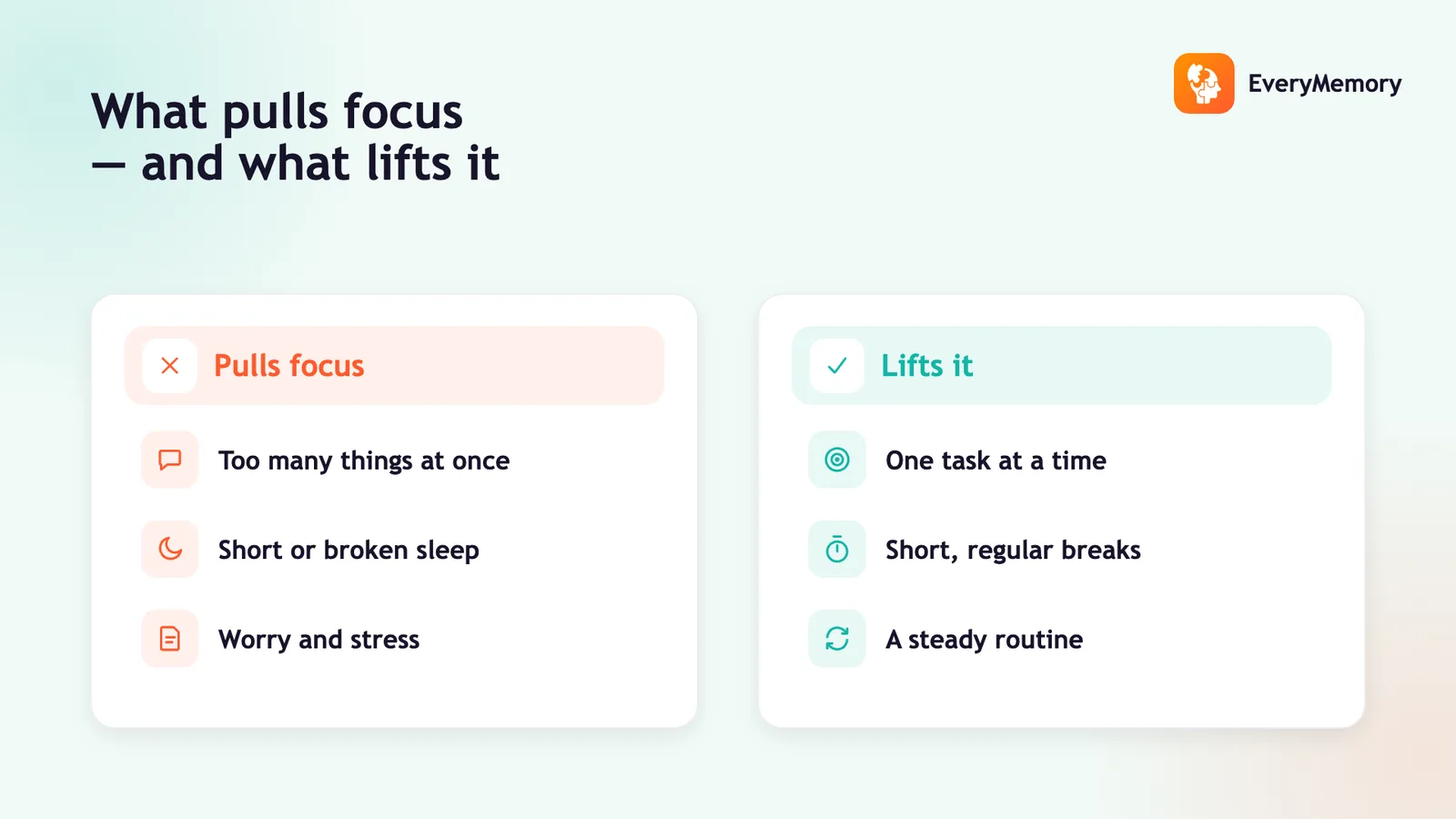
Smartphones have turbocharged this tendency - your phone stores contacts, appointments, directions, and anniversaries instantly, reliably, and always within reach. The brain, which is built to conserve energy, quietly adjusts: why encode something deeply when the device will hold it? The practical effect is that information gets shallowly processed rather than actively stored. That is fine for a calendar reminder. It becomes a problem when the same low-effort processing happens to things you actually want to remember: a new name, a conversation, something a family member told you. How attention works explains why shallow encoding is so closely tied to where your focus sits at the moment of learning.
The Google effect: remembering where, not what
In 2011, psychologist Betsy Sparrow and colleagues at Columbia University published a study in Science showing that people who expected to look up information later remembered the information itself less well - but remembered where to find it more reliably. They called this the Google effect.
We are not losing the ability to remember; we are redirecting it. Instead of encoding the fact, the brain encodes the retrieval route - the app, the search term. This is an efficient adaptation, but it means certain knowledge stays shallower in long-term storage.
Think of it as transactive memory - the system that leads couples to divide up what each person holds, trusting the other for their half. We have taken on our phones as memory partners. That is fine, as long as you remain an active participant rather than outsourcing everything.
How notifications fragment attention - and block encoding
Encoding - the process by which an experience gets written into longer-term storage - requires a brief window of sustained attention. When that window is cut short, the memory is weak or absent. Smartphone notifications do exactly this: research found that receiving a phone notification, even one that is not acted on, measurably reduces performance on concurrent attention tasks. Simply hearing the buzz is enough.
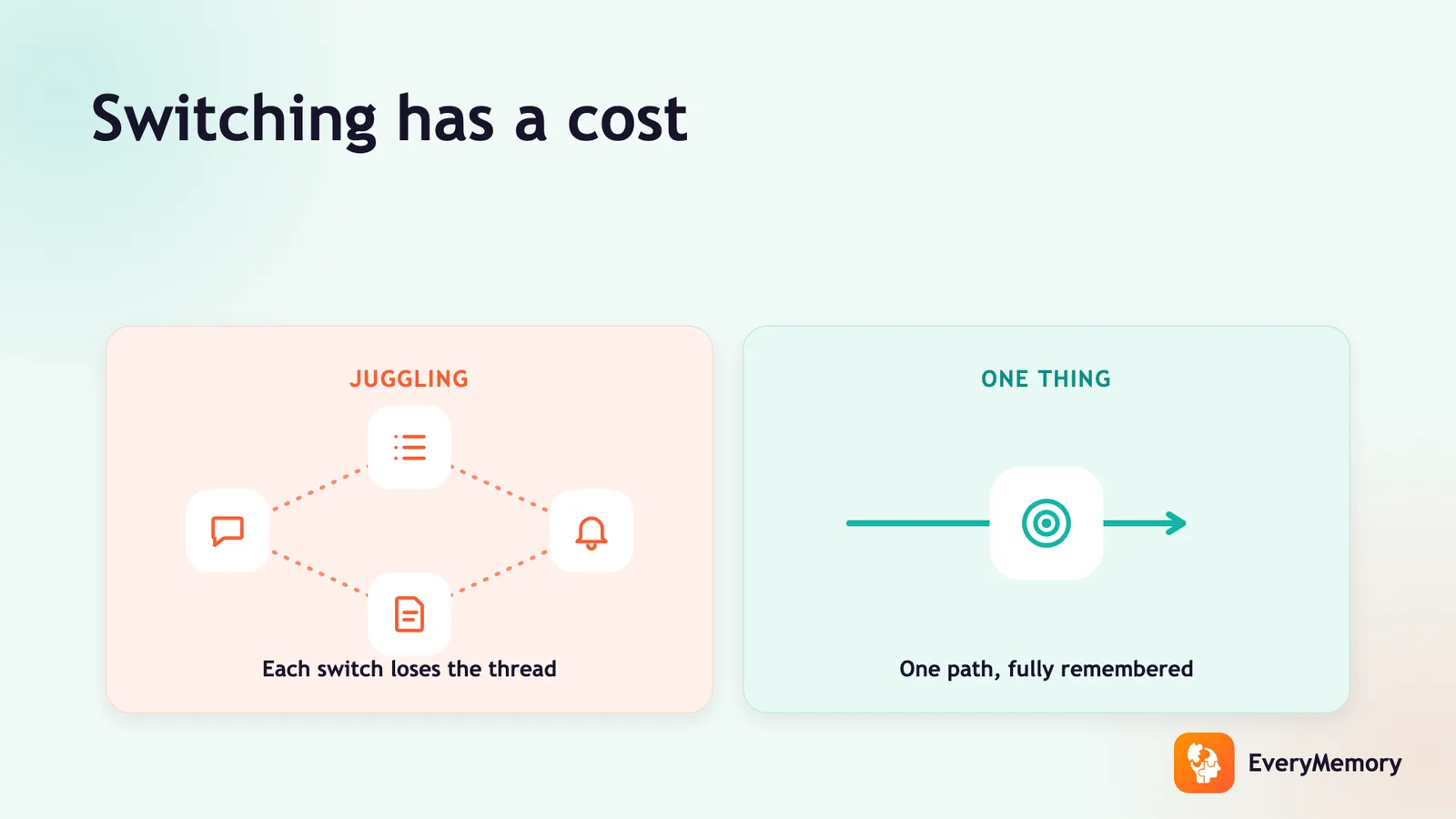
In daily life this plays out across dozens of small moments: a name heard while glancing at the screen, an errand mentioned mid-conversation while you are half-reading a message. None of these individually seems significant. Collectively, they create a pattern where a great deal of what happens around you never quite gets recorded. Multitasking and memory explores the same problem from a different angle - divided attention is divided encoding.
The practical fix is batch notifications: receiving alerts in two or three grouped sessions per day rather than continuously. Research on this approach found it improved both mood and self-reported quality of attention. The interruptions do not disappear; they are simply moved out of your focused hours.
The balanced picture: phones are not the villain
The popular narrative - "smartphones are destroying our memory" - is considerably less nuanced than the actual evidence. A few important counterpoints:
- Older adults who use smartphones regularly have been found in some studies to perform better on certain cognitive measures than non-users, possibly because digital engagement keeps the brain active.
- Cognitive offloading is not inherently damaging - freeing mental resources from rote storage can leave more capacity for deeper thinking.
- The question is not phones versus no phones. It is whether your phone habits support the conditions that good encoding requires.
What the evidence supports clearly is that how you use a smartphone shapes its effect on memory more than the fact of using one.
Why this may feel more noticeable after 55
If you have noticed that your phone seems to affect your memory more than it once did, there is a real explanation. The ease of forming new memories does shift gradually with age - not dramatically, but enough to mean that encoding needs slightly better conditions than it did at 30. A younger person might encode a name adequately even with a notification buzzing; the same situation may leave an older adult with nothing at all.
This is not a reason for alarm - it is a reason to be deliberate. The habits that help everyone (reducing interruptions during important conversations, choosing to actively commit things to memory rather than reflexively reaching for the phone) simply matter more as encoding efficiency changes. Our article on why focus fades with age explains the underlying changes clearly and practically. The strategies below are not about willpower or phone guilt - they are about giving memory the conditions it needs.
Practical habits that make a real difference
These small adjustments shift your phone from a passive memory-underminer to a neutral or supportive tool:
- Phone away during introductions. Pocket or bag the phone for those first sixty seconds when you meet someone. A name heard without distraction has a chance of being encoded. Then use it once in conversation - the same active rehearsal technique behind remembering numbers and PINs.
- Batch your notifications. Turn off badge and sound alerts for everything except genuine emergencies, and check messages at two or three scheduled times. This keeps focused hours genuinely focused.
- Pause before you search. When you want to recall a word, name, or fact, try to retrieve it for twenty to thirty seconds before reaching for the phone. That effortful attempt - even when it fails - strengthens the memory trace for next time.
- Leave the phone out of the bedroom. Sleep is when memory consolidates. Late scrolling or a 2am notification disrupts that process at its most important point.
✅ Try this today - The one-day phone audit
Pick one day this week to observe your habits without changing them yet - just notice.
- Each time you reach for the phone, pause one second and ask: could I hold this in my own memory instead?
- Each time you look at the phone during a conversation or while someone is speaking to you, note it - no judgment, just awareness.
- At the end of the day, write down three things from memory: who you spoke to, one thing they said, one task you completed.
- The following day, batch your notifications and see whether your recall of the day's events feels different that evening.
⚠ When to talk to a professional
Forgetfulness linked to phone habits is normal and addressable with better habits. If you notice sudden, rapid, or noticeably worsening memory difficulties - forgetting recent events, getting confused in familiar places, or losing track of conversations - it is worth speaking with a qualified healthcare professional to rule out causes unrelated to technology.