 EveryMemory
How to Memorise for Exams
Cramming feels productive and fails under pressure. What actually holds in an exam - self-testing, spacing, past papers, and mnemonics for the rote bits.
Part of the guide: How to Improve Your Memory: The Complete Beginner's Guide →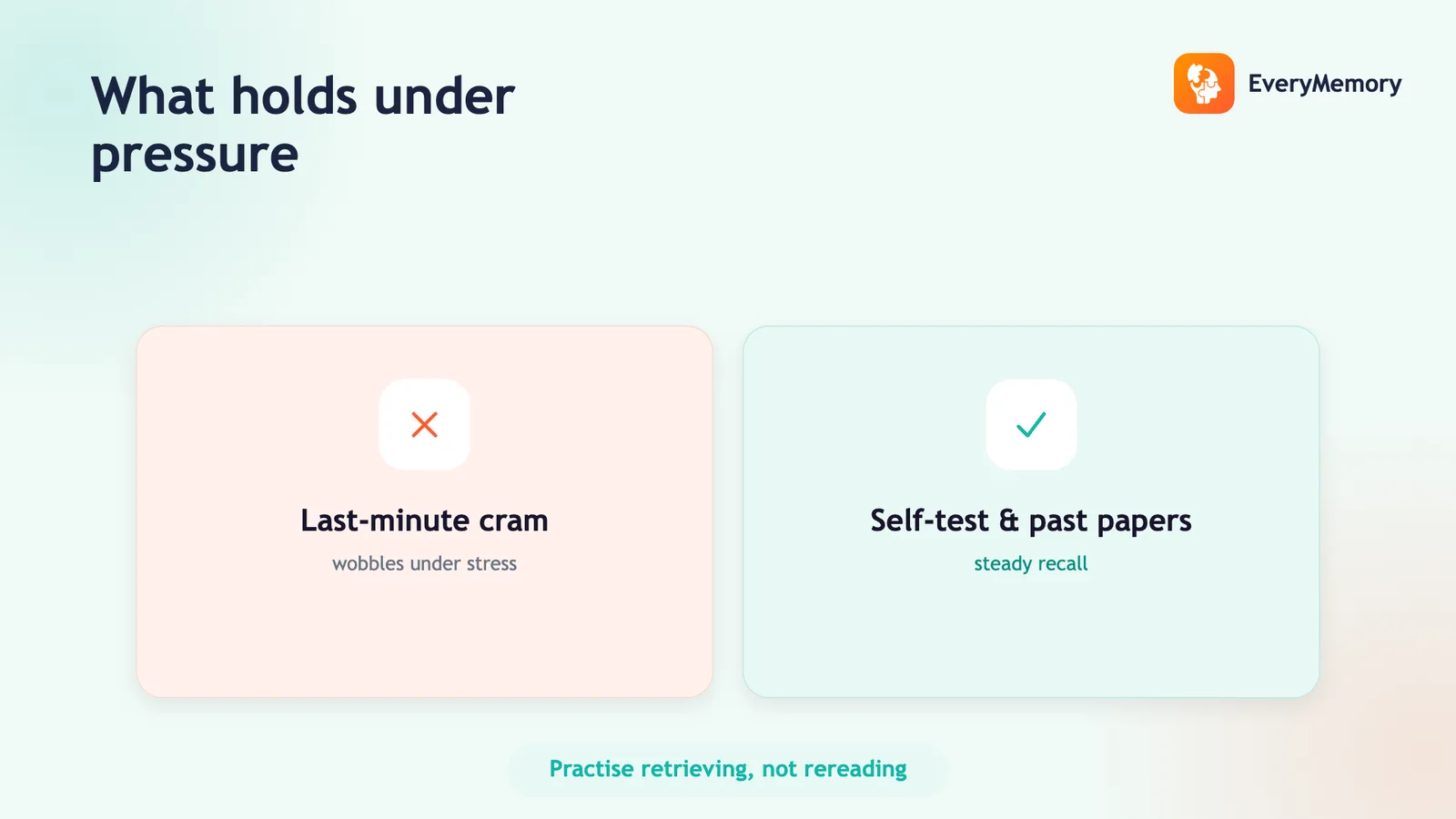
⚡ Quick answer
To memorise for exams, swap rereading for self-testing, start days ahead so you can space your review, and practise under exam-like conditions with past papers. Use mnemonics only for the facts and lists you must recall exactly. Cramming the night before feels productive but fades fast; spaced self-testing is what actually holds under pressure.
Key takeaways
- Cramming builds familiarity that feels like knowing but fades fast and collapses under exam pressure.
- Self-test with past papers under timed conditions - the closest practice to the exam itself.
- Start early enough to space your review across days; this is the biggest difference between revision that holds and revision that doesn't.
- Use mnemonics for rote facts and lists; keep the night before for light review and good sleep.
Exam revision is where weak study methods get exposed. Rereading your notes until they feel familiar produces confidence that evaporates the moment a blank exam paper asks you to produce the answer.
Here's what actually holds under exam pressure.
Why cramming lets you down
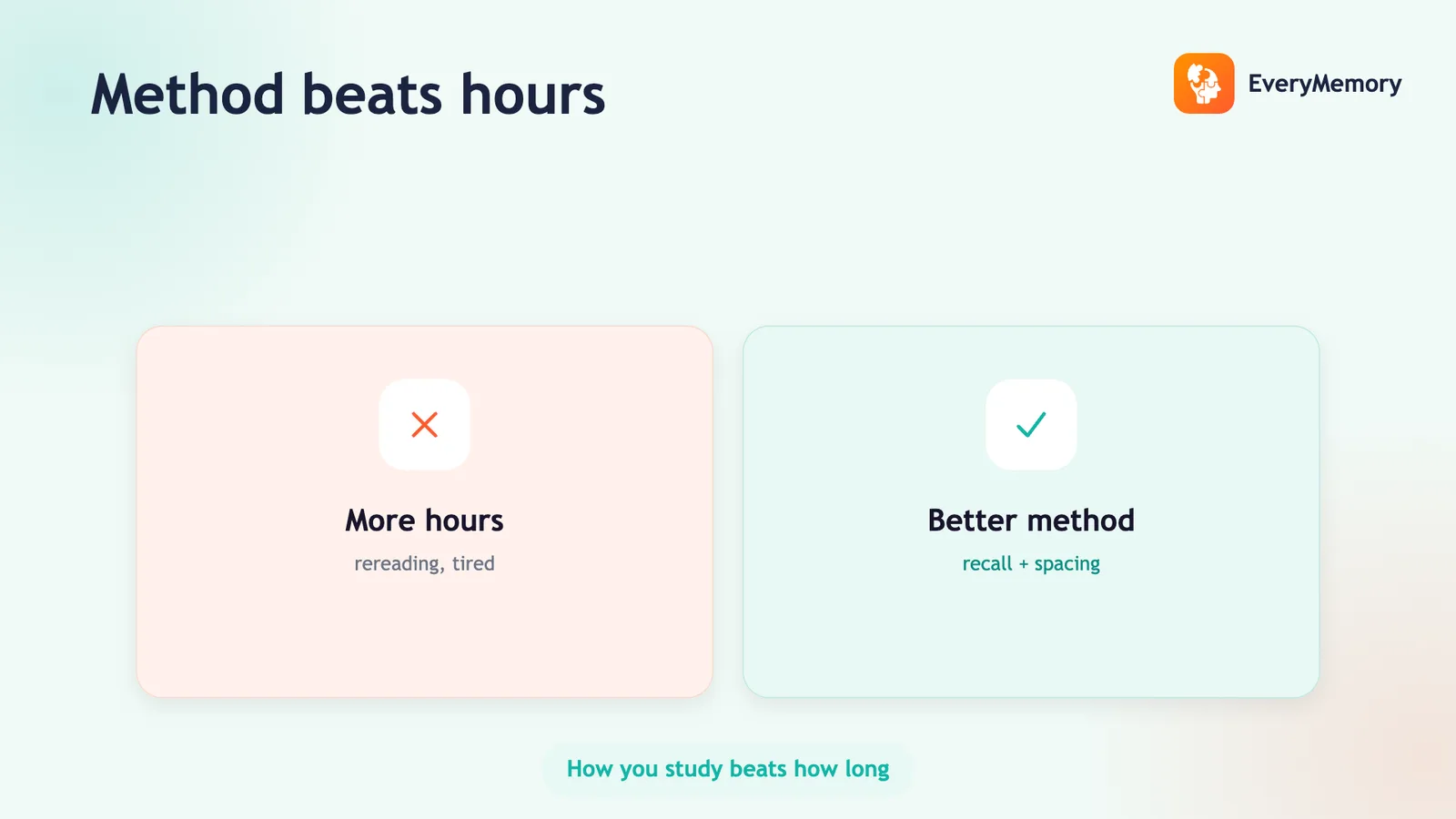
Cramming loads a lot into one session with no time to consolidate, so most of it drains away within days - often before the exam. Worse, the familiarity it builds feels like knowing, right up until you have to retrieve it cold. The fix is to study the way the exam tests you: by producing answers from memory.
Test yourself with past papers
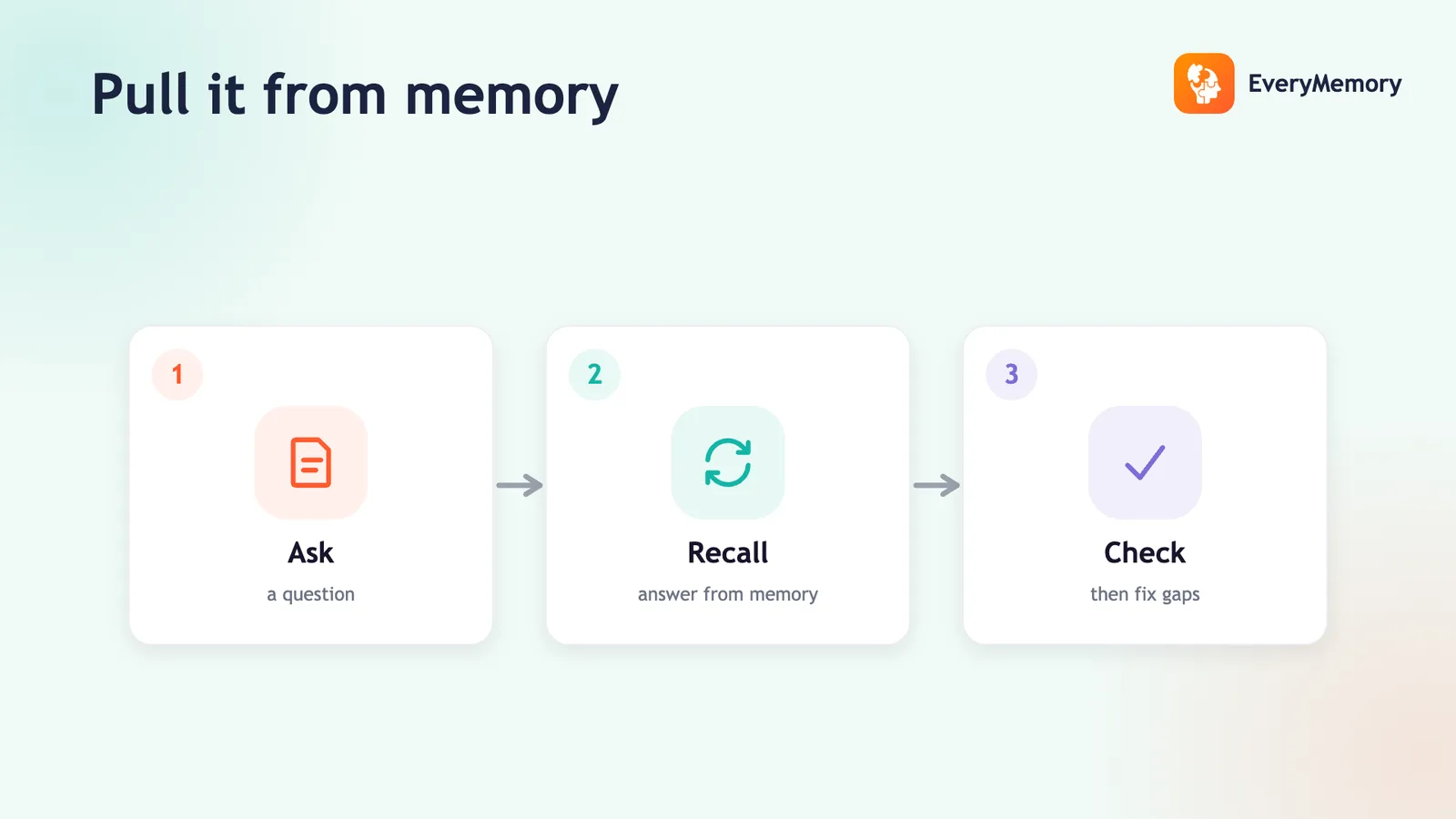
Nothing prepares you for retrieving under pressure like practising exactly that. Work past papers and practice questions from memory, under timed conditions, before checking. This is active recall in its most exam-relevant form, and it also reveals precisely what you don't yet know.
Start early enough to space it
Begin far enough ahead that each topic gets several reviews spread across days, not one rushed pass. Working backwards from the exam date, block short, spaced self-tests for each topic - see spaced repetition. This is the single biggest difference between revision that holds and revision that doesn't.
Use mnemonics for the rote parts
Some exam content simply must be recalled verbatim - formulae, lists, dates, classifications. For these, mnemonics earn their place: an acronym for a fixed list, a memory palace for ordered points. Use them for the rote layer and active recall for everything that needs understanding.
The night before and the exam itself
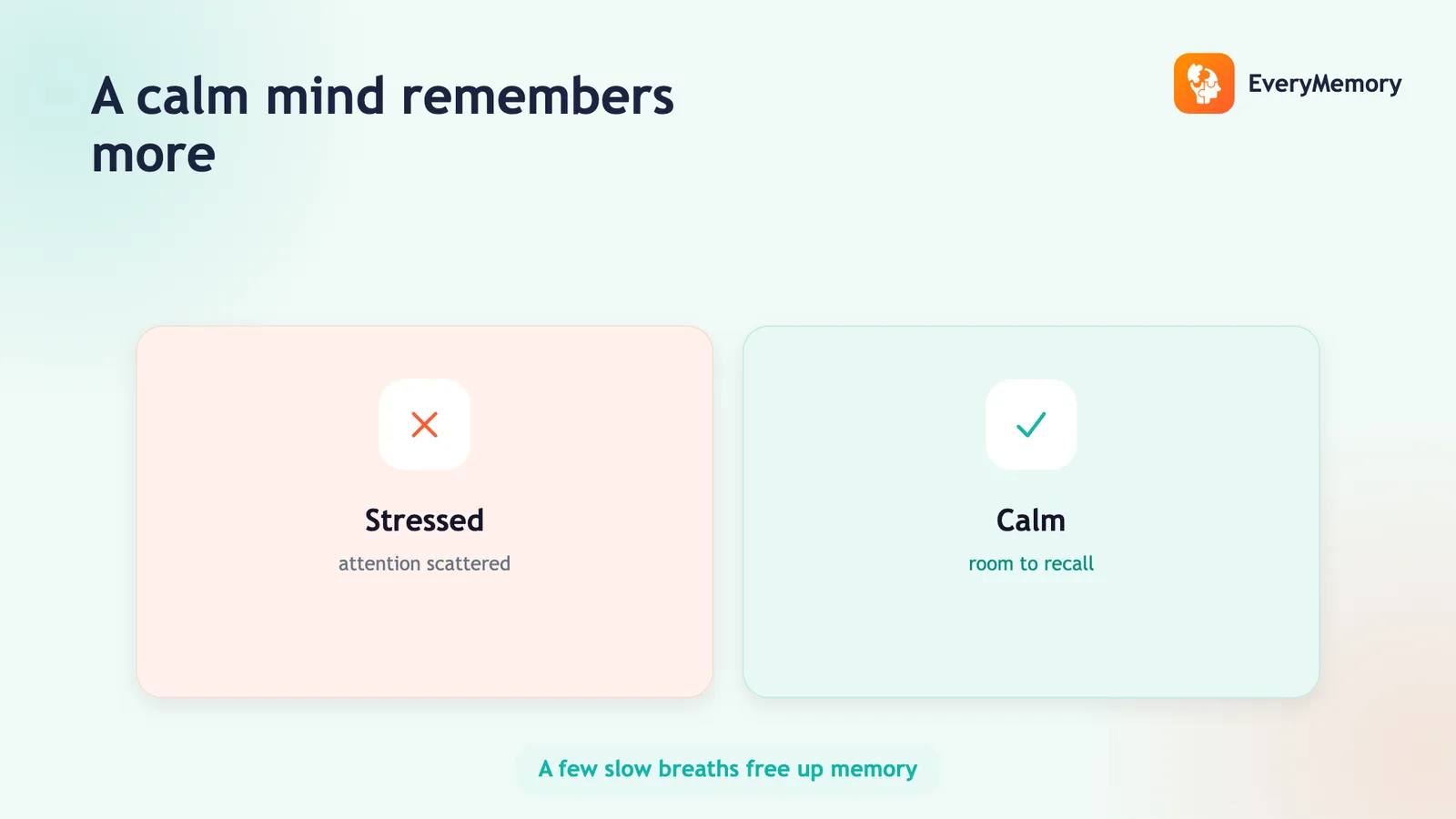
The night before is for light review and good sleep, not cramming - sleep consolidates what you've learned, and exhaustion wrecks recall (how sleep affects memory). In the exam, nerves shrink working memory, so a calm, steady approach protects recall more than last-minute panic; the link between stress and forgetting is in does stress cause forgetfulness?