 EveryMemory
Sugar and Brain Fog: What's Actually True?
That foggy, sluggish feeling after a sweet meal isn't in your head - but the story of sugar, blood glucose, and focus is more nuanced than most people realise.
Part of the guide: How to Keep Your Brain Healthy: A Complete Lifestyle Guide →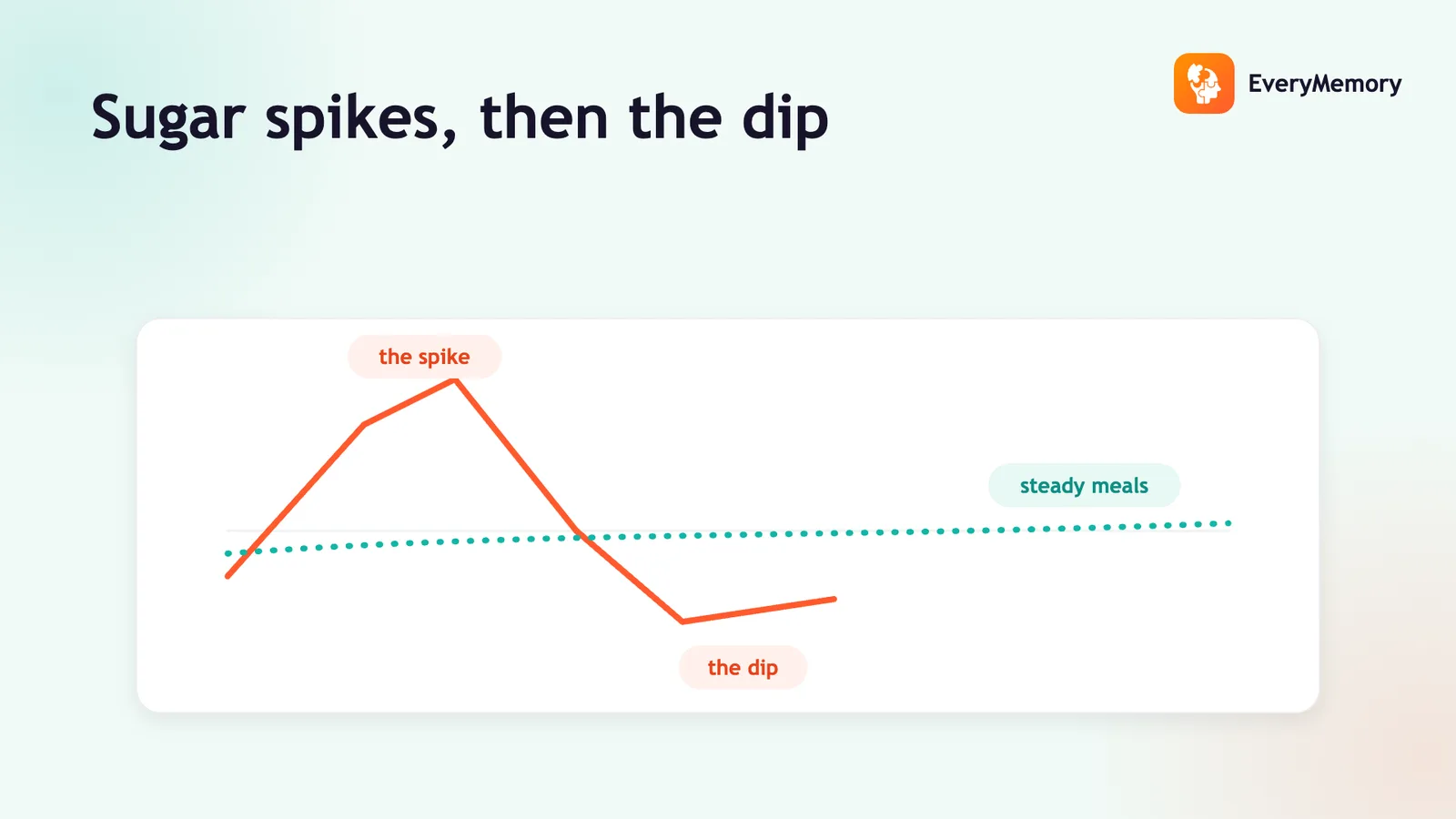
⚡ Quick answer
Blood glucose swings - sharp rises followed by rapid dips - are linked with temporary reductions in concentration, mental energy, and word recall. The so-called "sugar high" is not well supported by research; what does affect focus is the pattern of how glucose rises and falls throughout the day. Steady glucose delivery, through balanced meals with protein, fibre, and healthy fat, tends to support more consistent mental clarity than high-sugar meals that produce rapid spikes and dips.
Key takeaways
- The brain runs on glucose, but it performs best when glucose is delivered steadily - large spikes and dips are linked with temporary mental fog and slower thinking.
- The 'sugar high' is not well supported by research; what does affect focus is the composition of a meal and how fast its carbohydrates are absorbed.
- Adding protein, fibre, and healthy fat to meals is the most practical way to smooth glucose patterns and support more consistent afternoon focus.
- A ten-minute walk after lunch consistently reduces post-meal glucose rises and is one of the simplest habits for steadier afternoon energy.
You finish lunch and, twenty minutes later, your thinking slows to a crawl. The words you were looking for feel just out of reach. Concentration requires more effort than usual. If this sounds familiar, you are not imagining it - the link between what you eat and how clearly you think is real, and blood glucose is at the centre of it.
The details matter, though. Popular ideas about a "sugar rush", a dramatic crash, and sugar as the direct cause of brain fog are partly myth and partly truth. Understanding what is actually happening is more useful than panicking about sugar or dismissing the connection entirely.
What the brain actually needs from glucose
Glucose is the brain's primary fuel. Unlike muscles, which can switch between glucose and fat for energy, the brain depends on a relatively constant supply of blood glucose to keep neurons firing. This is not a reason to eat more sugar - it is a reason to keep glucose levels steady.
Research consistently shows that it is not the amount of sugar consumed in a single moment that shapes focus, but the pattern of glucose delivery over time. When glucose is available steadily, mental clarity tends to follow. When it rises sharply and then drops quickly, concentration and word retrieval become noticeably harder - the brain does not want a flood followed by a drought.
The myth of the sugar high
The idea that sugar gives you a burst of energy and then a crash is deeply embedded in popular culture - but the evidence is weak. A widely cited meta-analysis of over 31 studies found that sugar consumption did not produce a measurable mood boost or energy surge. For most healthy adults, the body's insulin response brings blood glucose back to a normal range without dramatic swings.
What is real is the composition effect. A meal that is almost entirely fast-digesting carbohydrates - a pastry, a sweetened drink, white bread with jam - can produce a rapid glucose rise that triggers a larger-than-needed insulin response. For some people, this pulls glucose down quickly, producing real fatigue, slowed thinking, and that distinctive foggy quality. It is less that sugar causes a high, and more that a poorly balanced meal can create an unhelpful glucose pattern in the hours after eating.
The post-meal energy dip - what is actually happening
The classic mid-afternoon slump, arriving roughly one to three hours after lunch, has two overlapping causes. One is circadian: the body has a natural, sleep-pressure dip in the early afternoon that is part of normal daily biology, independent of what you ate. The other is dietary: a large, carbohydrate-heavy lunch can amplify this dip considerably.
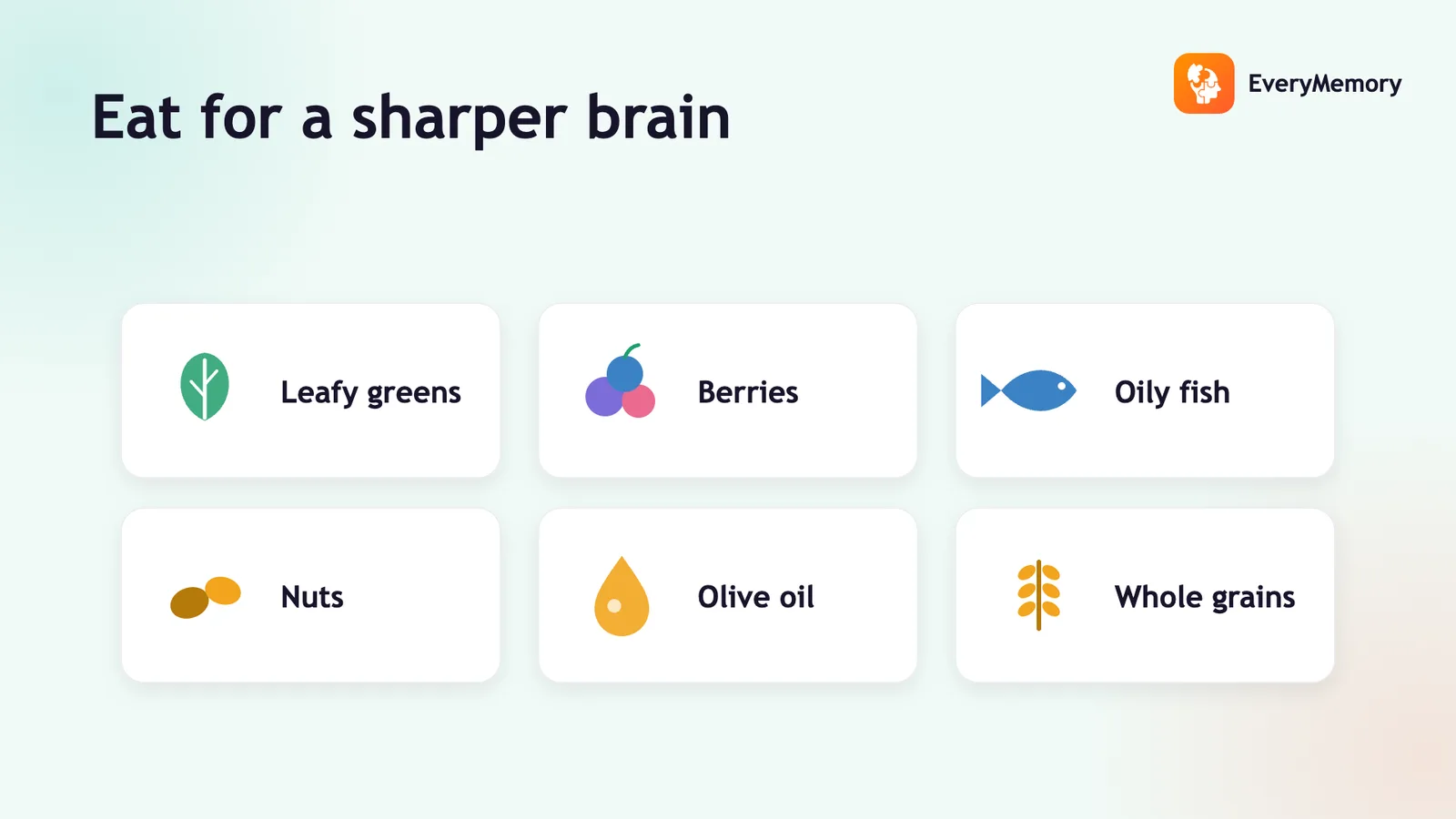
When a high-carbohydrate meal produces a rapid glucose rise, the body releases insulin to manage it. If the response overshoots, glucose falls toward the lower end of the normal range and the brain has less fuel to work with. The result is often described as heaviness, difficulty concentrating, slower word retrieval, and a pull toward rest. Adding protein, fibre, and healthy fat to what might otherwise be a carbohydrate-heavy meal slows absorption and flattens this spike-and-dip curve. Our article on best foods for memory and brain health covers the specific foods that help most.
For a broader look at what brain fog involves and its various causes, see our guide on brain fog causes and what helps.
Blood sugar swings versus steady energy - why the difference matters for focus
Research into glucose and cognition points in a consistent direction: it is variability that most affects mental performance. Studies examining moment-to-moment glucose changes have found that large daily fluctuations are associated with slower, less accurate mental processing, while stable glucose patterns support better sustained attention. This shifts the practical focus away from cutting all sugar and toward building meals that reduce unnecessary swings:
- Whole grains, legumes, and vegetables produce a slower, gentler glucose rise than their refined counterparts - the fibre and complex carbohydrates delay absorption.
- Protein and healthy fats eaten alongside carbohydrates blunt the glucose spike from those carbohydrates.
- Eating smaller, more frequent meals rather than one large one can reduce the magnitude of any single glucose fluctuation.
- Light movement after eating - even a ten-minute walk - is consistently linked with a smaller post-meal glucose rise and steadier energy in the hour that follows.
Dehydration also amplifies the effects of any glucose dip, because the brain is highly sensitive to fluid levels. Our article on hydration and focus in older adults explains the connection in more detail.
What this means for everyday focus
The practical upshot is not about eliminating sugar but about composition. A piece of fruit, which contains natural sugars alongside fibre, behaves very differently in the body from the same quantity of sugar in a sweetened drink with no fibre at all. Context matters far more than the simple presence of sugar.
Caffeine can counter the afternoon dip temporarily - but it does not resolve the underlying glucose pattern. Our piece on caffeine and memory looks at what caffeine actually does for focus, and where its limits lie. Regular sleep, physical movement, and avoiding long gaps between meals do more to smooth the daily glucose pattern than any single food swap.
Keeping it in perspective
For healthy adults, the brain manages ordinary dietary glucose without difficulty. The concern is not that occasional sugar is harmful, but that a consistently high-sugar, low-fibre diet creates glucose patterns that, over time, may be linked with less consistent mental sharpness. This is useful information, not a reason for anxiety.
The most honest takeaway: what and how you eat at meals has a real, measurable effect on how your brain performs for the next few hours. Small, sustainable adjustments to meal composition tend to produce more benefit than drastic restrictions.
✅ Try this today - The Balanced Lunch Experiment
Try this for three weekdays in a row and notice whether your afternoon focus changes.
- Build lunch around a protein source (eggs, chicken, fish, legumes, cheese), add vegetables or salad, then include a moderate portion of a whole-grain carbohydrate. The order matters less than ensuring all three elements are present - protein and fibre together slow glucose absorption significantly.
- Replace sweetened drinks at lunch with water. Even mild dehydration amplifies the post-meal concentration dip in ways that are easily mistaken for a glucose crash. A slice of lemon or fresh mint can make plain water more appealing.
- Within thirty minutes of finishing lunch, take a ten-minute walk. It does not need to be brisk. Light movement after eating is consistently linked with a smaller post-meal glucose rise and more stable energy through the afternoon.
⚠ When to talk to a professional
This article contains general, non-medical information about nutrition, blood glucose patterns, and everyday focus. It is not a substitute for medical advice. If you experience persistent brain fog, unusual fatigue, or changes in concentration that are affecting your daily life, please speak with a qualified healthcare professional - particularly if these symptoms are sudden, rapid, or worsening.