 EveryMemory
Why Old Memories Stay Clear While Recent Ones Fade
Childhood feels vivid, yet you can't recall what you had for lunch yesterday - this common pattern has a solid scientific explanation, and it's almost always reassuring.
Part of the guide: Understanding Memory Loss and Forgetfulness: A Calm, Reassuring Guide →
⚡ Quick answer
Old memories feel clearer for two main reasons: they have had years to consolidate into stable brain networks, and many were formed during emotionally intense, novel periods of life - especially youth - that your brain tagged as worth keeping. Recent events slip because they often haven't been attended to carefully enough to encode in the first place. A lapse in recent memory is usually an attention lapse, not a storage failure.
Key takeaways
- Old memories are stronger because they have consolidated over years and been rehearsed many times.
- The reminiscence bump explains why ages 10–30 produce the most vivid memories for most people.
- Forgetting recent events is usually an encoding failure caused by divided attention, not a storage problem.
- Consistent sleep and deliberate attention at key moments are the most practical ways to support recent memory.
You can describe your childhood bedroom in detail and sing every word of a song from your teens - yet you walked into the kitchen five minutes ago and can't remember why. The contrast between vivid distant memories and slippery recent ones is one of the most universal experiences in adult life.
It can feel unsettling as the years go by. But the gap between old and new memories is usually not a sign that something has gone wrong - it reflects well-understood features of how memory actually works, features that become more noticeable as the archive of past experiences grows larger.
How memories become permanent over time
A brand-new memory is fragile. When you experience something, the initial trace is held in the hippocampus - a small, curved structure deep in the brain that acts as a temporary staging area. Over hours, days, and even years, a process called memory consolidation gradually transfers and strengthens that trace, weaving it into networks of neurons spread across the cortex.
The longer a memory has been consolidating, the more stable and resistant to disruption it becomes. A memory from thirty years ago has been through thousands of sleep cycles, each of which gives the brain another opportunity to reinforce and reorganise it. A memory from this morning has had none of that. In a very literal sense, old memories have earned their solidity through repetition and time.
Emotional intensity speeds this process up. The brain's amygdala signals to the hippocampus that an experience matters, prompting deeper and faster consolidation. That is why your first day at a new job is probably clearer than last Tuesday's commute.
The reminiscence bump: why youth stands out
Ask someone in their sixties or seventies to describe their most memorable life events, and a striking pattern emerges. A disproportionate number of those memories will cluster between roughly ages 10 and 30. Psychologists call this the reminiscence bump, and it is one of the most reliably replicated findings in memory research.
Several factors work together to create it. Adolescence and early adulthood are packed with genuine firsts - first relationships, first independent choices, first encounters with the wider world. Novel experiences are naturally more memorable than routine ones, because the brain pays closer attention to things it has not encountered before.
Identity also plays a role. The years when we are forming a sense of who we are leave an especially deep impression, because those experiences become woven into the story we tell about our lives. A memory tied to self-identity gets revisited regularly - which strengthens it further each time. Music, photos, and shared stories from those years then surface throughout life as cues that reactivate and re-consolidate the memories attached to them.
Why recent events slip through
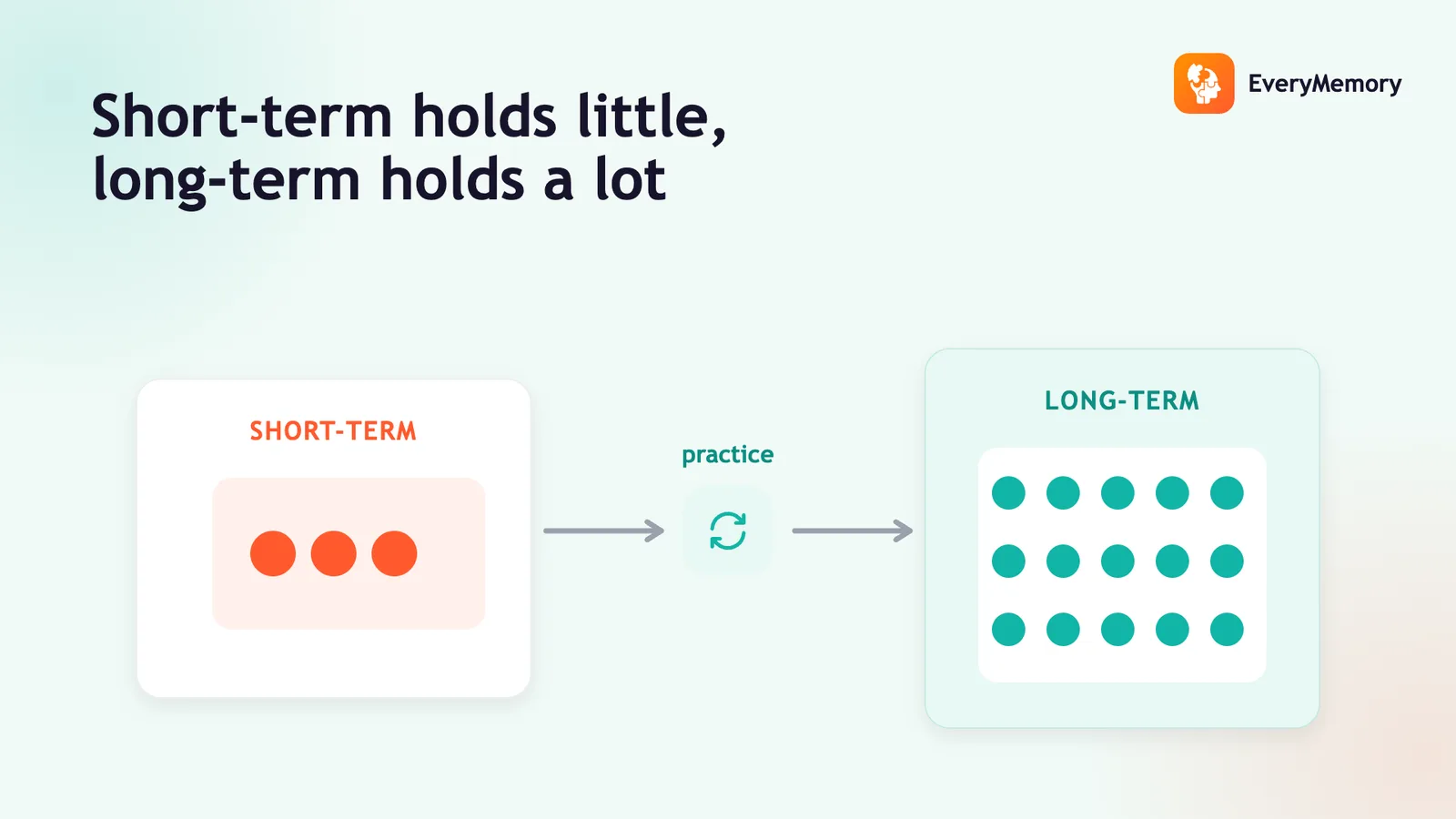
If old memories are robust, why do recent ones seem so unreliable? The answer is almost always about encoding - the first step in moving information from short-term into long-term memory. You cannot store what you never fully registered.
Modern life is full of conditions that undermine encoding. When you put your glasses down while thinking about something else, your brain simply does not commit the action to memory - your attention was elsewhere. The same is true for forgetting why you walked into a room, missing a name during an introduction, or losing track of whether you took your medication. These are not storage failures; the information was never properly encoded to begin with.
Mild fatigue, low-level distraction, and doing too many things at once all reduce the depth of processing available at the moment of encoding. And because recent events have had no time to consolidate, they are still fragile - any interruption before consolidation is complete can leave a memory incomplete or absent entirely.
- Putting something down while distracted is one of the most common encoding failures.
- Names and faces require active focus to stick - a casual introduction rarely produces a lasting memory.
- Multitasking at the moment of an experience reduces encoding quality significantly.
- Stress and sleep loss both impair the depth of encoding available to the brain.
Old memories are rehearsed - recent ones haven't been yet
There is a subtler reason old memories win the comparison: repetition. Every time you recall a memory, you effectively re-encode it - each retrieval refreshes and strengthens the trace. Memories from your past have been retrieved hundreds of times through conversations, daydreams, and photographs. Each pass makes the next retrieval easier.
Recent events simply haven't had that opportunity yet. You haven't retold the story of last Thursday's lunch or had reason to think back on it. Without rehearsal, the trace stays fragile and may fade before consolidation can do its work. This is the same principle behind spaced repetition - childhood memories benefit from decades of unplanned repetition; yesterday's events get none.
When the gap is typical and when it deserves attention
The pattern described above is a normal feature of how human memory is structured. It is not unique to older adults; people in their thirties and forties notice it too, especially during busy or stressful periods.
Normal forgetting looks like: losing a word mid-sentence and finding it shortly after; forgetting where you put an object and retracing your steps successfully; drawing a blank on a name but recognising the person.
What warrants a conversation with a healthcare professional is a different pattern: forgetting recent events completely without recovering them, getting confused in familiar places, repeatedly asking the same question in a short period, or noticing lapses becoming more frequent or severe over weeks. Our article on memory loss versus normal aging walks through these distinctions, and our piece on forgetting names after 60 covers one of the most common specific concerns.
Practical ways to give recent events a better chance
Understanding why recent memories are fragile points directly to what helps. Paying deliberate attention at the moment something happens - pausing to notice where you put an object, or repeating a name aloud - dramatically improves encoding depth. Sleep is the other major lever: the brain does most of its consolidation work during deep sleep, so a consistent sleep routine is one of the most evidence-linked habits for supporting everyday recall.
Reducing chronic multitasking also matters. When attention is split, each experience gets processed more shallowly. Single-tasking at key moments - during introductions, when placing important objects - gives recent memories a much better chance of becoming lasting ones.
✅ Try this today - The two-second pause habit
Try this simple encoding practice for one week to make recent events stick better.
- Whenever you put down something you will need later (glasses, keys, phone, medication), pause for two full seconds and say - aloud or silently - where you are placing it: "Keys on the hall table."
- When you are introduced to someone new, repeat their name once during the conversation: "Good to meet you, David." The repetition forces active encoding rather than passive hearing.
- At the end of each day, spend 60 seconds mentally reviewing two or three things that happened. This brief rehearsal begins the consolidation process for the day's events before sleep does the rest.
⚠ When to talk to a professional
If you notice that recent memory lapses are becoming more frequent, are affecting daily safety, or involve complete gaps that don't resolve on reflection, it is worth raising these with a qualified healthcare professional - they can help identify whether anything beyond normal aging is involved.