 EveryMemory
Short-Term vs Long-Term Memory: What's the Difference?
Short-term and long-term memory are genuinely different systems. Understanding the contrast helps explain why some things slip immediately while others last a lifetime.
Part of the guide: Understanding Memory Loss and Forgetfulness: A Calm, Reassuring Guide →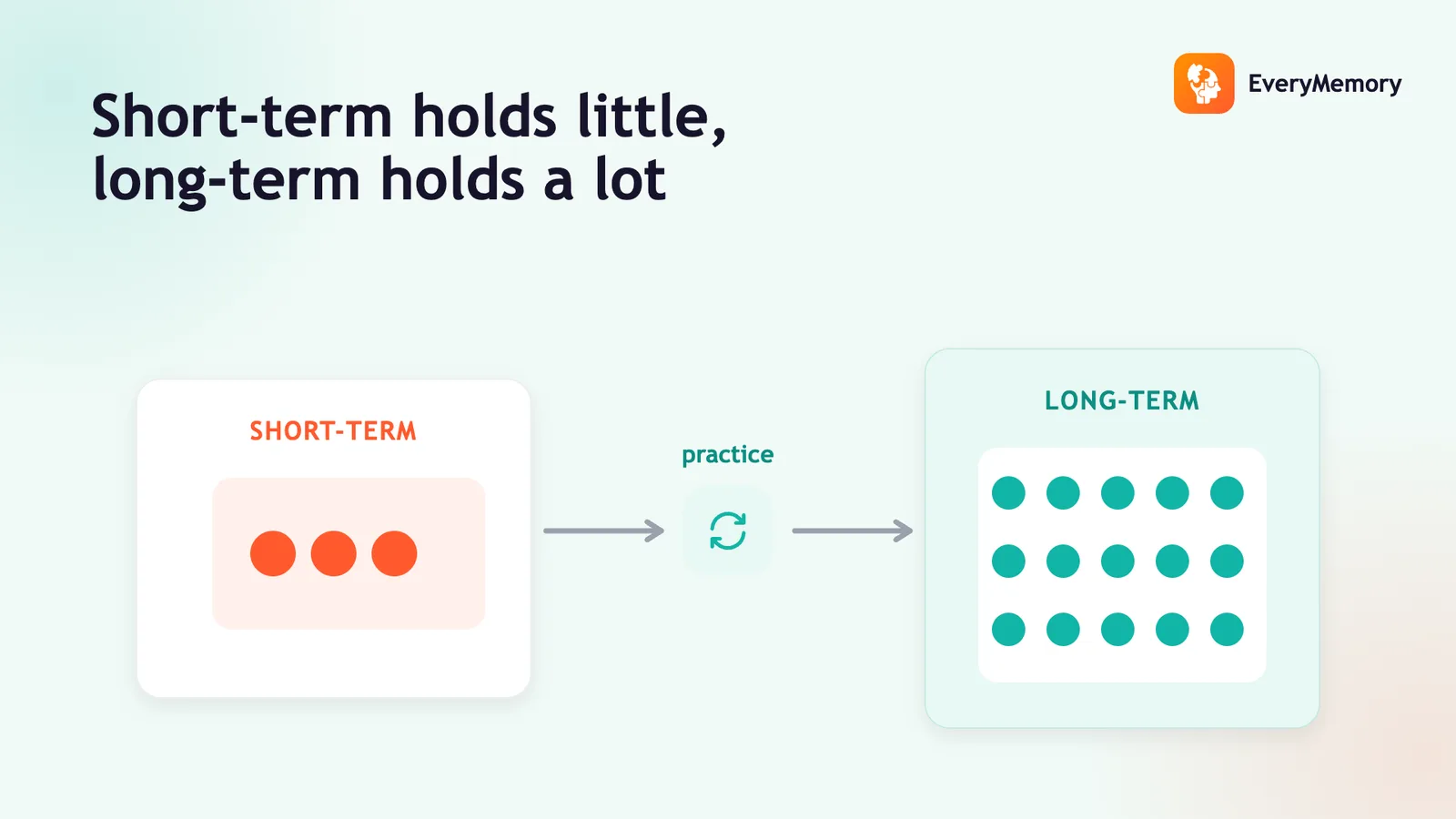
⚡ Quick answer
Short-term memory holds a small amount of information for a brief window - typically under a minute - and is easily disrupted by distraction. Long-term memory stores vast amounts of information for days, years, or a lifetime, and is far more durable. Most everyday forgetting happens in the short-term system, often because information never made it into long-term storage in the first place.
Key takeaways
- Short-term memory holds a small amount of information for about 20 to 30 seconds and is easily disrupted by distraction; long-term memory is far more durable and has no known meaningful capacity limit.
- Working memory capacity tends to show more noticeable age-related change than long-term memory for well-established knowledge, which often stays stable.
- Vivid old memories feel sharper than recent ones because they have had decades of consolidation and repeated retrieval to reinforce them - the contrast is common and expected.
- For short-term memory, structured habits and reduced distraction help more than trying harder; for long-term retention, connecting new information to what you already know and sleeping on it are the most effective approaches.
You walk into a room and immediately forget why. You can't recall the name of someone you met an hour ago. Yet you still remember the layout of the house you grew up in decades later, or the words to a song you haven't heard in years. These aren't random quirks - they're a direct reflection of how differently your short-term and long-term memory systems operate.
Understanding the distinction helps make sense of everyday memory moments that might otherwise seem alarming. It also points toward the kinds of habits and techniques that are most likely to help - because strengthening short-term recall and strengthening long-term retention involve somewhat different approaches.
What short-term memory actually does
Short-term memory - often called working memory when you're actively using and manipulating information - is your brain's immediate workspace. It holds what you're currently thinking about: the digits of a phone number as you dial, the thread of a sentence as you read it, the name of the street you just asked about.
Its defining features are its small capacity (roughly four to seven items at once) and its brief duration (information fades within about 20 to 30 seconds without active rehearsal). These limits are not a malfunction - they keep your brain focused and prevent cognitive overload.
When short-term memory slips, it typically feels like information simply evaporating: you turn away from something and it's gone. The street name, the item you needed from the kitchen, the thought you were about to share. These experiences are described in detail in our piece on common short-term memory problems and what causes them.
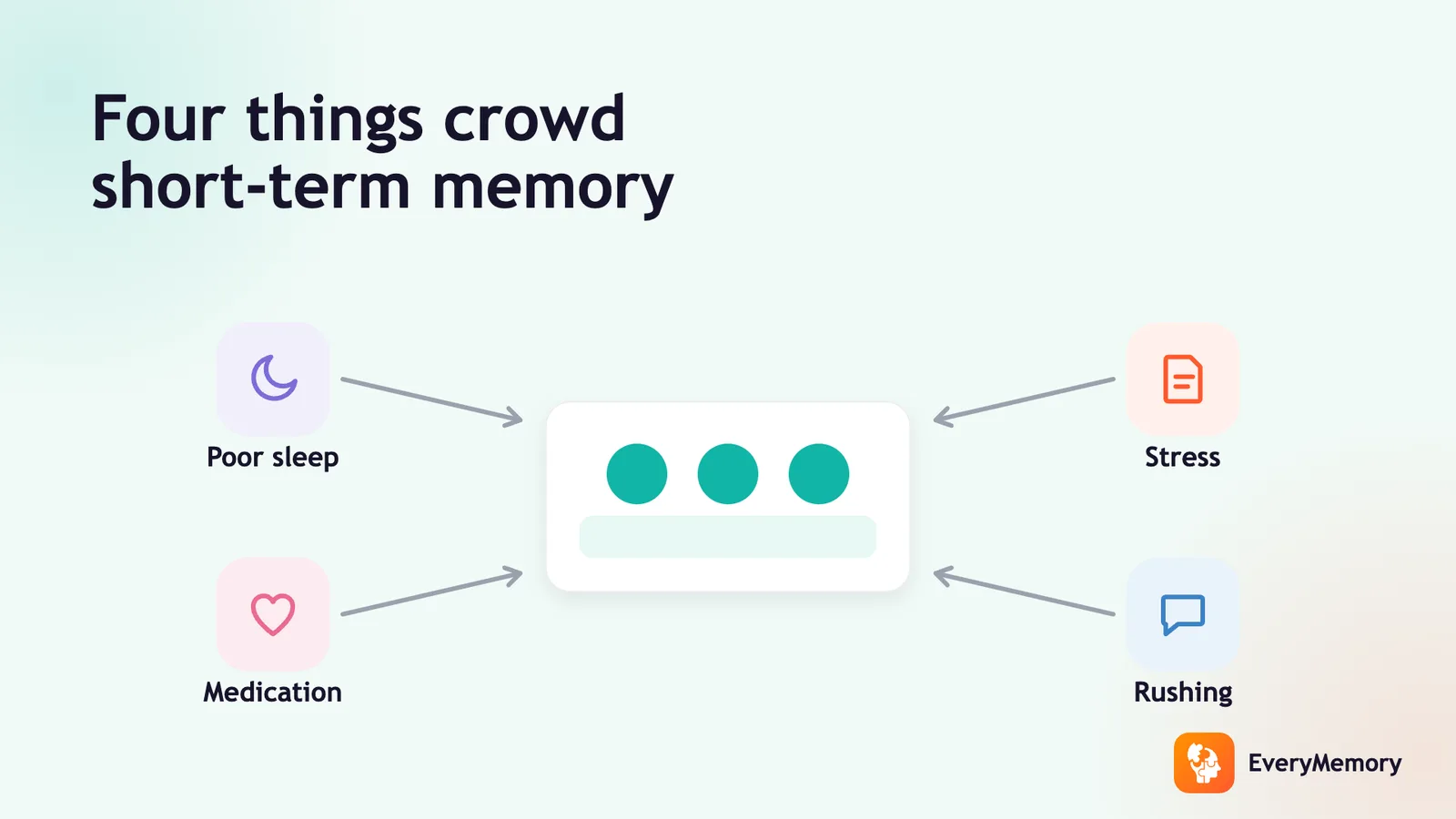
- Disruption by distraction is the most common cause of short-term forgetting.
- Multitasking directly divides and depletes short-term capacity.
- Anxiety and fatigue shrink effective working memory further.
- Short-term memory does not improve by simply trying harder - it responds to structure and reduced distraction.
What long-term memory does differently
Long-term memory is a different beast. It stores information over extended periods - from hours to decades - and has no known meaningful limit on capacity. Unlike short-term memory, which is fragile and easily disrupted, long-term memory is relatively robust and durable.
Long-term memory is not a single system. It contains semantic memory (general facts and knowledge - the capital of France, what a hammer is for), episodic memory (personal events with a when and where - your first day at a job, what you had for dinner last Tuesday), and procedural memory (how to ride a bike, how to type, how to drive).
Episodic memory - recalling personal events from your own life - tends to be the type people notice most when it changes. Forgetting what someone told you last week, not being able to place a recent conversation, or feeling like recent events are harder to hold than older ones - these are signs that the encoding and consolidation process is being disrupted somewhere.
| Short-term (working) memory | Long-term memory | |
|---|---|---|
| Capacity | Small - a handful of items at once | Vast - no known practical limit |
| Duration | Seconds to a minute or two | Days to a lifetime |
| Everyday example | Holding a phone number long enough to dial it | Recalling your childhood home or an old friend's name |
| How aging tends to affect it | More noticeable - juggling new information feels harder | Well-rehearsed memories often stay strong |
| What helps most | Fewer distractions; chunk information | Repetition and spaced practice over time |
How information moves from one to the other
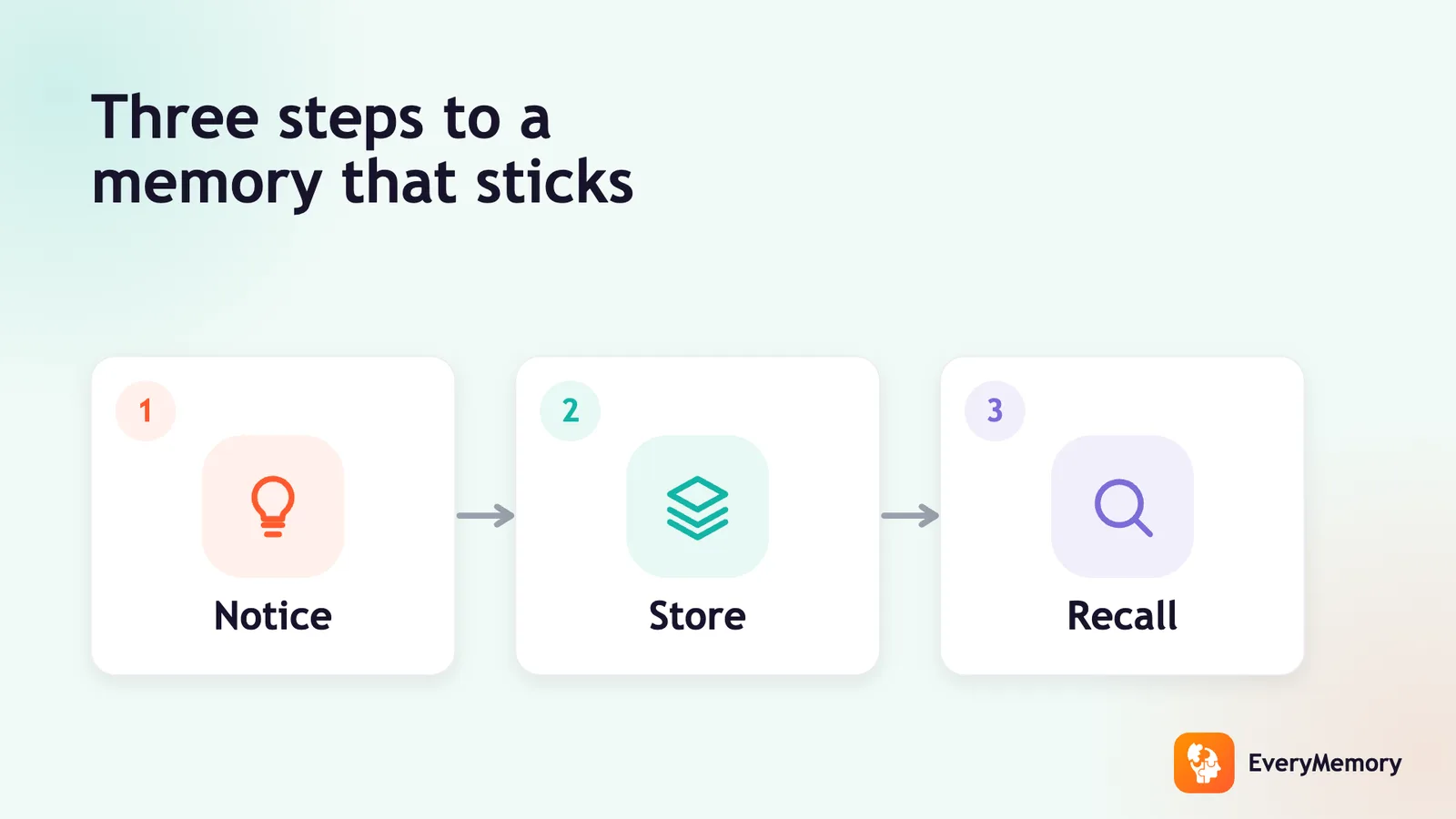
Short-term memory is the gateway to long-term memory. For something to become a lasting memory, it has to be held in the short-term system long enough to be processed and transferred - a process called consolidation. Consolidation happens partly in the moment (through repetition, meaning-making, and association) and partly overnight during sleep.
Not everything in short-term memory makes it through. Your brain selects based on relevance, emotional salience, and repetition. A fact you hear once, in passing, without any connection to what you already know, is a weak candidate for long-term storage. A fact you connect to something familiar, repeat, and sleep on has a much better chance.
This is why memory techniques like using association and spaced repetition work so well: they're designed to cooperate with this natural transfer process rather than fight it.
What slipping feels like in each system
Short-term slipping feels immediate: you put something down and instantly forget where, you're mid-sentence and the thought dissolves, or you look something up and forget it before you've used it. These moments feel jarring because they're so close in time.
Long-term slipping tends to feel different - difficulty retrieving something you're fairly confident you once knew, noticing recent events are hazier than older ones, or being unsure whether a conversation happened yesterday or last week. The information feels stored somewhere, just not reachable.
Both types happen to virtually everyone. The key question is whether the pattern is new, getting progressively worse, or affecting daily functioning concretely - a question addressed in our piece on memory loss versus normal aging.
Everyday examples worth recognising
Short-term memory in action: holding a shopping list in your head on the way to the kitchen; remembering a question while someone is still talking; keeping track of which bills you've paid this month.
Long-term memory in action: remembering your children's birthdays without looking them up; knowing how to drive a car you haven't driven in months; recalling the plot of a book you read years ago.
Where people often get confused is with very recent events - things from the last few hours or days. These are technically in a consolidation phase: they've left short-term memory but may not yet be fully secured in long-term storage. That's why recent events can sometimes feel hazier than older memories, especially if you were tired, distracted, or stressed at the time. The experience of forgetting why you walked into a room is a textbook example of short-term memory disrupted mid-task.
What you can do with this knowledge
For short-term memory, the most effective approach is reducing the demands on it rather than trying to expand it. Fewer simultaneous tasks, written reminders for anything important, and deliberate pauses before moving on all reduce how often it gets overwhelmed.
For long-term memory, the key is working with the consolidation process: connect new information to something you already know, revisit it more than once, and prioritise sleep - which is when consolidation happens most effectively.
Building a simple daily memory routine that covers both aspects - active recall practice for long-term retention, and structured habits for reducing short-term overload - is one of the most practical approaches available.
✅ Try this today - The same-day retrieval test
Pick one thing you want to remember today - a name, an appointment, something someone told you:
- When you first encounter it, pause and say it back to yourself once. Don't rush past it.
- About two hours later, try to recall it from memory before checking any notes. Just the attempt, regardless of outcome.
- Before bed, try once more. Notice whether the second and third attempts felt easier than the first. That pattern is consolidation working.
⚠ When to talk to a professional
This article is general, non-medical information. If you're noticing memory changes that feel sudden, rapidly worsening, or are beginning to affect your daily life in concrete ways, it's worth discussing them with a qualified healthcare professional. Mild, occasional lapses in both short and long-term recall are a common part of everyday life at any age.