 EveryMemory
10-Minute Memory Workout for Beginners
A simple, follow-along routine that mixes recall, focus, and visual memory into ten focused minutes - no equipment, no experience, and easy to repeat every day.
Part of the guide: Brain Exercises for Seniors: The Complete Guide →
⚡ Quick answer
A good 10-minute memory workout has three parts: a recall drill (memorise a short list, cover it, and rebuild it from memory), a focus drill (hold sustained attention on one simple task), and a visual-memory drill (study an image or scene, then recreate the details from memory). Do it most days, keep it light, and gradually make each block a little harder as it gets easier.
Key takeaways
- The workout splits ten minutes into three blocks: recall, focus, and visual memory - no equipment needed.
- Consistency beats intensity: five focused days a week outperforms one long session done occasionally.
- The mental effort of reaching for a memory - even imperfectly - is what strengthens recall, not perfect accuracy.
- Attaching the routine to an existing daily habit, like morning coffee, makes it far easier to keep going.
When people decide to "do something" about their memory, they often imagine it has to be a big commitment - a course, an hour a day, special equipment. So they never start, or they start big and quit by Thursday. The truth is the opposite: ten focused minutes, done most days, will do far more for you than an ambitious routine you abandon.
This workout is built for exactly that. It takes about ten minutes, needs nothing but a pen and paper, and is designed for complete beginners. It has three short blocks - recall, focus, and visual memory - that together exercise the everyday skills you actually use: remembering lists, holding your attention, and picturing things in your mind's eye.
Don't worry about getting everything "right." The effort of reaching for a memory is what does the work, whether or not you nail it. Let's go through the routine, then make it a habit that sticks.
Watch the guided session
Before you start: two ground rules
First, consistency beats intensity. A ten-minute routine you do five days a week will outperform a one-hour session you do once. So make it small enough that you'll actually repeat it.
Second, effort matters more than accuracy. The mental "reach" - straining to recall a word that's just out of grasp - is the part that strengthens memory, exactly like the last few repetitions of any exercise. A drill where you recall 6 out of 10 with real effort is more useful than one so easy you breeze through it.
Block 1 - Recall (about 4 minutes)
This trains the core skill of holding and retrieving information. Write a list of ten everyday words - say: apple, river, candle, ticket, garden, pencil, mirror, biscuit, engine, blanket. Study it for one minute, then cover it and write down as many as you can. Check, then repeat once or twice. Watching your score climb across attempts is the whole point.
When ten words become easy, make it harder: increase to twelve or fifteen, shorten the study time, or add a one-minute distraction (count backward from 50) before you recall. To go further, learn to group related words together - a technique explored in our word recall practice guide.
Block 2 - Focus (about 3 minutes)
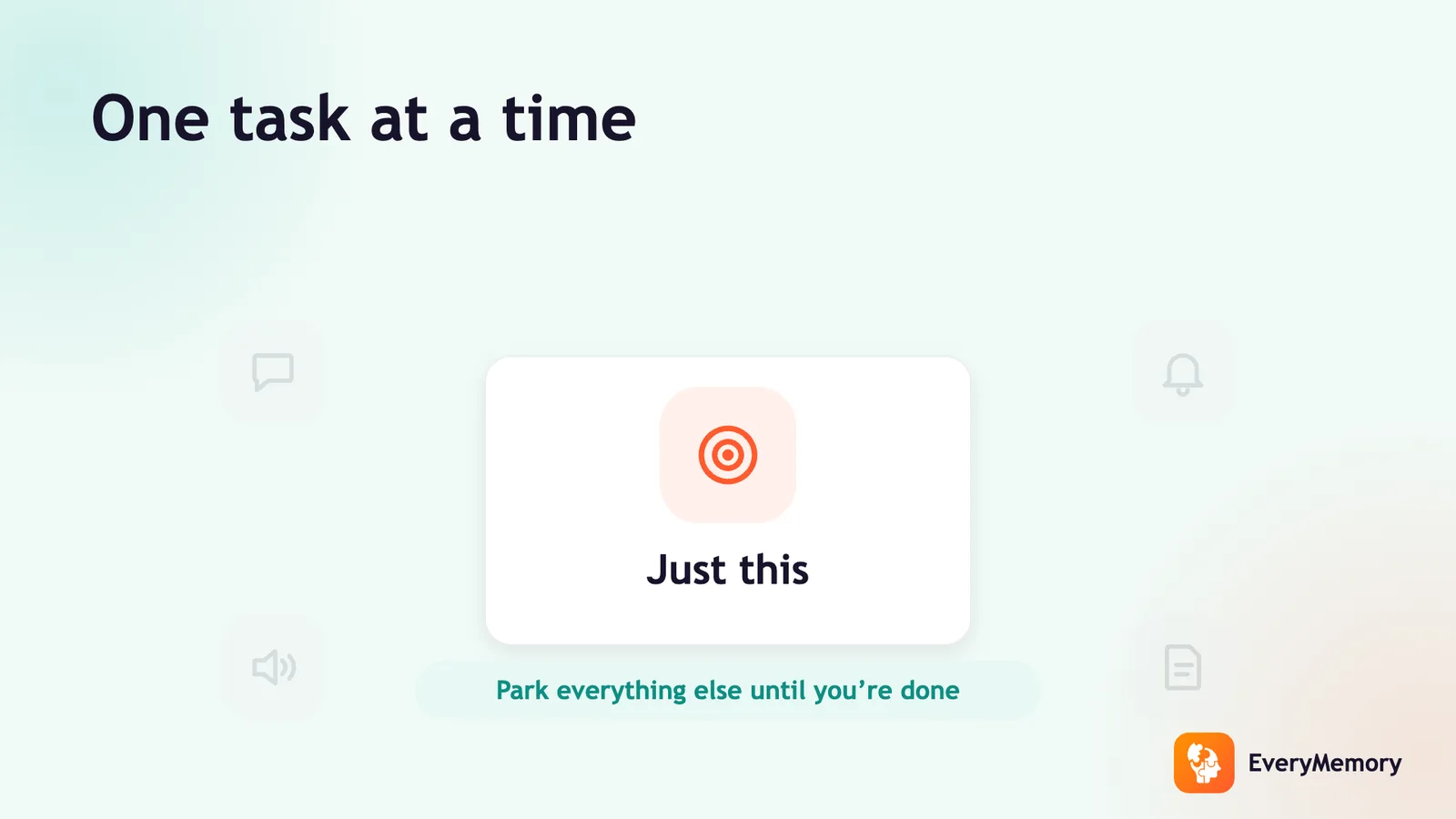
Memory depends on attention - you can't recall what you never properly noticed - so a few minutes of focus training quietly improves everything else. Pick one simple task that demands sustained concentration and do only that, with no second screen and no drifting.
A reliable choice: count backward from 100 by 7s (100, 93, 86, 79…). Each time your mind wanders, gently notice it and return to the count. That noticing-and-returning is the exercise. If sevens feel tough, use threes; if you'd like more options, our focus and attention workout has several.
Block 3 - Visual memory (about 3 minutes)
Visual memory supports everyday tasks like recognising places and remembering where you left things. To train it, look at a photo, or simply the room you're in, for 30 seconds - really study it. Then look away and write down ten details: colours, positions, objects, expressions. Look again to see what you missed.
A pleasant variation is the "tray game": place six small objects on a tray, study them for 20 seconds, cover them, and name all six - adding an object each time it gets easy. There's more on this in our visual memory training guide. Keep this block light and even playful; enjoyable practice is practice you'll come back to.
Making it a habit that lasts
A workout only helps if you keep doing it, so attach it to something you already do every day. "After my morning coffee, I do my 10-minute set" borrows the reliability of an existing habit to trigger the new one. On hectic days, do a 60-second version rather than skipping entirely - keeping the chain unbroken matters more than the length of any single session.
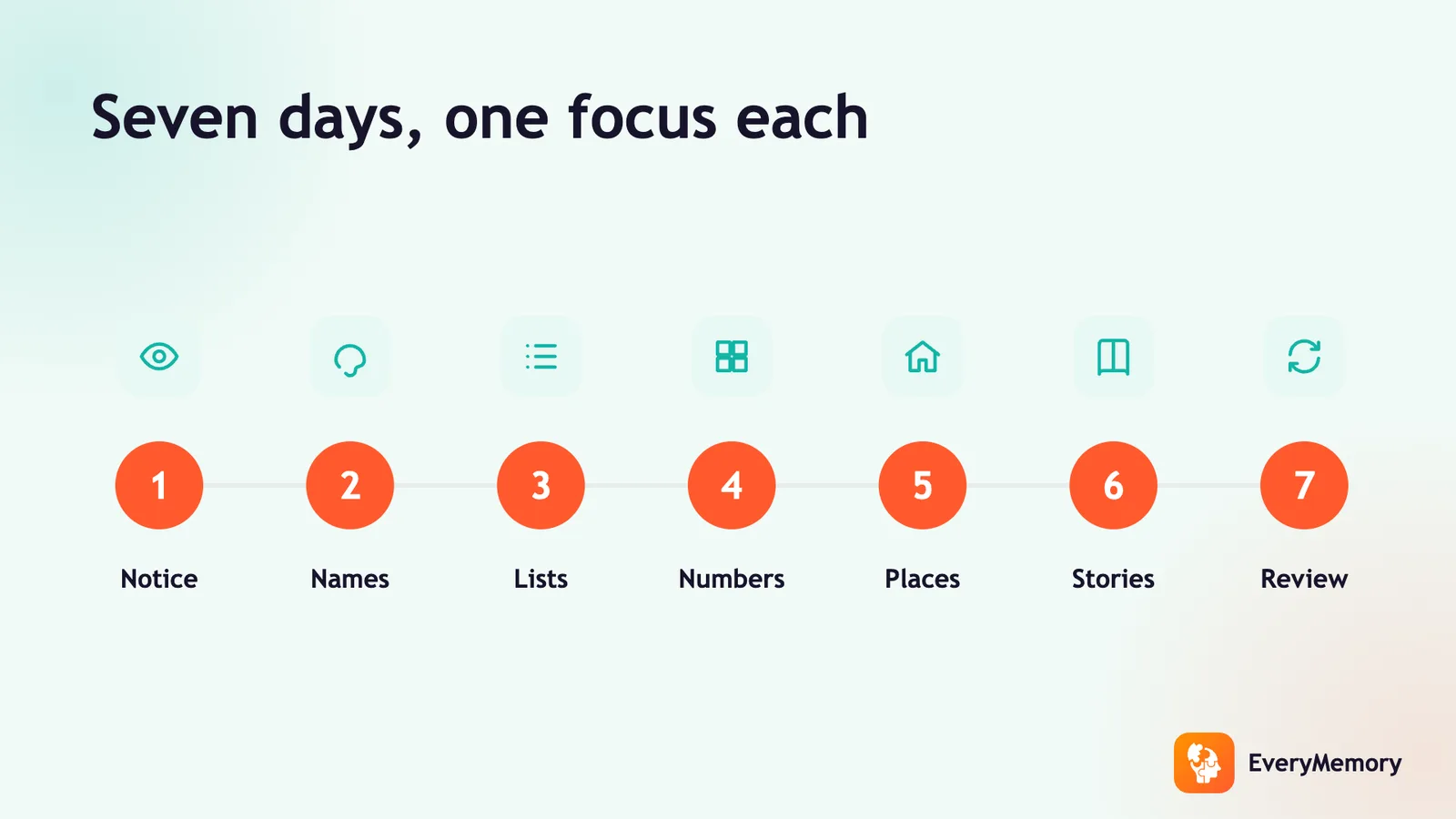
If you'd like the days mapped out for you, our 7-day memory training plan gives each day a single small focus, and you can download it as a free printable to stick on the fridge. For the deeper psychology of making it automatic, see how to build a memory training habit.
A realistic word on what to expect
Think of this as practice and habit-building for everyday recall and focus - like keeping fit - not a medical treatment or a cure for anything. What most people notice first isn't a dramatic leap but small, welcome wins: holding a shopping list without writing it down, staying with a task a little longer, feeling a bit sharper in conversation. Those are exactly the everyday wins the routine is built for.
✅ Try this today - Today's 10-minute set
Grab a pen and paper. That's all you need.
- Recall (4 min): memorise a 10-word list, cover it, and rebuild it from memory. Repeat twice.
- Focus (3 min): count backward from 100 by 7s without letting your mind wander.
- Visual (3 min): study a photo or the room for 30 seconds, then list 10 details from memory.
- Tomorrow, try to beat today - one more word recalled, one less drift in the focus block.
⚠ When to talk to a professional
This is a general wellness routine for practising recall and focus, not a medical treatment or a way to diagnose, prevent, or cure any condition. If you have sudden or serious memory changes, speak with a qualified healthcare professional.