 EveryMemory
7-Day Memory Training Plan for Beginners
A gentle, structured week with one small focus each day - the easiest way to start a memory-training habit and prove to yourself it can stick.
Part of the guide: How to Improve Your Memory: The Complete Beginner's Guide →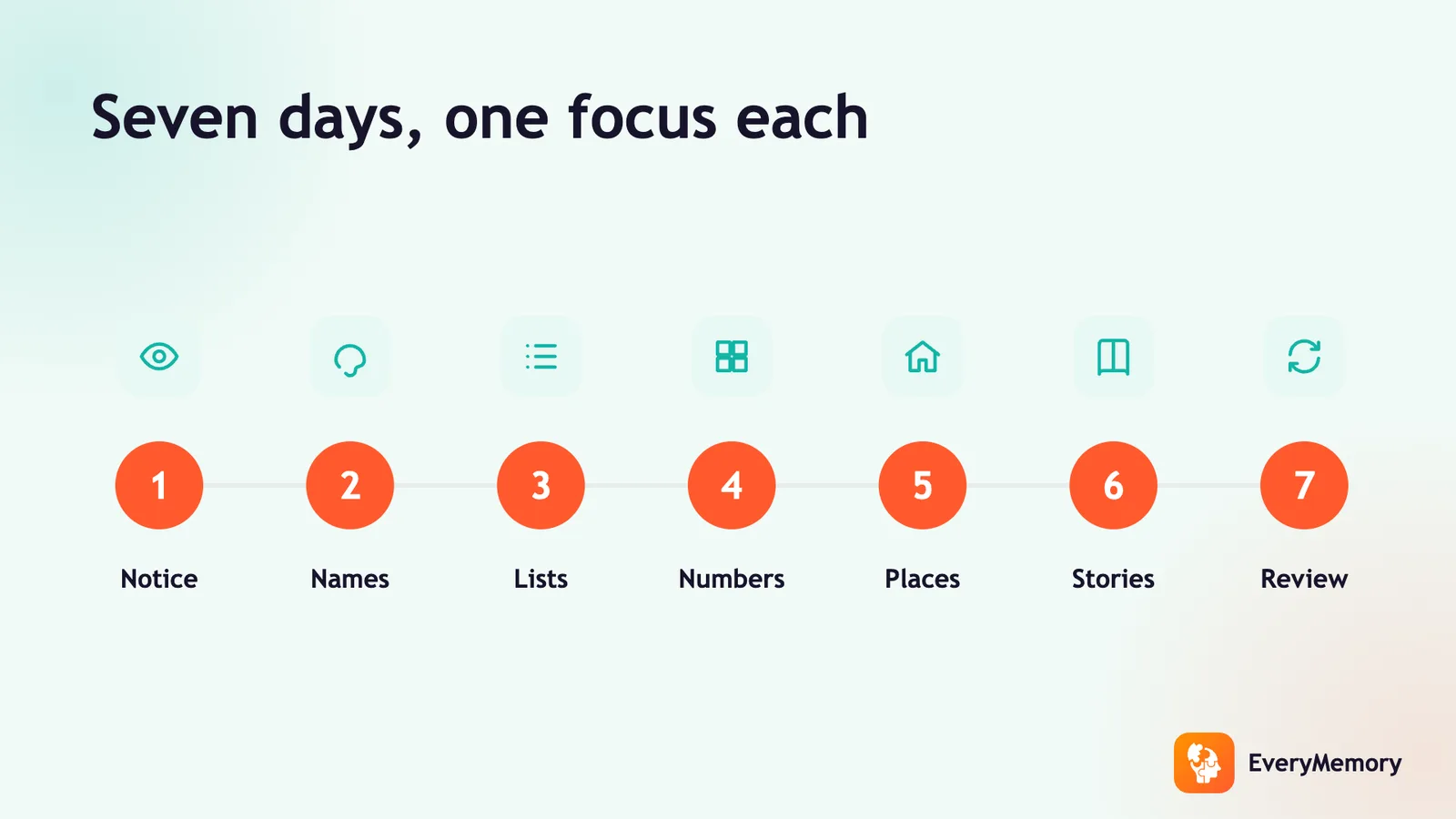
⚡ Quick answer
This 7-day plan gives you one short memory focus per day - recall, names, focus, visual memory, a technique, a review, and a reflect-and-rest day. Each takes under ten minutes and needs only pen and paper. Do the day's focus once, anytime; don't double up to 'catch up.' The aim of the first week is consistency, not perfection.
Key takeaways
- Each day covers a single focus - recall, names, attention, visual memory, chunking, review, and rest - all under 10 minutes.
- Attaching each day's exercise to an existing anchor, such as breakfast, makes following through nearly automatic.
- Missing a day is fine; just continue the next day rather than trying to double up and catch up.
- The real goal of week one is proof to yourself that a daily memory habit is doable and worth keeping.
The hardest part of memory training isn't the exercises - it's starting, and then showing up again the next day. Motivation is unreliable; what works is a clear, small plan that removes every decision so all you have to do is follow along.
That's what this seven-day plan is. Each day has a single, specific focus that takes under ten minutes, building from simple recall on Day 1 to a gentle review by the end of the week. There's no equipment and no experience required - just a pen, paper, and a few quiet minutes.
The real goal of week one isn't a transformed memory. It's proof - to yourself - that a daily memory habit is easy, pleasant, and worth keeping. Get through these seven days and you'll have something far more valuable than any single exercise: momentum.
How to use the plan
Keep it genuinely simple. Each day, do that day's single focus once - whenever suits you. If a day feels too easy, add a little challenge; if it feels hard, shorten it. Missing a day isn't failure: just pick up the next day rather than trying to make up for it.
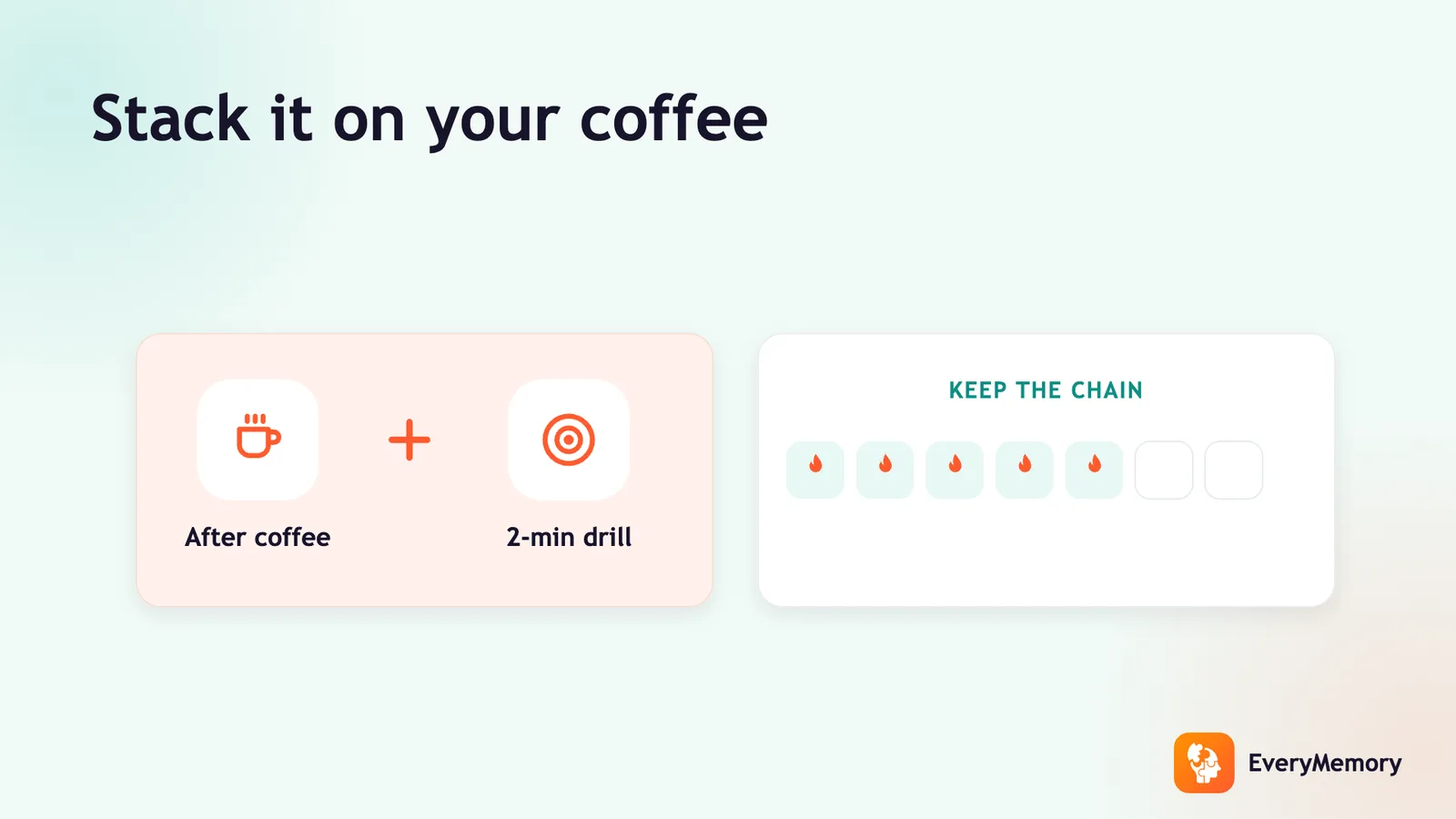
To make it almost automatic, attach the day's focus to something you already do daily - your morning coffee, or sitting down after lunch. That "anchor" becomes your reminder, which is the secret behind building a memory training habit that lasts beyond week one.
Day 1 - Recall: a 10-word list
Start with the foundational skill. Write ten everyday words, study them for one minute, cover the list, and write down as many as you can. Check your score, then repeat once. This simple study-cover-recall loop is the backbone of memory practice - more in our word recall practice guide.
Day 2 - Names: five faces
Today, practise the skill almost everyone wants most. Take five photos of people whose names you know and run the attention–association–review method on each, then test yourself. The full technique is in our names and faces memory exercise.
Day 3 - Focus: five minutes of one thing
Memory rests on attention, so today you train focus. Count backward from 100 by 7s, or single-task one simple activity for five minutes, gently returning your mind each time it drifts. Our focus and attention workout has more options if you'd like variety.
Day 4 - Visual memory: the tray game
Put six small objects on a tray, study them for 20 seconds, cover them, and name all six. Add an object if it's easy. This trains the mind's-eye memory you use to recognise places and recall where you put things - see visual memory training.
Day 5 - Technique: try chunking
Today you learn a tool you'll use forever. Take a long number - a phone number or a card number - and break it into small, meaningful groups so it's easy to hold. This is "chunking," and it's explained simply in our guide to the chunking technique.
Day 6 - Review: your favourite drill
Repeat whichever exercise from this week you enjoyed most or found most useful, and try to beat your earlier score. Revisiting is not a step backward - spaced repetition is exactly how skills consolidate, and noticing your own improvement is genuinely motivating.
Day 7 - Reflect and rest
No drill today. Instead, take two minutes to note what felt easier across the week, what you enjoyed, and which exercise you'd happily keep doing. This small reflection turns seven scattered days into a real habit and points you toward week two. A weekly memory check-in is a lovely way to make this a regular ritual.
What comes after week one
Finishing the week is the win - you've proven the habit is doable. From here you have easy options: repeat the week with slightly harder versions of each drill, settle into a single short daily memory routine you enjoy, or fold the exercises into the 10-minute memory workout. The best next plan is simply the one you'll keep doing.
✅ Try this today - Set up your week in five minutes
A little setup makes the whole week run itself.
- Write the seven daily focuses somewhere visible - the fridge or a phone note.
- Pick a daily anchor time (e.g., right after breakfast) so each day has a built-in reminder.
- Tick each day off as you go; on Day 7, jot one thing that felt easier than at the start.
⚠ When to talk to a professional
This plan is a general wellness routine for practising recall and focus. It is not a medical treatment and does not diagnose, prevent, or cure any condition. If you have sudden or serious memory changes, speak with a qualified healthcare professional.