 EveryMemory
How to Help Kids Study
Helping kids study is less about sitting beside them and more about setting up the routine, the space and the right habits so they can do the work themselves.
Part of the guide: How to Improve Your Memory: The Complete Beginner's Guide →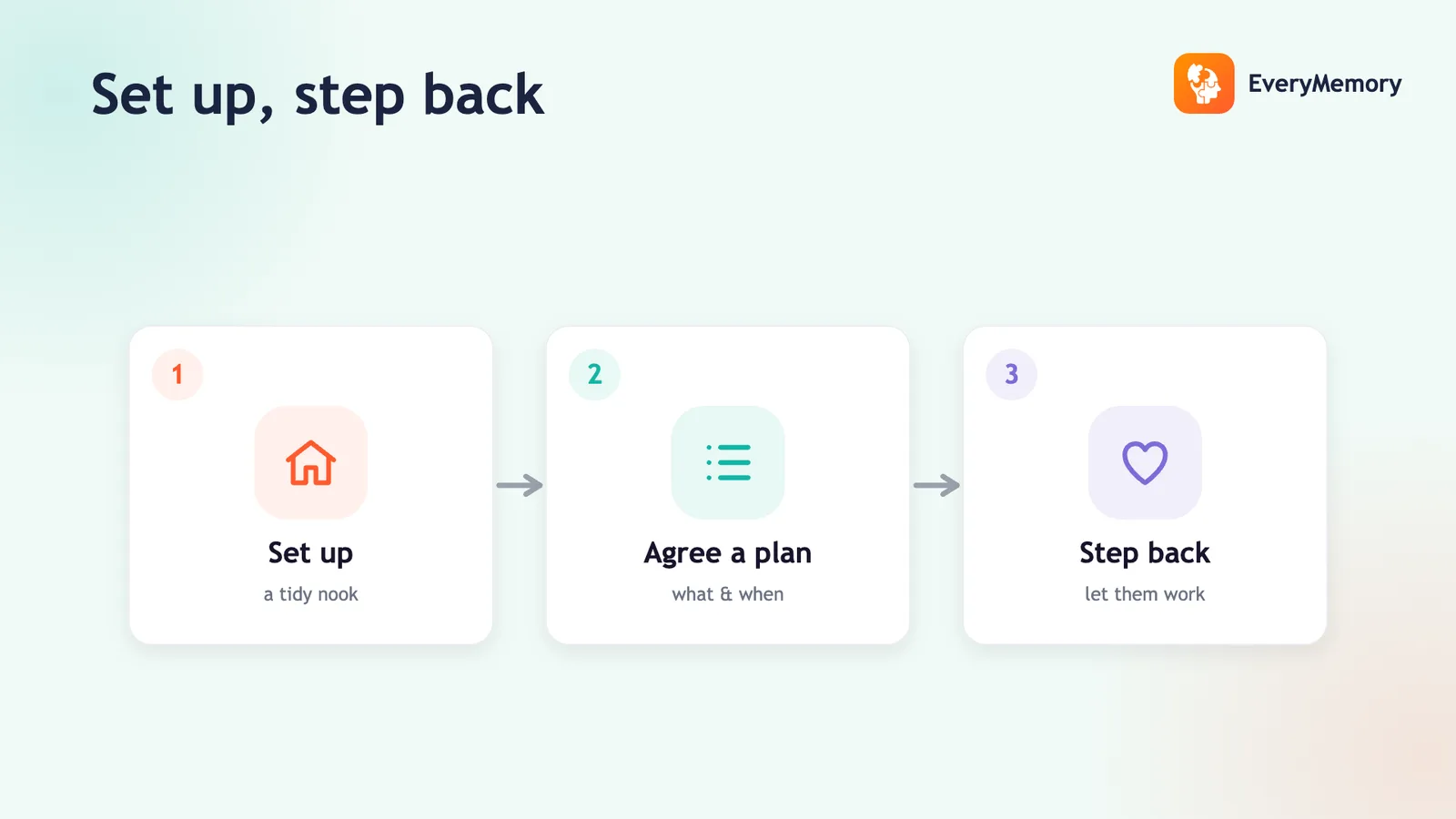
⚡ Quick answer
Help kids study by setting a consistent time and a distraction-free spot, breaking work into short focused chunks, and teaching them to test themselves rather than just re-read. Support from nearby rather than doing the work for them, praise effort over results, and let them struggle a little before stepping in. The goal is a child who can study independently.
Key takeaways
- Set a consistent time and a distraction-free spot, then step back from the work itself.
- Teach habits not answers - ask questions back and show them self-testing early.
- Swap nagging for an agreed routine that does the reminding for you.
- Praise effort over grades, and protect sleep, food and movement breaks.
The most useful thing a parent can do for a studying child is mostly invisible: a steady routine, a clear space, and a few good habits taught early. Hovering and correcting tends to backfire - kids learn to wait for help instead of trying first.
Your job isn't to teach the subject. It's to make studying easy to start and hard to avoid, then to step back. The aim across the years is a child who can sit down, work, and ask for help only when they're genuinely stuck - and that's a skill you build, not one you nag into place.
Set the stage before they sit down
Half of studying well is the setup. A predictable time and a tidy, quiet spot mean a child spends less energy deciding when and where, and more on the actual work.
- Pick a regular study time and keep it consistent on school days.
- Set up one spot with good light and just the materials needed.
- Put phones and tablets out of reach, not within glance.
- Have a snack and water ready so breaks don't become exits.
- Agree how long the session runs before it starts.
Teach the habits, not the answers
When a child is stuck, the instinct is to give the answer. Resist it. Ask a question back - "what's the first step?" or "where could you check?" - so they build the skill of getting unstuck themselves.
Teach self-testing early. Show them how to cover their notes and say what they remember, then check. This one habit, the active recall study method, does more than hours of re-reading. Pair it with showing them how to take better notes so revision later is easier.
Support without nagging
Nagging trains kids to study only under pressure. A calmer approach - agree the plan together, then let the routine do the reminding - keeps studying from becoming a daily argument.
| Instead of | Try |
|---|---|
| "Have you done your homework yet?" | "What's on your list tonight?" (asked once) |
| Sitting over their shoulder | Being nearby and available if asked |
| Correcting every mistake | Letting them check their own work first |
| "Why is this wrong again?" | "What could you try differently?" |
| Doing the hard parts for them | Doing one example together, then stepping back |
Praise effort and protect the basics
Praise the trying - "you stuck with that" - more than the grade. Kids who hear that effort matters take on harder work instead of avoiding it, because a wrong answer stops feeling like a verdict on them.
Don't overlook sleep, food and movement. A tired, hungry child can't concentrate no matter how good the study plan is. A short break to run around between tasks often does more for the next chunk of work than pushing straight through.
✅ Try this today - The ten-minute independent start
Train your child to begin homework on their own.
- Together, write tonight's tasks as a short checklist.
- Set them up at the cleared study spot with everything they need.
- Say you'll be back in ten minutes, then actually leave the room.
- When you return, ask what they've done before offering any help.
- Help only with what they're truly stuck on, then step back again.