 EveryMemory
How to Help a Child Focus
Children focus better with shorter tasks, fewer distractions and a predictable routine - practical ways to help your child concentrate without nagging or long sit-still sessions.
Part of the guide: How to Improve Your Memory: The Complete Beginner's Guide →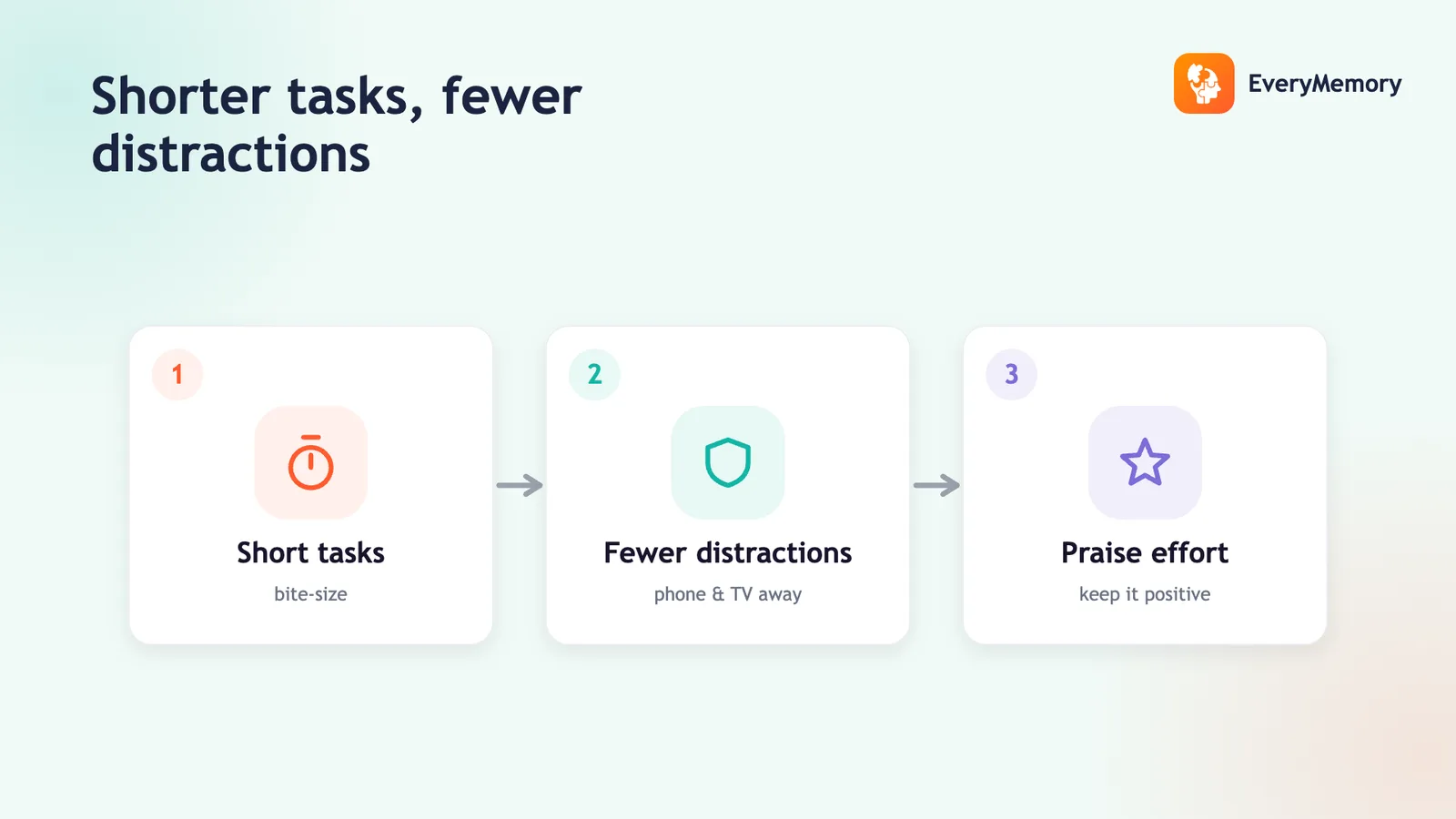
⚡ Quick answer
Help a child focus by shortening tasks to match their age (roughly two to five minutes of focus per year of age), removing nearby distractions like screens and toys, keeping a predictable routine for homework, and building in short movement breaks. Praise the effort, not just the result, and keep sessions short enough that they finish feeling successful rather than worn out.
Key takeaways
- Match tasks to attention span - roughly two to five minutes of focus per year of age.
- Clear distractions before starting: phones in another room, surface tidy, TV off.
- A predictable routine and a fixed spot make focus a habit, not a nightly battle.
- Movement breaks reset attention; stop while there's still goodwill left.
A child who can't sit still for homework usually isn't being difficult - their attention span is simply shorter than the task in front of them. The fix is rarely "try harder." It's making the task shorter, the room quieter, and the routine more predictable so focus has a fair chance.
Attention grows with age, and it grows with practice. What you're doing as a parent isn't forcing concentration; it's setting up the conditions where it happens more easily, then letting your child feel what focused work feels like. Small, repeatable wins do more than any single talk about "paying attention."
Match the task to their attention span
A common rule of thumb is that a child can focus for roughly two to five minutes per year of age. A six-year-old managing fifteen minutes is doing well - expecting forty is setting everyone up to fail. Break longer work into chunks that fit.
| Age | Rough focus span | Good chunk size |
|---|---|---|
| 4–5 | 8–12 minutes | One short activity, then a break |
| 6–8 | 12–20 minutes | Two small tasks with a break between |
| 9–11 | 20–30 minutes | A timed block, then move around |
| 12+ | 25–40 minutes | A focus block, short break, repeat |
Clear the runway
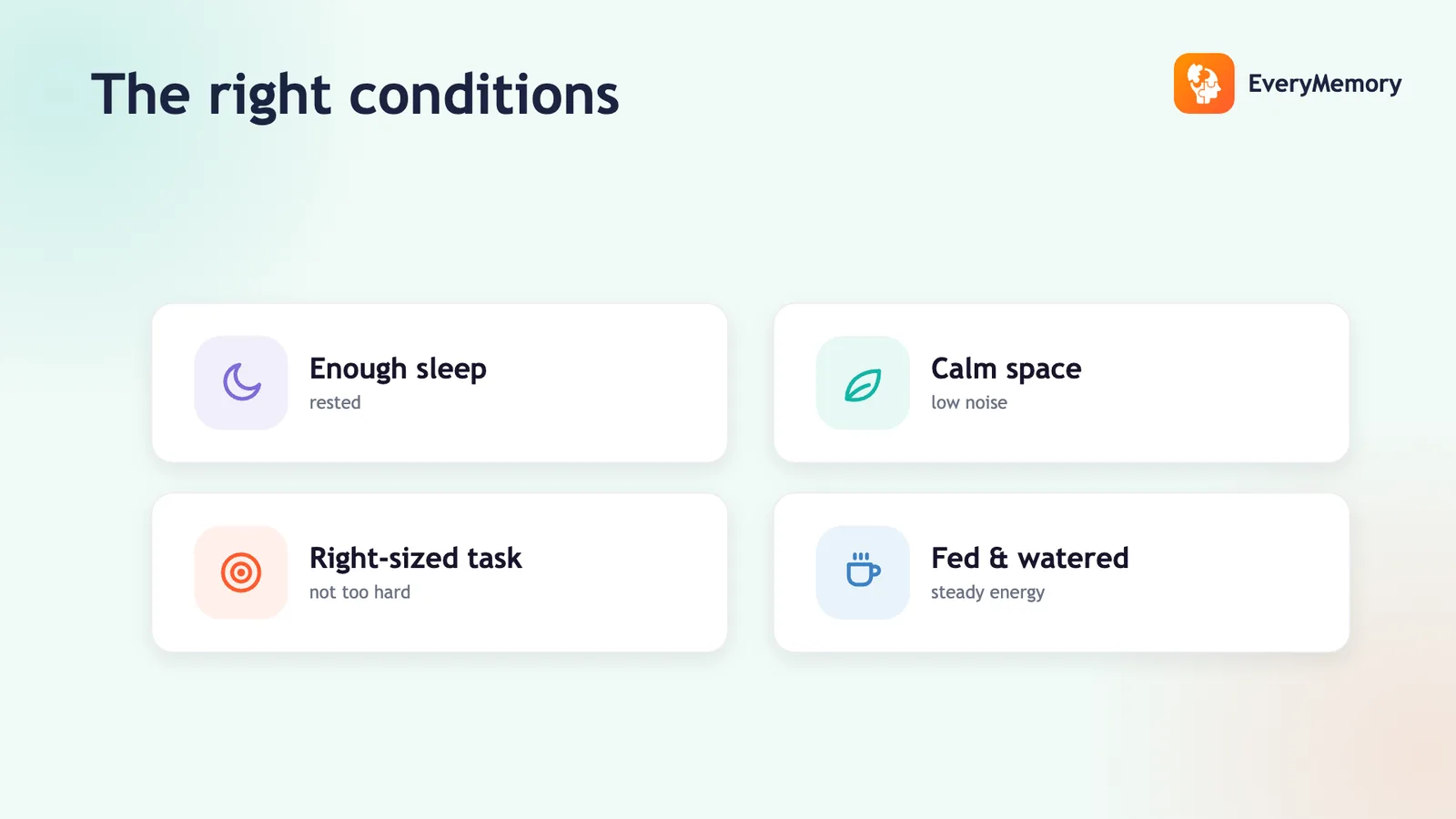
Focus is mostly about what isn't competing for attention. Before a task starts, take a minute to remove the obvious pulls - that small reset does more than any reminder mid-task.
- Put phones and tablets in another room, not face-down on the table.
- Clear the work surface down to just what's needed for this one task.
- Turn the TV off, not down - background noise still pulls.
- Have water and a snack ready so hunger and thirst don't interrupt.
- Pick a consistent spot so the brain learns "this is where we focus."
Build a routine, not a battle
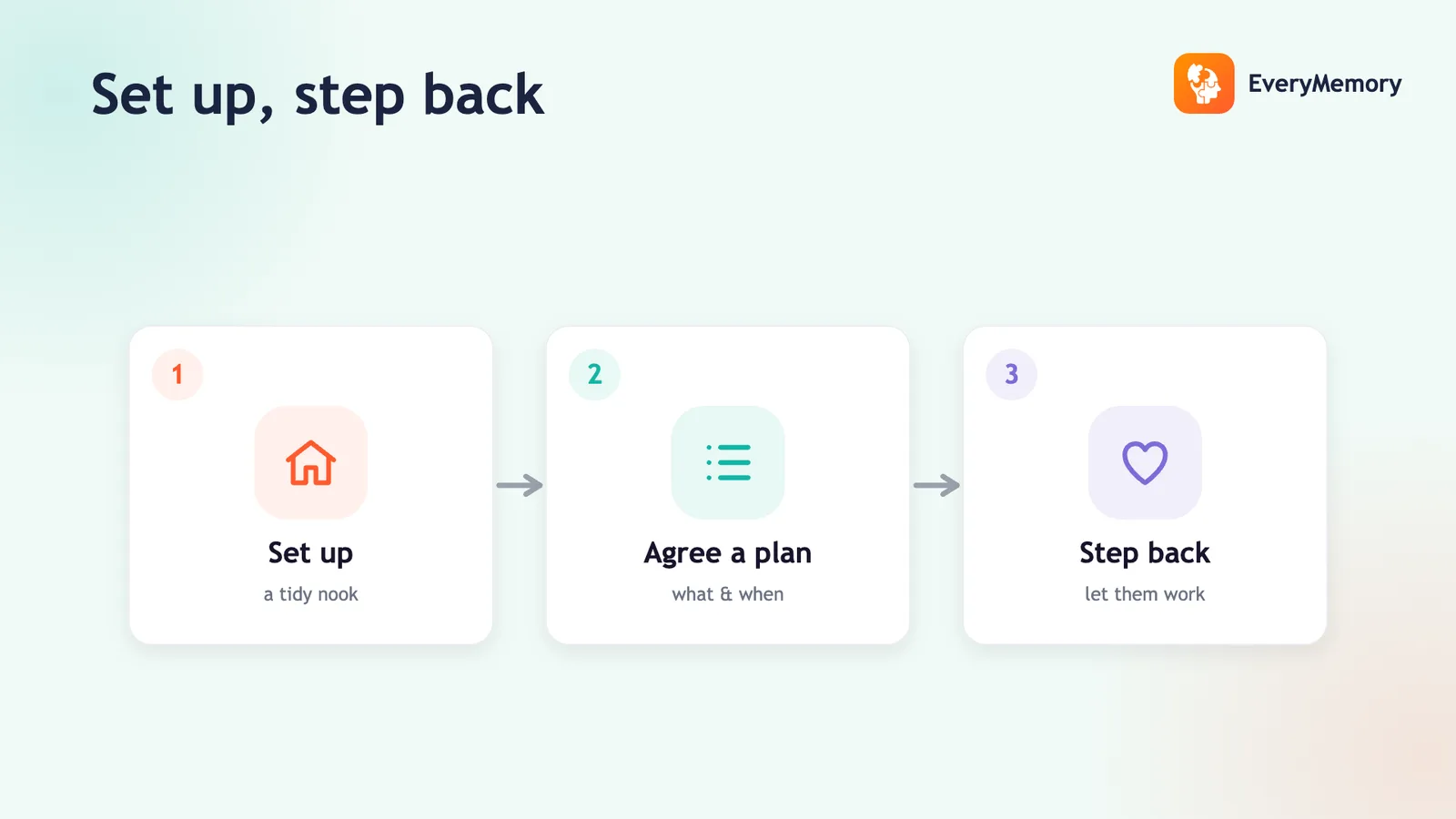
Children focus better when they know what's coming. A predictable rhythm - snack, then homework, then play - removes the daily negotiation and lets focus become a habit rather than a fight. Pick a regular time and protect it.
Movement helps more than sitting still. A short jump-around or a walk to the kitchen between tasks resets attention rather than breaking it. For a simple timer-based rhythm older kids can run themselves, see the Pomodoro technique for studying, and for the bigger picture, how to improve focus and concentration.
Practise focus through play
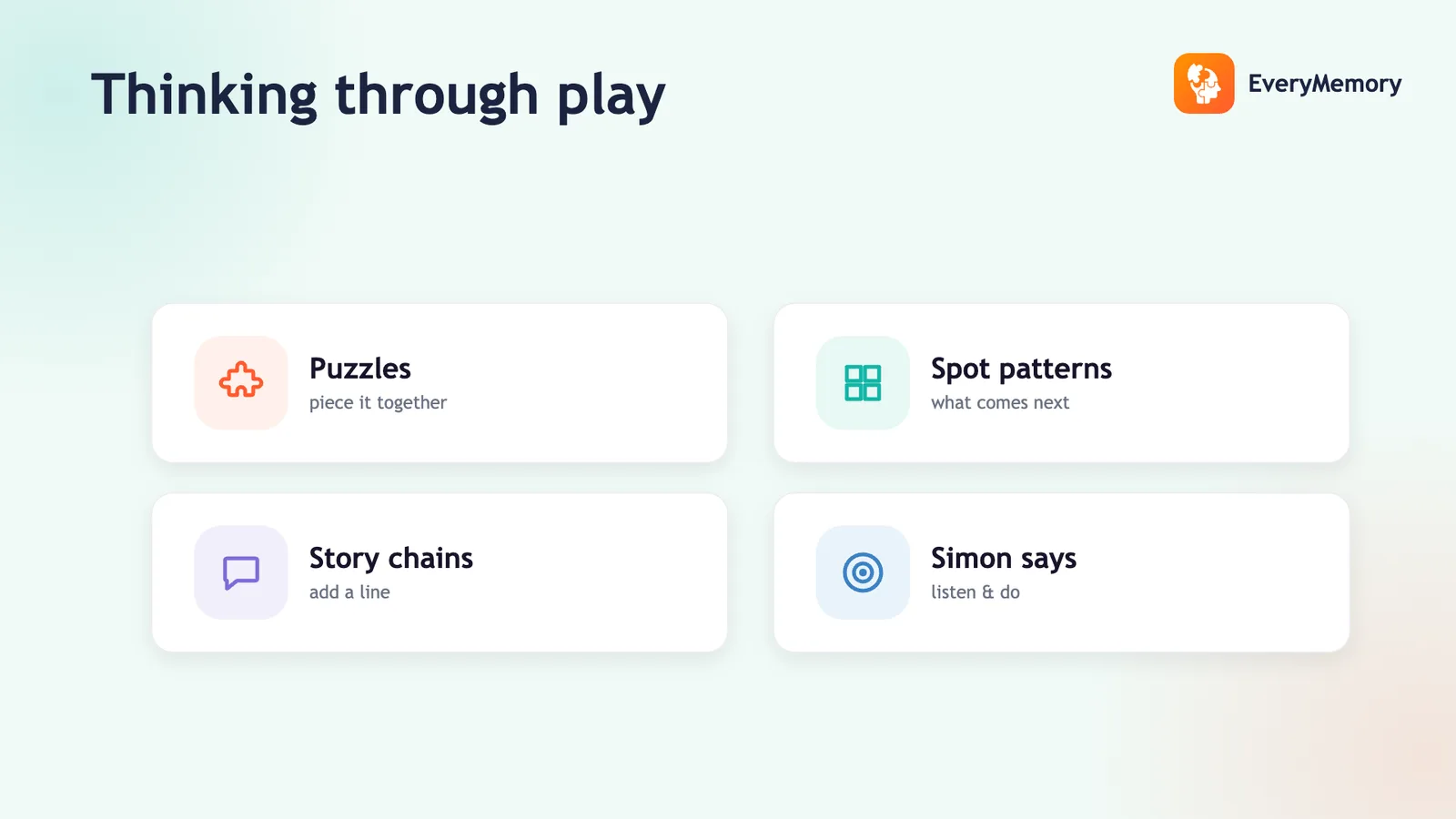
Games that demand attention are a gentle way to stretch focus without it feeling like work. Simon, spot-the-difference, and "freeze" games all ask a child to hold attention and notice detail.
The point is repetition that feels good. A few minutes of an attention game most days quietly builds the same muscle homework needs. Pair it with concentration exercises for kids for more ideas you can rotate through.
✅ Try this today - The first-task warm-up
Start homework with one tiny, easy task to get focus rolling.
- Clear the table and put screens in another room.
- Pick the smallest, easiest item on the list to do first.
- Set a short timer - 10 minutes for younger kids - and work only until it rings.
- Take a two-minute movement break: stretch, jump, get water.
- Repeat with the next chunk, and stop while there's still goodwill left.
⚠ When to talk to a professional
These are everyday, developmental tips, not advice for any specific condition. If a child has persistent, severe difficulty focusing that affects daily life, talk with their teacher and a qualified professional.