 EveryMemory
How to Improve Concentration in Children
Concentration grows with the right conditions - enough sleep, fewer distractions, tasks matched to age, and regular practice through games kids enjoy.
Part of the guide: How to Improve Your Memory: The Complete Beginner's Guide →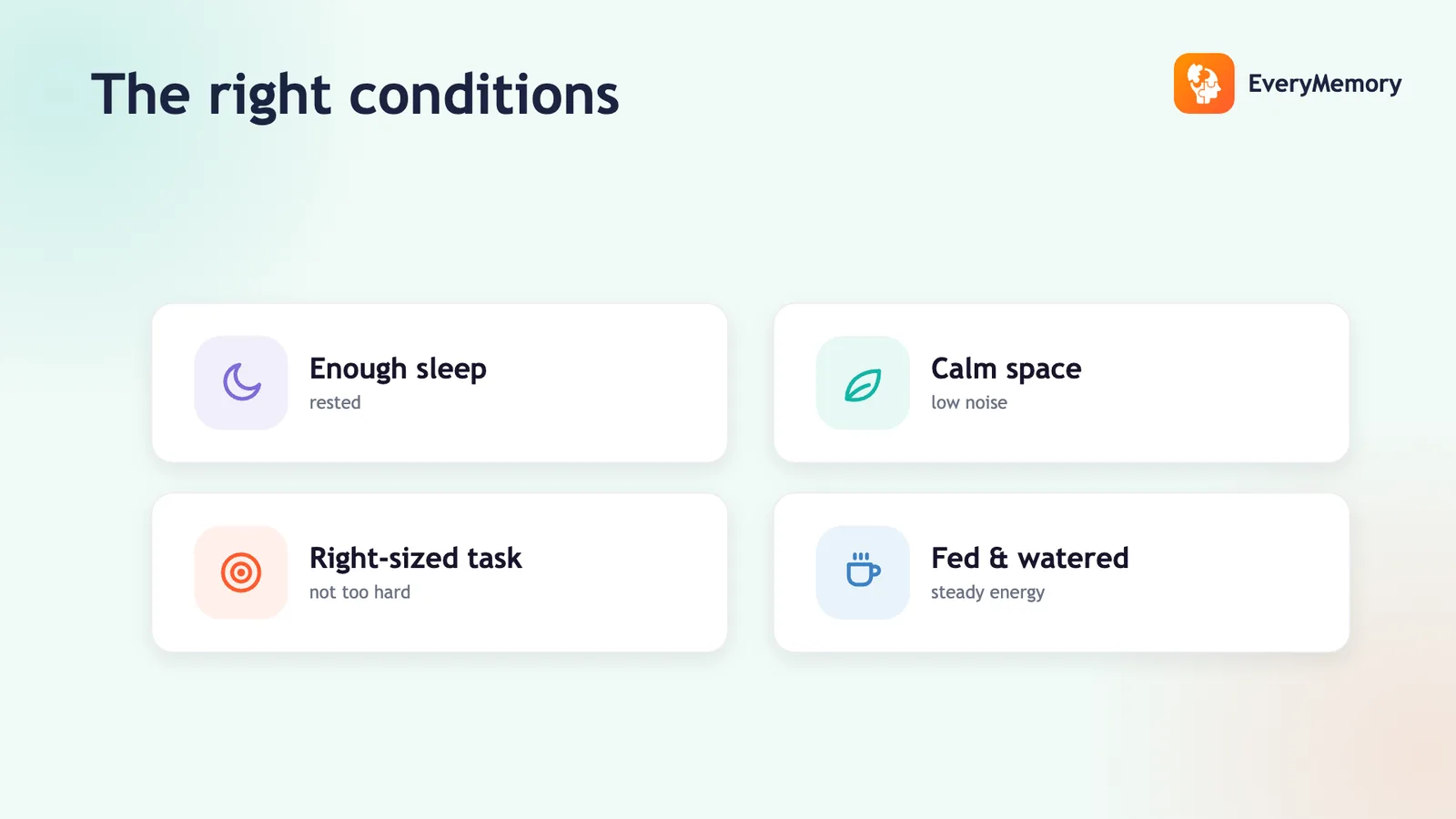
⚡ Quick answer
Improve concentration in children by protecting sleep, serving regular balanced meals, reducing background distractions, and breaking tasks into chunks that match their age. Build in movement breaks, keep a predictable routine, and practise attention through games like Simon Says. These everyday conditions matter more than any single technique, and concentration naturally lengthens as children grow.
Key takeaways
- Start with foundations - sleep, food, movement and a calm space matter most.
- Remove competing distractions before a task rather than redirecting mid-task.
- Break work into age-appropriate chunks with real movement breaks between.
- Practise attention through games like Simon Says, kept short and enjoyable.
Concentration in children isn't a fixed trait you either have or lack - it grows with age and gets better with the right conditions. A well-rested, well-fed child in a calm room concentrates far better than the same child tired, hungry, and surrounded by distractions.
So improving concentration is mostly about the basics done consistently: sleep, food, movement, fewer competing pulls, and tasks pitched at the right level. Add a little playful practice on top, and you give attention every chance to develop at its own pace.
Start with the foundations
Before any clever technique, get the basics right - they affect concentration more than anything else and are easy to overlook on a busy week.
| Foundation | Why it matters | Simple step |
|---|---|---|
| Sleep | Tired children can't sustain attention | Consistent bedtime, screens off an hour before |
| Food | Hunger and sugar crashes break focus | Protein-rich breakfast, regular snacks |
| Movement | Physical activity resets attention | Outdoor play before homework |
| Calm space | Distractions compete for focus | A tidy, quiet spot for tasks |
Cut the distractions
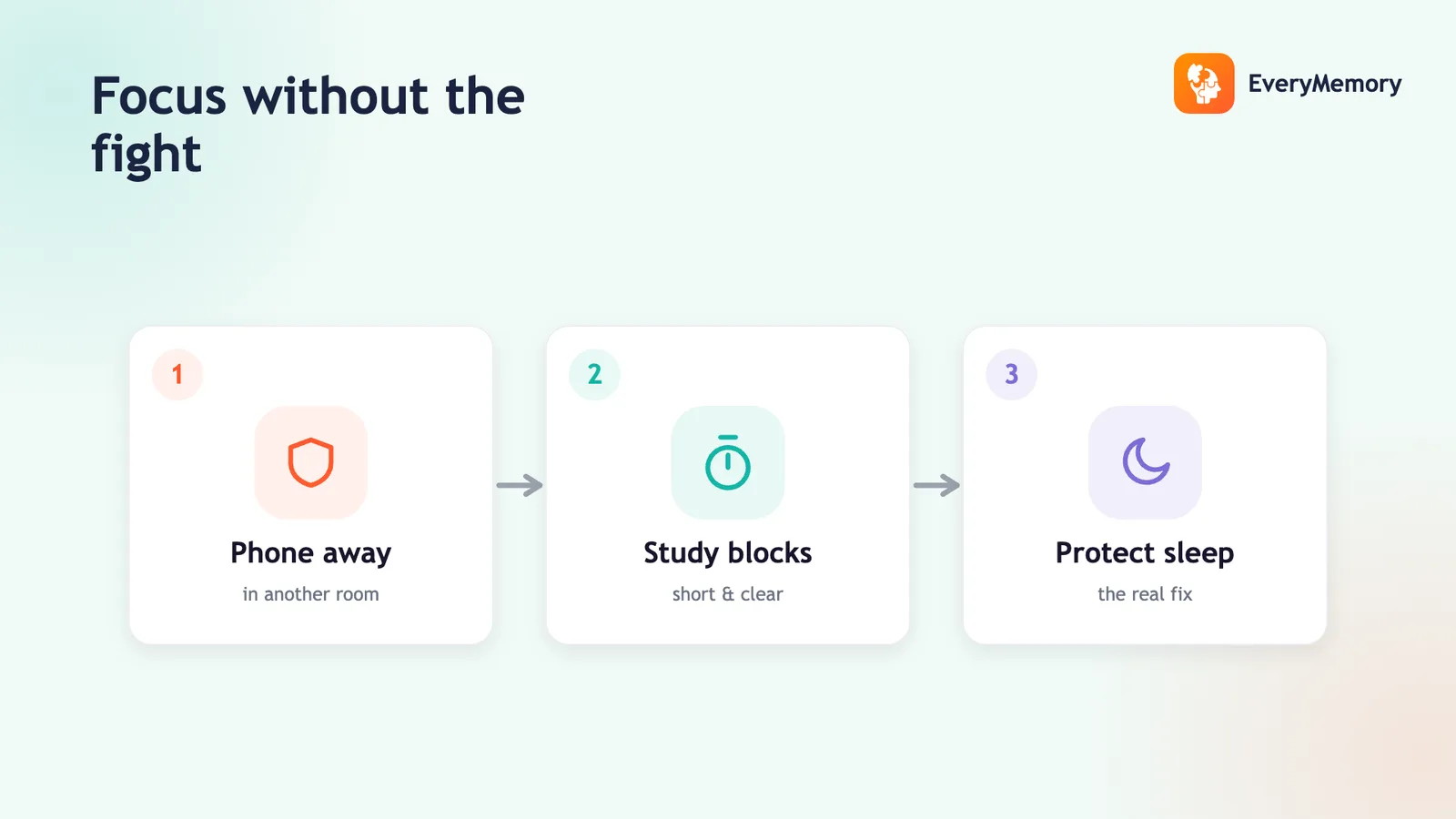
A child's attention goes wherever the most interesting thing is. If a screen, a toy, or a noisy TV is in view, that's where focus heads. The fix is to remove the competition before a task starts, not to keep redirecting them.
Screens deserve special mention. Fast, constant stimulation can make slower tasks like reading feel dull by comparison, so keeping homework and screen time clearly separate helps. A short screen-free window before focused work often makes the work easier.
Match the task, build the routine
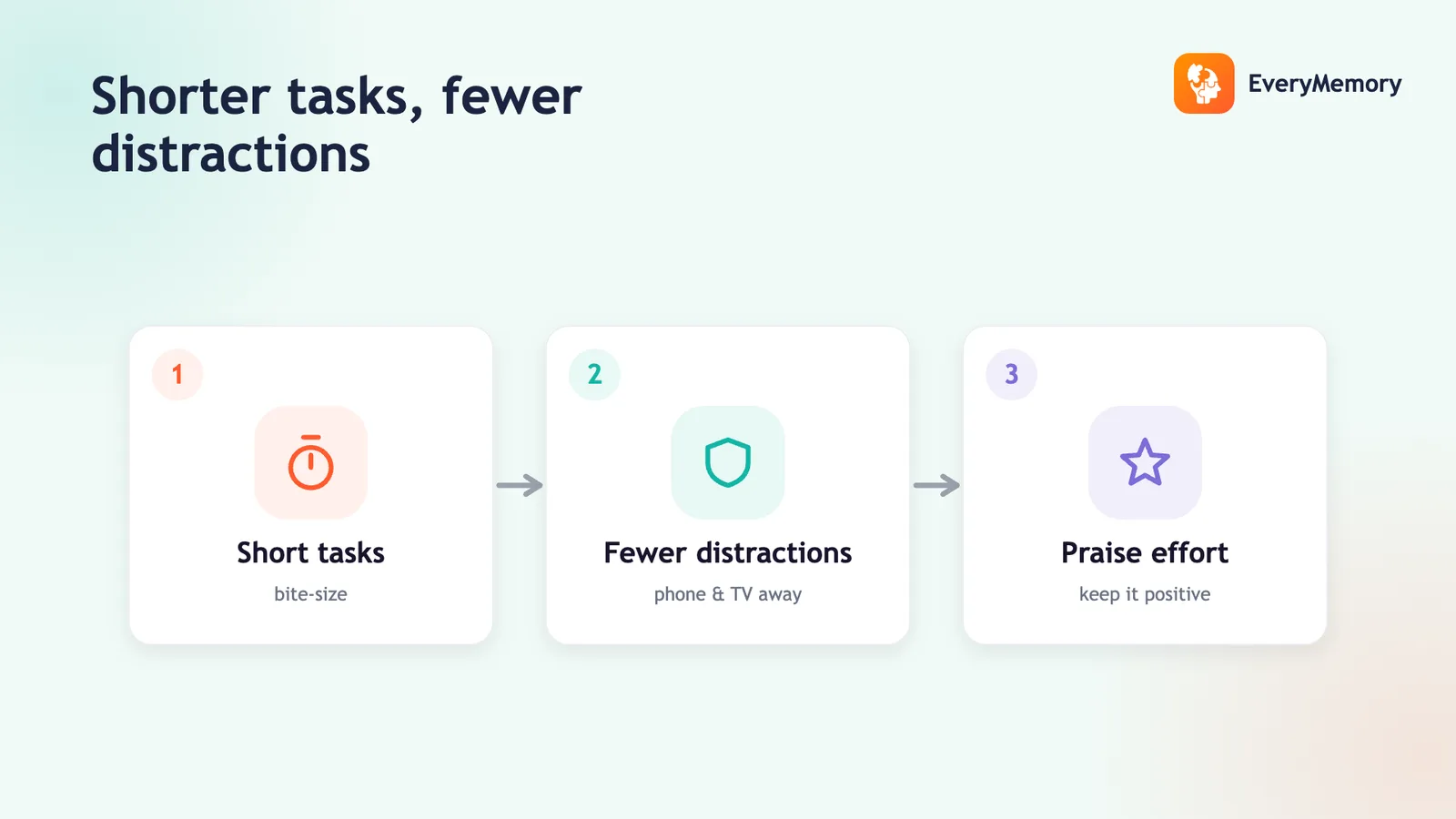
Concentration fails fastest when a task is longer than a child can manage. Break work into age-appropriate chunks with breaks between, and let your child feel the success of finishing rather than the grind of dragging on.
- Break the task into chunks your child can finish comfortably.
- Set a short timer and work only until it rings.
- Take a real movement break - not a screen - between chunks.
- Keep the same routine and spot each day so it becomes automatic.
- Stop while there's still focus left, rather than pushing to the end.
For more on the overall picture, see how to help a child focus and how to improve focus and concentration.
Practise attention through play
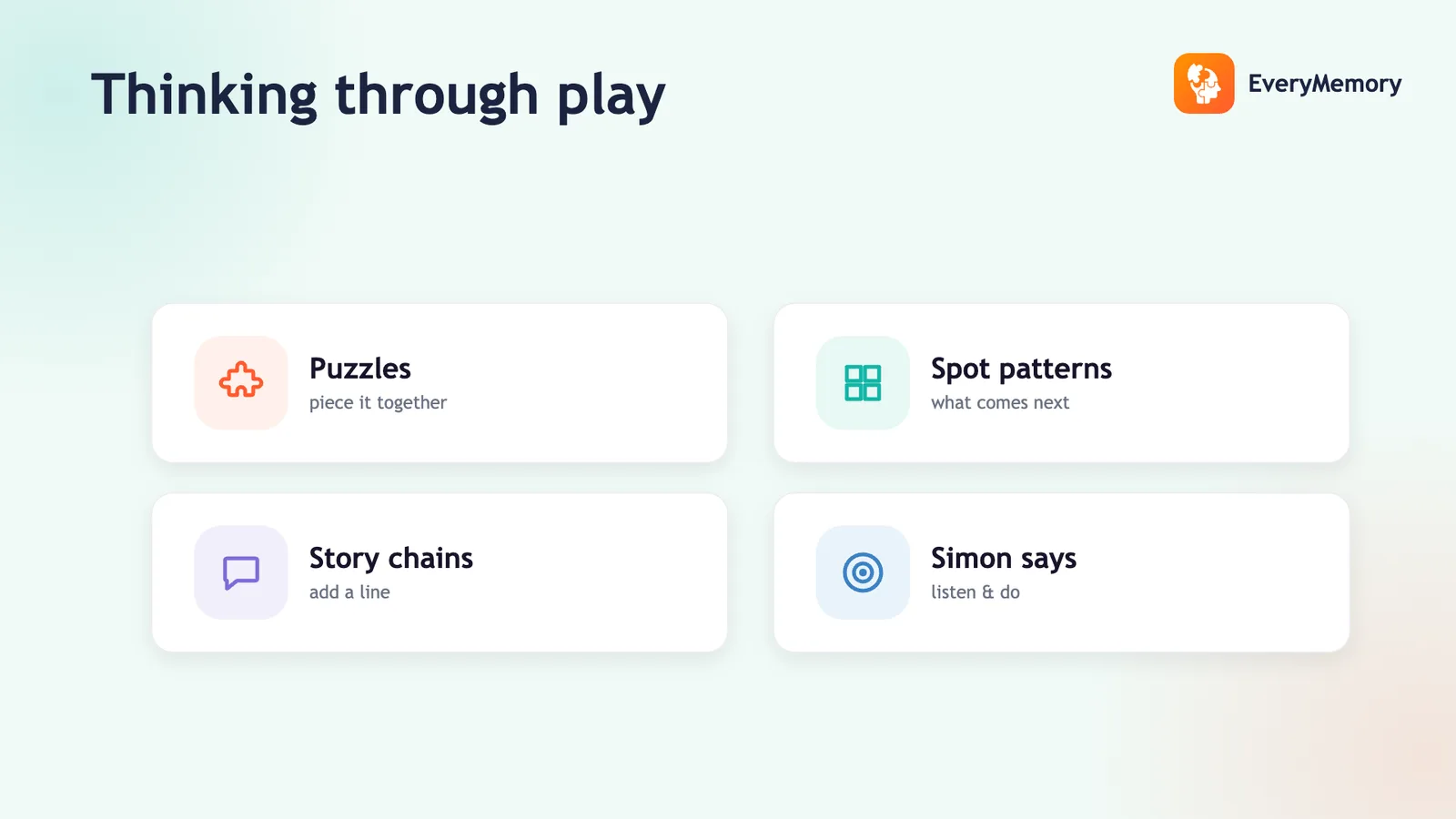
Attention strengthens with use, and games are the easiest way to get the reps in. Simon Says, freeze dance, jigsaw puzzles, and spot-the-difference all ask a child to hold focus and notice detail without it feeling like work.
Keep it short and enjoyable. A few minutes of an attention game most days quietly builds the same skill that homework needs. See concentration exercises for kids for a fuller set to rotate through.
✅ Try this today - Simon Says focus round
A classic game that rewards listening and self-control.
- Play Simon Says, where actions only count when you say "Simon says" first.
- Start slow, then speed up to make holding attention harder.
- Throw in tricky near-misses - "Simon says touch your... nose!" said quickly.
- Swap roles so your child has to plan and call the commands.
- Keep rounds short and finish on a laugh, not a frustration.
⚠ When to talk to a professional
These are general, developmental tips, not advice for any condition. Concentration varies a lot between children and grows with age. If a child has persistent, severe difficulty concentrating that affects daily life at home and school, speak with their teacher and a qualified professional.