EveryMemory
How to Memorize Things Fast
Fast memorising comes from better encoding, not more repetition. Understand, chunk, picture, link - one vivid pass beats a dozen rereads.
Part of the guide: How to Improve Your Memory: The Complete Beginner's Guide →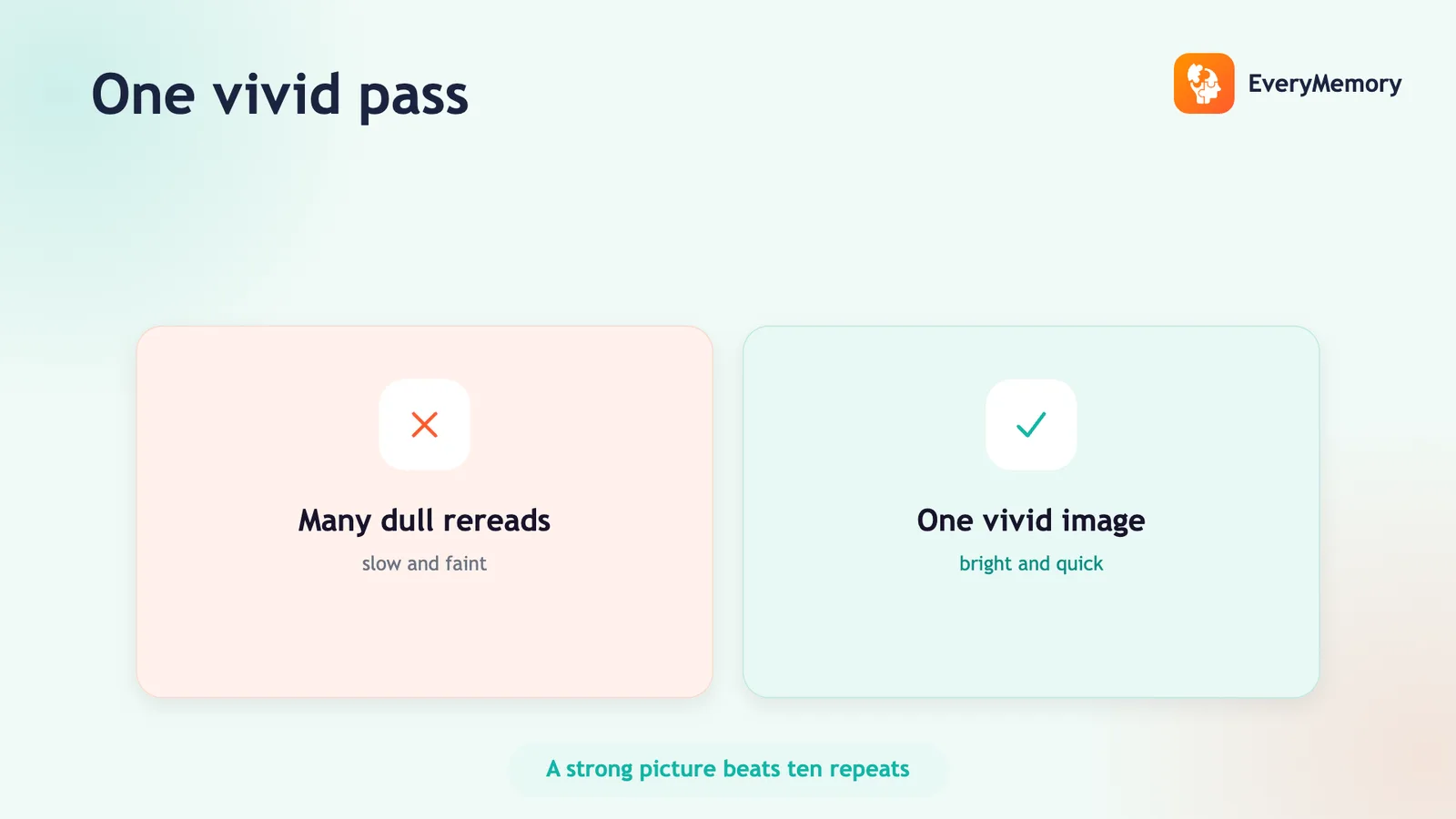
⚡ Quick answer
To memorize things fast, don't repeat them more - encode them better. Understand it first, break it into chunks, turn each chunk into a vivid image, and link the images into a story or place. One vivid, well-structured pass beats a dozen rereads. To make it last rather than just feel fast, recall it from memory shortly after.
Key takeaways
- Fast memorising comes from better encoding, not more repetition.
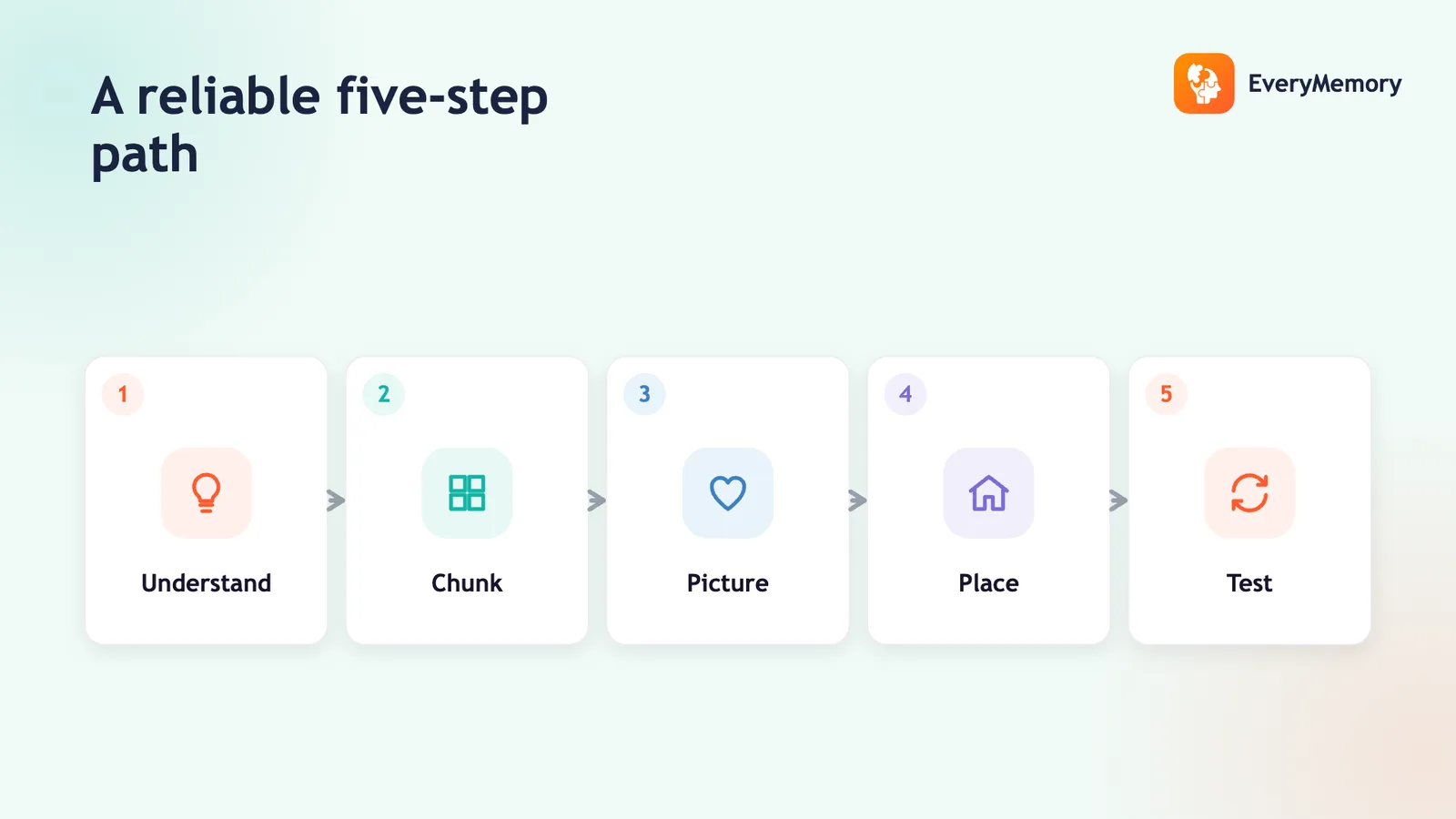
- Understand it, chunk it, picture each chunk vividly, and link the images into a story or memory palace.
- Match the tool to the material - chunking for numbers, palace for lists, acronyms for short fixed sets.
- Fast in isn't the same as lasting; recall it once shortly after and again the next day to keep it.
Speed in memorising doesn't come from cramming the same thing in more times. It comes from putting it in better the first time, so it sticks after one or two passes instead of ten.
Here's how to memorise things fast - and the one catch to make it last.
Speed comes from encoding, not repetition
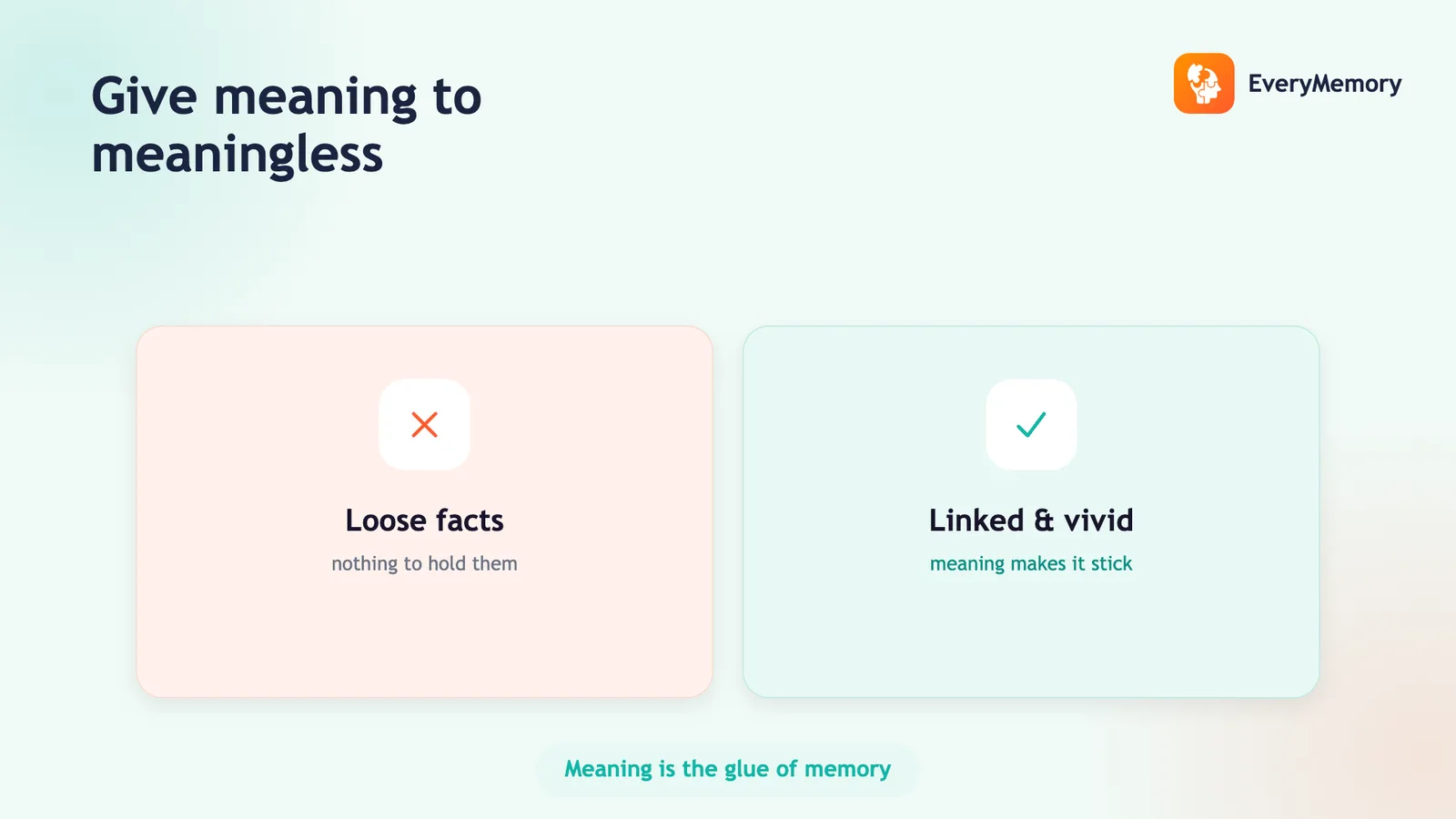
Rereading something twenty times is slow and weak; giving it structure and meaning once is fast and strong. The brain holds onto meaning and vivid images, so converting dry information into those is what makes it lodge quickly. That conversion is the whole skill.
The fast method, in four steps
- Understand it first - material that makes sense has far less to memorise by force.
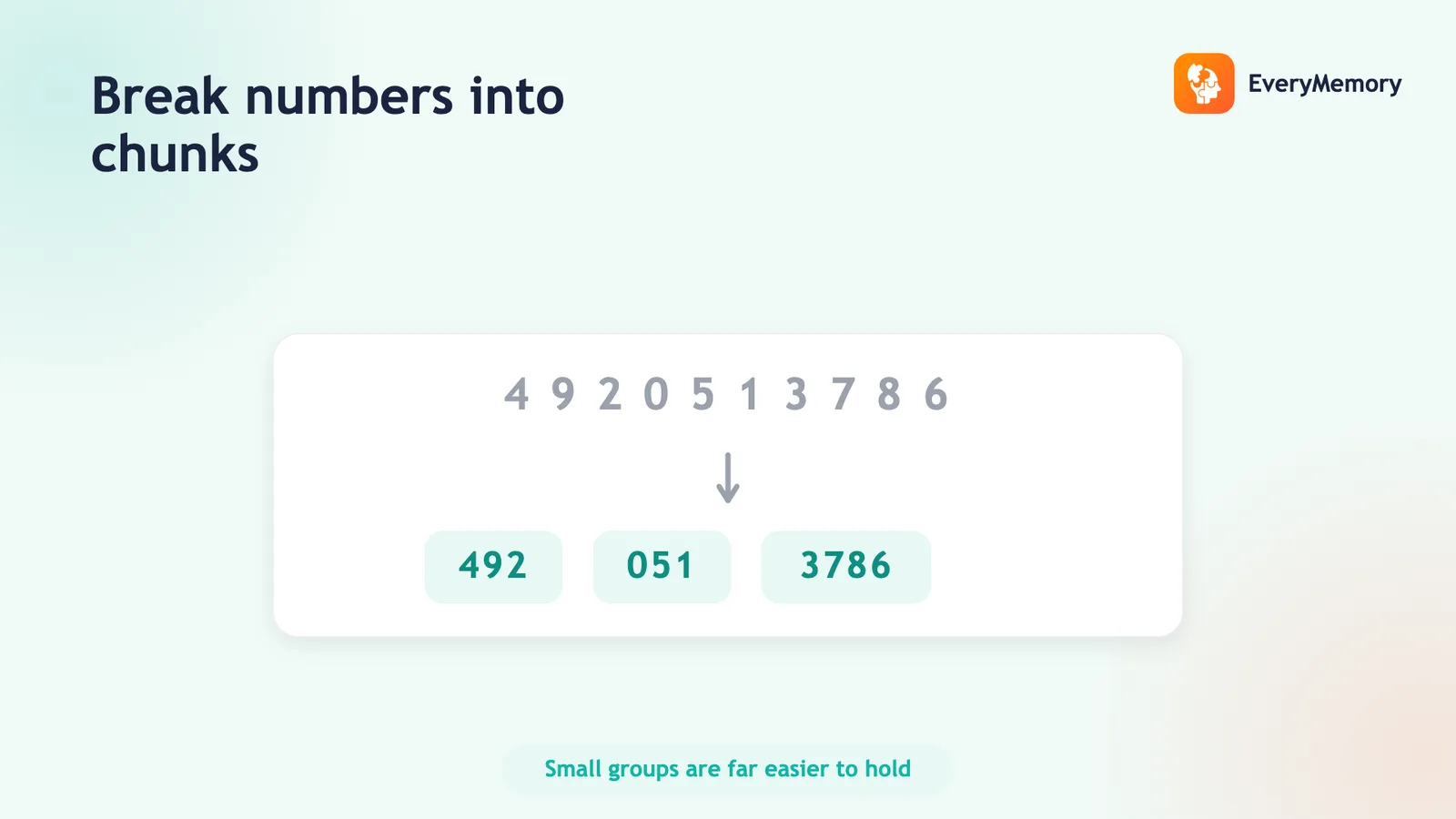
- Chunk it - break it into a handful of manageable pieces.
- Picture each chunk - turn it into a vivid, exaggerated image.
- Link the images - string them into a story or place them along a memory palace route.
Match the trick to the material
Numbers? Chunk and picture the digits - see remembering numbers. A list or speech? Memory palace. A short fixed set? An acronym. Names? Link the name to the face. The four-step method stays the same; only the 'picture and link' tool changes. The full workflow is in how to memorise anything.
The catch: fast in isn't the same as lasting
These methods get information in quickly, but anything you want to keep still needs one thing more: a recall a little later, and again the next day. Without it, even vividly-encoded material fades. So memorise fast, then test yourself once - that small step is what turns speed into retention.