EveryMemory
How to Remember a Shopping List Without Writing It Down
Four playful, proven memory techniques - a journey method, a silly story, aisle grouping, and association - turn an everyday errand into surprisingly good brain practice.
Part of the guide: How to Improve Your Memory: The Complete Beginner's Guide →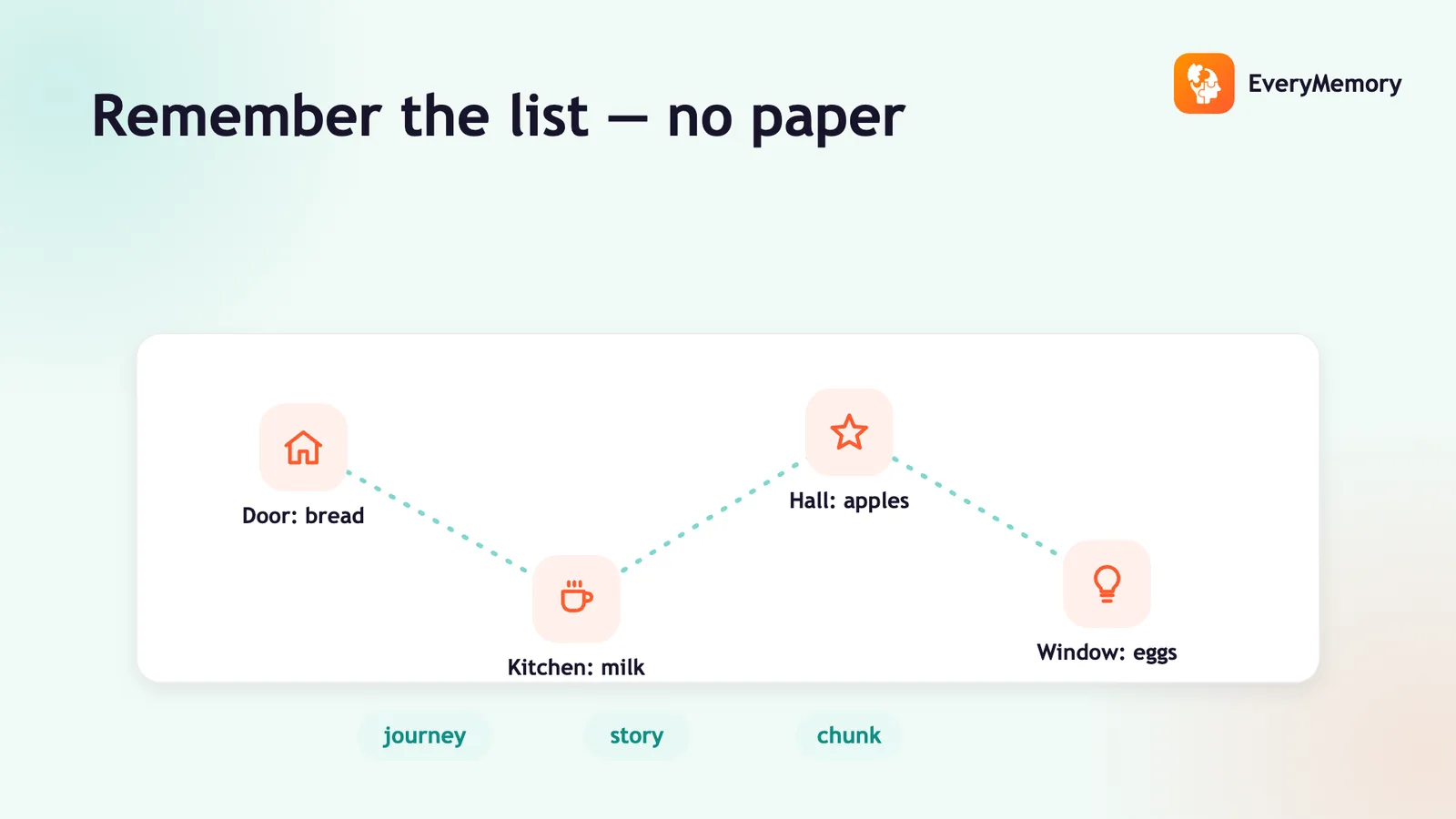
⚡ Quick answer
To remember a shopping list without writing it down, try one of four methods: walk a familiar route in your mind and place each item at a location (memory palace), weave items into a bizarre short story (linking method), group items by store aisle (chunking), or connect each item to something you already know well (association). Even a list of eight to ten items becomes manageable with any of these techniques, and the practice itself is genuinely good mental exercise.
Key takeaways
- The linking story method chains items into a silly narrative - studies show it dramatically outperforms plain list repetition.
- Chunking by aisle reduces ten items to three or four meaningful groups, cutting the load on working memory.
- The memory palace places each item at a familiar location in your home, making the route itself the retrieval cue.
- Regular practice with any of these techniques is a genuine everyday workout for working memory and recall.
You are halfway down the cereal aisle when it hits: what was that fourth thing you needed? Most of us reach for our phones at that moment - but a short shopping list is actually one of the best everyday exercises for your memory. Holding items in mind and retrieving them later under mild distraction is exactly the kind of mental effort that keeps recall sharp.
Memory researchers have studied this problem for decades, and the techniques they found are not complicated. They are, in fact, kind of fun. Here are four practical approaches you can try on your very next grocery run - no apps, no sticky notes required.
Why Your Brain Struggles with Plain Lists
Working memory - the mental scratch pad we use for short-term tasks - can reliably hold only about four to seven unrelated items at once. A bare list of ten groceries is asking a lot, especially when you are navigating a crowded store at the same time.
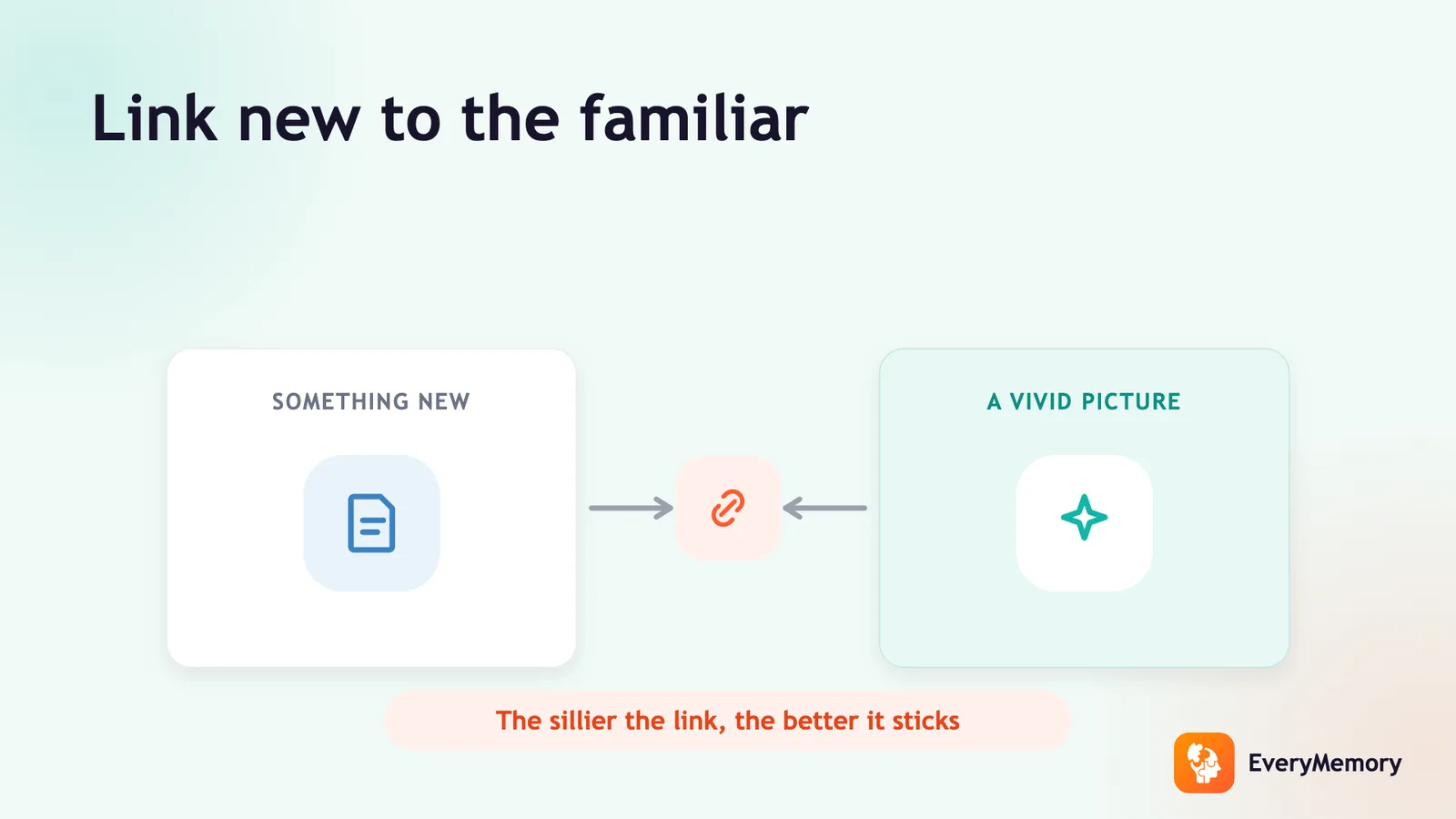
Every technique below works by the same principle: it gives each item a hook - a vivid image, a place, a connection - so the item links to something your brain already holds firmly. Random words are forgettable; a cartoon banana riding a shopping trolley is not. For a deeper look at how this works, see how memory works.
The Journey Method: Turn Your Home Into a Grocery Store
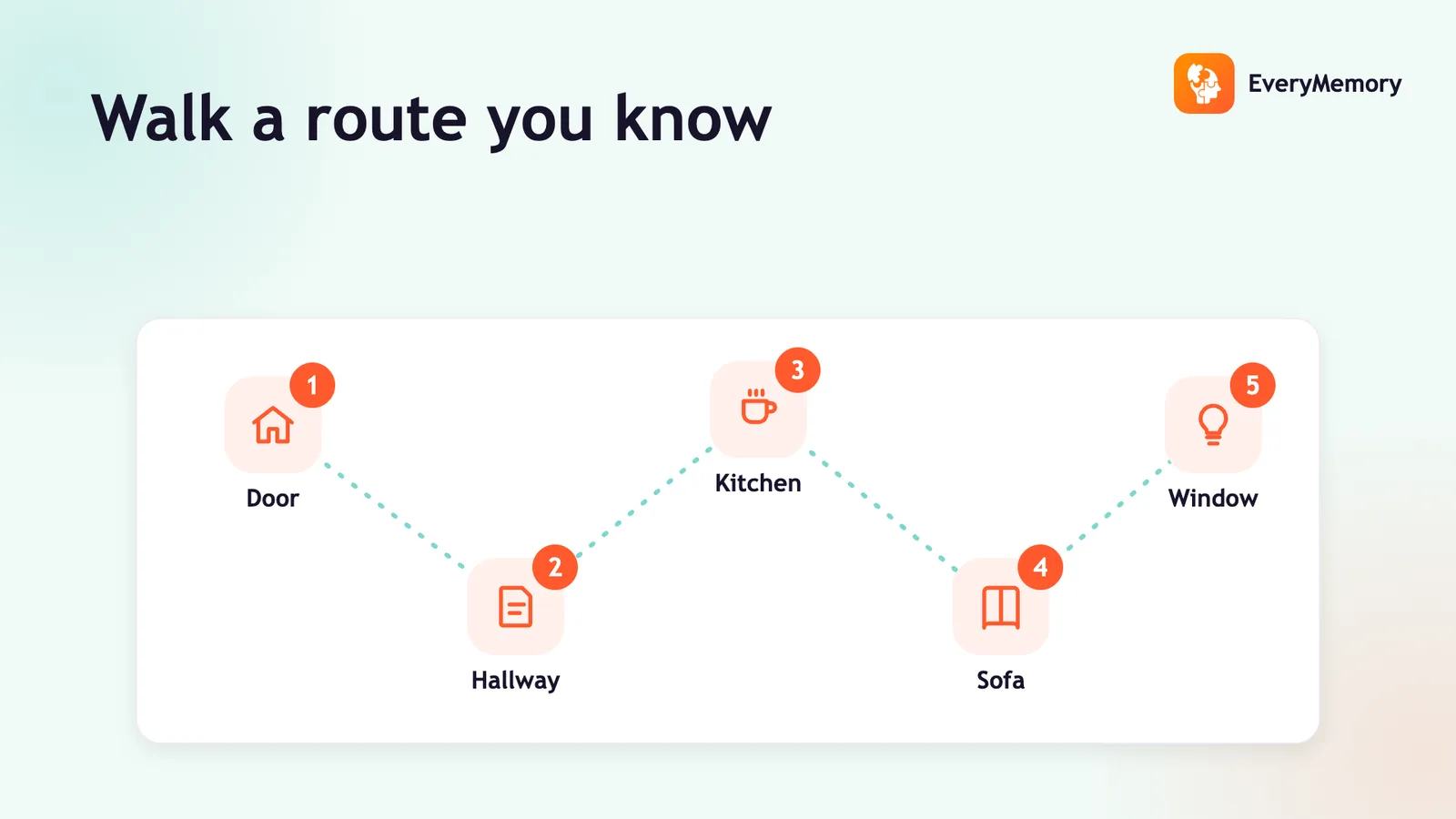
The journey method (also called the loci method or memory palace) is one of the oldest and most reliable memory strategies known. The idea is simple: mentally walk a route you know well - your home, your street, your morning commute - and deposit each shopping item at a distinct location along the way.
Start at your front door and work from room to room. Say your list is: milk, eggs, bread, olive oil, and apples. Picture a giant milk carton blocking your doormat, a nest of cracked eggs on the welcome mat, a loaf of bread dangling from your coat hook, and a bowl of red apples on the hall table. When you arrive at the shop, mentally walk the route again - each location hands you the next item. The sillier and more dramatic the images, the better they stick.
- Choose a route you can walk in your mind without effort - your home is ideal.
- Assign one item to one distinct location; never cram two items into the same spot.
- Make each image active - the milk is not just sitting there, it is flooding the floor.
- Walk the route twice before you leave the house.
The Linking Method: Chain Items Into a Silly Story
If the memory palace feels like too much setup for a quick five-item run, the linking (or story) method is faster to deploy. You simply connect each item to the next through a short, ridiculous narrative, so the list becomes a chain rather than a set of isolated words.
Take the same list - milk, eggs, bread, olive oil, apples. Your story: a cartoon cow (milk) trips over giant eggs, which crack open and flood a loaf of bread being surfed by a bottle of olive oil, which smashes into a pile of red apples that explode on impact. Each item cues the next, so forgetting one means you have lost only the chain link - and vivid imagery makes losing links rare.
Research on this method has found recall rates far higher than plain list repetition. The key is letting the story be genuinely strange; plausible, ordinary scenes are much harder to hold. This method pairs naturally with association techniques - the more personally funny your imagery, the stronger the links.
Chunking by Aisle: Group First, Then Remember
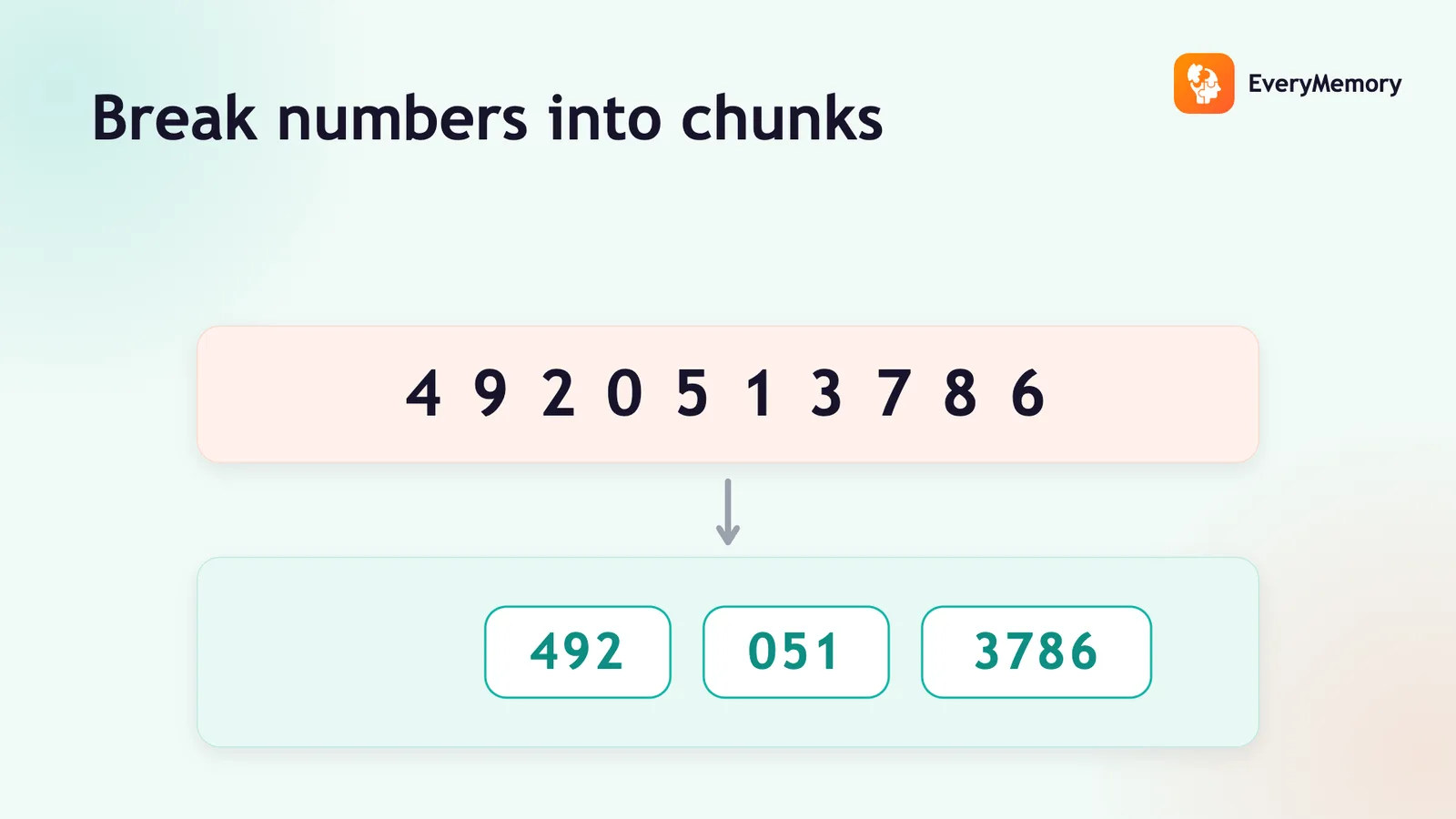
Psychologist George Miller's classic research showed that working memory handles chunks - meaningful groups - far better than individual items. Instead of ten separate words, you remember three or four category labels, each carrying two or three items. The load drops dramatically.
Before you leave home, sort your list by store section: produce (apples, spinach, lemons), dairy (milk, yogurt), dry goods (pasta, cereal), cleaning (washing-up liquid). Now you have four labels to hold rather than ten items. Walking the store in sequence means each section triggers its chunk automatically. The full guide to the chunking technique shows how the same grouping logic applies to names, numbers, and appointments.
- Sort items into three to five natural categories before you leave.
- Give each category a short, memorable label - "fridge stuff", "pasta aisle".
- Let the store layout prompt your recall: entering produce reminds you of the produce chunk.
- If a category has more than four items, split it into two smaller groups.
Association: Hang Each Item on Something You Already Know
Association works by connecting a new item to a vivid, existing memory. Rather than a chain or a route, you create a one-to-one link: this new thing reminds me of that firmly known thing.
If you need ginger, picture your grandmother's ginger biscuits - complete with the smell. If you need washing-up liquid, see your kitchen sink in your mind. The personal connection does the anchoring work, and it takes only a few seconds. This principle connects closely with remembering where you put things - in both cases the key move is pausing to build a deliberate mental image before moving on.
Association is especially useful for items that slip your mind every single shop. Pick one recurring item this week and spend ten seconds creating a vivid personal image for it - that small investment tends to make it stick permanently.
Combining Methods: What Works Best in Practice
Most people find that mixing methods works best: chunk the list by aisle first, then use a brief story or journey for whichever category feels slipperiest. For a list of four or five items, the linking story alone is usually enough.
The deeper benefit is not just fewer forgotten groceries. Deliberately encoding information - forming images, making connections, then retrieving under mild distraction - is exactly the kind of active mental effort associated with keeping working memory agile. Start with whatever feels most natural, and know that imperfect practice always beats waiting for the perfect technique.
✅ Try this today - Your Practice Run This Week
Before your next shop, try this three-step exercise to build the habit.
- Write your list as normal, then put it away. Choose one method - story, journey, or chunking - and spend two minutes encoding the list before you leave.
- In the shop, retrieve each item from memory first. Check your list only at the checkout. Note what you got right and what you missed.
- For missed items, spend thirty seconds building a stronger image or association. Repeat next week and notice whether your hit rate improves.
⚠ When to talk to a professional
The occasional forgotten item is normal and not a cause for concern. If you notice a sudden, rapid, or significant change in your ability to remember everyday tasks or familiar information, it is worth speaking with a qualified healthcare professional.