EveryMemory
How to Remember Appointments
A simple, reliable system for keeping track of appointments - even when your schedule gets busy or you stop using a planner consistently.
Part of the guide: How to Improve Your Memory: The Complete Beginner's Guide →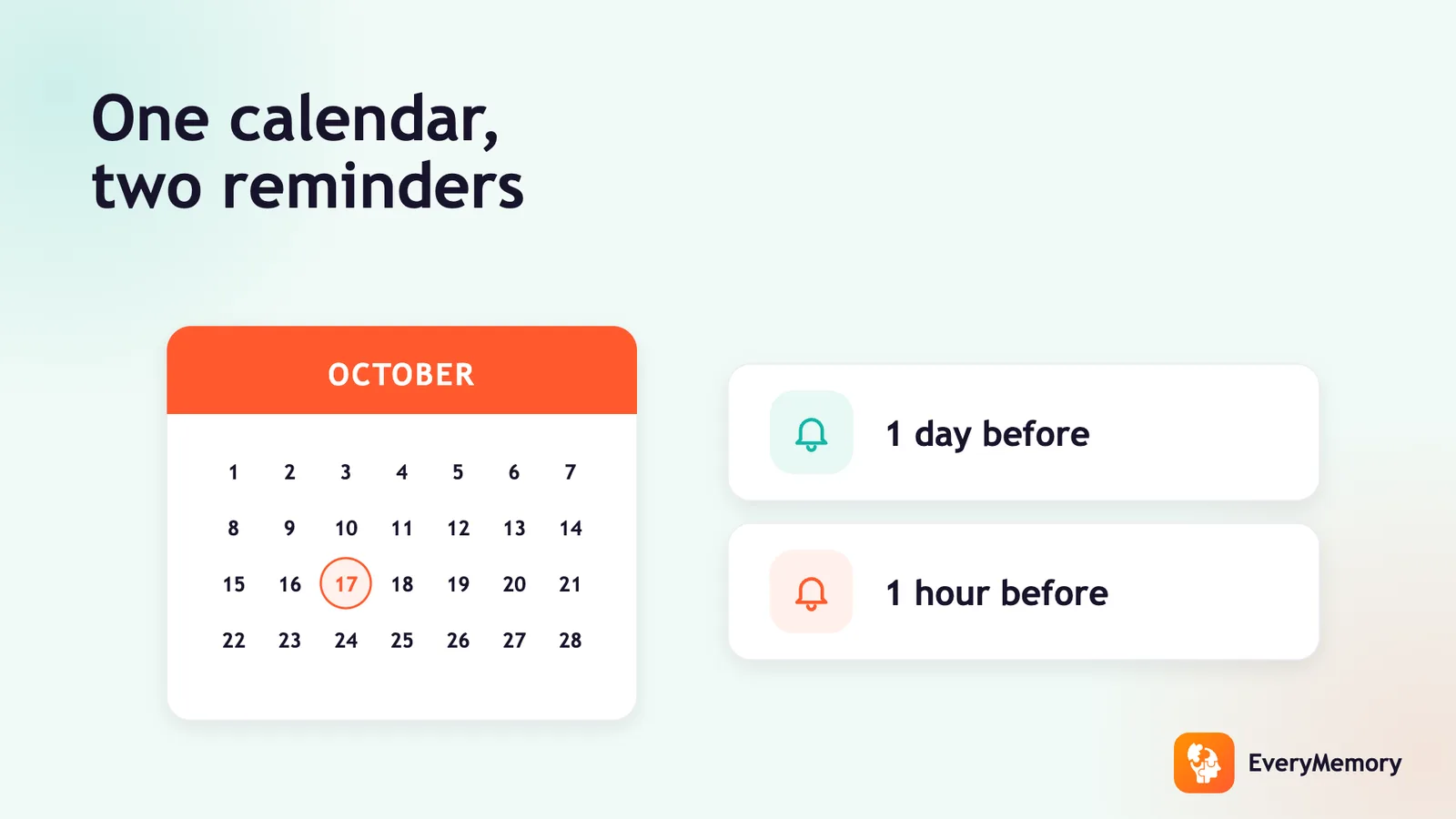
⚡ Quick answer
The most reliable way to remember appointments is a two-step habit: write every appointment down the moment you make it (in one consistent place), then set a reminder 24 hours and 1 hour before. The writing locks in the information; the reminders replace relying on willpower to check.
Key takeaways
- Write every appointment down the moment you make it, before leaving the desk or ending the phone call.
- Use one single diary or calendar for all appointments - splitting information across multiple systems causes things to fall through.
- Set two reminders for each appointment: one 24 hours before and a second 1 hour before.
- A two-minute diary check every morning replaces relying on willpower and turns the system into a reliable daily habit.
A doctor's appointment you nearly missed. A grandchild's recital you walked in ten minutes late. A phone call you completely forgot until the other person followed up. If any of these sound familiar, you're not alone - and the problem is almost never a "bad memory." It's a system problem.
Most people try to remember appointments the same way they try to remember everything else: by thinking hard about it. That strategy works well for vivid, emotional memories. It works poorly for dates and times, which are inherently abstract. A reliable appointment system doesn't ask your brain to do something it's not built for. It offloads the date-tracking to a simple external tool - and uses your brain only to build the habit of checking that tool.
Why your current approach keeps failing
When you leave a doctor's office with an appointment card and think "I'll remember this," you're asking your brain to store an arbitrary date in a busy, distracted context. Within hours, a dozen other things compete for that mental slot. This isn't a memory deficiency - it's normal interference. The appointment card ends up in a coat pocket, and the date fades.
The fix isn't trying harder. It's creating a system that doesn't require trying at all. Research on habit formation consistently shows that reliable behaviour comes from a trigger-routine pair - the moment you make an appointment is the trigger; writing it down in one fixed place is the routine.
If you'd like more background on why normal forgetting happens in the first place, why you forget why you walked into a room explains the attention-and-encoding connection in plain language.
The one-place rule
The most common appointment-tracking mistake is using several systems - a paper diary, a phone calendar, sticky notes, and mental notes - with no consistent hierarchy. You write the dentist appointment in the diary, the pharmacy pick-up on a sticky note, and the family lunch in your phone. None of them talk to each other, and none of them reliably alerts you.
Pick exactly one place for every appointment. For many people over 60, a paper week-at-a-glance diary sitting on the kitchen counter works better than a phone app, because it's always visible and requires no unlocking. For others, a phone calendar with automatic reminders is the clear winner. The right answer is whichever one you will actually use every day.
- Paper diary on the kitchen counter: visible, no battery required, easy to scan the whole week.
- Phone calendar (iOS Calendar, Google Calendar): automatic reminders, shared with family members.
- Whiteboard or corkboard in a central hallway: good for households where multiple people track the same appointments.
The booking moment: capture before you leave
The booking moment is the most important moment in the whole system. If you leave a clinic, a school office, or a phone call without recording the appointment, the date enters a very leaky short-term store. It may survive the drive home. It may not survive dinner.
Make a personal rule: I do not put the appointment card in my bag. I write the date in my diary (or phone) before I leave the room. Even better, say the date aloud once as you write it - speaking and writing together use more of the brain's encoding pathways than either does alone.
For phone appointments: keep a pen and your diary near where you typically take calls. When the scheduler offers you a date, write it down while they're still talking - not after you've hung up.
This connects directly to what building a memory training habit teaches about implementation intentions: you're not deciding whether to write it down, you're making it automatic.
Set two reminders, not one
Writing it down is only half the job. You also need a reliable prompt to check your notes before the appointment arrives. Two reminders work better than one because the first catches you while there's still time to prepare, and the second is a final nudge.
- 24-hour reminder: "Cardiology appointment tomorrow at 10 a.m. - bring medication list."
- 1-hour reminder: "Cardiology appointment in 1 hour - leave by 9:15."
- Optional: 1-week reminder for appointments requiring preparation, fasting, or travel.
If you use a paper diary rather than a phone, recreate the two-reminder system manually: every evening, open the diary to tomorrow and the day after. This one-minute check is the habit that replaces phone alerts. Many people find it easier to do right after dinner, when the day is winding down.
Worked example: the dentist appointment
You finish a checkup and the receptionist offers a 6-month follow-up: Tuesday, October 14th at 2:30 p.m. Here's what the system looks like in practice:
- Before leaving the desk: open your diary or phone calendar. Type or write: 'Dentist - Dr. Harris - 2:30 p.m. - 14 Oak Street'. Set a phone reminder for October 13th at 8 a.m. and a second for October 14th at 1:00 p.m.
- That evening: briefly mention it to a family member or housemate if relevant - a verbal review adds another encoding pass.
- October 13th morning: the first reminder fires. You check the address, remember you need to leave 20 minutes early for parking.
- October 14th at 1 p.m.: the second reminder fires. You pick up your keys and go.
Notice there's no moment in that sequence where you were relying on memory alone. The system did the work.
Common mistakes and how to fix them
Even a good system breaks down in predictable ways. Here are the most common failure points:
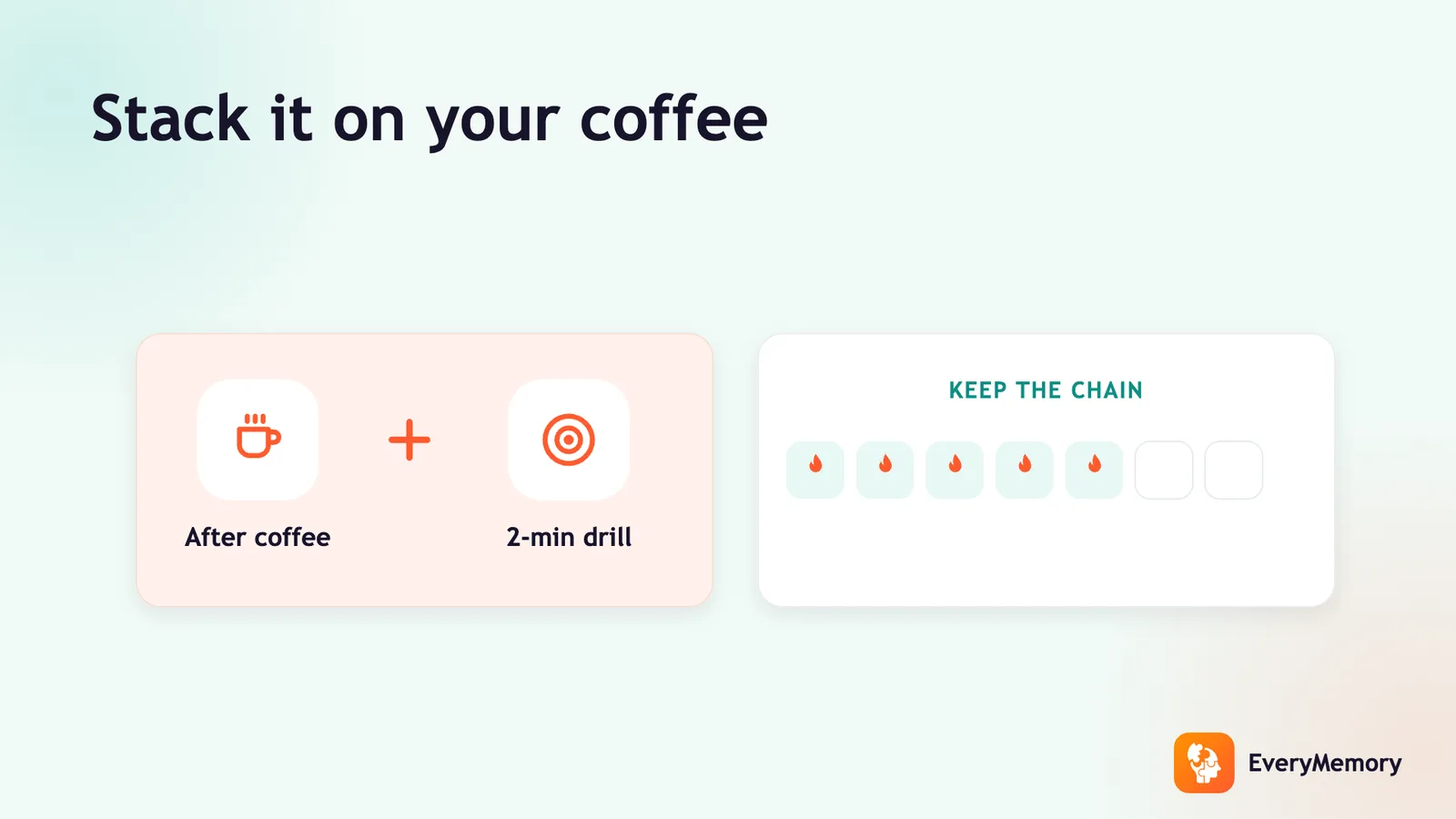
- Writing it down but never checking: schedule a fixed 2-minute diary review each morning. Make it part of making coffee.
- Multiple overlapping systems: choose one and commit. Tell family which one it is so they can add to it too.
- Forgetting to set reminders: make the reminder the very next action after writing the appointment. Don't let anything interrupt between the two.
- Appointments made for you (by a doctor's office, a care coordinator): ask them to send a text or email confirmation, then transfer it to your single system immediately.
For more on attention as the foundation of everyday memory, see building a simple daily memory routine - reducing mental clutter makes the whole system stick faster.
Practising the habit
Like any habit, this one needs a few weeks of conscious effort before it becomes automatic. The most effective way to build it: start with just one appointment per week where you practise the full system (write it the moment it's made, set two reminders, check the diary the night before). Once that feels natural, apply the same steps to every appointment.
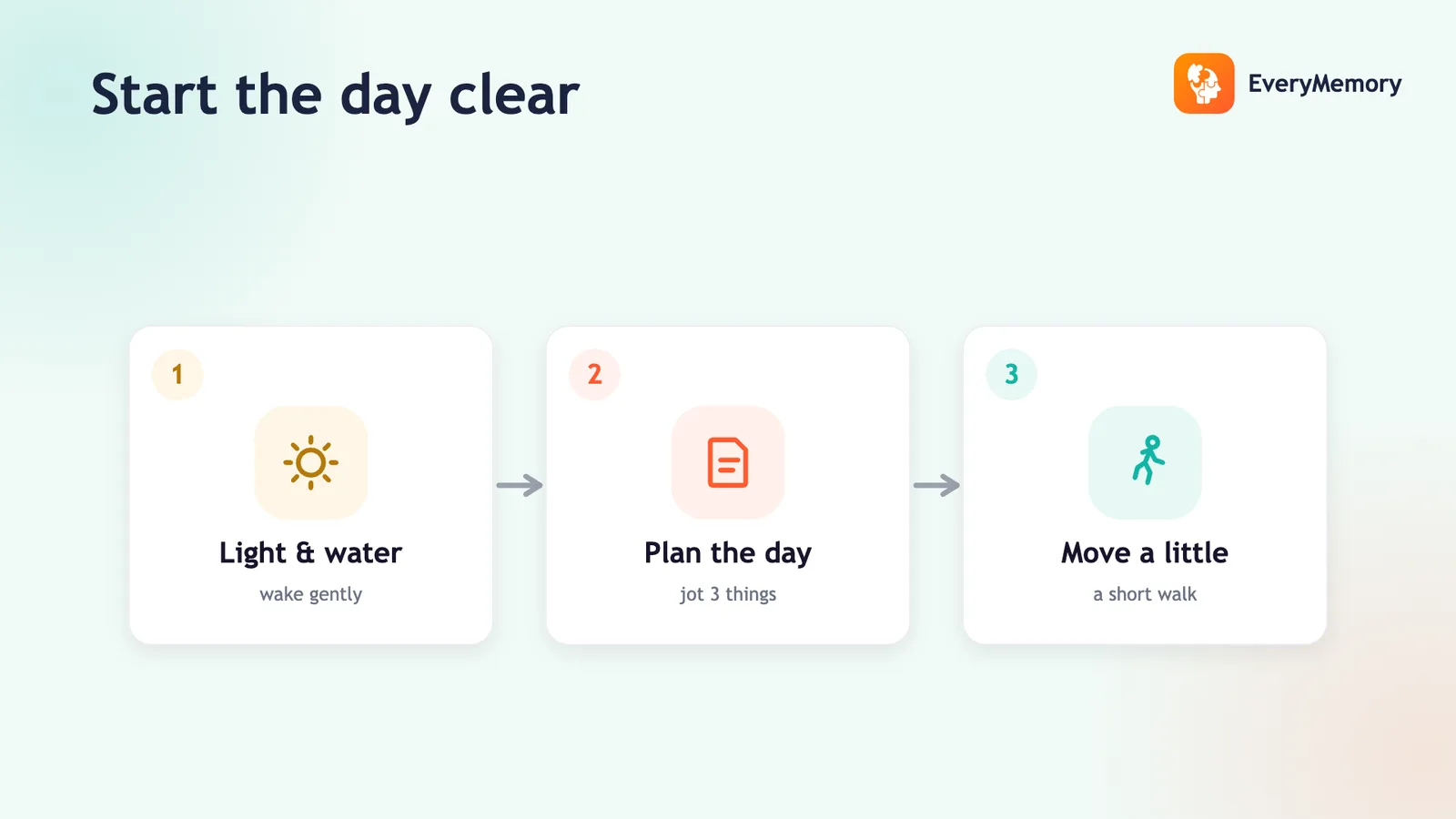
If you want a structured plan for building memory habits more broadly, the daily brain training routine guide walks through a full week of habit-stacking exercises. And pairing appointment tracking with a consistent morning check-in - as described in morning brain routine for older adults - creates a powerful anchor for the whole day.
✅ Try this today - Capture your next appointment before you leave
The next time you book an appointment - by phone, in person, or online - follow these steps immediately:
- Before ending the call or leaving the desk, write the date, time, and location in your one diary or phone calendar.
- Set two reminders on the spot: one for 24 hours before, one for 1 hour before.
- Say the date once aloud as you write it to reinforce encoding.
- Check your diary the following morning as part of your regular routine - not only when a reminder fires.