 EveryMemory
How to Remember Things Better
Most 'bad memory' is divided attention plus never practising recall. Five habits - built on how memory actually forms - that make things stick.
Part of the guide: How to Improve Your Memory: The Complete Beginner's Guide →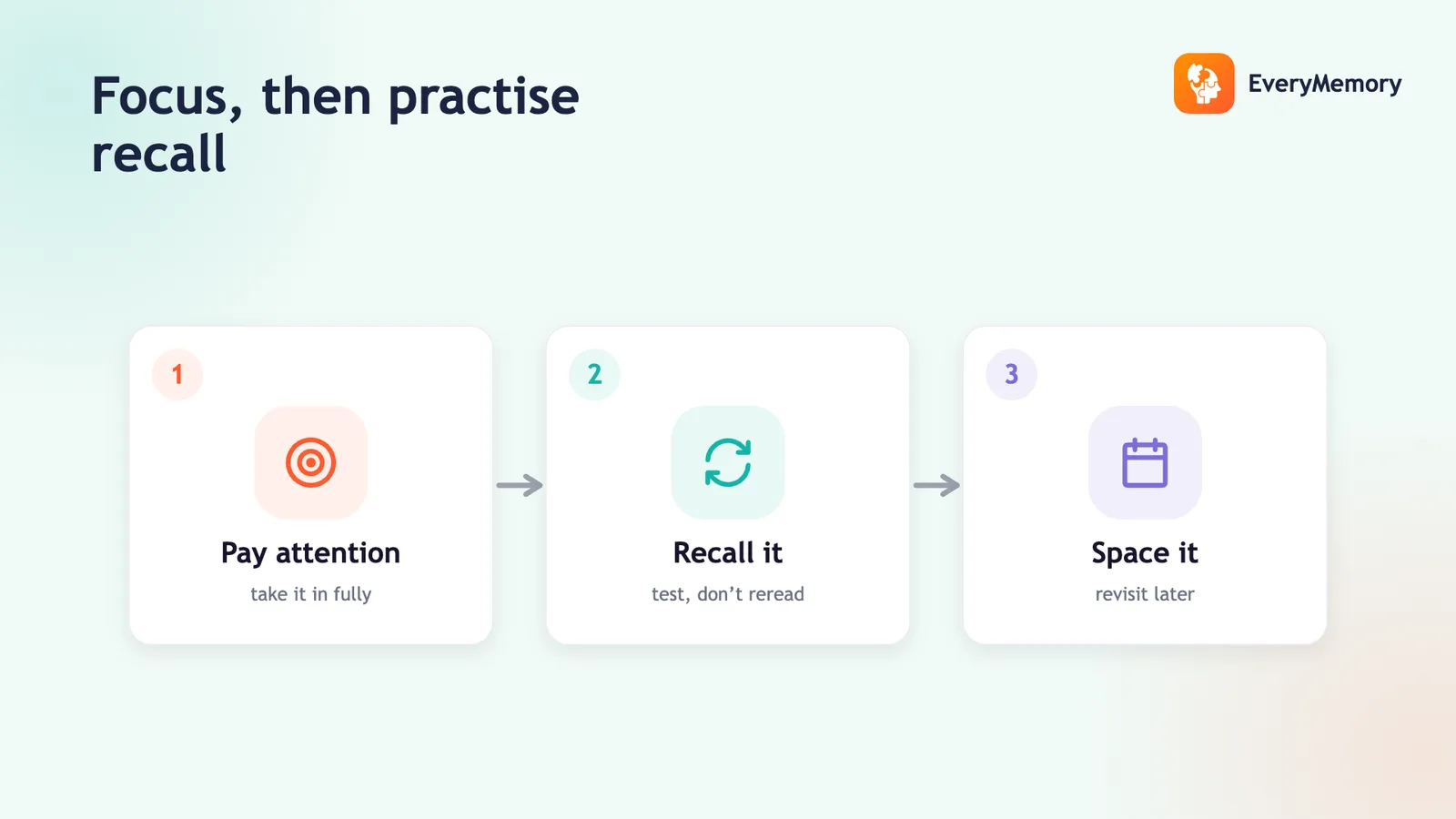
⚡ Quick answer
To remember things better, work with how memory forms: pay full attention when it matters, give the information meaning by linking it to what you already know, and retrieve it from memory rather than just reviewing it. Get enough sleep, and write down what doesn't need to live in your head. Most 'bad memory' is really divided attention plus never practising recall.
Key takeaways
- Most 'bad memory' is an encoding problem (you never paid attention) or a retrieval problem (you never practised recall) - both are fixable habits.
- Pay full attention for a few seconds, then give the information meaning by linking it to what you already know.
- Retrieve rather than review: recalling from memory strengthens it far more than rereading.
- Sleep consolidates new memories, and offloading what doesn't need to be in your head frees attention for what does.
"I have a terrible memory" is almost always the wrong diagnosis. Memory isn't a fixed trait you're stuck with - it's a process with predictable failure points. Fix the points and you remember more, without any special talent.
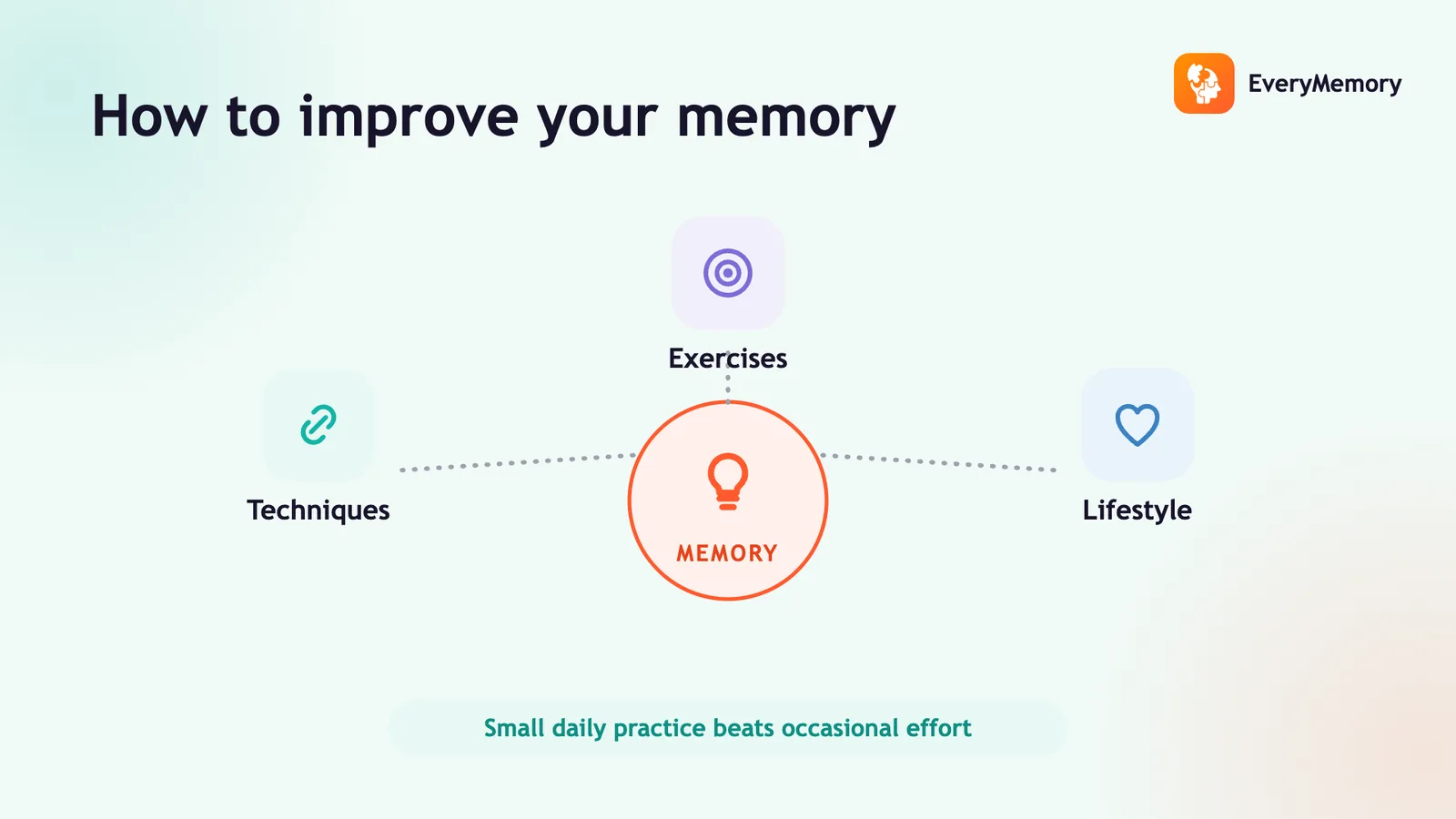
There are five habits that do the heavy lifting. They map directly onto how a memory is built, held, and pulled back out.
Memory has three steps - and two weak points
Every memory goes through three stages: encoding (taking it in), storage (keeping it), and retrieval (pulling it back). Almost every everyday "memory failure" is really an encoding problem (you never paid enough attention) or a retrieval problem (you never practised getting it back). Storage itself is rarely the issue.
That's good news: both weak points are habits, not hardware. The five below target them directly.
1. Pay attention first
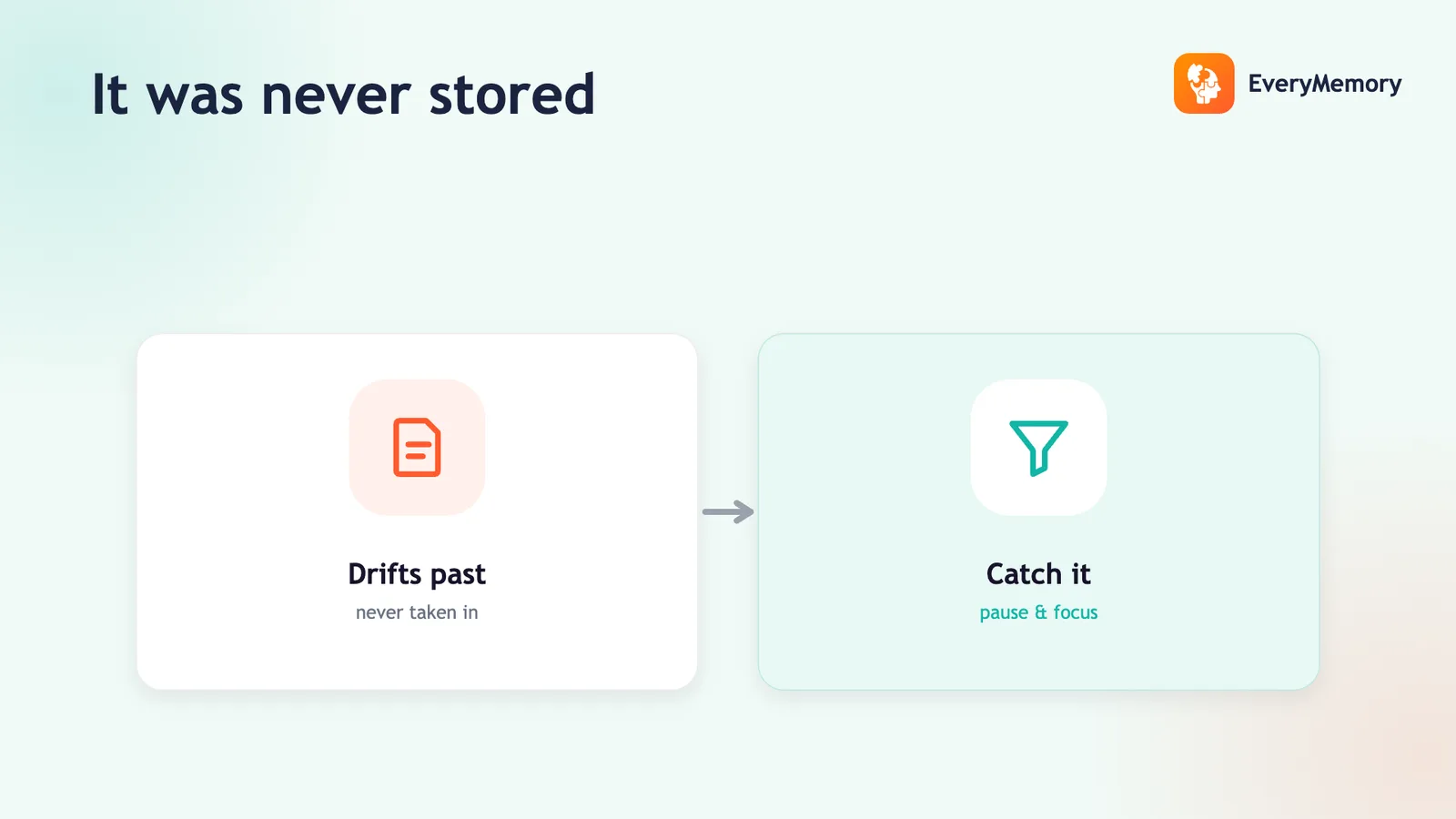
Nothing encodes if attention never landed. Half-listening while planning your reply, or putting your keys down mid-conversation, forms no memory at all. Give the thing that matters a clear few seconds of single-tasked attention before you move on. This one change fixes most in-the-moment slips - the kind behind forgetting things so quickly.
2. Give it meaning
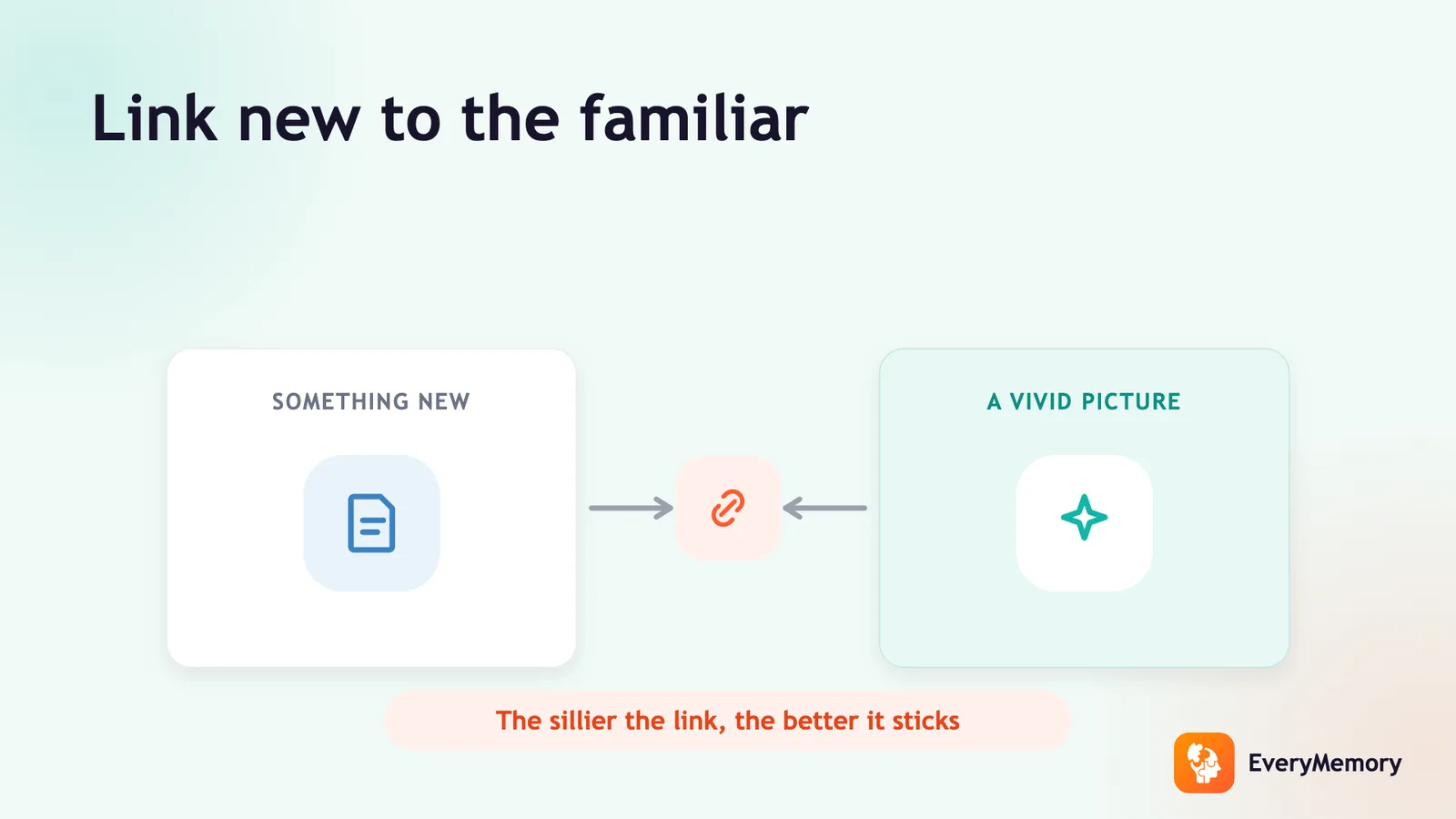
Your brain holds onto meaning, not raw data. A fact connected to something you already know has dozens of handles; an isolated fact dangles from one thread. Turn a number into a date you know, a name into a picture, a concept into an example from your own life. This is the core of using association to remember more, and it's the difference between memorising and understanding.
3. Retrieve - don't just review
Rereading and re-listening feel productive but mostly build false familiarity. The act that strengthens memory is pulling the information out - recalling it from memory before you check. Test yourself, cover your notes, explain it aloud. The same principle is why recalling beats rereading for anything you read.
4. Sleep on it
Memories aren't fully filed the moment you learn them - they're consolidated during sleep, especially the night after. A short or broken night both weakens new memories and shrinks the next day's capacity to form them. Treat sleep as part of learning, not a break from it.
5. Don't make your head do a filing cabinet's job
Working memory is for thinking, not storage. Offload anything that doesn't need to be in your head: write appointments down, give frequently-lost items one fixed home, keep a list. This isn't a memory crutch - it frees up attention for the things that genuinely need remembering, and removes the failures that come from trying to hold too much at once.
Match the method to what you're remembering
| What you're trying to remember | The habit that helps most |
|---|---|
| A person's name | Attention + meaning - say it back, link it to their face. See forgetting names. |
| Where you put something | Attention - say the location aloud as you set it down. See misplacing things. |
| Something you read | Retrieval + spacing - recall it, then review across a few days. |
| A list or sequence | Meaning - link items into a vivid story or route. |
✅ Try this today - one thing, done properly
Pick a single thing to remember today and run it through three steps:
- Give it three seconds of full, single-tasked attention.
- Link it to something you already know - a picture, a place, a fact.
- An hour later, recall it from memory without checking. That retrieval seals it.