 EveryMemory
How to Remember to Do Things (Prospective Memory)
Forgetting to take the bins out, reply to that email, or call someone back is not a sign of a failing memory. It is a prospective memory challenge, and there are simple, proven ways to fix it.
Part of the guide: How to Improve Your Memory: The Complete Beginner's Guide →
⚡ Quick answer
Prospective memory - remembering to act on a plan later - fails because nothing reminds you at the right moment. The most reliable fixes are: writing the intention down and placing it in your path, using "when I X, I will Y" rules to link tasks to events, and converting time-based tasks into event-based ones. Trying to rely on willpower alone rarely works.
You meant to take the bins out. You fully intended to reply to that message. You had every plan to call your friend back before the end of the day. And then, life happened, and it slipped clean away. This is not a general memory failure. You can remember conversations from years ago, song lyrics you have not heard in decades, and the exact route you drove on holiday in 2019. The problem is something far more specific: remembering to do things in the future.
Researchers call this prospective memory, from the Latin for "looking forward." It is the mental ability to form an intention now and execute it later, without anyone reminding you. And it turns out to be one of the most demanding things the human brain does. Unlike remembering the past, where a cue can trigger a memory at any time, prospective memory requires you to remember to remember, at exactly the right moment, often while you are busy doing something else entirely.
The good news is that prospective memory responds very well to simple external strategies. You do not need to "try harder" or feel guilty about forgetting. You need a small set of reliable techniques that do the heavy lifting for you. This article walks through why prospective memory fails and gives you practical tools you can use today.
What makes prospective memory uniquely hard
Most memory research focuses on retrospective memory, recalling things from the past. Prospective memory is different because the challenge is not storing the information; it is retrieving it at the right moment without being prompted. Nobody taps you on the shoulder and says "now is the time to take your medication" or "this is when you should send that email." The trigger has to come from inside, or from an external cue you have deliberately set up.
The brain handles prospective tasks through a part of the frontal lobes associated with planning and self-monitoring. When you are relaxed and focused, this system works reasonably well. But when you are busy, stressed, or switching rapidly between tasks, it gets deprioritised. The intention is still there, stored somewhere, but nothing brings it forward at the moment it is actually needed. That is why you remember the thing you forgot to do the instant you climb into bed.
Time-based vs. event-based: why one is harder than the other
Prospective memory researchers divide future tasks into two categories, and understanding the difference is practically useful. Event-based prospective memory means "when I see or do X, I will do Y", for example, "when I walk past the letterbox, I will post this card." Time-based prospective memory means "at 3pm I need to do X", for example, "I must call the dentist at lunch." Studies consistently show that event-based tasks are easier to remember because the cue, the letterbox, the lunch break, the front door, is present in the environment and triggers the intention automatically.
Time-based tasks are harder because you must also monitor the clock yourself. That monitoring draws on attention, and attention is exactly what is in short supply on a busy day. The most effective trick for time-based tasks is to convert them into event-based ones. "Call the dentist at lunchtime" becomes "when I sit down with my sandwich, I will call the dentist." Now you have an environmental cue working for you instead of relying on you to notice the time.
Implementation intentions: the "when I X, I will Y" rule
One of the most well-supported techniques in memory research is called the implementation intention, a simple mental formula where you link a future action to a specific cue. The format is: "When I [situation], I will [action]." For example: "When I put my shoes on in the morning, I will take my vitamins." Or: "When I close my laptop at the end of the day, I will check my to-do list for tomorrow." The specificity is what makes it work. A vague plan, "I should exercise more", gives the brain nothing concrete to hook onto. A specific if-then rule creates a mental shortcut that fires automatically when the cue appears.
You can use this technique for almost any recurring task. The key is choosing a cue that is reliable and contextually close to the intended action. "When I make my morning coffee" works better than "when I get up" because the coffee is a distinct, predictable event. This is also the mechanism behind building a simple daily memory routine, stacking new intentions onto existing habits so they execute without effort.
Physical cues, object placement, and offloading guilt-free
Your environment is one of the most powerful memory tools you have. Placing an object deliberately out of place is one of the oldest and most effective prospective memory strategies. Need to take a library book back? Put it by the front door, or better, on top of your shoes. Need to give your colleague a document? Put it on your keyboard so you cannot start work without seeing it. The visual interruption is the cue. It works precisely because it is slightly wrong or unexpected, and your brain flags unexpected things automatically.
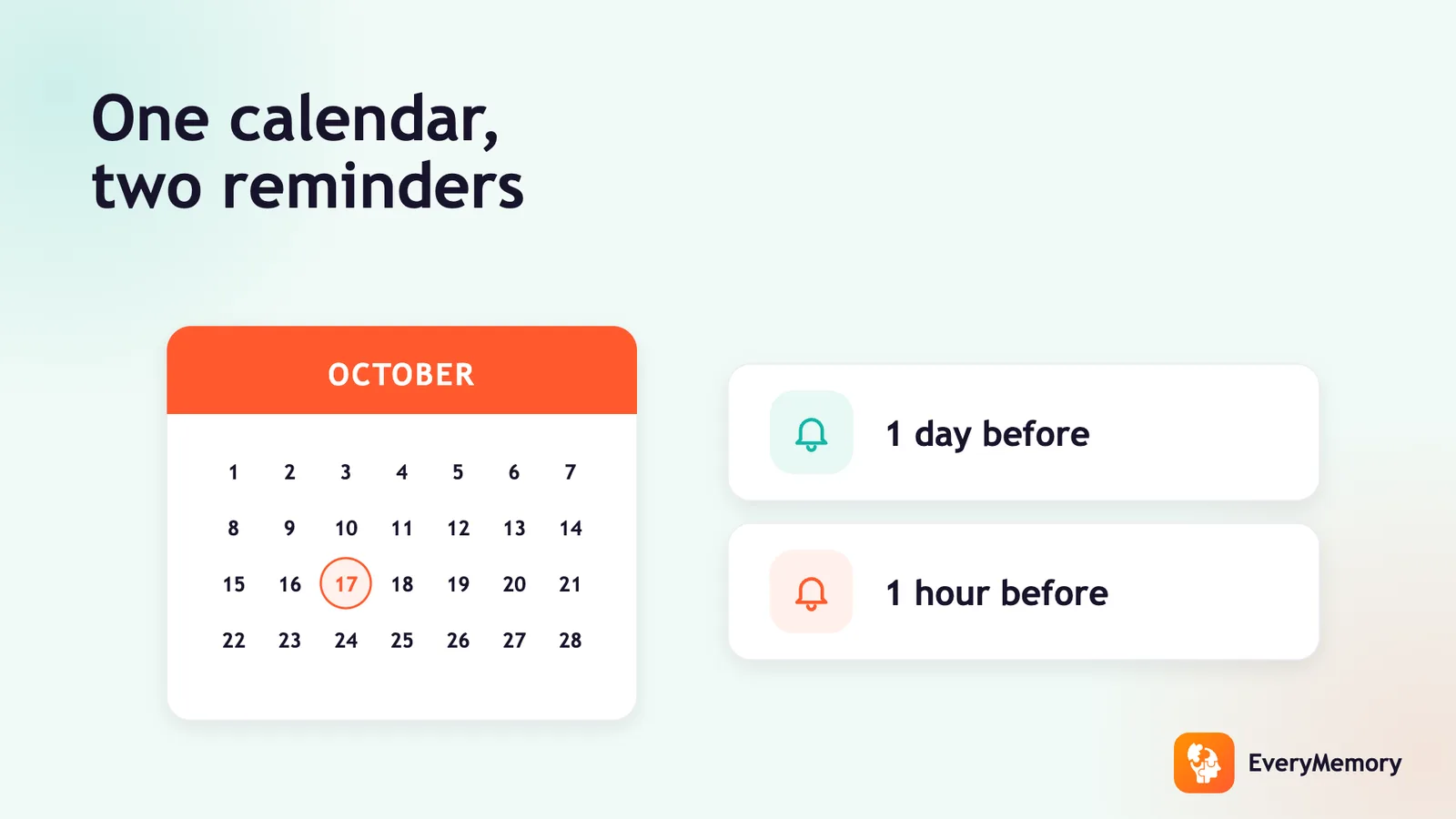
Writing things down serves a similar function, but only if the note ends up somewhere you will actually see it at the right moment. A note on your phone's lock screen, a sticky note on the bathroom mirror, or a reminder set for five minutes before you need to act is far more reliable than a note buried in a notebook. And importantly, offloading to an external system is not cheating, it is good practice. Using a calendar, a reminder app, or a whiteboard frees up your working memory for other things. Remembering appointments is far easier once you commit to one reliable capture system rather than trying to hold everything in your head.
If you find yourself repeatedly forgetting the same category of task, collecting parcels, returning calls, replying to messages, it is worth building a dedicated routine check into a fixed point in your day. Many people find a two-minute scan of a running list at the same time each morning or evening catches almost everything that would otherwise slip. See how to stop forgetting things for a broader look at building that kind of system.
The "do it now or capture it now" rule
One deceptively simple rule covers a huge proportion of prospective memory failures: if a task will take less than two minutes, do it immediately. If it will take longer, capture it in writing before you do anything else. The moment you think "I should reply to that" or "I must remember to pick that up" is the moment of maximum risk. The intention is vivid right now, but two minutes later, when something else has demanded your attention, it may be gone.
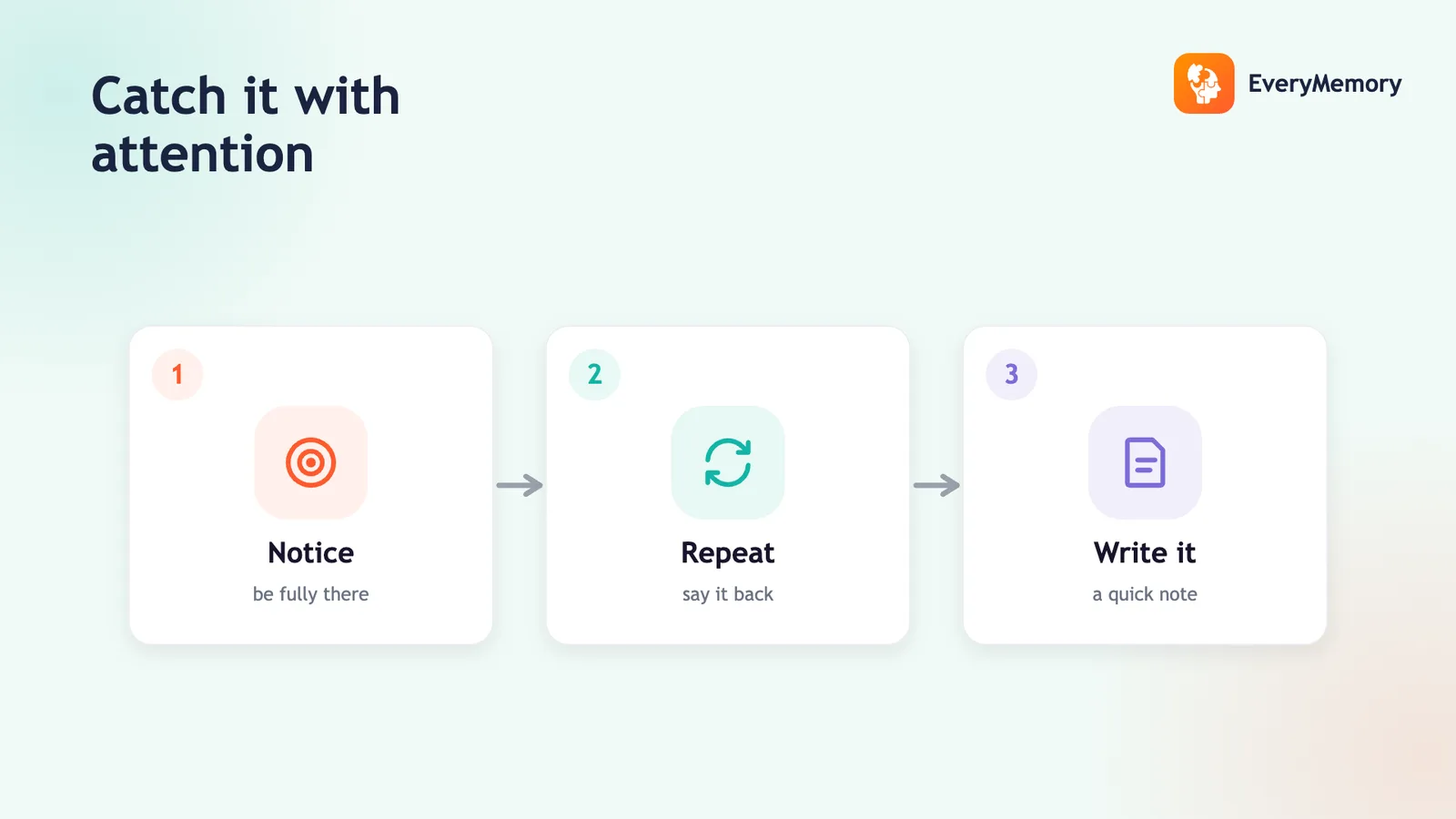
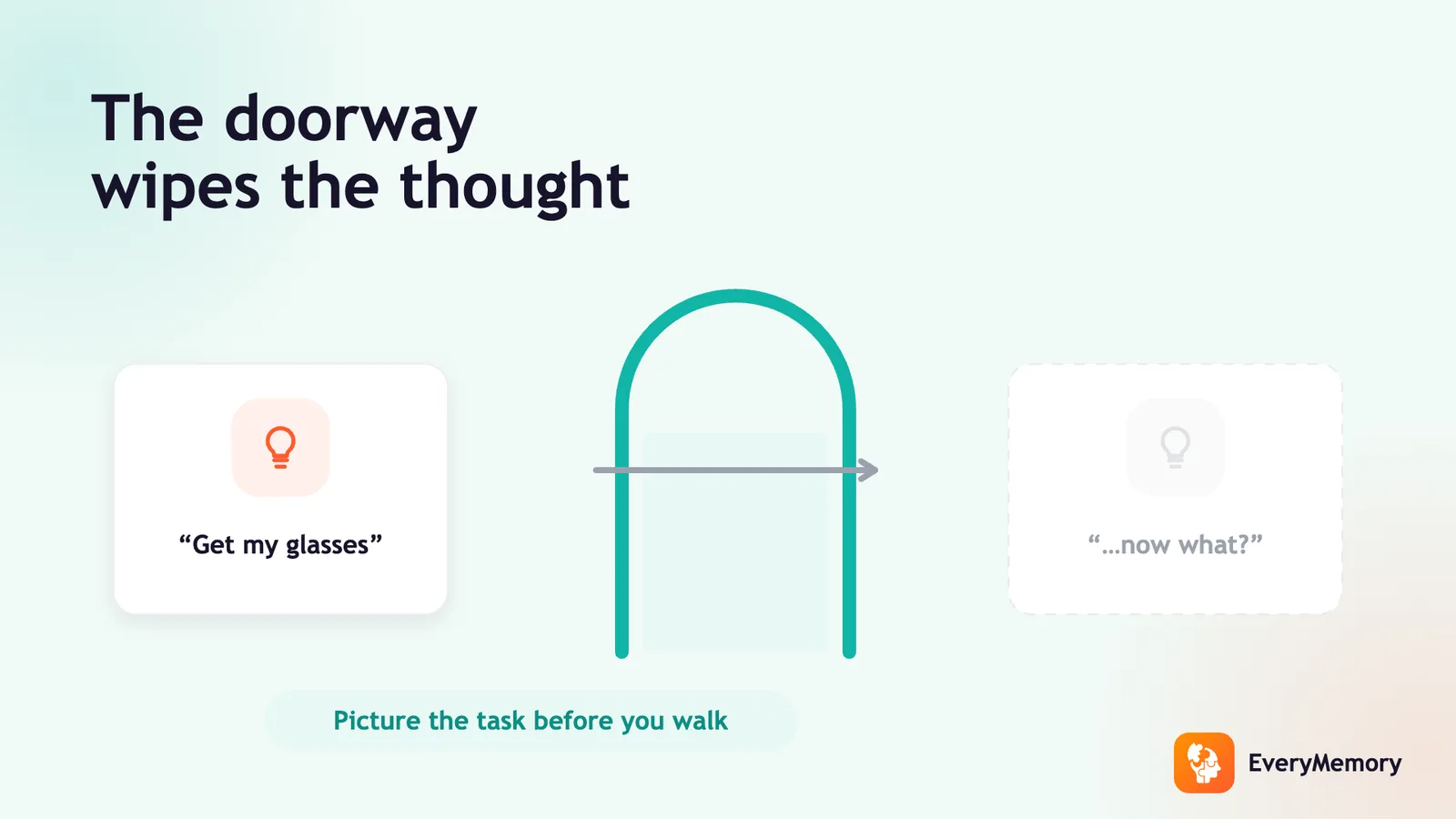
"Capture it now" means writing it, typing it, or speaking it into a voice memo, not just thinking "I'll remember that." The act of externalising the intention means your brain can let go of it, knowing it is safely stored somewhere. This is especially important during transitions: walking between rooms, arriving somewhere new, switching tasks. Forgetting why you entered a room is a classic example of how transitions disrupt prospective memory, the context that held the intention gets left behind. A quick capture habit before you move prevents most of these losses. Combined with association techniques, you have a genuinely robust system for keeping future tasks in reach.
✅ Try this today - Set up one cue-based reminder today
Pick one task you keep forgetting, something recurring, like taking a supplement, checking in with someone, or reviewing your to-do list. Use this three-step approach to make it stick.
- Identify a reliable daily event that happens close to when the task should happen, making coffee, locking the front door, sitting down for lunch. This is your cue.
- Write down the implementation intention in full: "When I [cue], I will [task]." Say it aloud once. Place a physical object or note near the cue location as a backup trigger for the first few days.
- After a week, notice whether the task has become automatic. If it has, remove the physical cue and pick the next forgotten task to apply this to.
⚠ When to talk to a professional
This article is for general wellness purposes and does not constitute medical advice; if memory difficulties are affecting daily life significantly, please speak with a qualified healthcare professional.