 EveryMemory
Memory Techniques for Studying That Actually Work
The biggest study wins aren't mnemonics - they're active recall, spacing, and explaining ideas. Where each technique fits, and the habits to drop.
Part of the guide: How to Improve Your Memory: The Complete Beginner's Guide →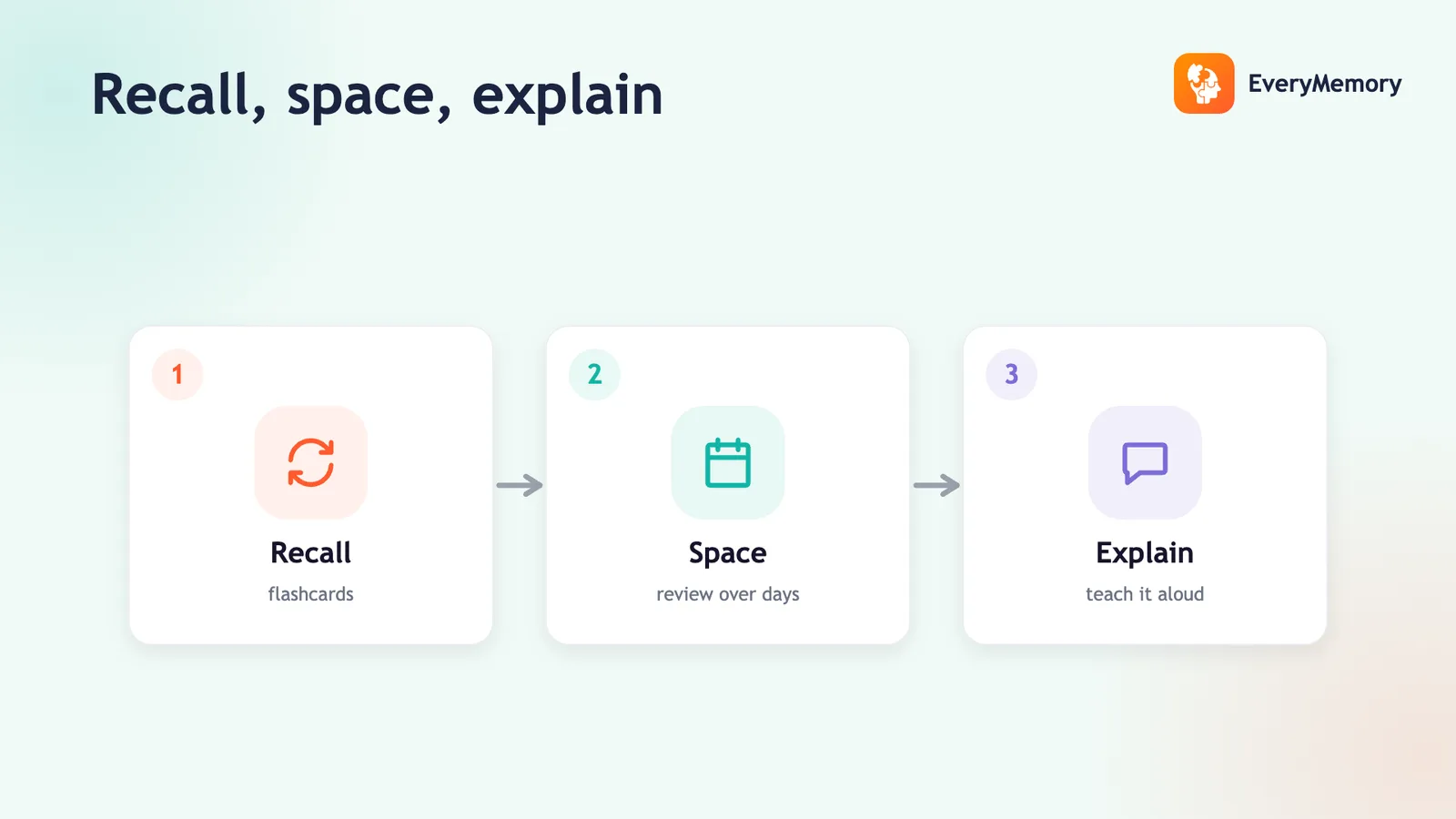
⚡ Quick answer
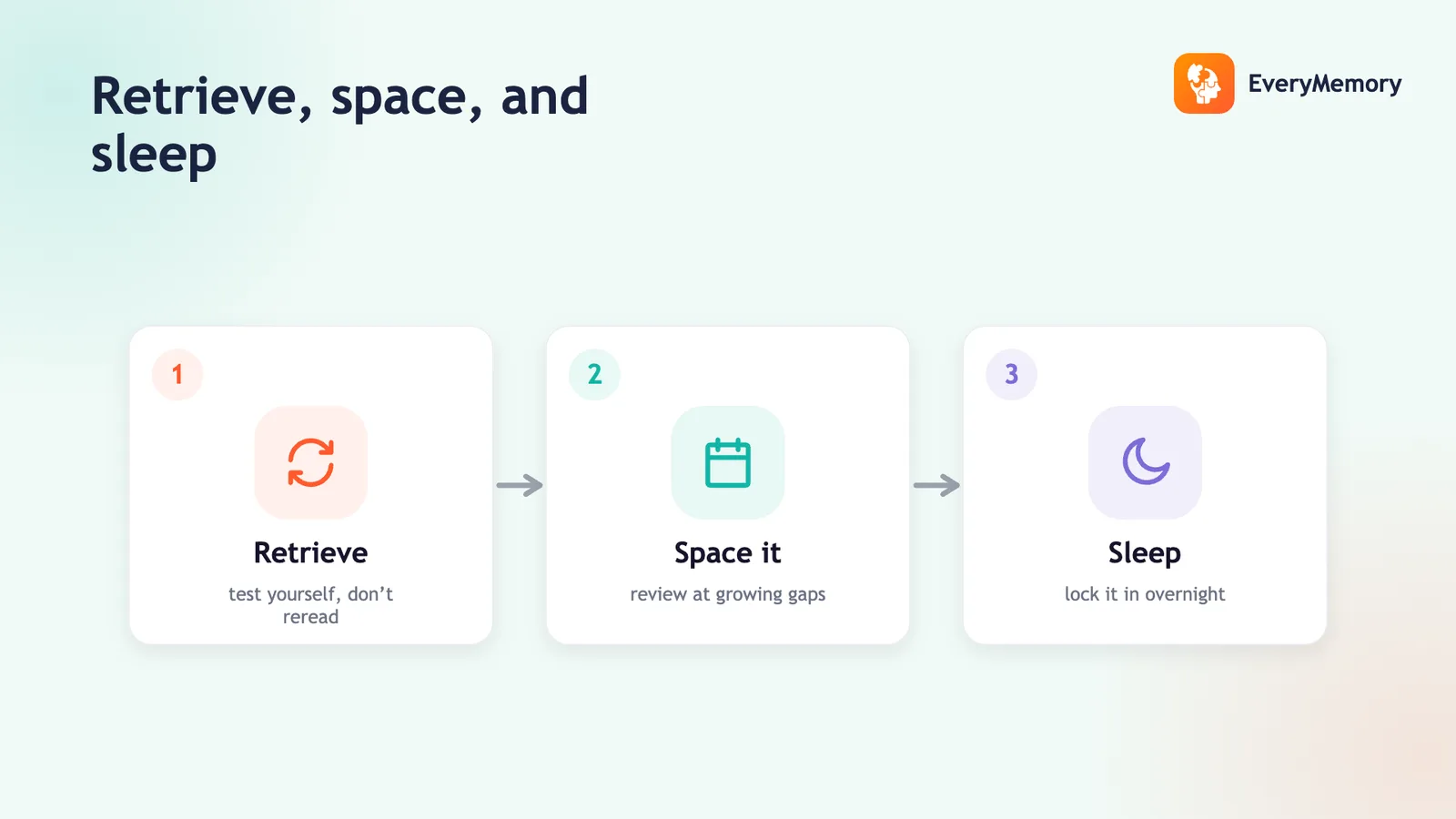
The most effective study techniques aren't memory tricks but learning habits: active recall (testing yourself), spaced review, and explaining ideas in your own words. Mnemonics like the memory palace or acronyms help for lists and facts that must be recalled exactly, but for understanding, retrieval and spacing do the heavy lifting.
Key takeaways
- The biggest study wins are active recall and spaced review, not mnemonics - testing yourself beats rereading by a wide margin.
- Explaining ideas in your own words turns memorised facts into understanding and exposes gaps.
- Mnemonics earn their place for the rote layer - formulae, lists, vocabulary recalled exactly.
- Drop rereading, highlighting, cramming, and studying with your phone nearby - they feel productive but teach little.
Most study advice is about putting more information in. The techniques that actually raise your grades are about getting it back out - and doing so on a schedule.
Here's what genuinely moves the needle for studying, where mnemonics fit, and the popular habits that quietly waste your time.
Active recall beats rereading
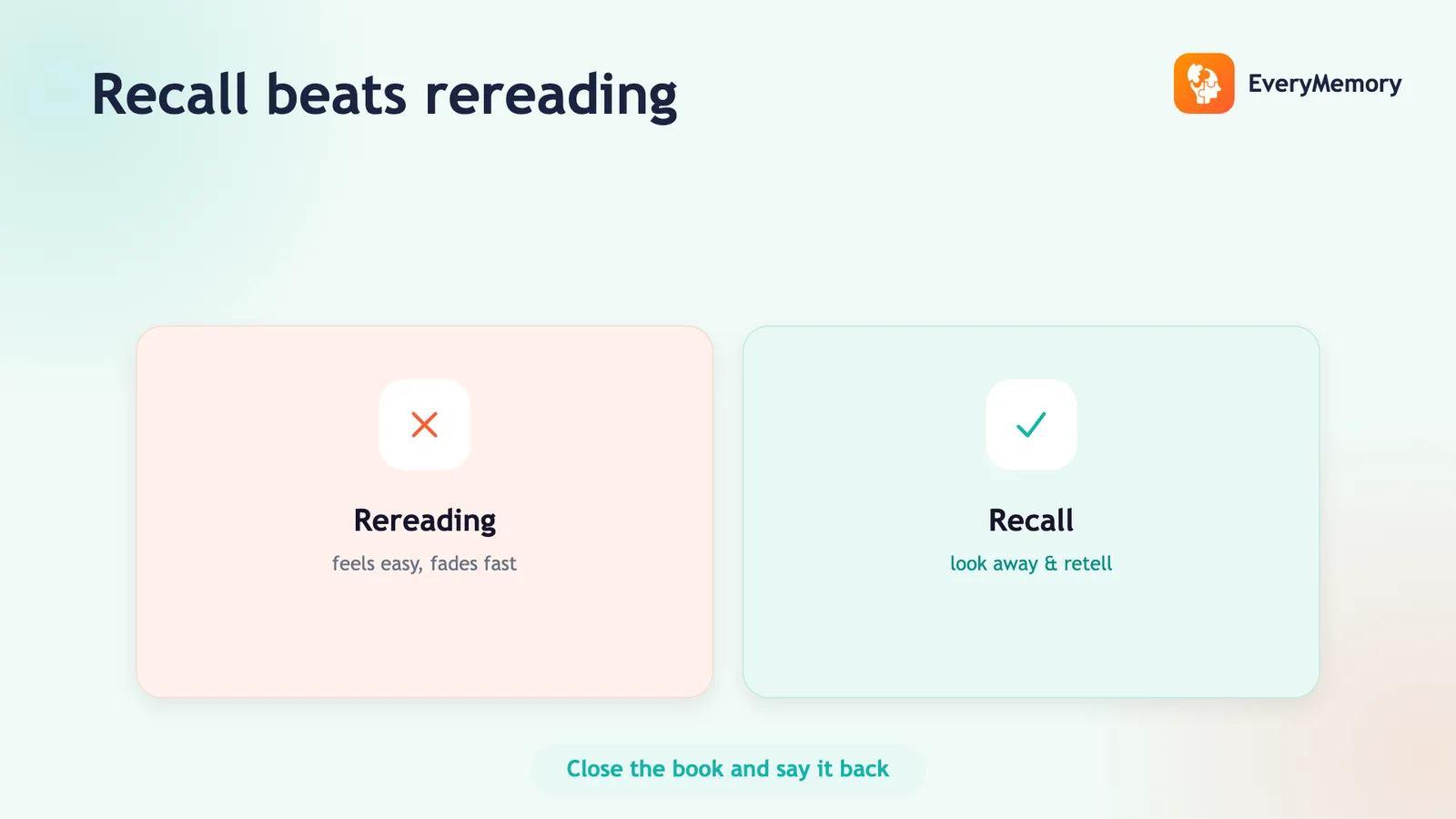
The highest-value study habit is testing yourself - closing the book and retrieving what you've learned from memory, then checking. Each retrieval strengthens the memory; rereading mostly builds false familiarity. Use practice questions, flashcards, or simply covering your notes and reproducing them. The same principle is detailed in remembering what you read.
Space it out
Reviewing material across several spaced sessions beats cramming it into one, for far less total time. Revisit a topic the next day, a few days later, then a week on - each spaced recall resets the forgetting curve. The mechanics are in improving memory retention.
Explain it in your own words
If you can teach an idea simply, you understand it; if you can't, you've found the gap. Explaining material aloud - to a friend, or an empty room - forces you to reconstruct it, which is both a test and a way of organising it. This 'elaboration' turns memorised facts into understanding.
Where mnemonics fit
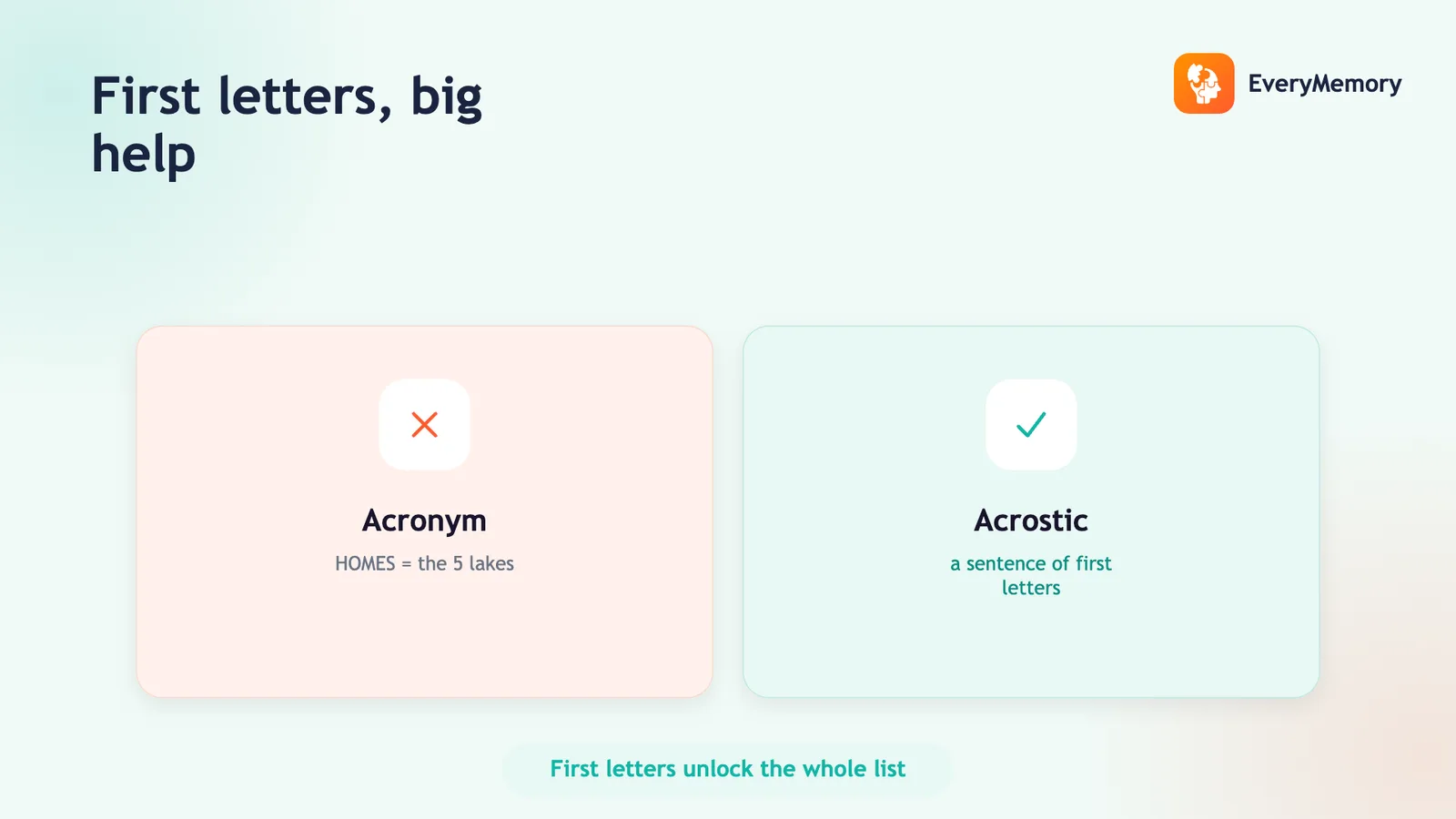
For the parts that simply have to be recalled exactly - formulae, lists, vocabulary, ordered facts - mnemonics earn their place. An acronym for a fixed list, a memory palace for ordered points, chunking for figures. Use them for the rote layer, and active recall for everything that needs understanding.
Habits to drop
- Rereading and highlighting - they feel productive and teach you almost nothing on their own.
- Cramming the night before - high effort, fast forgetting.
- Studying with your phone within reach - split attention means little encodes.
- Long unbroken sessions - focus fades; short, spaced, tested sessions win.
✅ Try this today - the blank-page test
Swap one reread for one recall:
- After studying a topic, close everything and write everything you remember on a blank page.
- Check it against your notes and mark the gaps.
- Restudy only the gaps, then repeat the blank page tomorrow.