 EveryMemory
How Pets Support Your Brain and Wellbeing
Companion animals can bring structure, movement, social connection, and a sense of purpose to daily life, all things that support a healthy, engaged mind.
Part of the guide: How to Keep Your Brain Healthy: A Complete Lifestyle Guide →
⚡ Quick answer
Companion animals can support brain wellbeing indirectly by encouraging daily routine, physical activity, social interaction, and a sense of purpose. These effects are meaningful but not medical, pet ownership is also a genuine commitment of time, money, and energy, and the same benefits can often be found through other routes.
For millions of people, a pet is more than a companion, it is a reason to get up in the morning, a creature that needs feeding, walking, and care on a reliable schedule. That rhythm, simple as it sounds, can quietly shape the whole texture of a day.
Research into the links between animals and human wellbeing has grown steadily over the past few decades. While no responsible scientist would say that owning a pet prevents cognitive decline or treats any health condition, a growing body of evidence points to real, indirect benefits for mood, movement, connection, and daily structure, all of which matter for a well-functioning mind.
This article explores how companion animals may support brain wellbeing, looks at the specific pathways involved, and offers an honest look at the responsibility that comes with pet ownership, including practical alternatives for people who cannot or do not want a pet of their own.
Routine and structure: the hidden gift of a feeding schedule
One of the quietest ways a pet supports the mind is by imposing a schedule. Animals need to be fed, let outside, and cared for at regular intervals, and that predictability gives the day a shape that humans thrive on.
A reliable daily structure is not a trivial thing. Psychologists have long noted that routine reduces decision fatigue, supports sleep quality, and helps people maintain habits they care about. For older adults especially, a structured day is associated with better mood and a greater sense of control. A cat waiting by its bowl at 7am or a dog nudging you toward the door is, in its own way, a cue that keeps the whole system running.
This kind of externally anchored routine is similar in principle to the strategies hobbies and regular activities provide, a reason to show up, do something, and move through the day with intention.
Physical activity: dog walking as a daily movement habit
Dogs, in particular, are compelling exercise partners, not because they inspire us, but because they insist. They do not accept rain as an excuse. A dog that needs two walks a day is a built-in movement commitment, and that matters enormously for brain health.
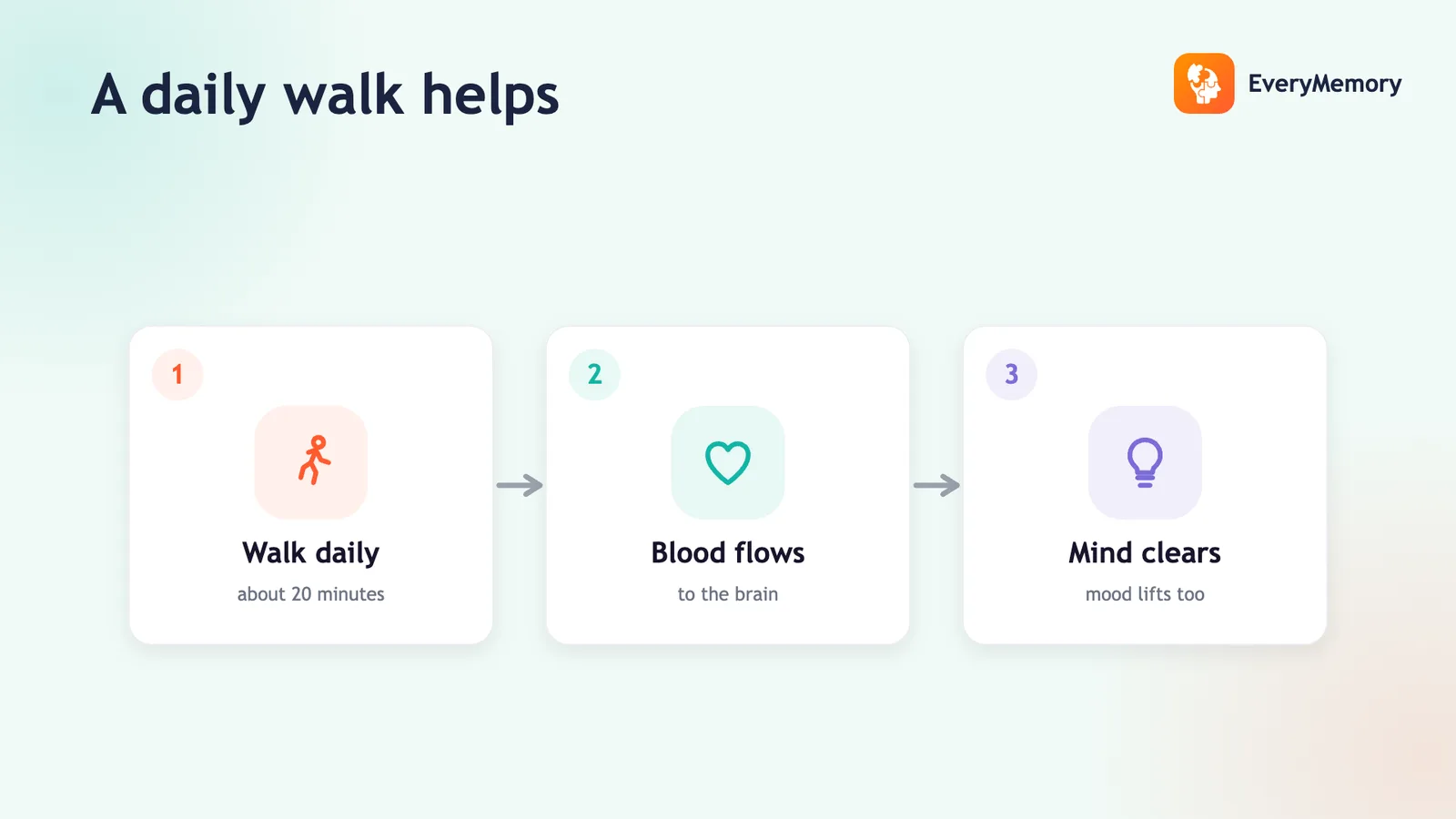
Aerobic exercise, even at a gentle walking pace, increases blood flow to the brain, supports mood-regulating neurotransmitters, and is one of the most consistently studied lifestyle factors linked to sharper thinking over time. The relationship between walking and brain health is well established, and dog owners tend to walk significantly more each week than non-owners. Combining that with the benefits of regular exercise and memory makes daily dog walking one of the most accessible habits a person can build.
Even a low-key cat owner benefits from the physical micro-movements of daily care, bending, reaching, playing with a wand toy, small actions that add up across a day.
Social connection: pets as conversation starters
Loneliness is one of the most consistently cited risk factors for poor cognitive and emotional health in older adults. Pets can help counter that, sometimes in surprisingly direct ways.
Walking a dog opens dozens of brief social interactions that would never happen otherwise. Neighbours stop to say hello, strangers ask the breed, children want to pet. These low-stakes exchanges may seem small, but they add up to a richer social environment. A pet can also be a focal point for conversation in the home, giving family and friends an easy, warm topic when visiting. The link between social connection and brain health is strong enough that anything reliably increasing human contact is worth taking seriously.
For people who live alone, the simple fact of speaking to an animal, giving it commands, narrating your day, offering affection, keeps social and communicative circuits engaged in a way that sitting quietly does not.
Stress, mood, and the power of touch
Stroking a calm animal has a measurable effect on the nervous system. Studies have found that spending time with a pet can lower cortisol (a key stress hormone) and encourage a sense of ease, an effect that does not require years of practice or special equipment.
Chronic stress has real costs for the brain, impairing memory, sleep, and concentration over time. Having a creature that offers uncomplicated companionship, one that is always pleased to see you and does not hold grudges, can provide a reliable emotional reset. This feeds directly into emotional wellbeing and memory: when mood is steadier, attention and recall tend to be sharper too.
The sense of purpose that comes from caring for another living thing is harder to quantify but equally real. Many people describe their pet as a reason to stay engaged with life, to maintain a home, to keep a routine, especially during periods of grief, transition, or low motivation.
An honest note: responsibility, cost, and alternatives
It would be misleading to talk about pets as an uncomplicated wellbeing tool. Owning an animal is a genuine commitment. Veterinary costs can be substantial, especially for older or ill animals. Pets need consistent care, which can become demanding during periods of illness or travel. A dog that needs two hours of walking a day is a wonderful motivation for an active person and a source of guilt and stress for someone who cannot keep up.
For anyone considering a pet specifically for the wellbeing benefits, it is worth being honest about your circumstances, your energy levels, your budget, your housing situation, and your support network. The wrong pet at the wrong time can increase stress rather than reduce it.
The good news is that most of the benefits described above are available without owning a pet. Offering to walk a neighbour's dog, volunteering at a local animal shelter, fostering animals temporarily, or pet-sitting for a friend delivers many of the same rewards, routine, movement, connection, purpose, without the long-term commitment. Companion robotic pets have also shown promise in care settings for people who want the sensory experience of an animal without the care responsibilities. The goal is connection and engagement, and there are many paths to both.
✅ Try this today - Get the benefits without the full commitment
You do not need to own a pet to experience what animals offer. Here are three ways to start small.
- Offer to walk a neighbour's or friend's dog once or twice a week, you get the movement, the outdoor time, and the social warmth without any of the ownership responsibilities.
- Contact a local animal shelter about volunteering or fostering. Many shelters need short-term foster carers for animals between homes, and even a few hours of regular contact can bring structure and purpose to your week.
- Arrange a regular visit with a friend or family member who has a pet. Make it a calendar event. The combination of human connection, animal interaction, and a predictable routine captures almost everything that makes pet ownership valuable for the mind.
⚠ When to talk to a professional
If you have allergies, immune system considerations, or mobility limitations, speak with your doctor before adopting a pet or spending extended time with animals.