 EveryMemory
How Rest Breaks Quietly Strengthen Your Memory
Your brain does some of its most important memory work during quiet downtime - short pauses, a brief walk, or even a nap can all help what you've learned stick.
Part of the guide: How to Improve Your Memory: The Complete Beginner's Guide →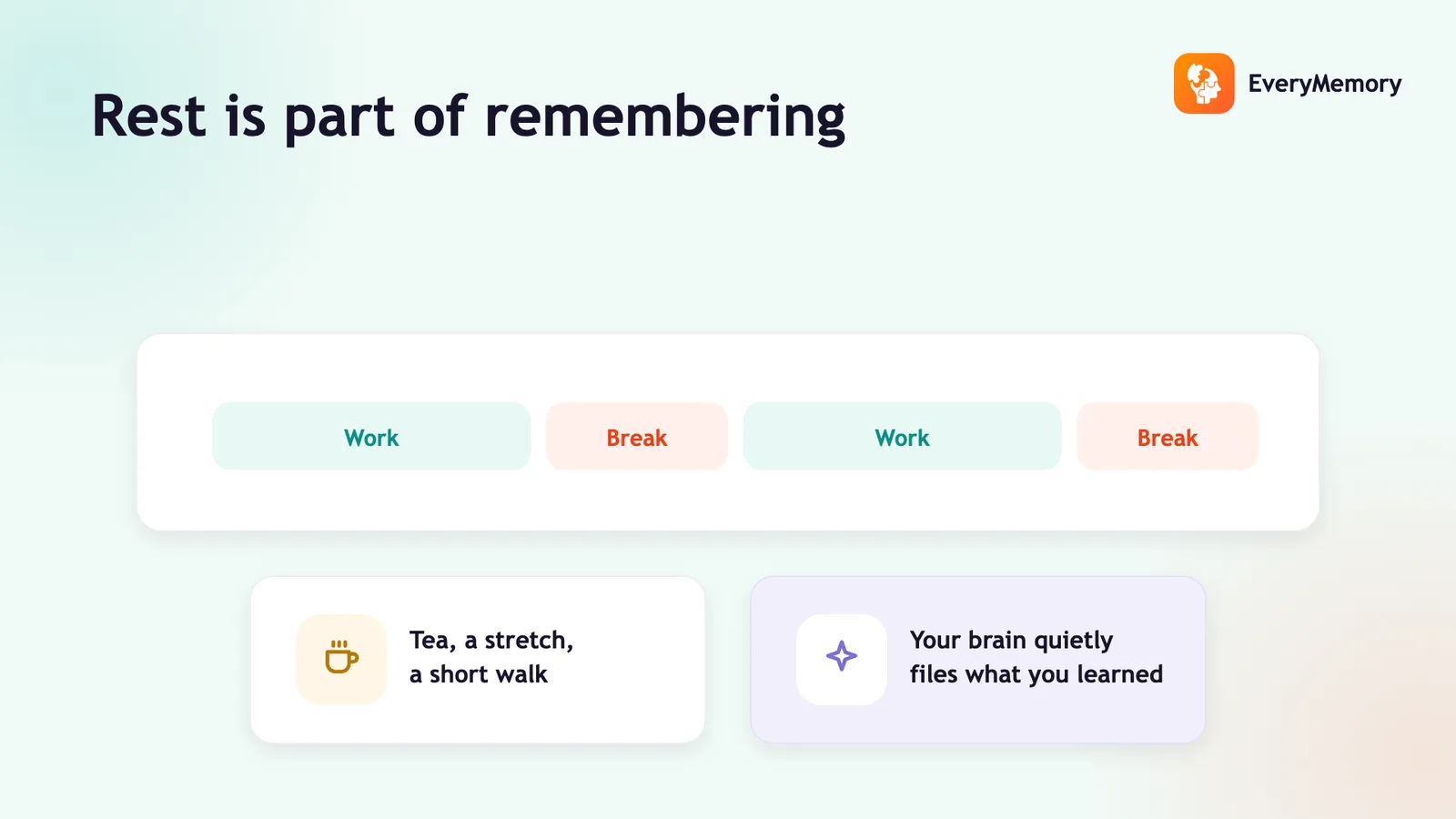
⚡ Quick answer
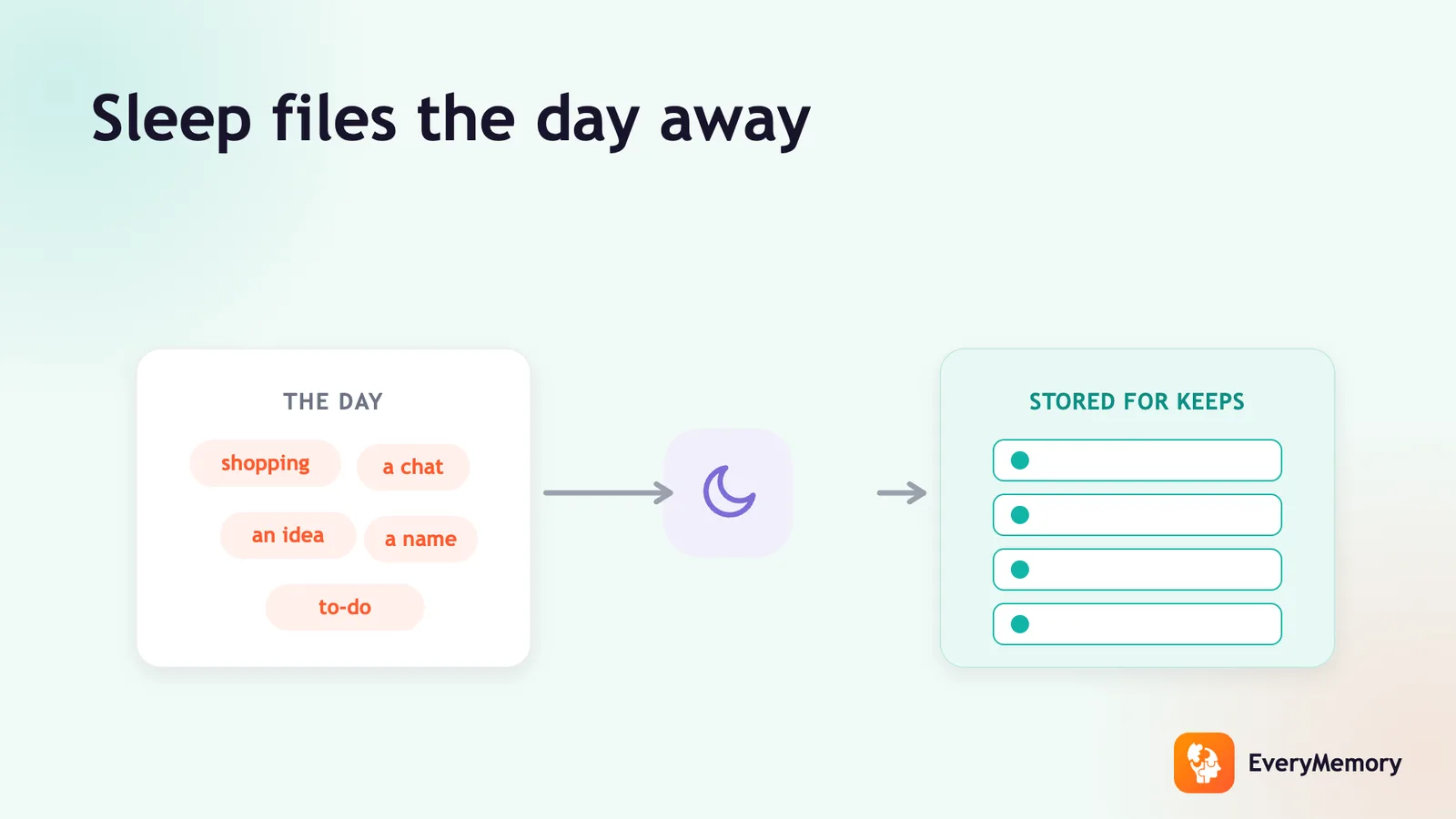
Short rest breaks after learning something new support memory consolidation - the process by which the brain files fresh information into longer-term storage. Research suggests that even 10–20 minutes of quiet downtime after an activity can sharpen recall of what came before it. Brief walks and short naps produce similar benefits. The brain is not idle during these pauses; it is actively replaying and organising what it has just experienced.
Key takeaways
- The brain consolidates memories during rest by replaying recent experience - quiet downtime after a task is part of the learning process, not a break from it.
- Even 10–20 minutes of low-stimulation rest after a focused session is linked with better recall of the material compared to moving immediately to the next task.
- Short naps of 10–30 minutes support alertness and memory consolidation and are associated with better cognitive performance in older adults.
- Scrolling or watching content during breaks reduces the consolidation benefit - the brain needs genuinely low stimulation to replay and file what it has just learned.
There is a quiet conviction, shared by many busy adults, that the harder you push your brain the more you will remember. More reading, more reviewing, less stopping. The research tells a different story. Some of the most productive memory work happens not when you are actively trying to learn, but during the pauses in between.
Understanding why this is true - and how to use it - does not require overhauling your day. Even small adjustments to when and how you rest can make a noticeable difference in how well things are remembered.
What the brain actually does during a rest break
When you stop a task and sit quietly, the brain does not simply switch off. It enters a state driven by what researchers call the default mode network - a set of interconnected regions that become more active during rest, not less. These areas, including parts of the hippocampus, are closely tied to memory retrieval and what neuroscientists call memory replay.
Replay is exactly what it sounds like: the brain rapidly revisits recent activity, running compressed versions of what just happened. Studies using brain imaging have caught this in action - the more robustly this replay happens during rest, the better people tend to perform later. Rest is not wasted time; it is part of the learning process, and skipping it means cutting the consolidation cycle short.
The case for short, quiet pauses
You do not need a long break for memory consolidation to begin. Research from the National Institutes of Health has shown that brief micro-breaks during a learning task are associated with faster, more accurate skill retention. Quiet, eyes-closed rest of around 10–20 minutes after reading or problem-solving has been linked with measurably sharper recall compared to staying active.
The key ingredient is low stimulation. A rest that involves watching fast-moving content, scrolling a phone, or holding a detailed conversation fills the same mental channels the brain needs to replay recent experience. Folding laundry, a gentle walk, or simply sitting with your eyes closed all provide the kind of low-demand downtime that supports consolidation. For anyone building a simple daily memory routine, a five-minute quiet pause after a focused session is one of the lowest-effort, highest-return adjustments available.
A brief walk: movement that helps memory settle
A short walk after learning combines low cognitive demand with light physical activity - a particularly useful pairing. Research consistently links moderate movement with the release of brain-derived neurotrophic factor (BDNF), a protein that supports the neural connections involved in storing new memories. A gentle ten-minute stroll is enough; no brisk workout is required.
Walking also sidesteps a common hazard of pure mental rest: the temptation to immediately start the next task. It creates a natural transition, signalling that the previous activity is complete. Our article on walking and brain health covers the longer-term benefits of regular movement, but even a single post-task walk offers a meaningful consolidation window - and tends to be more restorative for mood and recall than switching to a different screen.
Naps: the brain's built-in filing session
A short daytime nap is one of the most well-studied forms of memory-supporting rest. During sleep - even a brief episode - the brain moves information through consolidation stages that are difficult to replicate while awake. Slow-wave activity in the sleeping brain is associated with the transfer of recently acquired information from short-term hippocampal buffers into more stable longer-term storage.
For older adults, the evidence is broadly encouraging. Daytime napping under 90 minutes has been associated with better attention, episodic memory, and overall cognitive performance. The sweet spot appears to be 10–30 minutes: enough to deliver cognitive benefits - improved alertness and reaction time - without the groggy feeling that follows longer naps. Our piece on the sleep and memory connection covers why night-time sleep quality also matters so much for how well the previous day's experiences are retained. If napping is not practical, even quiet, screen-free sitting allows the brain to initiate some replay activity as long as stimulation is low.
Stress, overwork, and the cost of skipping rest
Sustained mental effort without recovery is associated with increased cortisol, and elevated stress hormones are linked with impaired memory encoding - the process of getting new information in. When each day is a continuous run of tasks with no genuine pauses, the brain has less capacity to lay down new memories and less opportunity to consolidate what it has already encountered. Our article on whether stress makes you more forgetful explores this in more detail.
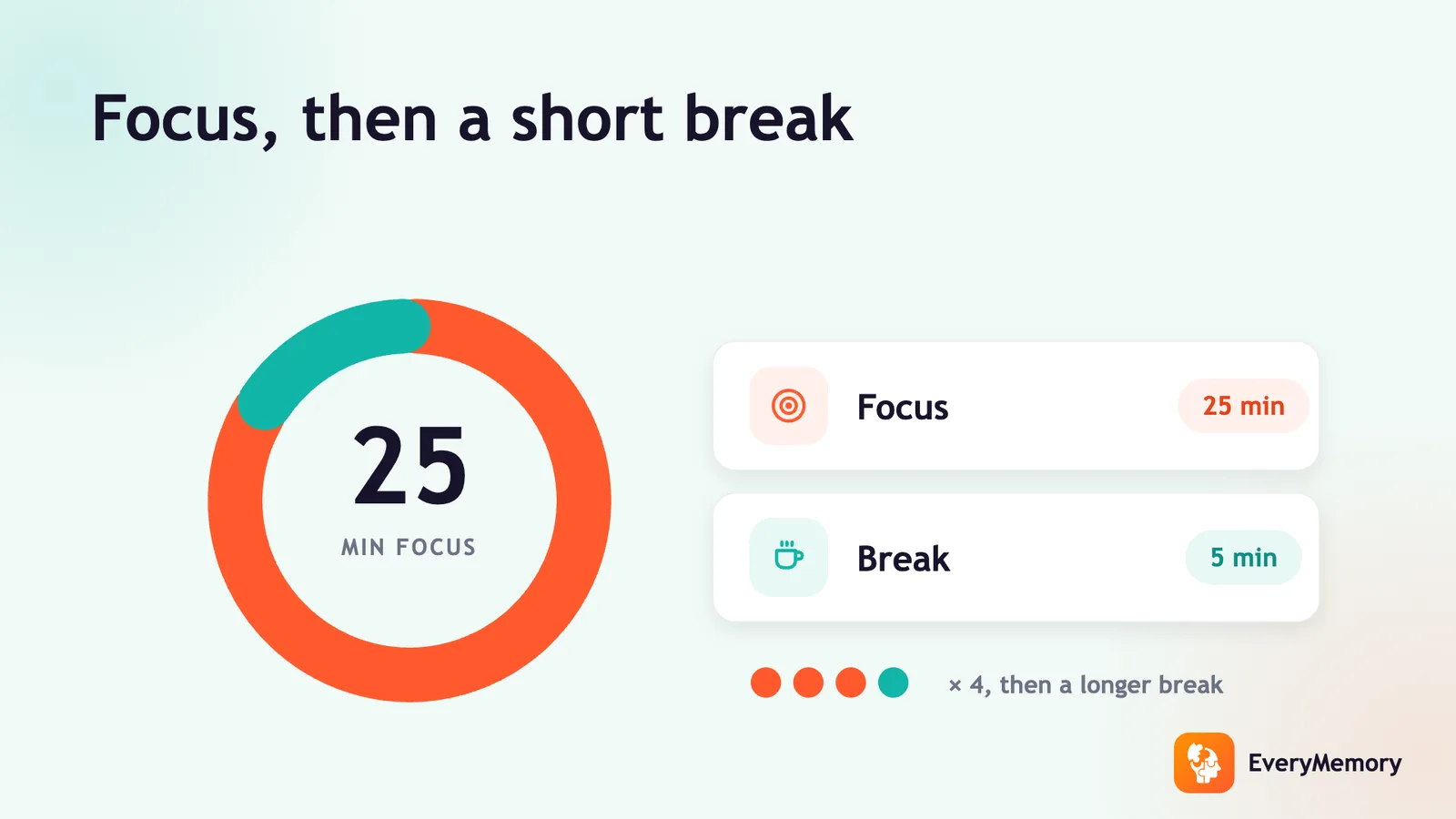
Structured work-rest cycles can help. The Pomodoro technique for focus offers one practical framework - 25 minutes of concentrated effort followed by a five-minute break. The research on passive rest suggests those brief pauses do more useful consolidation work than most people realise, provided the break is genuinely low-stimulation rather than a switch to a different screen.
Rest as part of a memory-friendly day
The practical message is not that rest replaces effort, but that it completes it. Moving straight from one task to the next compresses the window the brain needs to consolidate what just happened. A five-minute quiet sit after reading, a short walk between tasks, a 20-minute nap if the afternoon allows - none of these require willpower. They work because they are low-effort, and because the brain uses low-stimulation time naturally for memory filing.
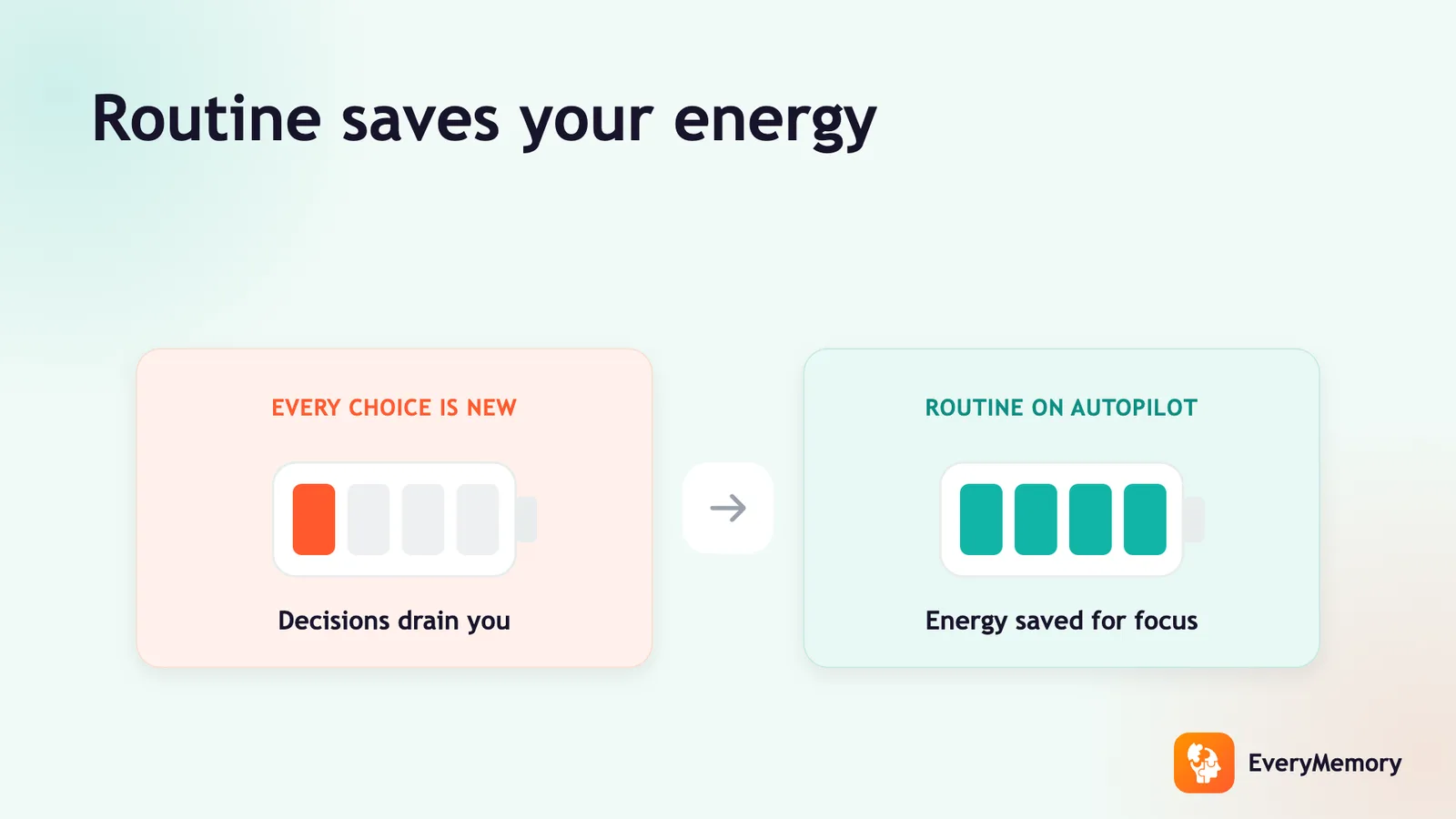
When rest breaks become predictable parts of a day rather than things squeezed in when possible, they are easier to keep and more effective. The ideas in our piece on why routine matters for focus offer a complementary framework for building this structure into ordinary life.
✅ Try this today - The Three-Pause Day
Try this for three days and notice whether your recall of the day's details feels different.
- After any focused reading or learning session, set a timer for 5–10 minutes and sit quietly without your phone - no music, no TV. Let your mind wander. You do not need to think about the material deliberately; the brain handles the replay on its own.
- Build in one short walk of 10–15 minutes, ideally after a meal or a work block. Keep the pace gentle and leave the phone behind. The goal is low cognitive demand with light movement, not exercise.
- If you feel tired in the early afternoon, try a 20-minute rest or nap, setting an alarm so you do not oversleep. Notice whether your focus and word recall in the late afternoon feel different on rest days versus non-rest days.
⚠ When to talk to a professional
This article contains general, non-medical information about rest, breaks, and everyday memory. It is not a substitute for professional advice. If you notice sudden, rapid, or worsening changes in your memory or concentration that are affecting daily life, please speak with a qualified healthcare professional.