 EveryMemory
Memory Issues: Common Causes and What Helps
Most everyday memory issues are about attention, stress, and sleep - not failing memory. The common causes, what helps, and when they're worth checking.
Part of the guide: Understanding Memory Loss and Forgetfulness: A Calm, Reassuring Guide →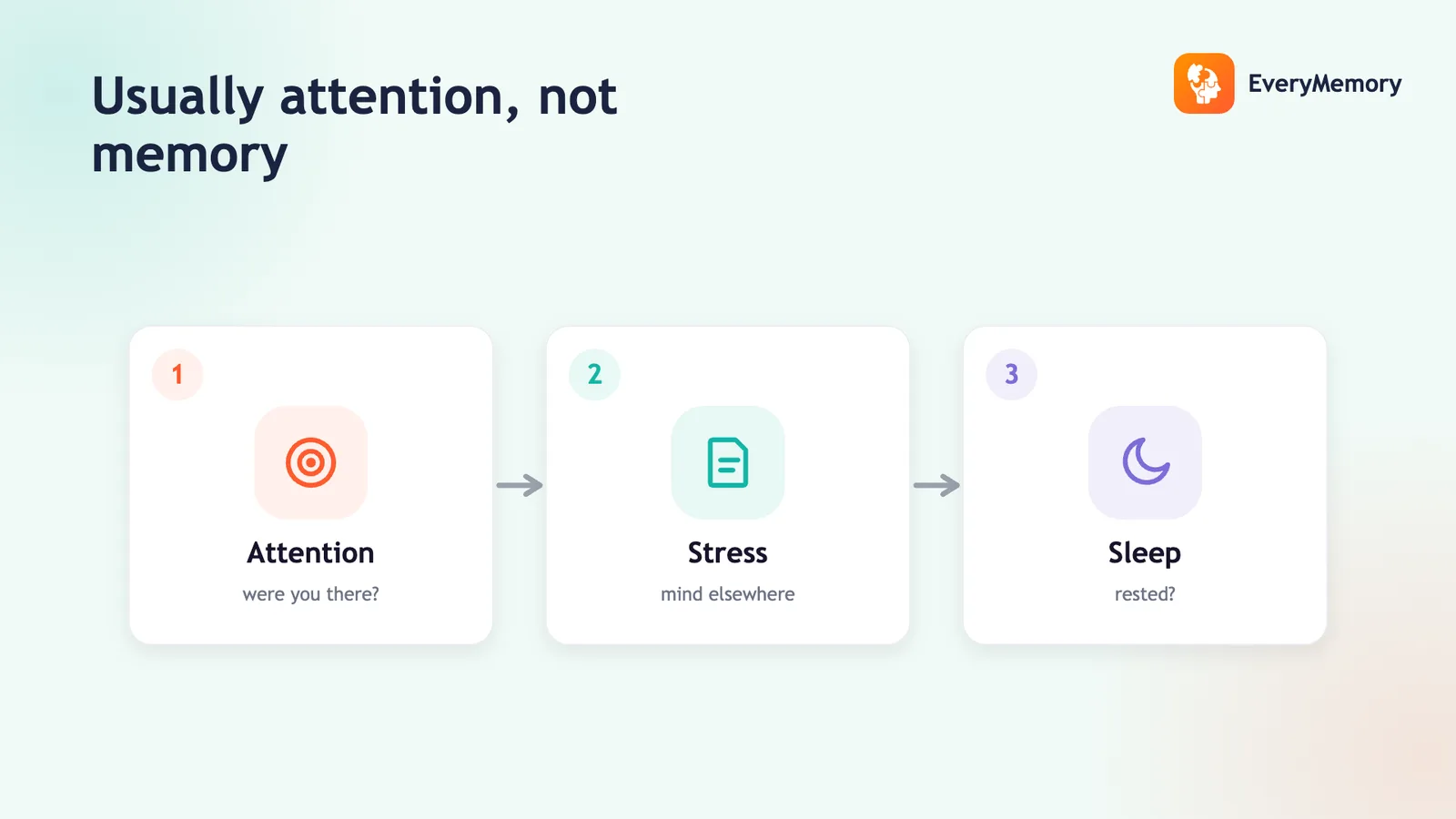
⚡ Quick answer
Most everyday memory issues - forgetting names, misplacing things, blanking mid-sentence - are about attention, stress, and sleep rather than failing memory, and they're common and fixable. They become worth a professional's input when they're clearly and steadily worsening, disrupting daily life, or noticed by others alongside confusion.
Key takeaways
- Most everyday memory issues come from divided attention, stress, and poor sleep - not failing memory - and are fixable.
- Everyday slips that fluctuate with how tired and busy you are are a normal feature of how memory works.
- Single-task, say things aloud, offload to a calendar, and protect sleep to resolve most of them.
- Worth checking if steadily worsening, disrupting daily life, or noticed by others alongside confusion.
"Memory issues" covers a lot - forgetting names, misplacing things, losing words, blanking on why you walked into a room. The reassuring news is that most of them share a few ordinary, fixable causes.
Here's what usually drives everyday memory issues, what helps, and the line where they're worth a closer look.
What people mean by 'memory issues'
Usually it's the everyday slips: a familiar name that won't come, keys you can't find, a word on the tip of your tongue, walking into a room with no idea why. Each is so common it has its own well-studied explanation - and each traces back to the same handful of roots, set out in why do I forget?
The common, fixable causes
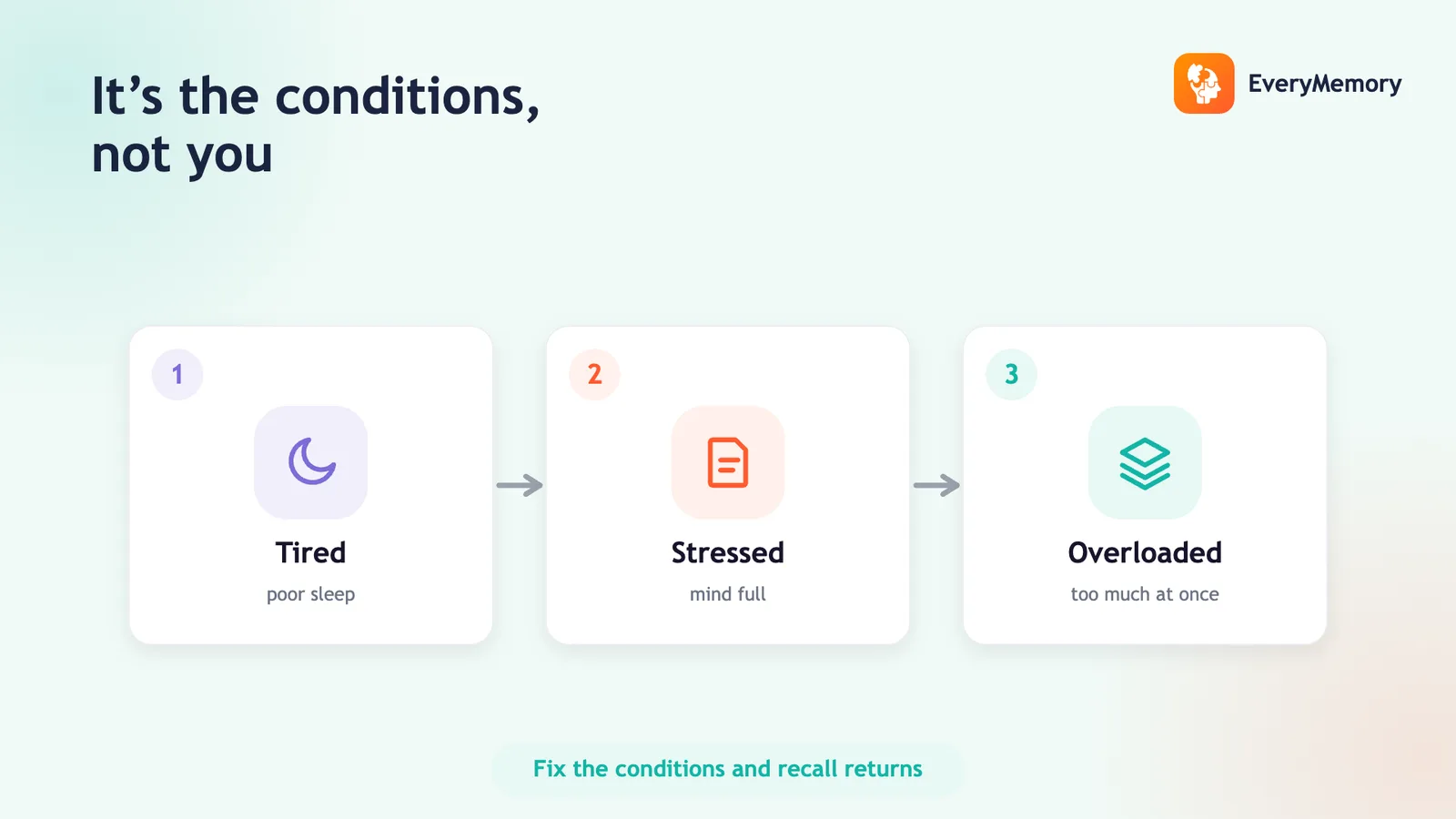
- Divided attention - the information never got stored because you were distracted (the biggest cause).
- Stress and worry - a busy mind has little room for new information; see stress and forgetfulness.
- Poor sleep - it weakens memory and next-day focus; see sleep and memory.
- A normal slowing of recall with age - words and names surface a little slower, but are still there.
They're usually normal - and improvable
Everyday memory issues that come and go with how tired and busy you are are a normal feature of how memory works, not a sign of decline. And because the causes are fixable, so is much of the forgetting - single-task on what matters, say things aloud, write down what you don't need to carry, and protect your sleep. The toolkit is in how to stop forgetting things.
When memory issues are worth checking
It's reasonable to speak with a qualified professional when memory changes are clearly and steadily worsening over weeks rather than fluctuating, start to affect everyday tasks, or are noticed by others before you - particularly alongside confusion about familiar people or places. Tracking specific, dated examples first, or repeating a non-medical self-check, makes that conversation far more useful. Where the ordinary line sits is covered in memory loss vs normal aging.
⚠ When to talk to a professional
Everyday memory issues that fluctuate with tiredness, stress, and busyness are usually normal. If they are steadily worsening over weeks, disrupting daily life, or noticed by others alongside confusion, talk to a qualified professional.