EveryMemory
Why Do I Forget? The Everyday Causes Explained
Names, words, why you entered a room, where you put things - different slips, three shared roots. The plain explanation, and the fix for each.
Part of the guide: Understanding Memory Loss and Forgetfulness: A Calm, Reassuring Guide →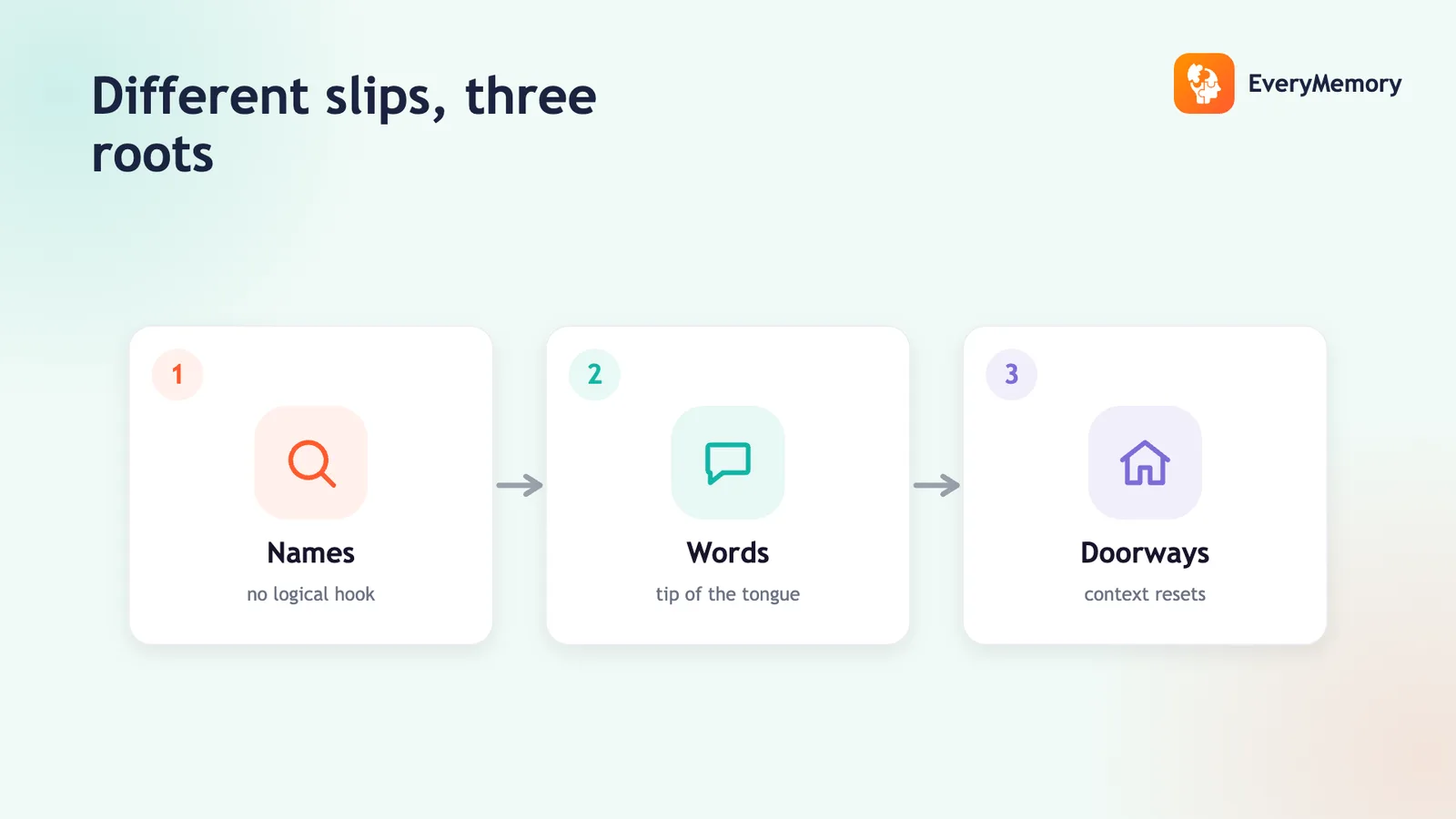
⚡ Quick answer
Most everyday forgetting comes down to a few ordinary causes: divided attention (the information never got stored), normal slowing of retrieval (it's there but slow to surface), and conditions like stress and poor sleep that reduce capacity. Each kind - names, words, why you entered a room, where you put things - has the same roots and its own simple fix.
Key takeaways
- Everyday forgetting has three roots: divided attention (never stored), slow retrieval (stored but slow), and reduced capacity from stress or poor sleep.
- Divided attention is the most common cause by far, and most fixes target attention.
- Each case - names, words, the doorway effect, misplacing things - fits one of these roots and has a simple fix.
- Worsening, daily-life-disrupting, or others-noticed forgetting alongside confusion is worth professional input.
Every kind of everyday forgetting feels different - a name gone, a word stuck, a reason for walking into the kitchen evaporated. But underneath, they trace back to just three causes.
Understand those three and each specific 'why do I forget' has an obvious fix.
The three roots of forgetting
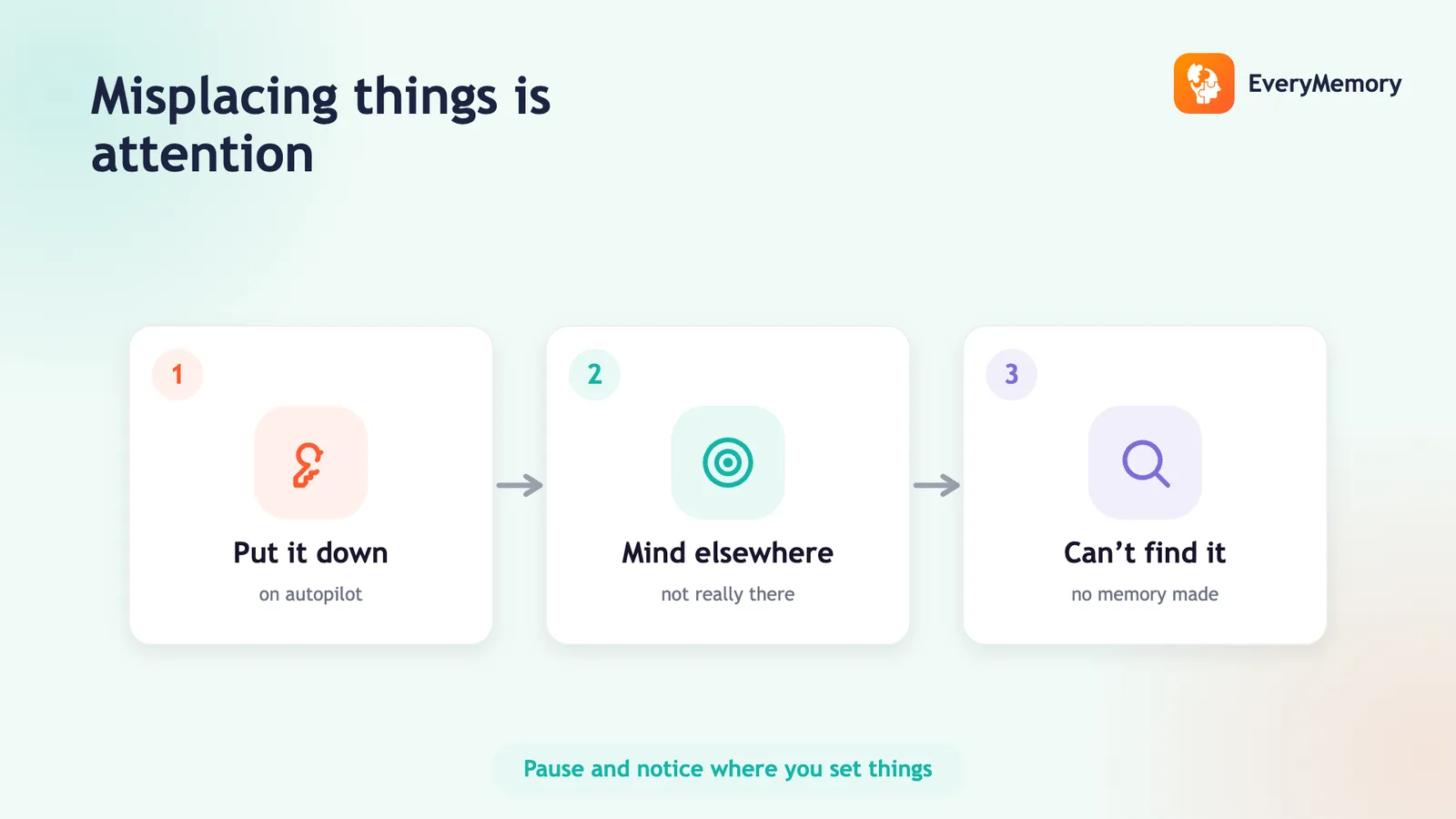
- It never got stored (attention). If you were distracted when something came up, no memory formed - there's nothing to recall. This is the most common cause by far.
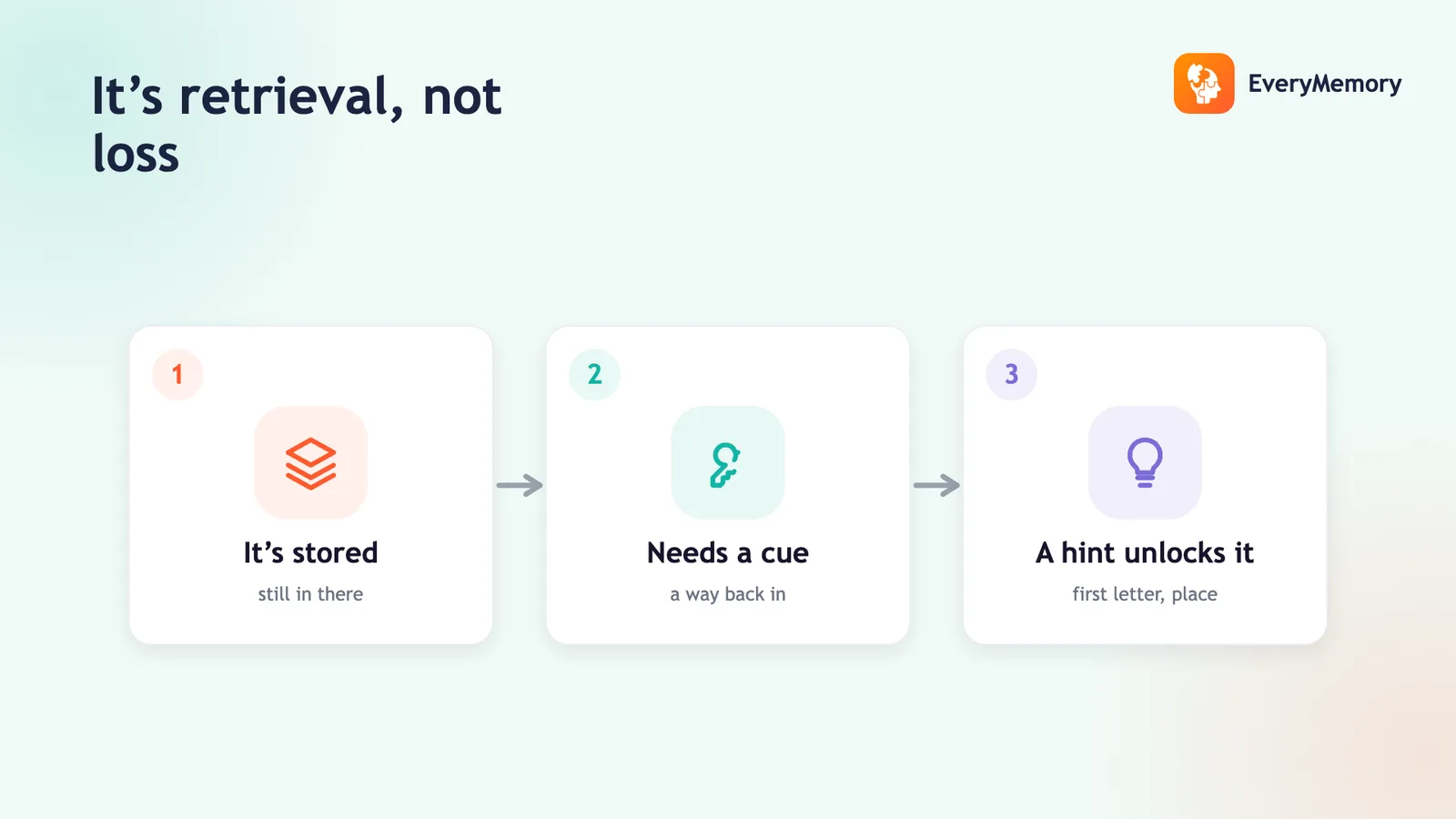
- It's stored but slow to surface (retrieval). The 'tip of the tongue' feeling: the information is there, the path to it is briefly weak. It usually arrives once you stop straining.
- Your capacity was reduced (conditions). Stress, poor sleep, and doing too much shrink the attention and working memory the other two depend on.
The common cases - and where each fits
| What you forget | Main root | Read more |
|---|---|---|
| A name you just heard | Attention - never stored | Names and words |
| A word on the tip of your tongue | Retrieval - slow to surface | Words while speaking |
| Why you walked into a room | Attention - the doorway effect | The doorway effect |
| Where you put something | Attention - autopilot | Misplacing things |
| Things seconds after hearing them | Attention + capacity | Forgetting quickly |
The shared fix
Because most forgetting is an attention problem, most fixes are the same: give what matters a few seconds of single-tasked attention, say it aloud, link it to meaning, and write down or give a fixed home to anything that doesn't need to live in your head. For the conditions, protect sleep and lighten the load. The full toolkit is in how to stop forgetting things.
When forgetting is worth a closer look
These everyday causes, worse on tired or busy days, are normal. It's reasonable to speak with a qualified professional if forgetting is clearly and steadily worsening over weeks, disrupting daily life, or noticed by others alongside confusion about familiar people or places.
⚠ When to talk to a professional
Everyday forgetting from attention, retrieval, and tiredness is normal. If it's steadily worsening, disrupting daily life, or noticed by others alongside confusion, talk to a qualified professional.