 EveryMemory
Quick Memory Tips and Tricks for Everyday Recall
The memory tips that actually work are small and consistent - not clever. Eight quick wins for names, tasks, and everyday recall, with deeper guides for each.
Part of the guide: Brain Exercises for Seniors: The Complete Guide →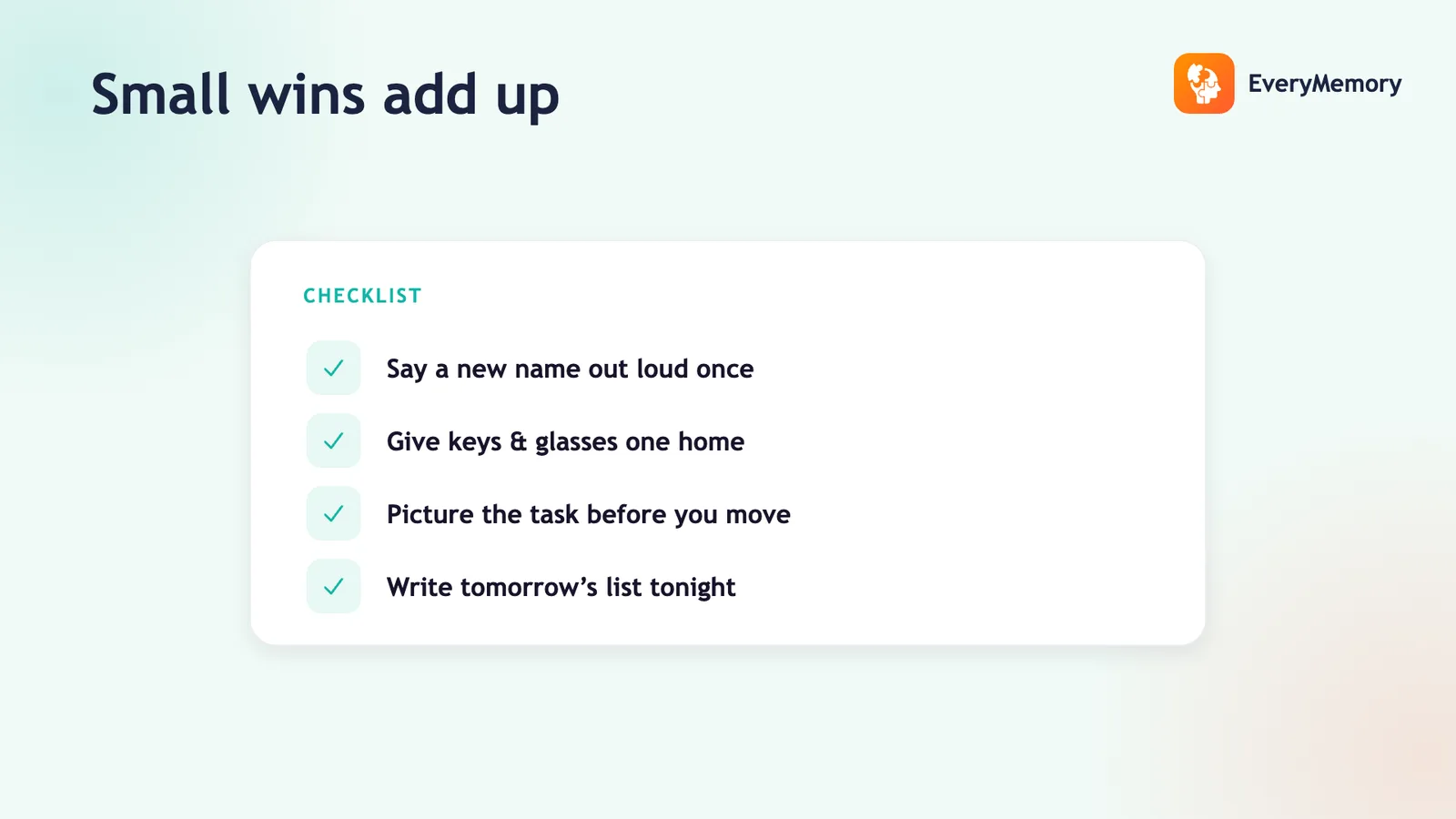
⚡ Quick answer
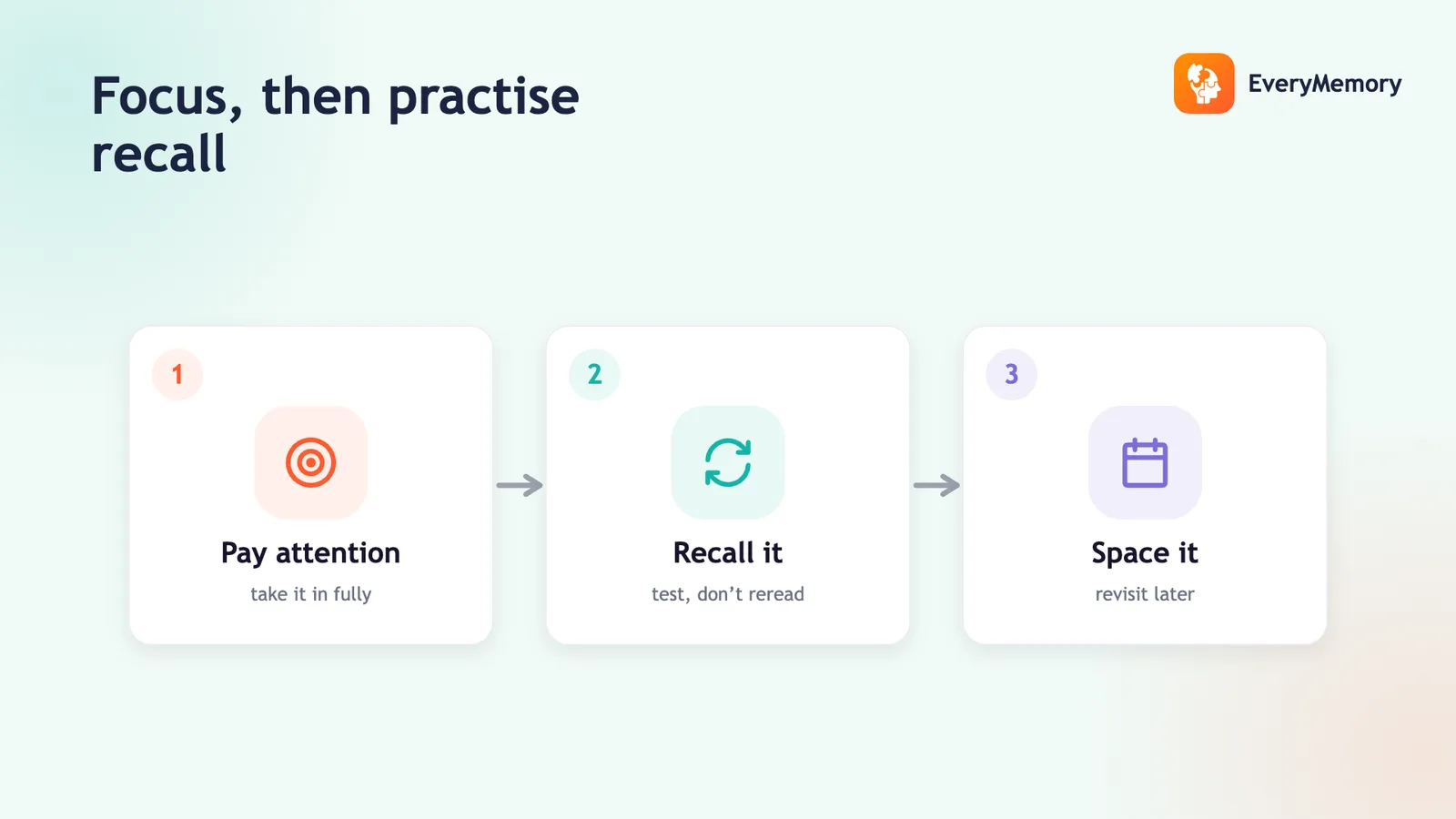
The memory tips that actually work are small and consistent: pay full attention to what matters, say names and locations aloud, link new things to what you already know, write down what you don't need to carry, and test yourself instead of rereading. None is clever, but used daily they cut everyday forgetting sharply.
Key takeaways
- The memory tips that work are small and consistent, not clever - they target attention, the real failure point.
- Give what matters three seconds of attention, say names and locations aloud, link new things to what you know, and write down what you don't need to carry.
- Test yourself instead of rereading, give lost items a fixed home, and protect your sleep.
- Adopt two tips that match your most common slips before adding more; skip anything promising effortless, dramatic results.
Most 'memory hacks' are either gimmicks or one good idea dressed up. The tips that genuinely cut everyday forgetting are unglamorous - and they work because they match how memory actually forms.
Here are eight quick wins. None is clever; all of them help when you actually use them.
Eight tips that actually work
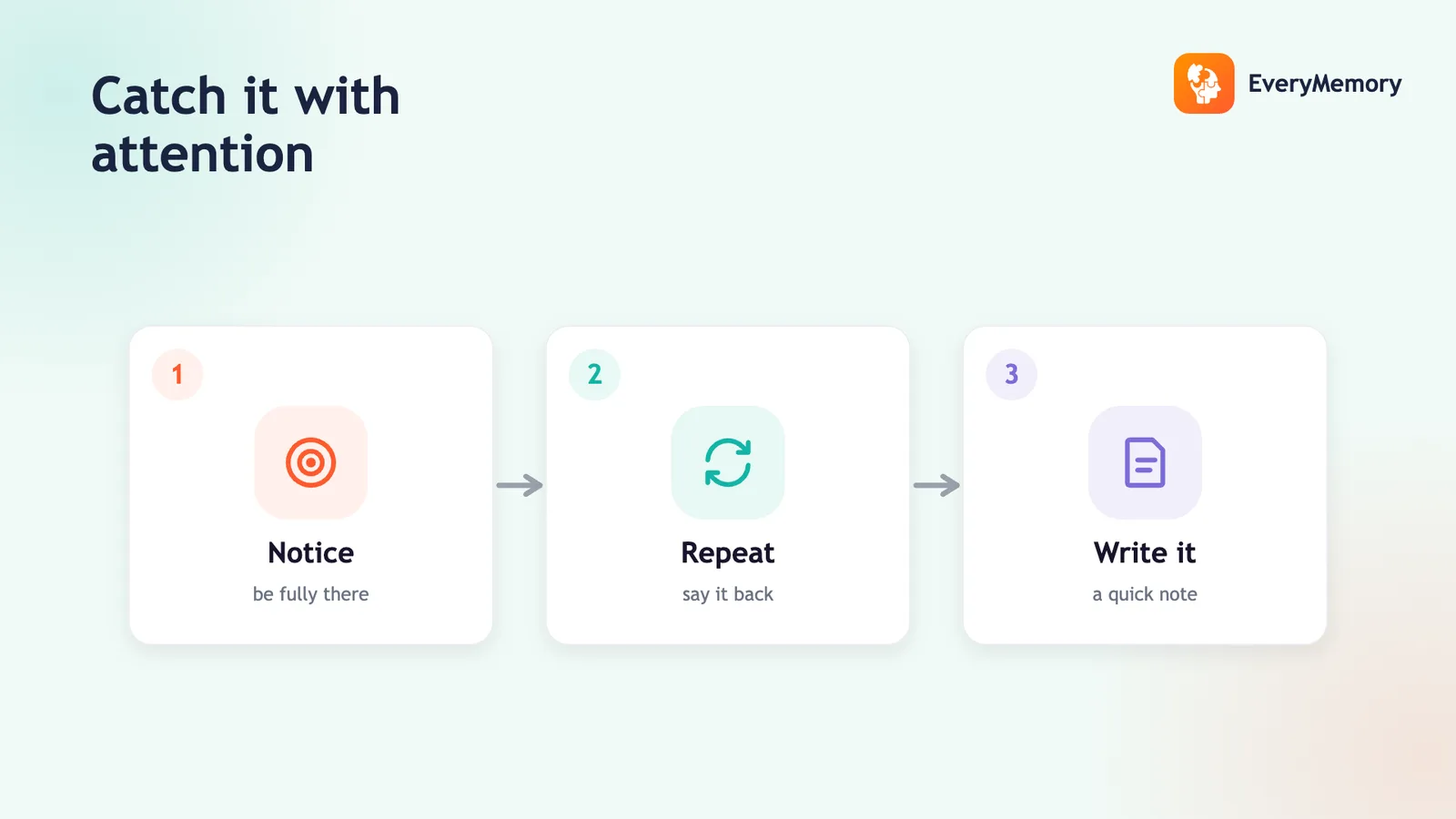
- Give it three seconds. Most slips are divided attention - single-task on what matters before moving on. See why you forget things so quickly.
- Say it aloud. Repeat a name or 'keys on the hook' out loud to force the attention that stores it.
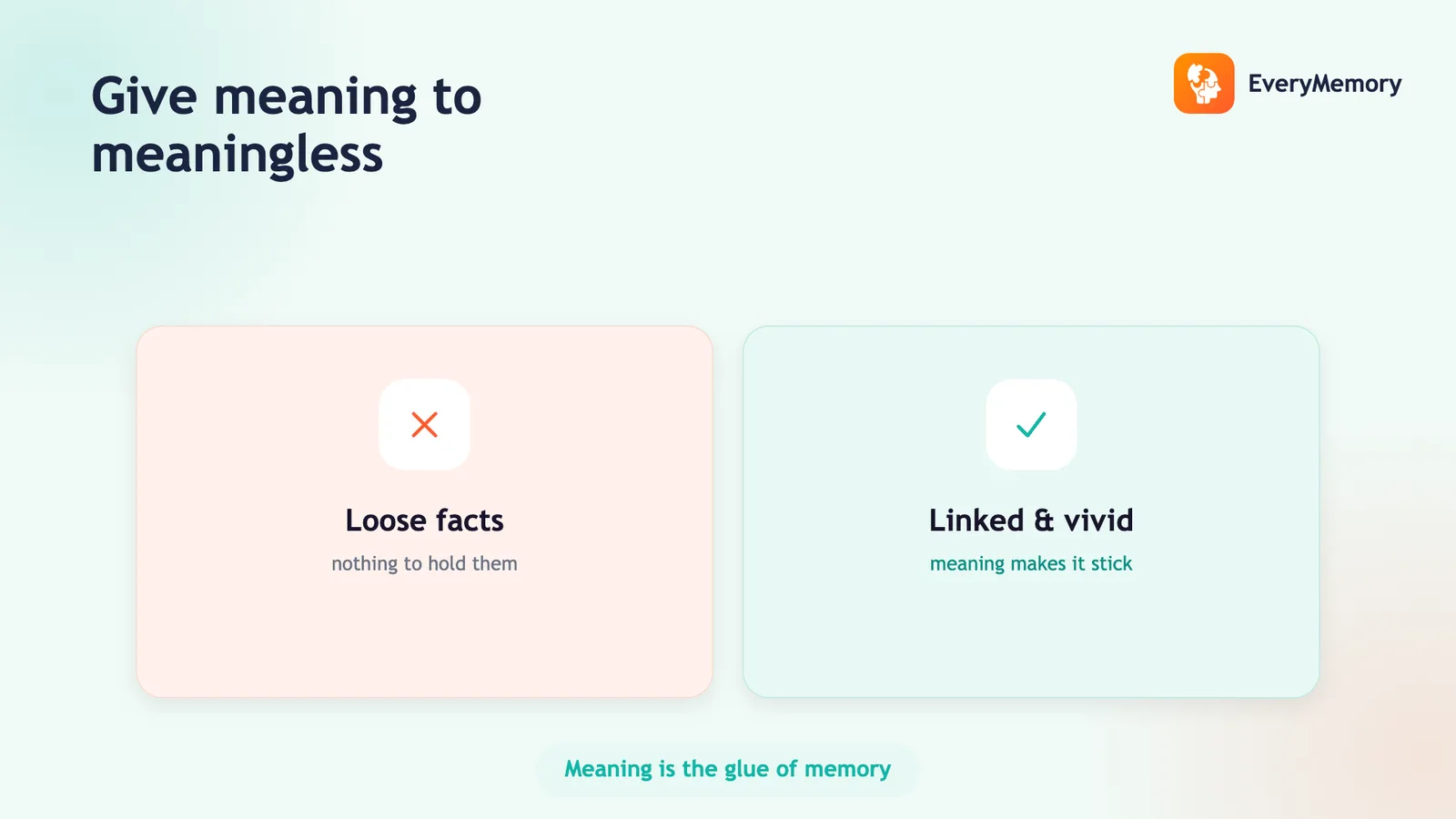
- Link it to what you know. Connect new information to something familiar - that's what memory holds. See association.
- Use the name back. 'Good to meet you, Sarah' locks a name in. More in remember names easily.
- Give lost items a fixed home. Keys on a hook, glasses in a dish - no memory needed.
- Write it down. Offload appointments and tasks so memory is free for thinking.
- Test, don't reread. Recall from memory rather than re-reading - far more effective. See retention.
- Protect your sleep. It files the day's memories; a bad night undoes a lot. See sleep and memory.
Why simple beats clever
Elaborate tricks fail because you won't keep them up. These tips are small enough to actually use in the moment, and they target the real failure point - attention. Used consistently, plain beats clever every time.
Build a couple into habits
Don't try to adopt all eight at once. Pick the two that fit your most common slips - say-it-aloud for names, a fixed home for keys - and make them automatic before adding more. For the techniques behind the bigger wins, see memory techniques and how to remember things better.
What to skip
Skip anything promising effortless, dramatic results - 'unlock 100% of your memory', miracle supplements, or apps claiming medical benefits. Memory responds to attention and good habits, not shortcuts.
✅ Try this today - pick two, use them today
Don't adopt all eight - start with two:
- Choose the two tips that match where you slip most.
- Use each one deliberately every time the situation comes up today.
- Keep them for a week until they're automatic, then add a third.