 EveryMemory
How to Remember Anything
No trick remembers anything for you, but a reliable approach handles most of it: attention, meaning, a vivid image, and a recall soon after.
Part of the guide: How to Improve Your Memory: The Complete Beginner's Guide →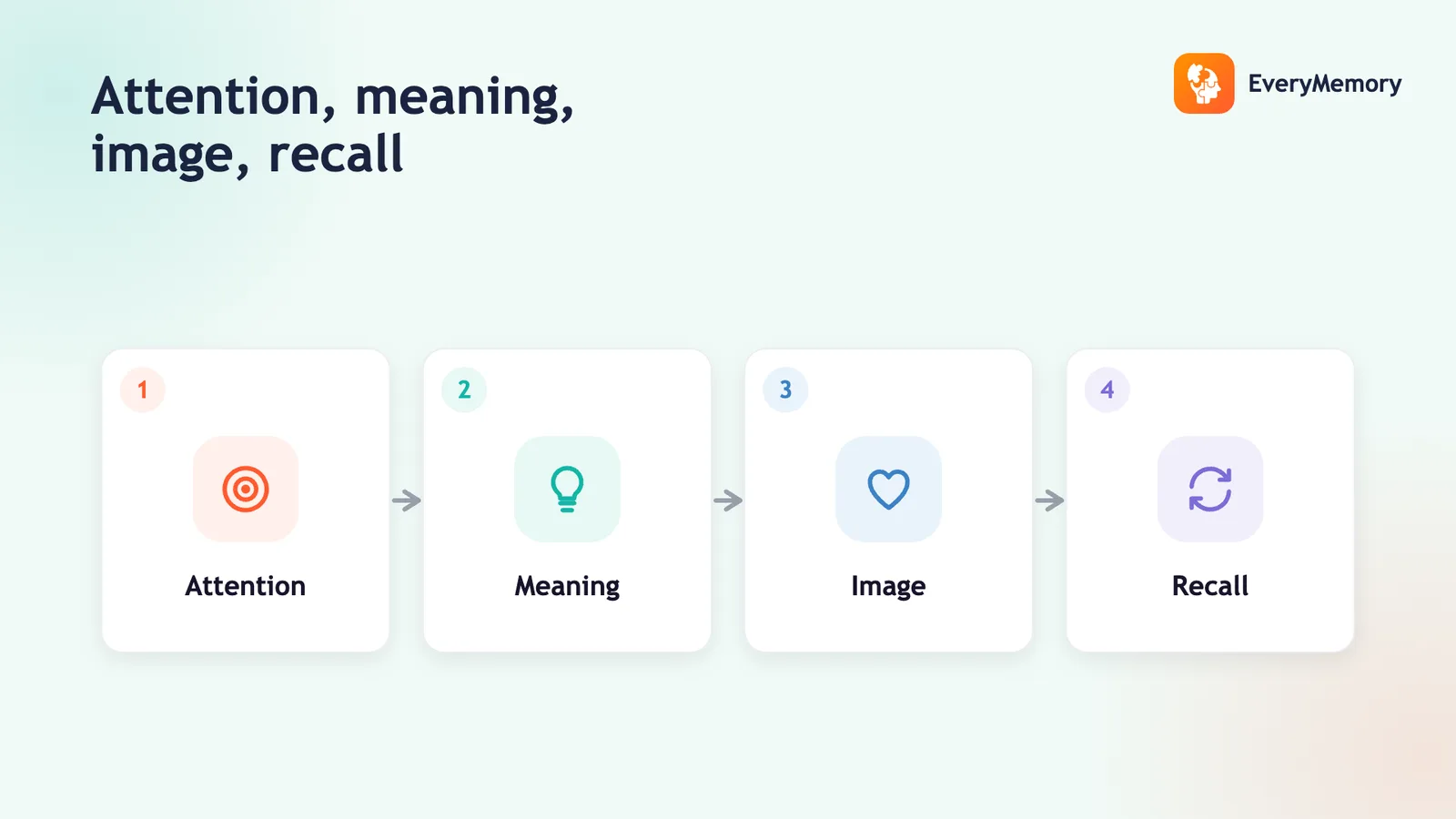
⚡ Quick answer
There's no trick that remembers anything for you, but a reliable approach handles most things: pay full attention, connect it to what you already know, picture it vividly, and recall it from memory soon after. For lists and facts, place them in a memory palace; for everyday slips, single-task and write things down. Attention plus meaning plus retrieval covers almost anything.
Key takeaways
- No trick does it for you, but a reliable approach handles most things: attention, meaning, a vivid image, and a recall soon after.
- Match the method to the thing - names, numbers, lists, what you read, where you put things each have a best technique.
- Most everyday slips are attention, not memory: single-task and write down what you don't need to carry.
- The single highest-value habit is to recall rather than reread.
There's no single trick that remembers everything for you. But there is a dependable approach that handles almost anything you'd want to hold onto - names, numbers, lists, what you read, where you put things.
Here it is, plus the best method for each type.
The universal approach
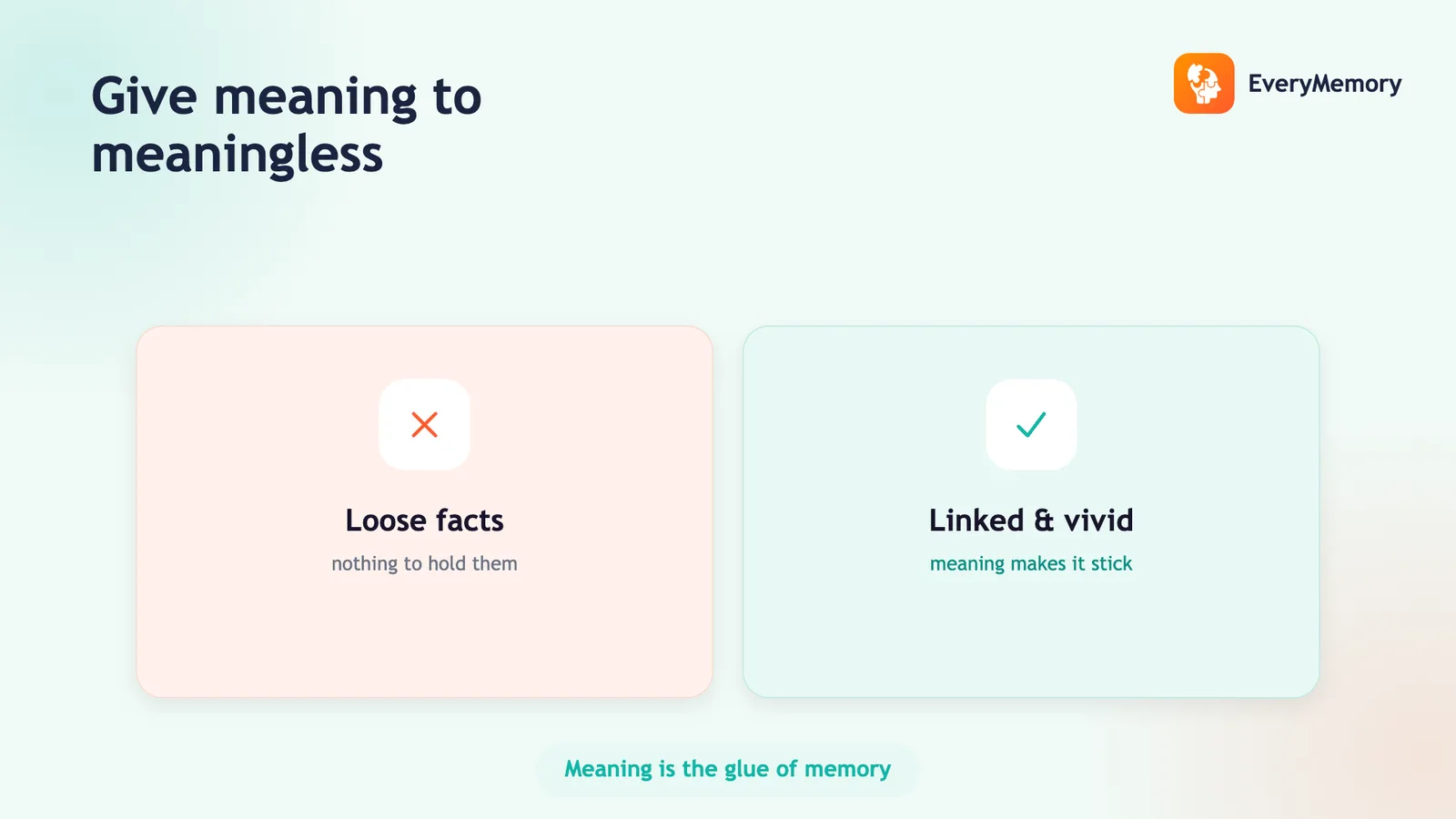
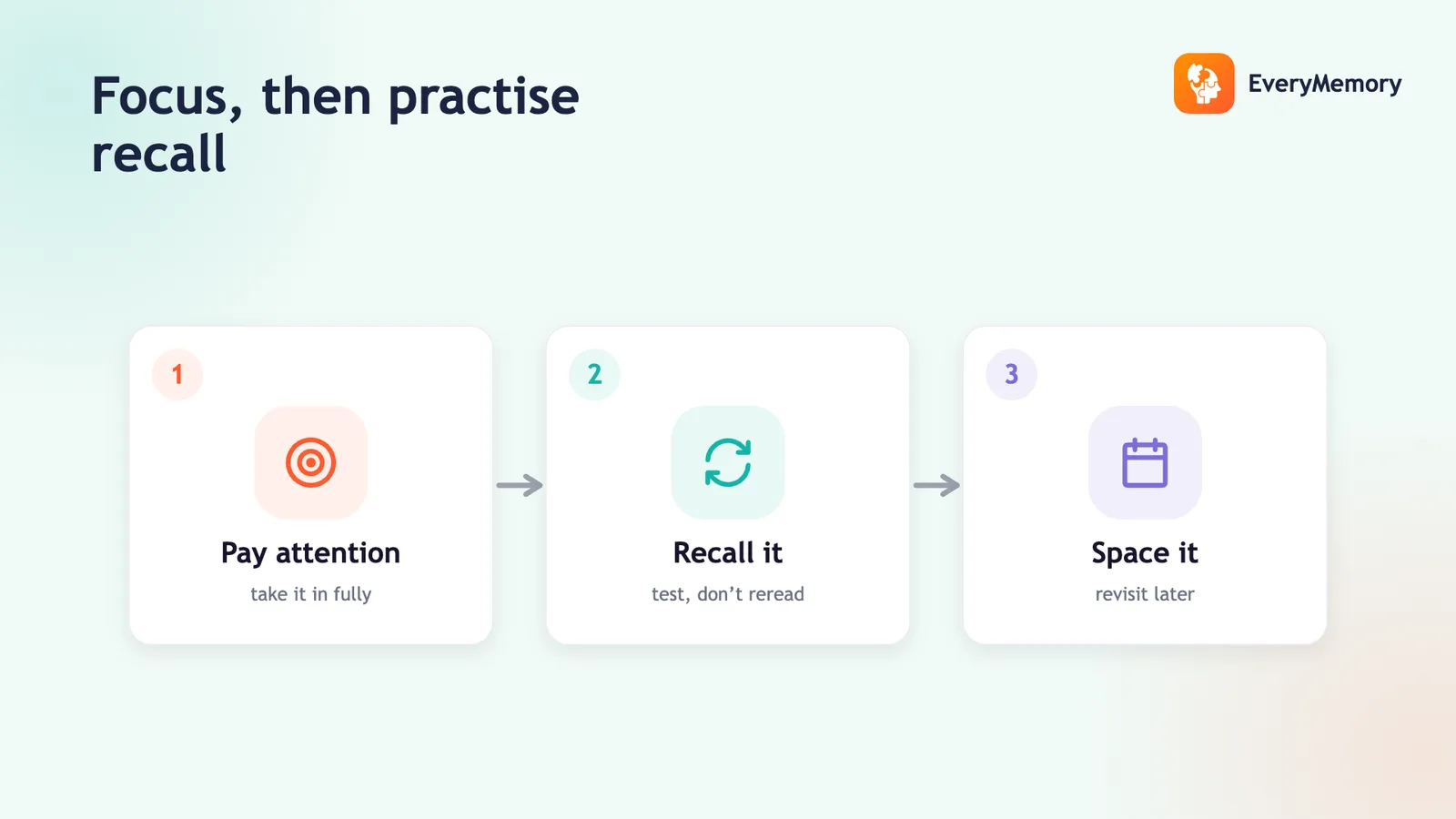
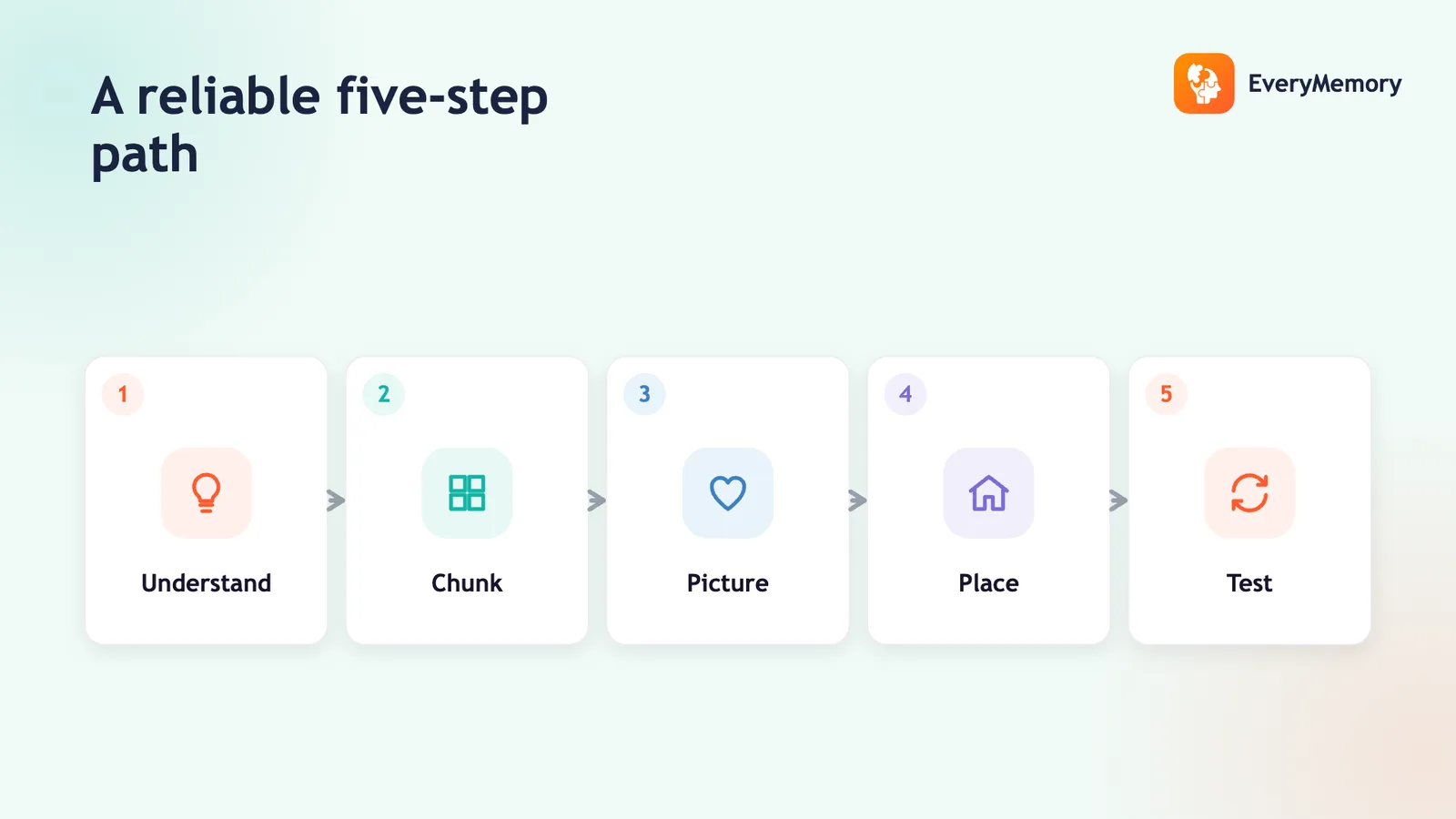
Nearly all remembering comes down to three moves: give it attention (nothing stores without it), give it meaning (link it to what you already know), and practise retrieval (recall it rather than reread it). Get those three right and most memory problems shrink - they're the backbone of remembering things better.
Match the method to the thing
| What you want to remember | Best method |
|---|---|
| A name | Attention + link it to the face - names easily |
| A number | Chunk and picture it - numbers |
| A list or speech | A memory palace or story |
| Something you read | Recall it, then space reviews - what you read |
| Where you put things | Say the location aloud - misplacing things |
For everyday remembering
Most daily slips are attention, not memory. Single-task on what matters, say names and locations aloud, and offload appointments and tasks to a calendar or a fixed home - see how to stop forgetting things. Don't ask your memory to do a notepad's job.
The one habit, if you do nothing else
Recall, don't reread. Whatever you're trying to remember, the act of pulling it back from memory - once, soon after, and again later - does more than any amount of reviewing. It's the single highest-value memory habit there is, detailed in active recall.